On the Horizon

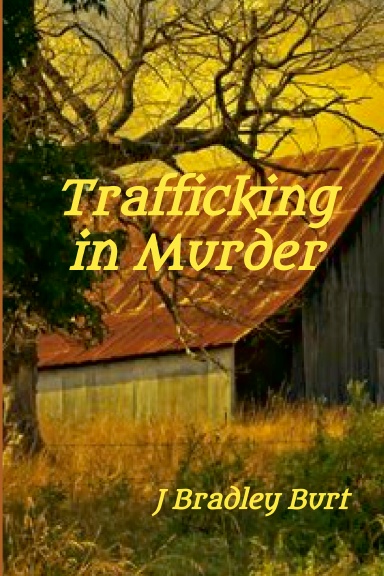
Two new books are on the horizon that you, as a regular (or even occasional) reader of this blog, are sure to enjoy.  The first is the twelfth novel in my crime-fiction series featuring two engaging, dynamic characters—Maggie Keiller and Derek Sloan.

Trafficking In Murder is set for release this coming fall, and it will take you on a similar tension-filled, as-it-happens journey that readers of the previous books in this mystery-thriller series have experienced.

The story is set against an all-too-true backdrop of human-trafficking—the smuggling and exploitation of vulnerable asylum-seekers hoping for a new life in Canada.

It all begins when an immigration Judge is attacked by an illegal refugee in her courtroom, and the violence spreads quickly into the community with assaults on innocent bystanders, a kidnapping scheme, and finally murder.

Because of their support for two innocent asylum-seekers embroiled in the turmoil that follows, Maggie and Derek become involved.   As events threaten to spiral out of control, they are drawn further into the local police investigation, which is tied into a broader investigation at the national level by the RCMP and Canadian Security Intelligence Services (CSIS).

Over a tumultuous two-week period, both Maggie and Derek are physically attacked, which only increases their determination to protect the people depending on them.  Working closely with retired and active police investigators, they work diligently to bring the evildoers to justice.

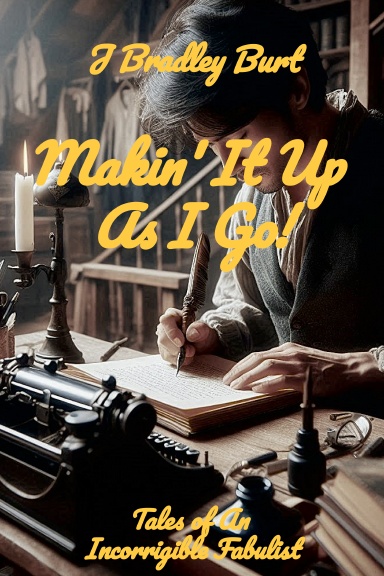
The second book on the horizon, Makin’ It Up As I Go: Tales of An Incorrigible Fabulist, is my tenth collection of short stories and poetry, all of them whimsical, humourous, or pointed in their outlook.  The book is scheduled to drop later this year or early in 2025.

The forty-plus tales are based on weekly prompts from my Florida writers’ group, the Pelican Pens, an eclectic gang of people who enjoy the creative outlet we share.  Four of our number have won awards from the Gulf Coast Writers Association for our work, and three of my winning pieces are included in this anthology.

If you enjoy reading the selections published here in TallandTrueTales, I know you will like both these books.  Once available, they may be found and purchased with all my other published works at this safe site—

https://www.lulu.com/spotlight/precept

Happy reading!

Round Tables

It is no mean feat for writers to create an imaginary world that readers will come to see as true and historically accurate.  Fashioning something from one’s imagination that resonates with readers, a tale that merges with their perception of reality, is not easily done.

Two relatively recent examples of such efforts are Tolkien’s Lord of the Rings and Martin’s Game of Thrones, both of which have convinced many an avid reader of their legitimacy.

As a young boy at the dawn of the 1950s, it was the magical tales of King Arthur and the Knights of the Round Table that captured my fancy.  I first read them in The Boy’s King Arthur, a version of Malory’s Le Morte d’Arthur, which abridged and bowdlerized items from the original text, sexual and otherwise, that were deemed unsuitable for children.

I was completely captivated by the legends of the Lady of the Lake, Arthur’s conception at Tintagel, his seizing of the sword Excalibur, his alliance with the magician Merlin, his ultimate battle with Mordred, and his laying to rest in Avalon.  Most intriguing of all was the notion that he had not died, that he was merely sleeping, that he would rise again, the ‘once and future king’.

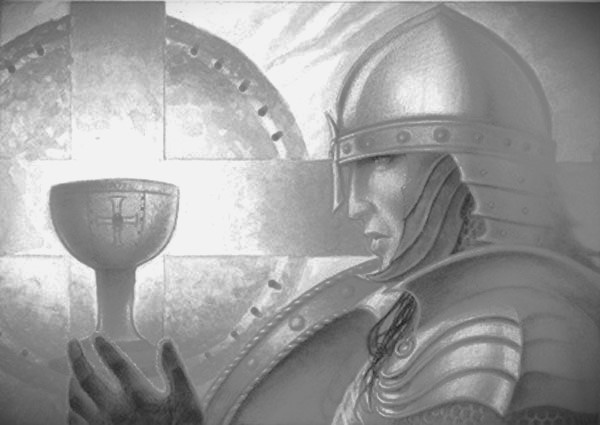
I eventually graduated to the reading of unexpurgated versions, but in the beginning I fancied myself as many of those brave warriors:  Lancelot, until I learned of his treachery with Arthur’s queen, Guinevere; Gawain, who bravely faced the Green Knight in a chivalric romance told in Middle-English alliterative verse; Perceval and Tristram, whose feats of derring-do enthralled me; and of course, Galahad, whose sacred quest for the Holy Grail seemed the most inspired.

I subsequently read about that storied quest in other works, and learned from more than one that two phrases in French—san graal and sang royale, pronounced almost identically—translate to two different things: Holy Grail and royal blood.  This assertion expostulated the theory that following Christ’s death, his wife and children fled to France, where his bloodline continued anonymously, eventually merging with the Merovingian dynasty, then the Carolingian dynasty, all the way to William the Conqueror—who, in a tidy completing of the loop, came to rule over Arthur’s ancient kingdom.

True or not, the story affirmed for me that the greatest Arthurian quest came to fruition in the merging of these two fanciful tales, one religious, the other mythical.  And for a long time in my youth, I believed.

The lasting impression I took from this childhood reading, however, was the concept of the Round Table.  In its simplest form, I thought it presented an ideal way of governing or managing a kingdom, an empire…or any enterprise.  Everyone sat around the circular table, each facing everyone else, and all had an equal say in the decisions that were made—all but one, of course.  The King, by virtue of his position, reserved the right of veto.

In such a setting, the objective of any group’s deliberations is always to achieve consensus on matters discussed, the theory being that everyone will have a greater commitment to decisions made when they feel they’ve contributed to them.  The process involves give and take, it usually means no one gets all of what they want, but it allows everyone to get some of what they hoped for.  Some might call that win/win.

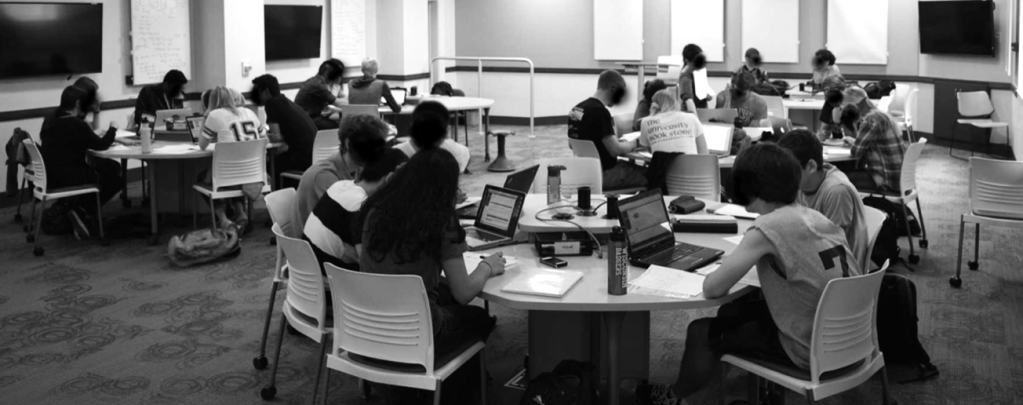
As a young teacher in the mid-1960s, chock-full of enthusiasm for and faith in the teaching/learning paradigm, I furnished my classroom with circular tables, not individual desks.  My thirty-plus students sat in groups of five or six around these tables, groups whose membership rotated periodically, based on their accomplishments and interests. 

Our interactions, the teachings and learnings we shared, usually (but not always) were conducted with me sitting around a table with them.  To this day, I find it remarkable how much self-discipline, cooperation, and independent learning took place among the young people at those tables.  Only rarely did I ever have to exercise my right of veto.

Twenty years after leaving the classroom, installed as the CEO of a school board district, I still favoured round tables.  In my office, senior staff met weekly around a large, circular oak table, where everyone had a valued voice.  We didn’t always agree on how best to proceed with certain matters, but when we concluded our discussions, each of us felt we’d had the opportunity to make known our views.  And all of us acted on the consensus decisions with total commitment.  And again, I almost never had to decide arbitrarily on a course of action.

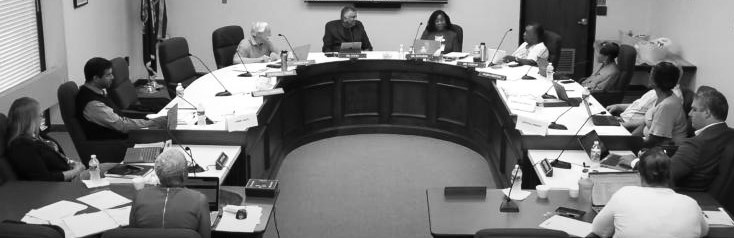
In the boardroom, where elected trustees met weekly to discuss and make policy, they sat at desks arranged in a circular shape, each of the fourteen with a direct view of the others.  The chairperson of the board managed the meetings according to established rules of order, and only occasionally overruled a colleague.  Decisions were made by voting, as required by the Education Act, but only rarely were those votes disputatious…and never acrimonious.  I believe there was something about sitting in the circle formation that elevated the level and tone of discussion, that enabled consensus decision-making.

As a young father, I sat with my wife and two daughters around a circular kitchen table, virtually every night, for dinner together.  Any of us might miss now and then, given our respective work and school commitments, but sitting down around that table was the established custom, one we all honoured until the girls headed off to university.  Our discussions centred on what all of us were doing at any given moment, and everyone contributed freely.  No topic was off-limits (although when the girls were very young, some issues were covered only cursorily, appropriate to their age).  Looking back now, I consider the learnings we all experienced with each other as indispensable to our family’s enduring ties.

And to think, it all began for me with my fascination for the Arthurian legends I first read as a boy, stories of the Knights of the Round Table that imbued me with a sense of romanticism and chivalry that I still value today.

I remain eternally grateful to all writers who have managed to create a world that I and other readers consider enjoyable and aspirational…even if imaginary.

 And I still wonder, even at this great age, if Arthur is merely sleeping at Glastonbury Tor, as the legends maintain, and if we shall ever see his like again, holding forth at his great Round Table.

My Whiffenpoof

The Gulf Coast Writers Association in Florida has announced the winners of its 2024 writing contest. After winning a first prize last year in fiction, I’m pleased to say I’ve taken a second prize this year in the same category. My latest entry was published on this blog website last winter, but I’m posting it again for any who are interested—

The young lad’s voice was pleasant enough, if a tad off-key here and there, and he held his beer-drinking audience rapt as he began singing the song.

To the tables down at Mory’s, to the place where Louie dwells,
To the dear old Temple Bar we love so well,
Sing the Whiffenpoofs assembled with our glasses raised on high,
And the magic of our singing casts a spell…

“What’s a Whiffenpoof?” old Hardy McKinnon yelled out rudely, slamming his empty glass down on the table in front of him, half-cut already, though the evening was young.  “Sounds like a fart!  One o’ them SBD ones!”

The lad stopped singing, joined in the laughter that followed, then said, “SBD?  What’s SBD?”

“Silent but deadly!” McKinnon’s wife cried, pointing at her husband, beckoning to me for another round as the laughter erupted again.

“Quiet, ye lot!” I shouted from behind the bar where I’d been drawing another tray of drafts.  “Let the boy sing his song!”

Indeed, he did look more a boy than a man, sitting there in his khaki uniform, the cuff of one sleeve pinned to his left shoulder where his arm should have been—the only one to return of five village lads who had marched proudly to the train station two long years ago, off to fight the foe for King and country. 

The polished medal at the end of the ribbon round his neck testified to his gallantry and sacrifice—the Victoria Cross, awarded for valour in the face of the enemy, the highest military award the nation could offer.  It had been presented by none other than King George himself, and I’d been there to witness it.

“Let him sing!” I cried once more into the clamour, and it subsided quickly as Jimmy took up his song again.

Yes, the magic of our singing of the songs we love so well---
‘Shall I Wasting’ and ‘Mavourneen’ and the rest---
We will serenade our Louie while life and voice do last,
Then we’ll pass and be forgotten with the rest…

The eyes of almost everyone were fixed steadily on the lad as he sang, the words and melody casting a solemn pall over the room.  Those who weren’t looking at him were staring emptily into space with that thousand-yard stare I used to see in my Robert’s eyes after he came home from fighting the Boers.  He never spoke of the horrors, nor of the comrades he’d lost, but I knew they’d been with him ‘til the day he died.

I’d held on to the business after he passed, McSorley’s Old Ale House being the only home I had, and the only pub for miles around—a gathering-place as sacred to its patrons in its own way as the Church of England ever could be.

“Aye, Jimmy, sing some more!” Angus MacPherson said softly into the silence.  “Sing the chorus for us, lad!” 

Jimmy drank deeply from the new pint I’d set in front of him, wiped the foam from his mouth with his one hand, and when he started in again, many of the assembled joined in, the words as familiar to them as the faces in their mirrors—

We’re poor little lambs who have lost our way,
Baa, baa, baa!
We’re little black sheep who have gone astray,
Baa, baa, baa!
Gentlemen songsters out on a spree, doomed from here to eternity,
Lord, have mercy on such as we,
Baa, baa, baa!

My tears glistened on the polished, wooden surface of the bar, and I scrubbed them away furiously with my rag.  Most of the old warriors who’d been singing along were weeping, too—silent tears tracking down their grizzled, ruddy cheeks, only to be swallowed up and lost in their scraggly beards, just as their innocent youth had been torn from them by the long-ago battles they had fought for the fading Empire.

In the silence that blanketed the normally-boisterous room, Jimmy stood up, finished his pint, then walked wearily over to the bar, waving shyly to the crowd.  “I’ll be headin’ up now,” he whispered with a sad smile.  “Shout me up when yer closin’, an’ I’ll be back down to help.”

“Shure, an’ I’ll be doin’ that very thing,” I said, knowing full well I would not.  The boy was bone-tired, I could tell, and needing his sleep—if sleep would come.  I watched as he mounted the narrow staircase, his steps heavy, his one hand on the banister, his chin sunk low on his chest.  I couldn’t see his medal, but I know it weighed heavy on him.  He’d have given it back in an instant if it meant the return of his fallen friends.

“He’s a good lad, young Jimmy!” Liam Dewar shouted, his half-empty pint raised high.  “A noble warrior, an’ a damn fine singer!”

“Three cheers for Jimmy!” Molly Malone cried, a bit unsteady on her feet, trying not to show it.   She was sweet on Jimmy, I knew, but trying not to show that, either.  The crowd joined in, as did I—Huzzah!  Huzzah!  Huzzah!

And then another song broke out, this time led by the lovely tenor voice of the vicar, the Reverend Alastair Holmes, and everyone took up the tune—

It’s a long way to Tipperary, it’s a long way to go,
It’s a long way to Tipperary, to the sweetest girl I know…

And I thought about the long way home young Jimmy had taken—the journey from carefree boyhood to the blood-soaked trenches of Europe, and back again—mutilated and scarred, perhaps forever.  And for what?  For three cheers and a piece of tin around his neck?

My tears began anew, but tears of gratitude this time—gratitude that, unlike so many other mothers’ sons, he was home again.

My Whiffenpoof.

My boy.