
It is no mean feat for writers to create an imaginary world that readers will come to see as true and historically accurate. Fashioning something from one’s imagination that resonates with readers, a tale that merges with their perception of reality, is not easily done.
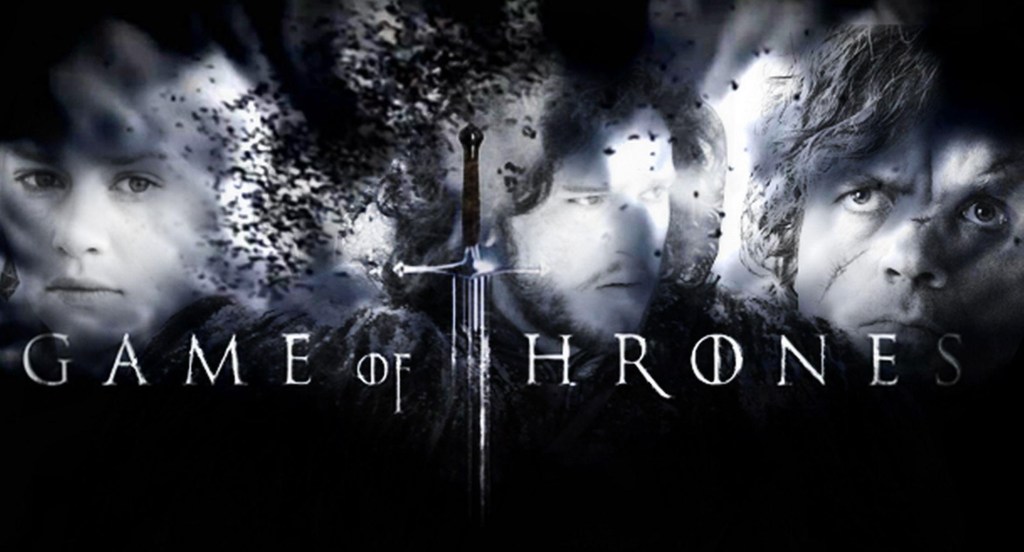
Two relatively recent examples of such efforts are Tolkien’s Lord of the Rings and Martin’s Game of Thrones, both of which have convinced many an avid reader of their legitimacy.
As a young boy at the dawn of the 1950s, it was the magical tales of King Arthur and the Knights of the Round Table that captured my fancy. I first read them in The Boy’s King Arthur, a version of Malory’s Le Morte d’Arthur, which abridged and bowdlerized items from the original text, sexual and otherwise, that were deemed unsuitable for children.
I was completely captivated by the legends of the Lady of the Lake, Arthur’s conception at Tintagel, his seizing of the sword Excalibur, his alliance with the magician Merlin, his ultimate battle with Mordred, and his laying to rest in Avalon. Most intriguing of all was the notion that he had not died, that he was merely sleeping, that he would rise again, the ‘once and future king’.
I eventually graduated to the reading of unexpurgated versions, but in the beginning I fancied myself as many of those brave warriors: Lancelot, until I learned of his treachery with Arthur’s queen, Guinevere; Gawain, who bravely faced the Green Knight in a chivalric romance told in Middle-English alliterative verse; Perceval and Tristram, whose feats of derring-do enthralled me; and of course, Galahad, whose sacred quest for the Holy Grail seemed the most inspired.
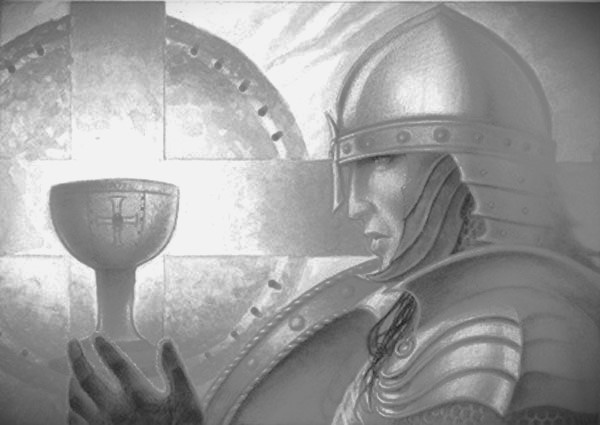
I subsequently read about that storied quest in other works, and learned from more than one that two phrases in French—san graal and sang royale, pronounced almost identically—translate to two different things: Holy Grail and royal blood. This assertion expostulated the theory that following Christ’s death, his wife and children fled to France, where his bloodline continued anonymously, eventually merging with the Merovingian dynasty, then the Carolingian dynasty, all the way to William the Conqueror—who, in a tidy completing of the loop, came to rule over Arthur’s ancient kingdom.
True or not, the story affirmed for me that the greatest Arthurian quest came to fruition in the merging of these two fanciful tales, one religious, the other mythical. And for a long time in my youth, I believed.
The lasting impression I took from this childhood reading, however, was the concept of the Round Table. In its simplest form, I thought it presented an ideal way of governing or managing a kingdom, an empire…or any enterprise. Everyone sat around the circular table, each facing everyone else, and all had an equal say in the decisions that were made—all but one, of course. The King, by virtue of his position, reserved the right of veto.
In such a setting, the objective of any group’s deliberations is always to achieve consensus on matters discussed, the theory being that everyone will have a greater commitment to decisions made when they feel they’ve contributed to them. The process involves give and take, it usually means no one gets all of what they want, but it allows everyone to get some of what they hoped for. Some might call that win/win.
As a young teacher in the mid-1960s, chock-full of enthusiasm for and faith in the teaching/learning paradigm, I furnished my classroom with circular tables, not individual desks. My thirty-plus students sat in groups of five or six around these tables, groups whose membership rotated periodically, based on their accomplishments and interests.
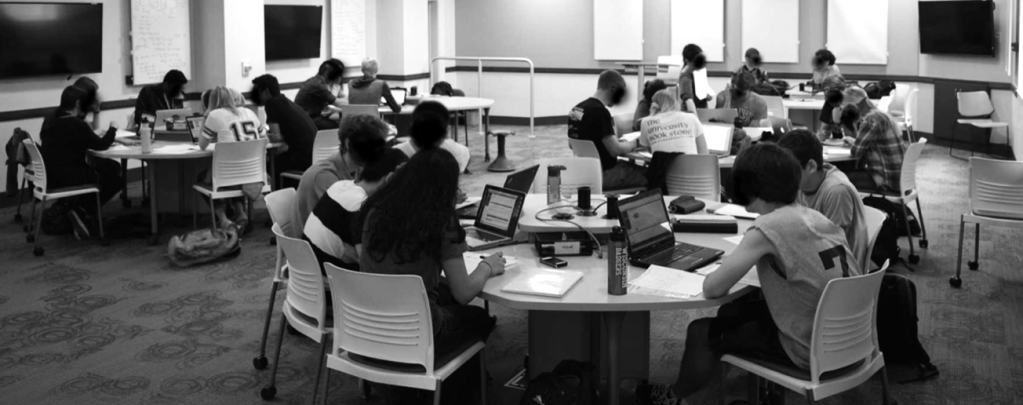
Our interactions, the teachings and learnings we shared, usually (but not always) were conducted with me sitting around a table with them. To this day, I find it remarkable how much self-discipline, cooperation, and independent learning took place among the young people at those tables. Only rarely did I ever have to exercise my right of veto.
Twenty years after leaving the classroom, installed as the CEO of a school board district, I still favoured round tables. In my office, senior staff met weekly around a large, circular oak table, where everyone had a valued voice. We didn’t always agree on how best to proceed with certain matters, but when we concluded our discussions, each of us felt we’d had the opportunity to make known our views. And all of us acted on the consensus decisions with total commitment. And again, I almost never had to decide arbitrarily on a course of action.
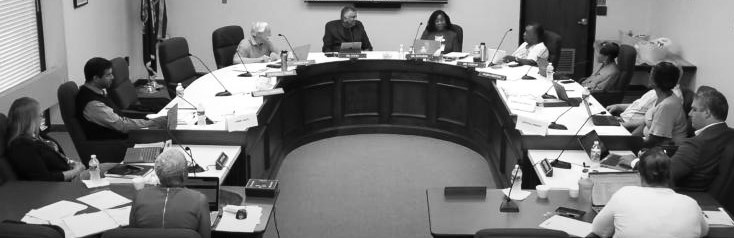
In the boardroom, where elected trustees met weekly to discuss and make policy, they sat at desks arranged in a circular shape, each of the fourteen with a direct view of the others. The chairperson of the board managed the meetings according to established rules of order, and only occasionally overruled a colleague. Decisions were made by voting, as required by the Education Act, but only rarely were those votes disputatious…and never acrimonious. I believe there was something about sitting in the circle formation that elevated the level and tone of discussion, that enabled consensus decision-making.
As a young father, I sat with my wife and two daughters around a circular kitchen table, virtually every night, for dinner together. Any of us might miss now and then, given our respective work and school commitments, but sitting down around that table was the established custom, one we all honoured until the girls headed off to university. Our discussions centred on what all of us were doing at any given moment, and everyone contributed freely. No topic was off-limits (although when the girls were very young, some issues were covered only cursorily, appropriate to their age). Looking back now, I consider the learnings we all experienced with each other as indispensable to our family’s enduring ties.
And to think, it all began for me with my fascination for the Arthurian legends I first read as a boy, stories of the Knights of the Round Table that imbued me with a sense of romanticism and chivalry that I still value today.
I remain eternally grateful to all writers who have managed to create a world that I and other readers consider enjoyable and aspirational…even if imaginary.
And I still wonder, even at this great age, if Arthur is merely sleeping at Glastonbury Tor, as the legends maintain, and if we shall ever see his like again, holding forth at his great Round Table.
Discover more from tallandtruetales
Subscribe to get the latest posts sent to your email.
 tallandtruetales
Brad,
I always appreciate and learn from your online blog and your comments at Pelican Pens.
As you now know, Sinclair Lewis novels were an inspiration as well as those ofPaul de Kruif, “Hunger Fighters”, Microbe Hunters, etc.
Dan
LikeLike
Thank you! I enjoy our Pelican Pens discussions, too.
LikeLike
Great piece, Dad! Made me think of the structure of round tables in my own life.
LikeLike
For me, round tables are a symbol for inclusion, and you certainly exemplify that!
Thanks for the comments.
LikeLike