
From my Canadian vantage point, the longstanding myth of American exceptionalism appears to have been exposed. The Benighted States of America has signalled it is no exception after all, as it falls into line behind nations like Brazil, Hungary, and Russia on the slippery path to corporate, fascist oligarchy.

Those citizens who lament this turn might blame the result of the recent election on an ill-informed electorate, but the truth is the voters were not uninformed, misinformed, or disinformed. Well in advance of voting day, the winning party composed and published its agenda, Project 2025, hanging it out there for all to see. So, any lamentations might more aptly be directed toward apathy or hubris on the part of too many Americans.
And of course, there’s the fact that more voters are celebrating the result than bemoaning it, at least according to the popular vote count. In that sense, the will of the people prevailed, just as it’s supposed to.
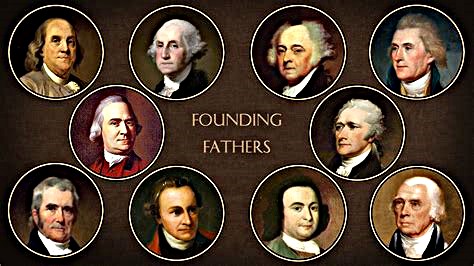
It appears so far that the election process unfolded as designed, with no accusations or evidence of widespread glitches or fraud, despite the plethora of different voting procedures across the fifty states. That process—which, by deliberate decision on the part of the landed gentry known as the Founding Fathers—leaves the final choosing of the chief executive in the hands, not of the people, but a select group of electors from each state. America is still exceptional in this, I suppose, given it’s the only nation in the world to rely on an Electoral College.
Simplistically stated, democracy implies that majority rules, no matter how slim that majority. In a tri-cameral system—executive, legislative, and judicial—it is rare that one party will capture the Presidency and both branches of the legislature. But at the time of writing, the Presidency, the House of Representatives, and the Senate have apparently fallen to one party in this recent election. The popular vote count, although not overwhelmingly one-sided, was decisive.
It’s worth remembering that democracy is not ordained, merely proposed and tried. Churchill called it “the worst form of government, except for all the others.” Still, it endures for now, and should certainly not be dismissed because it yields an electoral result not satisfactory to a segment of the population.
Whether this recent result is good or bad is based upon one’s point of view. My own opinion is that it bodes ill for the future of the nation, and perhaps the world, but my opinion matters little. American politicians are fond of proclaiming, “This is who we are as Americans!”, or conversely, “This is not who the American people are!” Although neither statement is accurate, both can be apt in any given instance, depending on how Americans’ behaviour matches or clashes with those politicians’ ideological leanings. For example, public demonstrations or protests are often acclaimed and disparaged simultaneously by opposing political factions. At the very least, any occasion represents only who some Americans are and who other Americans are not.

One thing for sure is true, however: the entire population of 346-million+ cannot rightly be dubbed ‘the American people’. Across all spectra—political, social, economic, religious, ethnic, gender, rural/urban—Americans, like other nations’ citizens, comprise a distinct array of diversity, not a homogeneous collective. Americans, unsurprisingly, do not all think alike or cherish the same values.
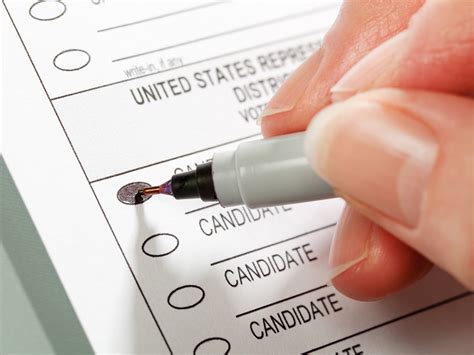
Nevertheless, it is clear the recent election was decided by the American people who were eligible to vote—those who exercised their right and those who did not, those who swung one way and those who went the other. Democracy in action.
Like it or not, people’s understanding as to whether something is right or wrong, good or bad, is inevitably shaped by the outcome of any election. Perhaps there is a true right and a true wrong in the moral universe, but it’s how those concepts are filtered through an ideological lens that matters most. Did America decide wisely on its future this time, or foolishly? Is liberal democracy the judicious choice, or corporate fascism? Is an imperial Presidency the better model, or a checks-and-balances structure? And does the worm always turn?
To paraphrase a timeworn sports adage, any nation is what its voters say it is, and it remains so until its voters say it’s something else. That, I submit, is governance by and of the people. Whether or not America’s recent election results prove to be for the people will likely become apparent over the next couple of years.
Ultimately, we all get the government we deserve. America is no exception.
Discover more from tallandtruetales
Subscribe to get the latest posts sent to your email.
 tallandtruetales
The USA (my country) is not a progressive, sensible, forward-thinking country. My opinion of much of its citizenry is very low.
LikeLike
I have so many American friends whose opinions and values I share, so it’s such a shame to look at what’s happening.
Thanks for commenting.
LikeLiked by 1 person
Brian- An eye opening piece that makes one think about choices.My worry is around the ill informed voter that believed radical words do not affect them. Believing that they will soon regret their choice..what form will come from this regret? Could it be rebellion?
Could it involve the states like California separating from the fragile Republic? Divide and conquer is not the mantra for Democracy. Time will tell.
LikeLike
Secession was tried once by thirteen states, as you know, and it didn’t work out for them.
Could it happen again?
He-he-he…..who can say?
Thanks for commenting.
LikeLike
WOW Brad, beautifully written !
America has voted, however as the days go by, the editorials written, and the list of frumps appointees unfolds, I wonder if those unwary voters, may be wondering about their choice. The next couple of years, will be VERY telling !
LikeLike
Caveat emptor may well apply, eh? Or the Chinese proverb, Be careful what you wish for!
Thanks for the comment!
LikeLike