Facts Matter

Words matter. The fact I declare this should come as no surprise, since I’ve been a writer for as long as I can remember.
Opinions matter, too. But they’re meaningful only if they’ve been subjected to a rigorous examination of their validity before being uttered. Otherwise, they’re merely pointless, irrelevant noise, adding nothing of substance to any conversation.

Persuasion also matters. How convincingly we present our opinions goes a long way in influencing those who hear and read them. Logic, structure, and sincerity bolster the likelihood that they will be well-received.

Most importantly, facts matter. The truth. Without accurate information, nothing we utter can add value to general discourse. Absent validated facts, the things we say and write can distort a conversation beyond all salvation. Misinformation—and worse, disinformation—are fatal to an honest exchange of views.

“But what is truth?” some will ask. “How do you know what the true facts are?”

My best answer is that truth is, to paraphrase Hemingway, a movable feast. Not movable in the sense of being deceitful or misleading to accommodate or justify a preconceived situation or viewpoint, but in the sense of being open to new discoveries that advance it beyond what is presently known.

For example, before the discovery of insulin in 1921, it was true that diabetes was an oft-fatal condition. Following that discovery, a significant advancement in medical knowledge, a more perfect truth was established, and sufferers began to live longer and healthier lives.
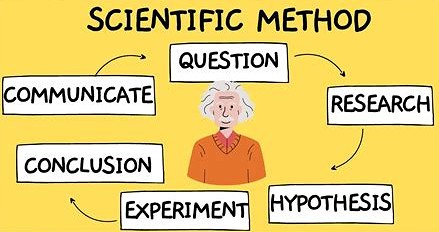
Any truth is established through a process that generally includes observation, questioning, hypothesis, testing, and conclusion. But given the transitory nature of truth in an evolving universe, every conclusion is itself subject to further observation, questioning, and so forth, until a more plausible definition is found. And this cycle, the scientific method, is endless.

Occasionally, special-interest groups will attempt to misrepresent generally-accepted truths by substituting non-scientific alternatives that have met none of these standards. They often base their claims on ‘alternative facts’. But at any given time, for any given subject, there is only one set of facts. And there is a difference between truths that no longer hold, that have been superseded in the face of newfound evidence, and outright falsehoods proclaimed by those who would deny proven truths for reasons of their own. Mendacity is not truth.

Mind you, all of us have reasons of our own for thinking or believing things we hold dear. I value different thoughts and beliefs now than I did in my youth, but they are undoubtedly more considered and tested than those earlier ones.  

One of my favourite songs, made famous by Mary Hopkins, contains the lines: …we’d live the life we choose, we’d fight and never lose, for we were young and sure to have our way. But over time, I learned that we didn’t always have our way, and that many of the truths we espoused back then subsequently proved to be flawed.

The critical essence of facts, of truth, is that they are forever subject to scrutiny, that they must be evidence-based, that they are constantly in a state of flux as new discoveries come to light. Deliberate falsehoods are bound by none of those.

As a little boy, I believed the sun ‘came up’ in the morning because the rooster crowed, and ‘went down’ at night so I could go to sleep. That was how it appeared to me, and that is how those events were described by those around me. I eventually discovered the truth of the matter, but at the time I would have sworn upon my mother’s life that my childish perception was the truth.
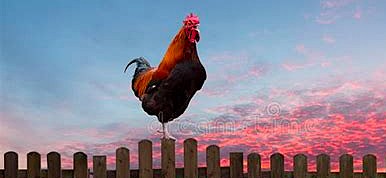
“Is that really what you think?” a scornful, unkind friend could have asked me (although none did).

And I would have exclaimed, “I don’t think! I know!”

To which my friend could have replied, “I don’t think you know, either!” And he would have been right. I only thought I knew the truth.

This fictional anecdote points out a problem that can arise when we declare we think or believe something, and then, because we’ve declared it, assume it to be true, to be factual. If I think it rained because I had just washed my car, that does not make it the reason. Because I believe it’s bad luck to walk under a ladder or break a mirror does not make either of those things true.
One of the best pieces of advice I ever came across was: Don’t believe everything you think. And I try not to, although it is sometimes hard.

In politics, when one tries to ascertain the reason why certain things happen while others do not, there is a cynical piece of advice: follow the money.

In life, as one tries to discern the facts—the truth of any matter—my advice is to follow the evidence. Think critically, identify credible sources of information, and consider that information rationally. Words matter. Opinions matter. Persuasion matters. But above all, facts matter if we are to know the truth.

And the truth shall make us…well, you know.

Cogito, Ergo Sum

Cogito, ergo sum—I think, therefore I am. 

So opined René Descartes in 1637, in his famous work, Discourse on Method, demonstrating what he regarded as the first step in the acquisition of knowledge.

Of course, we don’t know that he was right, but because enough of us have come to believe his posit, it is almost universally accepted.  Left unanswered is the question as to whether other living organisms are sentient, whether they also can think.

Some people believe they can—that creatures such as elephants, whales, and dogs are capable of thought—and they cite observed actions by these animals as proof of their belief.  But what of other animals, or fish, and what of plants and rocks?  To my knowledge, no one has as yet been able to prove (or disprove) the thesis that any lifeform other than human is capable of thought.

Regardless, it does seem likely that no form of life on our planet has attained the same level of high-order thinking that the human species has.  And if any have, they have hidden it from us remarkably well.  With physical brains somewhere between the largest and smallest in size among all living creatures, we humans appear to have outstripped them all in our capacity to think rationally.

The capacity to think is what allows many of us to read widely, listen to diverse sources of information, and weigh the relative merits of differing schools of thought before deciding on a course of action—critical thinking.  Alas, it is also what allows us to read narrowly (if at all), listen carelessly, and reject schools of thought that do not reflect our own preconceived notions.

Either way, thinking broadly or narrowly allows us to form opinions.  And those opinions, whether supported by evidence or not, often morph into staunch beliefs if we don’t continue to think about them, to test them against emerging information.  And inference plays a big role in that.

For example, if I waken one morning to the sound of thunder, and if I see flashes of lightning illuminating the drawn curtains of my bedroom, I might well infer that it’s raining outside.  But I have no proof of that until I actually see (or feel, or smell, or taste) the tangible rain.  I might throw open the curtains to discover there is no rain falling, despite the harbingers of storm; merely hearing and seeing those from inside my room would have drawn me into a false conclusion, yet one I believed until faced with proof of the opposite.

It points out the danger of choosing to believe everything we think, at least before we have evidence to support (or deny) our premises.  As sentient beings, we are compelled to seek answers to the baffling phenomena we observe around us, to find reasons why situations unfold as they do, to explain the arcane mysteries that bedevil us—like where we came from and where we’re going.

Our world is replete with examples of how we have gone about this—in religion, science, engineering, medicine, music, literature, and so many other fields.  The list of human accomplishments over the millennia is long and laudable.  Errors have been made along the way, and corrections applied, but the steady march of knowledge-acquisition has been relentless.

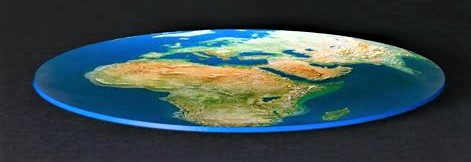
Many of our ancestors, for instance, once believed (and some still do) that the earth was flat, that any who got too close to the edge would topple off the edge, fall into the void, and be lost forever.  We know now, of course, that belief was untrue.  As an amusing aside, the Flat Earth Society still boasts today in its brochures of having chapters of believers around the globe!

Still other folks believed once upon a time that our planet was at the centre of the known universe, that the moon and sun revolved around us; those people’s skills of observation, primitive by today’s standards, and their earnest thinking about those observations, led them to that conclusion. Yet, it was also not true.

Nevertheless, despite our many errors and missteps along the way, our capacity to think rationally—and to forever question our thinking—has allowed us to advance our collective knowledge.  A key factor in continuing that progress is to avoid investing complete faith in any one thesis, regardless of its appeal at any given time; we must retain an appropriate level of skepticism in order to keep from falling into the acceptance of rigid dogma and blind ideology. 

As George Carlin is reputed to have said, “Question everything!”

Another key is to continue testing theses to reinforce their viability, to find evidence of their truth (or falsity).  But at the same time, we must remember that an absence of evidence of truth in the moment does not mean the same thing as evidence of an absence of truth.  In other words, just because we don’t have the facts to prove the legitimacy of a thesis right now does not mean that thesis is untrue; it may mean simply that we haven’t as yet discovered the facts to validate it.

The advance of knowledge is, to paraphrase Hemingway, a movable feast.

An exception to prove the truth of any thesis can always be found, of course—something that demonstrates the general truth of a thing by seeming to contradict it.  For instance: most of the teachers in that elementary school are female, and the one male teacher on staff is the exception that proves the rule.  The thesis is factual.

We also know the true merit of any pudding is put to the test in the eating.  But with one person’s taste being different from another’s, whose opinion is to be accepted as the truth?  Any decision there must be regarded as opinion, not fact.

It is interesting to note that Descartes did not write, Cogito, credo quod cogitare, ergo non est recta—I think, I believe what I think, therefore it is right.  Apparently, he understood that because we think something, even to the point of believing it, that does not necessarily make it true.

He also wrote, Non satis est habere bonum mentem; Pelagus res est ut bene—It is not enough to have a good mind; the main thing is to use it well.

Quaestio, semper quaestioquestion, always question!