As a response to this week’s prompt from my Florida writers’ group, to write a story using the five senses, I’m posting a piece I hope will allow you to see, hear, smell—perhaps even taste and feel—the events portrayed.
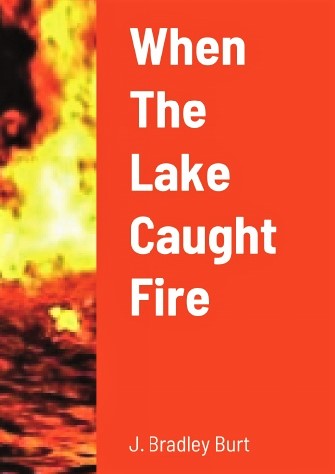
The piece is the draft prologue to my next crime novel, my eighth—working title, After the Lake Caught Fire—which I expect to see published later this year (or early in 2022).
No one was there to witness the birthing of the beast. Speculating afterwards, people said it was most likely caused by a strike from the surly skies overhead—a bolt of heat-lightning that ignited the oily, gummy crust floating on the lake’s surface. But nobody knew for sure.
The flames spread slowly across the water, hungrily devouring the layers of filthy grunge, sending a greasy black smoke into the sky to blend with the heavy overcast. Later on, people figured the fire burned for most of the first day, all that night, and well into the following day before exhausting its run.
Had anyone been there that Saturday, the smell was the first thing they’d have noticed—an acrid, unpleasant odour, distinctly repellent, entirely hostile. On that sticky, humid day, it saturated the moist air, cloying and pervasive, unmistakably out of place in the forest setting.
Had someone been there that night, they’d have seen greedy tongues of flame, nearly invisible in the daytime—a greenish-blue inferno flecked with orange, like a propane camp-stove turned low. The fire lent a Dante-esque glow to the darkness, roiling and surging atop the lake like the awakening beast it was.
The small kettle-lake, unnamed, had been devoid of life for years. No fish swam in the depths of its half-a-square-kilometre bowl, their remains having long since mouldered on the bottom or rotted on shore. No ducks, or geese, or iconic loons splashed down on its surface during their migratory travels. No small animals came to drink from its water, or to hunt the frogs and crawfish that had once inhabited the shoreline. The lake was dead beyond reclamation, a silent, toxic cesspool, the perfect breeding ground for the catastrophe it was spawning, a poisoned promise to the future.
By the following morning, Sunday, the beast had reached the sloping terrain of the eastern shore, an expanse of granite covered in stiff lichen, furry moss, and low, prickly scrub. Dead leaves, twigs, and branches littered the rising slope, sere and brown in the summer heat. Pockets of smoke appeared near the bottom of the grade, and gradually moved upward, tracing the path of the smouldering monster in the cracks and fissures of the rock. By mid-afternoon, the first small flames sprang to life—not explosively, not aggressively, but languidly, as if the oppressive heat of the day was more than they could tolerate. The abundance of dead, dry vegetation on the ground allowed the flames to spread, moving in every direction from the centre, climbing the slope, consuming everything in their path.
On the flatter shoreline areas—gravel-covered beaches, bare of vegetation, where no fire should have found purchase—the flames nevertheless spread haphazardly, as if drawing on some unseen source of fuel. Black tendrils of smoke traced their route from the lake’s edge toward the forest, their odour the same as that arising from the water-borne gunk.
Late on Sunday afternoon, before the fire could spread uncontrollably, the rains came, one of those sudden, summer downpours, appearing almost out of nowhere, lasting perhaps an hour, leaving behind an azure, cloudless sky and setting sun. For a while, the rainwater on the surface of the lake evaporated as soon as it landed, replacing the smoke with mists of steam, scarcely different in appearance. But eventually, the rain’s sheer volume quenched the flames, already diminishing as a result of their relentless consumption of the oleaginous scum they’d been feeding on.
From the forest floor, rainwater rushed pell-mell down the slopes of granite to the lake, drowning the smouldering monster before it could reach the treeline, leaving large swathes of black soot across the pink-hued rock. And the flames creeping across the gravel-laden flats were similarly quelled, with wispy threads of acrid smoke rising lazily from the chemical-soaked ground, pale tendrils striving futilely against the rain.
On Monday morning, when the men came back in their growling trucks laden with more barrels from the factory—tailings sloshing in a chemical stew—they were startled by the scene that greeted them. But the fire was already out, the greedy slurry-pits were waiting, and the bosses at the plant would have no tolerance for excuses. After a few minutes of muted chatter, the men dumped their loads as usual, and headed back for more.
Most of them, lifelong residents of the Northern Highlands district, understood what was happening. But no one could afford to lose their job by being the one to sound the alarm and abort the nascent disaster.
And the bosses, who also knew and understood, did nothing.
The beast was born.
 tallandtruetales