A Better Story

Can bad decisions lead to better stories?

Let us suppose for the purpose of crafting an entertaining story that your lead character’s dotty, old Aunt Hilda—whom he hasn’t seen in forty years, and who recently died at the impossibly-old age of 103—left him, her only heir, the sum of twenty-five million dollars, all in bearer-bonds, and twenty-five cats who shared her last abode.

Your protagonist is elated, of course, and only mildly sorry he hadn’t taken time to visit the old gal from time to time.  After placing the cats out for adoption and depositing one million of those dollars in his personal chequing account to cover immediate lifestyle changes, he now needs to decide how to properly invest and grow the remaining twenty-four million.

To whom does he turn for advice?

He could enlist the help of reliable, established bankers, investment counsellors, financial gurus, and market analysts, all of whom would be eager to serve.  He knows he could safely rely upon these learned and experienced people, whose profession it is to help other people make money—being handsomely reimbursed for their efforts, naturally.  Let us call this the elite option.

But if he has never considered himself an elite, he might decide to call on twenty-five of his closest friends who—in return for the chance to celebrate (and perhaps share in) his great, good fortune—tell him they will devise a sure-fire strategy to determine how he will invest the bulk of his new-found wealth.  That strategy, in order to be enacted, need only be approved by a simple, majority vote of 13–12, swayed perhaps by the most voluble, the most persuasive of the group, rather than by the most knowledgeable.  

Let us call this the populist option, and if your protagonist deems himself a man of the people, he might well choose this second course.

Or, let us suppose for the purpose of creating another entertaining story that your lead character has been recently diagnosed with a life-threatening illness, out of the blue, and that she has very little time to decide on the best medical option that might save her life—although there are no guarantees, of course, from any of them.
To whom does she turn for advice?

She could, in addition to talking with her loved ones, consult with her physician and the specialists to whom the physician refers her, all experts in their field.  Before choosing her treatment plan, she might seek second, third, even fourth opinions from people who have studied their entire lives to deal with critical situations such as hers.  Let us call this, again, the elite option.

But let us suppose again, if she does not reckon herself among the elite, she might gather together concerned family members and friends, all of whom love her and wish her only the best, to ask, by majority vote, which treatment plan they believe she should follow—the established medical option, a naturopathic or homeopathic approach, or maybe an experimental route (which might require travel to a foreign country for procedures not approved in her home and native land). 

Let us call this, again, the populist option, and if she fancies herself of the people, she might choose this second course.

In these examples (deliberately simplistic, I know), there are dilemmas confronting these two characters and the decisions they would have to make.  To whom would they turn in such critical situations, the elites or the populists?

The authors of such stories, too, face these same dilemmas, these same decisions.  Which path should they choose for their protagonists to follow in order to compel their readers to stay locked in to the story?  And will those decisions prove good or bad?

In one telling of the first example, the lucky heir to the twenty-five million dollars might turn to the wise counsel of the investment community, prosper as his fortune grows, and live in a cloistered castle to a ripe, old age.  End of story.

But in another telling, he might seek the advice of his friends, invest and lose his entire inheritance based on their advice, realize belatedly the error of his ways, embark on a driven quest to recoup his lost fortune, clash and joust with pillars of the financial community, rise and fall again and again, only to triumph at the end—a true Horatio Alger story.  Or perhaps, in a cruel twist of fate, he might lose it all yet again and die miserably in an abject state of poverty.
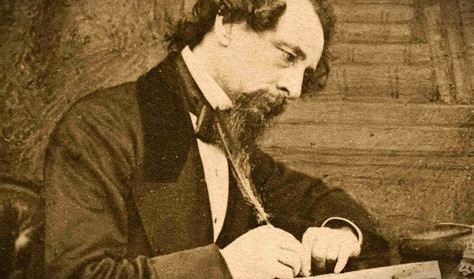
Only the author can decide.

In one telling of the second example, the stricken person might rely upon the medical establishment and, after a period of treatment and rehabilitation, survive to live a long and happy life.  End of story.

But in another telling, the person might turn to family and friends for a decision, choose unwisely, see her condition worsen unto the point of death, only to be miraculously saved by the last-minute intervention of a handsome, dedicated doctor who refuses to be rebuffed by quackery.  The patient’s health improves dramatically, she marries her saviour, and goes on to live well into her nineties.  Or perhaps, in a cruel twist of fate, she is assailed by a recurrence of her disease, against which she vies valiantly, time and again, only to succumb in the end—a true Shakespearian tragedy.

Only the author can decide.

In either example, which do you suppose might offer the more entertaining story, the first version or the second?  The authors make their decisions in the initial writing, of course, but in the end, it is the readers who decide if those decisions are good or bad.

So, can bad decisions lead to better stories?

You tell me.

Nature Will Prevail

Many years ago, my wife and I followed after the outgoing tide in the Bay of Fundy, along with our two young daughters, marvelling at the wonders we spied on the surface of the seabed.  We laughed as our footprints gradually disappeared behind us in the spongy, soaked sand, and we strayed unmindfully farther and farther from shore. 

When the tide reversed its course and began to flow back in, we dallied until the water was sloshing around our ankles before turning for shore.  To our surprise, the rising surge outpaced our progress, the four of us able to move no faster than two pairs of tiny legs could muster.  When the water got to our mid-calf level, we picked the girls up in our arms and picked up our pace, more than a touch anxious that we had underestimated our own capabilities.

We finally made it safely to higher, drier ground, but not before the water had soaked our buttocks, and to this day, I remember the knot of fear that had settled in my stomach, the certain knowledge that I was powerless against the relentless force of nature pursuing us shoreward.

Nature is like that—unrelenting, uncaring, inexorable.  In our arrogance, we humans like to call it Mother Nature—in the same way we have anthropomorphized so many presumed deities and abiding mysteries.  But nature is the furthest thing from a maternalistic, loving parent.

Since our planet first began its orbit around the sun, a natural environment has existed, an environment that eventually spawned life in its most primitive form.  We humans are but a relatively-recent expression of that life-force, and we fancy ourselves its most highly-developed manifestation.  From our very beginnings, we have sought to discover, understand, and control our surroundings—and to be fair, we have certainly done that to some extent.

Nevertheless, we find ourselves still subordinate to the forces of nature—feasts and famines, pestilence and disease, floods and droughts, tides and winds, wildfires and glacial melting, rising sea-levels, earthquakes and volcanic eruptions, to name a few.  We have managed to mitigate the damage of such events to some degree, but we have not been able to eliminate them.  In fact, the cataclysmic effects of nature’s actions have, over time, led to the extinction of many forms of life; taxonomists estimate that more than ninety-nine percent of all species that have ever existed are extinct.  And so, the question naturally arises, could that same fate await our species?

The International Union for Conservation of Nature (IUCN) publishes a Red List of Threatened Species, an inventory of the global conservation status and extinction risk of biological species.  It includes 2.16 million current animal species, almost surely an underestimate, the most numerous of which is insects, almost half the total.  In descending numerical order, the other groups are: molluscs, arachnids, crustaceans, fishes, reptiles, birds, amphibians, mammals, and corals.

We humans are just one species among the mammals, the second-smallest of the ten groups, a mere 0.003 percent of the total.  Our group numbers more than 6500 recognized species, and of those, we are the most numerous (with rats being second).

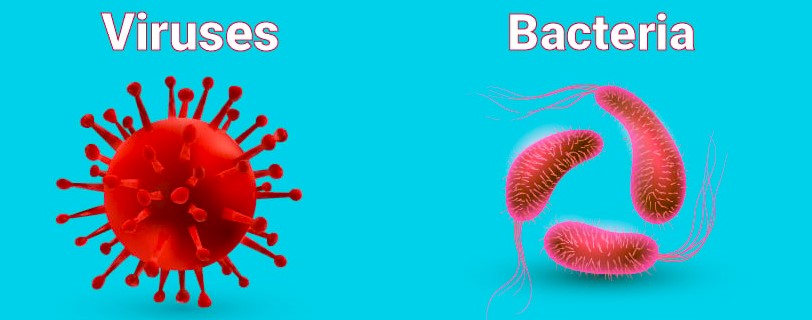
In addition to the 2.16 million animal species on the planet, there are more than sixty thousand other species of life, including protozoa, plants, chromists, fungi, bacteria, and archaea.  Among these, bacteria—the smallest, simplest, and most ancient cells—exert a tremendous influence on human life. 

In our bodies, bacteria inhabit our digestive system, live on our skin, and contribute to our general wellbeing.  But there is a downside, too; infectious diseases caused by bacteria have killed more than half of all humans who have ever lived, through pandemics such as the bubonic plague.  Other examples of disease caused by bacteria include tuberculosis, whooping cough, sexually-transmitted infections, and e-coli.  Because bacteria can reproduce themselves in less than an hour, mutations can emerge and accumulate rapidly, causing significant change, such as resistance to antibiotics.

Viruses, by contrast, are not living organisms.  Rather, they are an assembly of different types of molecules that assume different shapes and sizes, but they can be as dangerous to human life as bacteria.  Unlike bacteria, they cannot reproduce on their own, but need to enter a living cell to replicate and evolve.  Once inside, they take over the cellular machinery of their host and force it to make new viruses.  They can infect humans, other animals, plants, and even bacteria, and are able to evolve and jump from other animal forms to humans.  They cause diseases like the flu, the formidable common cold, and SARS-CoV-2.

In the face of many perceived threats to our survival, a group of prominent researchers in Australia, the Commission for the Human Future, identified a list of risks to life on the planet: climate change, environmental decline leading to species extinction, nuclear weapons proliferation, resource scarcity (especially water), food insecurity, dangerous new technologies (such as AI), overpopulation, chemical pollution, pandemic disease, and denial and misinformation.  Six of the ten are clearly within nature’s purview; the other four would be the result of human miscalculation.

What our species does about these ten existential threats in the next few years will determine whether present and future generations face a safe, sustainable, and prosperous future or the prospect of collapse and even extinction, the report said.

It also stated, Understanding science, evidence, and analysis will be key to adequately addressing the threats and finding solutions. An evidence-based approach has been needed for many years.  Under-appreciating science and evidence leads to unmitigated risks…

Shaping [the human future] requires a collaborative, inclusive, and diverse discussion.  We should heed advice from political and social scientists on how to engage all people in this conversation…

Imagination, creativity, and new narratives will be needed for challenges that test our civil society and humanity.

I confess to some doubt as to whether our species, tribalistic and combative as we are, will be able to manage that collaborative approach.

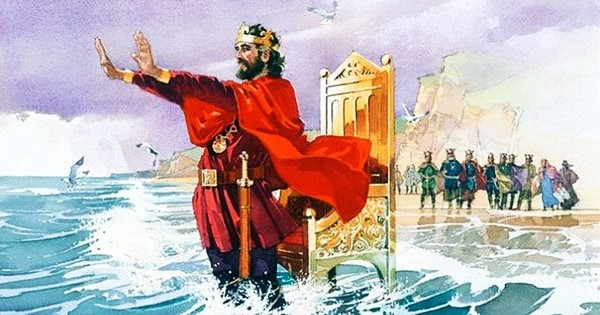
And I think back to the apocryphal story of King Canute, trying to hold back the tide—knowing full well he could not—in an attempt to teach his flattering courtiers that an earthly monarch could exert no control over the natural elements.  True or not, the story illustrates the conceit of humankind in thinking we can ever be in control of nature.

As my wee family found out so long ago on the shores of the Bay of Fundy, we are most definitely not.

Nature will prevail, I fear.  And the planet will continue its evolutionary journey around the sun, perhaps without us, until that star, too, is extinguished.

Empress of the Garden

Very recently, I came upon some pictures of the neighbourhood where my parents purchased the last home they would ever own—a home where I spent the final ten years of my boyhood.  The pictures, old black-and-whites, had been taken before all the homes were built, and the streets were still dirt-tracks.  No one yet occupied any of the finished homes.  The cars and construction vehicles parked helter-skelter were like a virtual museum of 1950’s-era vehicles.

home

It wasn’t long, however, before we and our new neighbours were moving in—into freshly-painted homes, with tidy lots of newly-laid grass, driveways of impossibly-white gravel, and (for the most part) no trees.

But my family was singularly fortunate in that, along our side of the rear property line, a row of mature trees stood, there for years before the developer arrived, perhaps marking the boundary between some long-ago farmer’s fields.

Our house was set amidst them—tall, ancestral trees, most of them, old enough that they could have known our grandparents’ names, and their parents before them.  To my young eyes, they seemed to reach endlessly to the sky, then bow over, protectively, to shield us from the world.

In short order, my parents established a garden around and beneath those trees.  Some were big trees, with trunks wide enough to hide behind, others were smaller, with branches dipping low enough to allow us to climb.

trees 5

On the hottest of summer days, my siblings and I could return from playing in nearby parks to collapse in the cool, welcoming shade.  In the crispness of autumn afternoons, we could jump and hide in (and scatter) the piles of fallen leaves my father had spent hours raking together.  He never seemed to mind.

At dusk on a cold winter’s evening, we could stare through frosted windows at the skeleton branches, stark against the darkling sky.  And in the rebirthing spring, we could search out budding maple-keys, housing seeds, peel them back, and stick them on our noses.

They were of many kinds, our trees.  The maple, which we tried to tap one spring to make syrup, but unsuccessfully.  An oak, scattering acorns on the ground for us to collect, and which brought the squirrels.  A beautiful beech, with its lovely bark and spreading foliage.  And a large, gnarled weeping willow that we used to hide under, its branches trailing snakily along the ground.

The oldest and most important of all our trees, however, was an elm.  Standing firmly on a small rise at the back of the garden, she reigned over the other trees (in my mind’s eye, anyway).  Encircling her base was a large rockery, broken in one spot by a narrow walkway of flagstone steps leading from the lawn up to the base.  At the top sat an old bench, which we always referred to as our throne.

But we rarely played our games in or around the elm tree, as we did with all the others.  At various times, we had swings attached to sturdy branches of some, and knotted ropes hanging from others.  For a while, we had a treehouse roosting in one of our trees, complete with a crude ladder nailed to the trunk.  And, of course, we climbed in as many of them as we could, playing at being pirates, or Tarzan of the Apes, or Robin Hood’s merry men.

elm 4

But, we didn’t play in the elm tree.  Somehow, she seemed too stately to suffer our nonsense gladly.  She rose, tall and columnar, to a great height, before spreading her branches, fan-like, over the trees around her.  They looked to be paying homage to her, perhaps because she’d been there forever.  For us, she made the yard a wonderful and safe place to be.

The empress of our garden.

But then, one sad summer, her leaves turned brittle and brown, and began to fall before their time.  During the other trees’ glory of autumn-colour, she was already bare.  When the following spring arrived, she budded only partially as disease spread through her limbs, and in the ensuing summer she shed her leaves early again.  When next the spring came with its hope of new life, she was dead.

For us, so young, her death seemed incomprehensible.

She remained standing for another year, maybe two, a haunting, spectral reminder of what she had been.  When her rotting branches began to break and fall off with increasing frequency, she had to be taken down.  And then, all that remained of her former grandeur was a large, wide stump on top of the small rise.

I still remember, quite clearly, sitting on the ground one day beside that forlorn nubbin.  I was simply looking at our garden, when it suddenly struck me just how small it really was.  Our trees no longer seemed so grand without their empress, nor so inviting.

boy 3

It was about that time, I think, that I began to put away my childhood games.