My Whiffenpoof

The weekly prompt from my Florida writers’ group was to write a piece incorporating a song lyric, even a misunderstood one. I chose to use a complete song, but with its meaning and setting skewed from its real attribution for purposes of fiction.

The young lad’s voice was pleasant enough, if a tad off-key here and there, and he held his beer-drinking audience rapt as he began singing the song.

To the tables down at Mory’s, to the place where Louie dwells,
To the dear old Temple Bar we love so well,
Sing the Whiffenpoofs assembled with our glasses raised on high,
And the magic of our singing casts a spell…

“What’s a Whiffenpoof?” old Hardy McKinnon yelled out rudely, slamming his empty glass down on the table in front of him, half-cut already, though the evening was young.  “Sounds like a fart!  One o’ them SBD ones!”

The lad stopped singing, joined in the laughter that followed, then said, “SBD?  What’s SBD?”

“Silent but deadly!” McKinnon’s wife cried, pointing at her husband, beckoning to me for another round as the laughter erupted again.

“Quiet, ye lot!” I shouted from behind the bar where I’d been drawing another tray of drafts.  “Let the boy sing his song!”

Indeed, he did look more a boy than a man, sitting there in his khaki uniform, the cuff of one sleeve pinned to his left shoulder where his arm should have been—the only one to return of five village lads who had marched proudly to the train station two long years ago, off to fight the foe for King and country. 

The polished medal at the end of the ribbon round his neck testified to his gallantry and sacrifice—the Victoria Cross, awarded for valour in the face of the enemy, the highest military award the nation could offer.  It had been presented by none other than King George himself, and I’d been there to witness it.

“Let him sing!” I cried once more into the clamour, and it subsided quickly as Jimmy took up his song again.

Yes, the magic of our singing of the songs we love so well---
‘Shall I Wasting’ and ‘Mavourneen’ and the rest---
We will serenade our Louie while life and voice do last,
Then we’ll pass and be forgotten with the rest…

The eyes of almost everyone were fixed steadily on the lad as he sang, the words and melody casting a solemn pall over the room.  Those who weren’t looking at him were staring emptily into space with that thousand-yard stare I used to see in my Robert’s eyes after he came home from fighting the Boers.  He never spoke of the horrors, nor of the comrades he’d lost, but I knew they’d been with him ‘til the day he died.

I’d held on to the business after he passed, McSorley’s Old Ale House being the only home I had, and the only pub for miles around—a gathering-place as sacred to its patrons in its own way as the Church of England ever could be.

“Aye, Jimmy, sing some more!” Angus MacPherson said softly into the silence.  “Sing the chorus for us, lad!” 

Jimmy drank deeply from the new pint I’d set in front of him, wiped the foam from his mouth with his one hand, and when he started in again, many of the assembled joined in, the words as familiar to them as the faces in their mirrors—

We’re poor little lambs who have lost our way,
Baa, baa, baa!
We’re little black sheep who have gone astray,
Baa, baa, baa!
Gentlemen songsters out on a spree, doomed from here to eternity,
Lord, have mercy on such as we,
Baa, baa, baa!

My tears glistened on the polished, wooden surface of the bar, and I scrubbed them away furiously with my rag.  Most of the old warriors who’d been singing along were weeping, too—silent tears tracking down their grizzled, ruddy cheeks, only to be swallowed up and lost in their scraggly beards, just as their innocent youth had been torn from them by the long-ago battles they had fought for the fading Empire.

In the silence that blanketed the normally-boisterous room, Jimmy stood up, finished his pint, then walked wearily over to the bar, waving shyly to the crowd.  “I’ll be headin’ up now,” he whispered with a sad smile.  “Shout me up when yer closin’, an’ I’ll be back down to help.”

“Shure, an’ I’ll be doin’ that very thing,” I said, knowing full well I would not.  The boy was bone-tired, I could tell, and needing his sleep—if sleep would come.  I watched as he mounted the narrow staircase, his steps heavy, his one hand on the banister, his chin sunk low on his chest.  I couldn’t see his medal, but I know it weighed heavy on him.  He’d have given it back in an instant if it meant the return of his fallen friends.

“He’s a good lad, young Jimmy!” Liam Dewar shouted, his half-empty pint raised high.  “A noble warrior, an’ a damn fine singer!”

“Three cheers for Jimmy!” Molly Malone cried, a bit unsteady on her feet, trying not to show it.   She was sweet on Jimmy, I knew, but trying not to show that, either.  The crowd joined in, as did I—Huzzah!  Huzzah!  Huzzah!

And then another song broke out, this time led by the lovely tenor voice of the vicar, the Reverend Alastair Holmes, and everyone took up the tune—

It’s a long way to Tipperary, it’s a long way to go,
It’s a long way to Tipperary, to the sweetest girl I know…

And I thought about the long way home young Jimmy had taken—the journey from carefree boyhood to the blood-soaked trenches of Europe, and back again—mutilated and scarred, perhaps forever.  And for what?  For three cheers and a piece of tin around his neck?

My tears began anew, but tears of gratitude this time—gratitude that, unlike so many other mothers’ sons, he was home again.

My Whiffenpoof.

My boy.

Uneasy Lies the Head…

Uneasy lies the head that wears a crown.  So mused Henry IV in William Shakespeare’s eponymous play, after he had seized the throne from Richard II.  Being ruler of an Empire had proven more wearisome than he had reckoned.

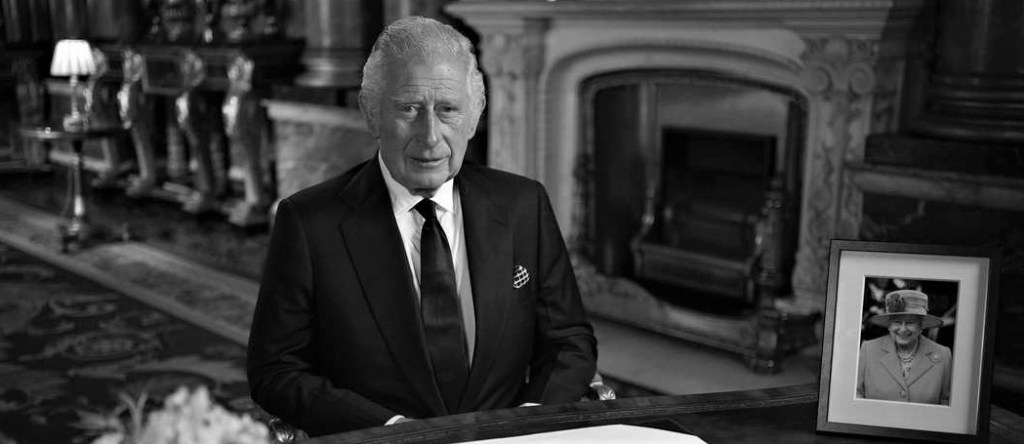
I thought of his quandary upon hearing the news that Prince Charles has succeeded his deceased mother, Queen Elizabeth II, to the British throne, and will henceforth be known as His Majesty Charles the Third, by the Grace of God, of the United Kingdom of Great Britain and Northern Ireland and of His other Realms and Territories King, Head of the Commonwealth, Defender of the Faith.

That is a mouthful, and may prove to be more than he can chew.

For the first nine years of my life, I pledged allegiance to a King every morning in school—and to the flag, the Empire, and my country—but I had scant appreciation of what those actually were.  To me, the King was a framed portrait of a uniformed man hanging on the wall of my classroom; the flag was an attractive array of red, white, and blue crosses, draped below the portrait; the Empire was made up of the pink areas on a Mercator projection wall-map prominently displayed nearby; and my country, Canada, was for a long time defined by the few square city-blocks I could traverse on my tricycle before being corralled by a frantic mother.  But it was pink!

Indeed, as we were taught, the sun never set on the British Empire.  We sang the national anthem every day with great gusto: God save our gracious King, Long live our noble King, God save the King… 

It took a while for us to master the switch to God save our gracious Queen… upon the death of George VI in 1952 And eventually, we stopped singing the song at all, in favour of our own national anthem, O Canada, officially adopted in 1980—long after I had left my schoolboy days behind.

It never occurred to me back then that those glorious pink areas on the map were the result of rampant, colonial conquest of the original inhabitants of those lands.  And in fairness, how could I have known?  I was raised to believe in right vs. wrong, truth vs. falsity, morality vs. depravity, religiosity vs. atheism, generosity vs. selfishness, civility vs. rudeness, the rule of law applied to all equally vs. anarchy—all admirable virtues in and of themselves, but all defined, of course, by the privileged White authority represented by the Crown.  The triumphant.

…Send him victorious, Happy and glorious…

I was brought up in the bosom of the Anglican Church, a colonial version of the Church of England, and taught to believe that sin was inevitable, repentance essential, and forgiveness attainable.  And those, too, I came to understand, were defined from on high.  Sin was anything the clergy might from time to time, in their great, Christian wisdom, determine it to be; repentance was adjudged sincere or not by their strict standards; and forgiveness was beneficently granted by the Lord through them—or not, as they deemed appropriate—often requiring mandatory acts of atonement.

To be sure, I enjoyed a privileged childhood, for which I am grateful.  But my upbringing rendered me an absolutist well into my adult years, fully invested in the values and tenets I had been taught.  That I am today something of a relativist may, I suppose, be attributed to my advancing years and a questing mind, more than to any great, moral awakening.

It seems to me now that, although might should never make right, the definition of right vs. wrong is still determined by those who can enforce their interpretation.  Truth vs. falsity is defined and re-defined by those who are winning the culture-wars at any particular moment.  Ernest Hemingway wrote a memoir, published posthumously, the title of which—A Moveable Feast—describes perfectly the relativism of the definitions of virtues we still profess to believe.

What constitutes selfishness today, as opposed to self-interest?  And who gets to decide?  What is regarded as moral vs. depraved behaviour?  And by whom?  Where is the boundary between civility toward one another vs. rudeness and hate?  And who sets that boundary?

Is adherence to a set of liturgy-bound, religious beliefs more legitimate than a self-imposed regimen of acceptable, generous-of-spirit behaviour?  And who is to decide if the adherents of either viewpoint are upholding and demonstrating their professed beliefs, as opposed to merely paying lip-service.  Hypocrisy is never pretty.  

In the diverse, multicultural world in which we live, there are many who would answer those questions. And there are many more, alas, who will not listen to any but their own.

A major advantage of being an absolutist is that one need never question one’s own motives or actions.  For the acquiescent, it is enough to act within the boundaries of the commonly-accepted virtues proscribed from on high, or profess to be doing so.  For the scofflaws, it suffices to act in opposition to that, based upon their own set of contradictory values.  Each side sees itself as right, the other wrong.  And they are absolutely certain of their positions.

Relativists, on the other hand, are forever doomed to uncertainty, questioning the validity, the relevance, the wisdom of their beliefs and actions, no matter what they do.  Theirs is the age-old question—why?

King Charles III strikes me from afar as one who, though bound by centuries of absolutist tradition and ritual, will prove to be something of a relativist, a King who will question many of those very institutions and sacraments surrounding him, with a view to modifying them.  I want to believe he realizes that, even as the monarchy is steeped in pomp and circumstance, it cannot stand still.  There is no such thing as stasis.  Just as our world is ever evolving, so, too, must its institutions.

Charles now wears the crown I pledged allegiance to on the head of his grandfather during my long-ago school-days, and I pray it will not lie uneasy upon him.  I hope it will inspire him to critically examine his reign relative to the world around him, to lead his monarchy to a strengthening of ties with his subjects, and toward reconciliation with those whom the Empire has harmed.

…Long to reign over us, God save the King.