My crystal ball, alas, is not actually crystal. What it is, in fact, is an ordinary rubber balloon—clear, transparent-pink in colour, filled, not with the swirling, necromantic vapours of true crystal balls, but with hot air. My hot air.
I call my crystal ball Cassandra, named for the woman in Greek mythology who was granted the power of prophecy by the god Apollo, one of the twelve Olympians. But because she, a mere mortal, spurned his romantic overtures, Apollo cursed her; although her prophecies were always correct, she was never believed. At least not in advance.

And so it is with my crystal ball, my Cassandra.
She sits in the centre of my dining-room table, nestled in a shallow bowl, a lovely piece of raku pottery made by my wife. One might be excused for supposing that her colour (Cassandra’s, not my wife’s), should portend rose-coloured forecasts, but that is rarely the case. In truth, she is more prone to proffering pessimistic, even alarming, predictions.
These are offered in a comforting contralto from somewhere deep inside my head—a voice only I hear, apparently. I do know that people who claim to hear voices are generally looked upon by others with skepticism, even alarm, so for that reason, I consult Cassandra only in the privacy of my home. But I always pay heed.
I ask her, for example, “Cassandra, can you assure me that, during this terrible pandemic, we have nothing to fear but fear itself?”
I wait, sometimes quite a while, for her response. “Foolish man, you have everything to fear—except fear itself. Your fear is the only thing that might save you, although that, too, is uncertain. Fear, even when harnessed to blind faith, is often insufficient.”
On another occasion, I say, “Cassandra, I want to believe humankind will come safely through this horrid ordeal and get our lives back to normal. Will it be so?”
“And what is normal?” Cassandra replies. “A planet quickly being denuded of its forest canopy, wracked by fire and flood, ravaged by earthquake and hurricane, its polar ice-caps melting, millions of its inhabitants dispossessed and starving to the point of extinction, its vast oceans no longer pristine? Even I, Cassandra, am unsure as to why you would want to go back to that. But I assure you that you most likely will.”
That’s not the normal I had in mind, of course, so I persevere. “Can we not overcome those problems if we put aside our selfish, nationalistic interests, if we all work together, if we mount a global effort, if we put into practice our stated belief in equity for all humankind? Can we not establish a new normal?”
Cassandra is brutal in her honesty. “Do you know how many times you used the word if in your question? The issue is not whether you can work as one to overcome these problems, but whether you will. Your history to date does not suggest a favourable prognosis.”
This is not encouraging at all. But being a simple soul, not vested with any special powers or authority, in need of a beacon-light during times of trouble, I ask Cassandra, “Can our leaders not bring us safely through?”
Cassandra never snickers at my questions (although I imagine she might have this time). But I listen, anyway, as she says, “And who are your leaders? Those who are ordained and enrich themselves by preaching from their pulpits to frightened congregants? Those who are elected and enrich themselves by talking down from their bully-pulpits to fearful constituents? Those who are self-proclaimed prophets, charlatans, who promise only they can solve your problems for you? Are these the leaders to whom you refer? If so, the answer is No, they will not lead you home.”

I despair. Just as the mythological Cassandra was correct in her soothsaying every time—to no avail because no one believed her—I fear that my own Cassandra is a victim of that same fate. She is the voice of one crying in the wilderness, a source of harsh truths nobody wants to hear.
Mind you, I have to remind myself, I am the only one who claims to hear her, which is a shame.
“Is there no room for hope, then?” I cry. “Are we all going to die? Is our planet beyond saving?”
“Ah, foolish man,” Cassandra says, “perhaps enlightenment dawns. The answer to your first question, as you well know, is Yes. You all are going to die. Everything dies, sooner or later. There is a time for every purpose.”
I nod in agreement. I do know that.
“But the answer to your second question is No,” Cassandra continues. “The planet you humans profess to love but refuse to nurture was here for millennia before your arrival. And it will be here long after you are gone.”
And then, as if to prove her thesis that everything dies, and before I can fully appreciate the true import of her final prophecy, Cassandra suddenly bursts. With stunning speed, like any run-of-the-mill balloon, she is irretrievably gone. Spontaneous self-destruction. A big bang!
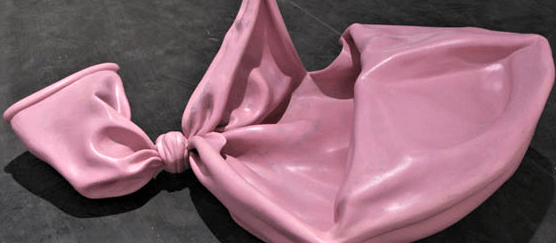
And I am left with her voice no longer speaking in my head. In its place, only the mournful sound of a sonorous bell, tolling for whomever might choose to hear.


 tallandtruetales