
Facts Matter

Words matter. The fact I declare this should come as no surprise, since I’ve been a writer for as long as I can remember.

Opinions matter, too. But they’re meaningful only if they’ve been subjected to a rigorous examination of their validity before being uttered. Otherwise, they’re merely pointless, irrelevant noise, adding nothing of substance to any conversation.

Persuasion also matters. How convincingly we present our opinions goes a long way in influencing those who hear and read them. Logic, structure, and sincerity bolster the likelihood that they will be well-received.

Most importantly, facts matter. The truth. Without accurate information, nothing we utter can add value to general discourse. Absent validated facts, the things we say and write can distort a conversation beyond all salvation. Misinformation—and worse, disinformation—are fatal to an honest exchange of views.

“But what is truth?” some will ask. “How do you know what the true facts are?”

My best answer is that truth is, to paraphrase Hemingway, a movable feast. Not movable in the sense of being deceitful or misleading to accommodate or justify a preconceived situation or viewpoint, but in the sense of being open to new discoveries that advance it beyond what is presently known.

For example, before the discovery of insulin in 1921, it was true that diabetes was an oft-fatal condition. Following that discovery, a significant advancement in medical knowledge, a more perfect truth was established, and sufferers began to live longer and healthier lives.
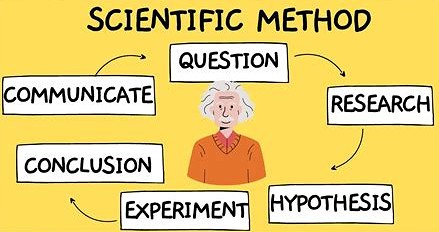
Any truth is established through a process that generally includes observation, questioning, hypothesis, testing, and conclusion. But given the transitory nature of truth in an evolving universe, every conclusion is itself subject to further observation, questioning, and so forth, until a more plausible definition is found. And this cycle, the scientific method, is endless.

Occasionally, special-interest groups will attempt to misrepresent generally-accepted truths by substituting non-scientific alternatives that have met none of these standards. They often base their claims on ‘alternative facts’. But at any given time, for any given subject, there is only one set of facts. And there is a difference between truths that no longer hold, that have been superseded in the face of newfound evidence, and outright falsehoods proclaimed by those who would deny proven truths for reasons of their own. Mendacity is not truth.

Mind you, all of us have reasons of our own for thinking or believing things we hold dear. I value different thoughts and beliefs now than I did in my youth, but they are undoubtedly more considered and tested than those earlier ones.  

One of my favourite songs, made famous by Mary Hopkins, contains the lines: …we’d live the life we choose, we’d fight and never lose, for we were young and sure to have our way. But over time, I learned that we didn’t always have our way, and that many of the truths we espoused back then subsequently proved to be flawed.

The critical essence of facts, of truth, is that they are forever subject to scrutiny, that they must be evidence-based, that they are constantly in a state of flux as new discoveries come to light. Deliberate falsehoods are bound by none of those.

As a little boy, I believed the sun ‘came up’ in the morning because the rooster crowed, and ‘went down’ at night so I could go to sleep. That was how it appeared to me, and that is how those events were described by those around me. I eventually discovered the truth of the matter, but at the time I would have sworn upon my mother’s life that my childish perception was the truth.

“Is that really what you think?” a scornful, unkind friend could have asked me (although none did).

And I would have exclaimed, “I don’t think! I know!”

To which my friend could have replied, “I don’t think you know, either!” And he would have been right. I only thought I knew the truth.

This fictional anecdote points out a problem that can arise when we declare we think or believe something, and then, because we’ve declared it, assume it to be true, to be factual. If I think it rained because I had just washed my car, that does not make it the reason. Because I believe it’s bad luck to walk under a ladder or break a mirror does not make either of those things true.

One of the best pieces of advice I ever came across was: Don’t believe everything you think. And I try not to, although it is sometimes hard.

In politics, when one tries to ascertain the reason why certain things happen while others do not, there is a cynical piece of advice: follow the money.

In life, as one tries to discern the facts—the truth of any matter—my advice is to follow the evidence. Think critically, identify credible sources of information, and consider that information rationally. Words matter. Opinions matter. Persuasion matters. But above all, facts matter if we are to know the truth.

And the truth shall make us…well, you know.

The Smartest Guy

During my working career, sometimes I was the smartest guy in the room.  But only sometimes.  Fortunately for me, in many of the situations where I wasn’t, I was the highest-ranking guy in the room, so the smartest folks, if they wanted corporate decisions and actions to go their way, had to convince me of the merits of their positions.

On occasion, that was relatively easy for them, because the evidence in favour of their arguments was plentiful and conclusive, and I’d have had to be the dumbest guy in the room not to understand that.  But I was never the dumbest guy, so in matters where there seemed only one reasonable course of action, not much convincing was needed. 

Other times, though, those smarter folks in the room would present conflicting data to me, sufficient to rule out an obvious choice, and that’s where the need to be convincing became paramount.  Whenever I was presented with two or more sets of factual data, each suggesting plausible courses of action, the art of persuasion became more significant.  And in such cases, I could always be persuaded by logic and passion.

Early on in my career, before I‘d reached the point where I was the arbiter in such scenarios, I watched as other smart folks made their pitches—sometimes in concert with me, sometimes in opposition—to those who would ultimately decide the matters in question.  And I learned that, absent overwhelming evidence in favour of one option or another, the most effective presentation of the differing bodies of evidence usually won the day.

Most of the folks to whom I reported along the way—men and women both—considered themselves the smartest guys in the room.  But just in case they might be wrong, all of them surrounded themselves with subordinates who might be—and who often were, in fact.  More importantly, the most effective of my bosses listened closely to their people, allowing themselves to be swayed by facts, logic, and passion—usually in that order.

I soon learned that passion alone would rarely, if ever, win the day with the smartest guys in the room.  For them, facts and logic were essential; they were, after all, rational beings.  But whenever reams of facts and heaps of logic offered divergent paths that might plausibly be followed, emotion entered the arena—enthusiasm, zeal, fervour, each of which is an essential part of the art of persuasion. 

Over time, I noticed the people who had the most success at winning over the decision-makers embodied similar characteristics, employed similar methods.  They were open and transparent about themselves, for example, and allowed others a chance to know them on a personal level, to learn what they stood for, what they valued.  When talking with someone, they focused exclusively on that person in the moment—leaning in, making eye contact, smiling and nodding when appropriate—all of which had the effect of making the person feel singularly important—even the boss.

The effective influencers were highly-visible in the workplace, too, and always asked pertinent questions of others in conversations and meetings to solicit their viewpoints.  They listened actively to the responses they received, sometimes saying them back, perhaps in their own words—not just to indicate understanding, but often to reframe the discussion in their direction.  They tried to establish links between colleagues’ ideas and their own, seeking to achieve synthesis—and eventually, consensus.

All of them were consensus-builders, but the consensus they strove for invariably skewed toward their own desired outcomes.  They would acknowledge and commend the results suggested by others’ proposals, then meld them with their own to offer higher-order outcomes, often coupled with a variety of strategies and tactics to achieve them.

One of the most effective of these tactics was their engaging habit of beginning their responses to others’ ideas with a phrase like, “Yeah, I agree…” or, “Yeah, I like that…”.  And then they’d segue to their own proposal by adding something like, “And if we were to combine that concept with this one…”, the point of which was to move the needle on the consensus-meter in their direction.

Without exception, all these folks who were successful at winning others over had a keen sense of anticipation, a nose to the wind for what might be coming, perhaps unexpectedly, and they made sure they were prepared with contingency plans.  I took notice of how they always had responses at the ready for questions that might never get asked, for objections that may never be raised.  They radiated readiness and competence, and as a result encouraged confidence in their abilities on the part of those around them.

With few exceptions, these smart folks with whom I worked were well-intentioned, not self-serving or conniving.  Almost all of us had the best interests of the organization at heart, and each of us believed the option we were advancing in a particular circumstance, even where it differed from colleagues’ proposals, was the best alternative for the organization.  We competed, yes, but for the overall good.

After I eventually ascended to the arbiter’s chair, the critical factor for me in favouring one proposed course of action over another was integrity—each person’s integrity, definitely, but also the underlying validity and foundation of her or his proposal.  The credibility of both the person and the proposal were paramount.  When those were in place, when the data and logic were clear, I was ready to be convinced, to be persuaded.

Even today, long-since retired, I consider the importance of having to be the smartest guy in the room over-rated.  One could be merely a shade above average in a roomful of average—hence, the smartest in the room—yet not particularly well-equipped to make critical decisions.

Far more important for decision-makers, I have always thought, is to encircle themselves with folks with the potential to be the smartest guy, and then encourage them, listen to them, take direction from them, and earn their commitment to a final consensus—a consensus that may ultimately combine elements of several proposals.

Now, if you’ve read this far, it’s possible that you disagree with me about some or all of my thinking, so feel free to persuade me otherwise.

I can be reached.