By Their Works

It is said, by their works shall we know them.  And increasingly, we do.

They rise among us, predominantly—but by no means exclusively—white, male, overweight, bewhiskered, rural, racist, ostensibly-straight, conservative, angry, and occasionally violent.  They are frequently accompanied by others who don’t fit this profile exactly, but who express the same rage, the same fear, the same desire to take Canada back.

It’s unclear where they want to take us back to, but I suspect it might be back to the ‘50s—a decade most of them are too young to have lived through—a time when, in their fevered imaginations, men were men, women knew their place, children spoke only when spoken to, and nobody—including elected governments—told anybody else what to do.

Redneck heaven, to borrow a phrase.

According to the messages these folks spew unrelentingly on social media, marriage back then was between one man and one woman—born male and female, respectively.  Every child lived in a nuclear family.  Racialized and Indigenous people were not part of the established fabric, nor for the longest time were women, the poor, Jews, immigrants, or differently-abled people.

And it goes without saying, the LGBTQIA+ community was non-existent.

Previous decades have seen lots of protests in support of many causes—the ‘60s and ‘70s come to mind for this old-timer, but every era has known them.  Most of those were peaceful, yet often effective; some involved civil disobedience; still others degenerated into violence, with consequences visited upon those who violated the law.  The majority were mounted in the name of advancing more liberal, progressive movements—universal suffrage, socialized medicine, civil rights, end-the-war, the women’s-lib movement, and Indigenous reconciliation, to name but a few.

And that marks a major difference with today’s oft-inchoate protests, striving noisily to take us back to ‘the good old days’.  Today’s aggrieved zealots behave as if our country always belonged exclusively to them—more accurately, their predecessors—and not to everyone who inhabited it then, and does so to this day.

Populists, bigots, and white-supremacists have ever been part of Canada’s demographic, of course, and many of us, I suspect, knew some of them back in the day.  As a child born in the ‘40s, growing up in the ‘50s, I well remember the use of such loathsome slurs as kike, wop, dyke, fag, nigger, Paki, d-p, and others even more vile.  As I was part of the white middle-class, they were never used against me, but more than a few of my white schoolmates hurled them—perhaps unwittingly, parroting their elders, but hurtfully, nonetheless—at those on the receiving end.

Another difference between those long-ago times and today is the opportunity the bigots now have to spread their hateful rhetoric.  Social media, for all the benefit it has brought to much of society, has enabled the haters and ragers to amplify their message across the internet.  In their posts, we find no trace of the civility that once characterized public discourse, even among those whose political ideologies and points of view conflicted.

When did it start to be okay, I wonder, to ignore the fundamental tenets of good manners?  Of respect for other people?  Of common sense?  Perhaps it’s cantankerous of me to bewail their passing, or maybe I’m being overly pernickety in complaining about it.  After all, as I’ve previously written, some folks consider me an unrepentant curmudgeon.  Perchance, I am.  Still, was respectful consideration for others not always a hallmark of civilized behaviour? 

Today’s unruly mob weeps and wails loudly, profanely, about their loss of freedom, even as they enjoy the freedom to assemble and protest it.  To me, it’s as though they believe this coveted freedom means unfettered license to do whatever they wish, unencumbered by the rule of law.  Thus arises anarchy.

In Canada, citizens elect a federal Parliament every four years or so; then, with the ritual approval of the Governor-General, that Parliament chooses a government based on votes of confidence among elected members.  The Prime Minister is the elected leader of the party chosen by Parliament to govern.  Occasionally, one party wins a majority of seats in a given election, and thereby becomes the governing party by default.

For citizens either enamored of, or disappointed by, the actions of the PM and governing party, there is a means of re-electing or turfing the incumbents—the next election.  Responsible civil engagement and voting are the tools.  Increasingly, however, today’s fervid protesters crowding the nation’s public venues revert to intimidation, bullying, and threats of violence to overturn the will of the majority, to impose their values and beliefs on everyone.

If they win, democracy—imperfect though it may be—loses.

By their works, we shall know them.
The Quality of a Nation

According to St. Augustine, a nation is an association of reasonable beings united in a peaceful sharing of the things they cherish; therefore, to determine the quality of a nation, you must consider what those things are.

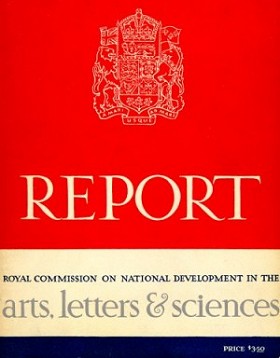
He wrote this in a monumental work of Christian philosophy, entitled The City of God, in the fifth century AD.  Fifteen-hundred years later, in 1951, the Canada Royal Commission on National Development in the Arts, Letters & Sciences used it as a preface to their report to parliament.

royal-commission

The recent triumph of Donald Trump in the US presidential election was one of two things that got me to wondering what a list of those qualities might be—not so much for the USA as for my own country.  What are the values that Canada, as a nation, truly cherishes?

The political opponents of the American president-elect have cast his ascension to power in the darkest terms, quite a difference to the sunny ways seemingly endorsed in our own federal election a year or so ago.  Words like racist, misogynist, bully, and xenophobic, used in reference to Trump by his foes, offer a stark contrast to words such as enthusiastic, transparent, optimistic, and leader, which have been applied to our prime minister, Justin Trudeau, by his supporters.

On the flip-side, Trump’s supporters have described him as strong, forceful, down-to-earth, and no pushover.  Trudeau’s detractors have used words and phrases like boyish, emotional, and not man enough in their descriptions.

Of course, political opinions, like beauty, are mostly in the eye of the beholders, and care should be taken not to believe everything one reads or hears about either of these gentlemen.  Still, the fact that both were elected to their country’s highest office by their respective citizens might say something about what is cherished by each nation.  At least at present, and by a sufficient number of those who voted.

But the critical thing about nationhood is that, despite these opposing viewpoints, each nation as a whole must accept and adhere to a basic set of values if it is to survive.

us-constitution

The second thing that prompted my curiosity about the qualities Canada might cherish was the proposal by a presumptive political-party leader, Kellie Leitch, to vigorously pre-screen potential immigrants for any trace of “anti-Canadian values”.  If they fail to measure up to the standard she will presumably establish, she will bar them from entry.

It makes sense, of course, to ban terrorists and criminals; it also makes sense to admit people with skills and training Canada needs, and people who are fleeing for their lives from oppressive regimes.  In fact, our current immigration practices and procedures do both of these things quite well.

But what are the values Leitch is looking for?  She has stated that the test will screen for anti-Canadian views that include intolerance toward other religions, cultures, and sexual orientations; violent and/or misogynist behaviour; and/or a lack of acceptance of our Canadian tradition of personal and economic freedoms.

I wonder, though, how she might define such concepts as intolerance (Sorry, but I will not eat poutine!) or personal freedoms (Okay, okay…I won’t pee on the golf course!).  Could it be so simple and light-hearted?

Likely not.  For example, if I were a prospective immigrant of a particular faith, say Catholic, would I be banned for not endorsing the notion of same-sex marriage?  If I were to vigorously protest the environmental policies of the federal government (perhaps a government she might be leading), thereby exercising  free speech, would I be expelled?  If I chose to wear a niqab during my citizenship swearing-in, would I be rudely escorted from the room?  And the country?

The Canadian Charter of Rights and Freedoms, adopted as part of the Constitution Act in 1982, pretty much lays out in its thirty-four sections the entitlements and responsibilities conferred upon, and expected of, every citizen.  By its very existence, it establishes many of the values our nation cherishes; for example:

  • the right to life, liberty and security of the person…
  • [equality] before and under the law and…the right to the equal protection and equal benefit  of the law without discrimination and, in particular, without discrimination based on race, national or ethnic origin, colour, religion, sex, age or mental or physical disability…
  • [these rights] shall not be construed as denying the existence of any other rights or freedoms that exist in Canada…
  • [these rights] are guaranteed equally to male and female persons.

canadian-charter

In effect, this means all citizens enjoy the right to cherish, and act in accordance with, whatever they believe—with the proviso that they must not harm anyone else.  No one, it seems to me, including a politically-motivated Kellie Leitch, can judge any of us on a set of arbitrarily-established Canadian values.

Perhaps John Stuart Mill said it best, in his 1859 essay, On Liberty, where he attempted to identify standards for the relationship between a nation’s authority and its citizens’ liberty:

          The maxims are, first, that the individual is not accountable to society for his actions, in so far as these concern the interests of no person but himself…

          Secondly, that for such actions as are prejudicial to the interests of others, the individual is accountable, and may be subjected either to social or to legal punishment, if society is of opinion that the one or the other is requisite for its protection.

If we were to accept the guidance offered in these two foundational sources, I don’t believe we would need a test to suss out anti-Canadian values.  To the contrary, our co-existence would exemplify those values, and allow us to live united in a peaceful sharing of the things we cherish.

And we would be proud of the quality of our nation, upholding it for all to see—from sea to sea to sea.

The Iron(y) Lady

Many will remember the Iron Lady, Margaret Thatcher, Prime Minister of the United Kingdom from May 1975 – November 1990.  Her sobriquet, originally bestowed by a Russian journalist, alluded to her obdurate political views and leadership style.

Perhaps the best encapsulation of this approach was delivered in a speech in 1980, when many in her conservative party were calling for a policy U-turn because of a looming recession.  “You turn if you want to,” she declared.  “The lady’s not for turning!”

Nor did she.  Seven years later, when the general economic conditions in the country had turned for the better, she was re-elected.  Uncompromising to the end, she narrowly lost a leadership vote in her party in 1990 and resigned the premiership.

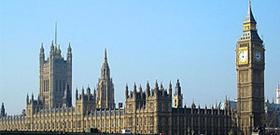
westminster

Now, twenty-six years on, there enters from stage right the second female Prime Minister in the long history of the UK, Theresa May, succeeding David Cameron as party leader after his hapless (mis)management of the Brexit crisis.  She has publicly agreed with a commentator’s description of herself as a bloody difficult woman, yet at the same time, has claimed to be a real Goody Two Shoes in her approach.

On first glance, those two self-appraisals would appear to be at odds.  And much of her political performance also demonstrates this same antithetical nature.  For example, she campaigned for the ‘remain’ side in the recent Brexit referendum, although somewhat tepidly, yet has already signalled that she will get on with the job of exiting the EU posthaste.

“Brexit means Brexit,” she has said, “and we’re going to make a success of it.  There will be no attempts to remain inside the EU, there will be no attempts to rejoin it by the back door.  As Prime Minister, I will make sure we leave the European Union.

This, despite presumably voting to remain.

Although a long-time conservative party member, and Home Secretary for the past six years, her approach has been defined as more liberal than many in her party, almost non-ideological in its pragmatic approach to dealing with issues of governance.  In her recent leadership campaign (unexpectedly ended when her last rival dropped out), she clearly enunciated policy directions that one mainstay of the media described as going further than the Labour Party’s own positions.

Might that be a strategic move to stage left?

At the same time, another media pillar declared the new PM to be staunchly more conservative, more anti-immigration, and more isolationist than Boris Johnson (he being, admittedly, a moderate liberal conservative), a once-presumed rival for the party leadership, who campaigned aggressively for the ‘leave’ side.

Perhaps this dichotomy in the perceptions of the new leader demonstrates nothing more than the long-standing shibboleth that successful politicians, whether campaigning from the right or left, govern from the middle once elected.

We shall see with Theresa May whether that will be so.  But wouldn’t it be the epitome of British irony if, instead, we see a leader who picks and chooses her own path, regardless of that prevailing belief.  If such proves the case, given her shifting positions and statements on key issues and policies to this point, Prime Minister May may, mayhap, earn her own sobriquet, echoing Thatcher’s own—

The Iron(y) Lady.