Of, By, and For

From my Canadian vantage point, the longstanding myth of American exceptionalism appears to have been exposed.  The Benighted States of America has signalled it is no exception after all, as it falls into line behind nations like Brazil, Hungary, and Russia on the slippery path to corporate, fascist oligarchy.

Those citizens who lament this turn might blame the result of the recent election on an ill-informed electorate, but the truth is the voters were not uninformed, misinformed, or disinformed.  Well in advance of voting day, the winning party composed and published its agenda, Project 2025, hanging it out there for all to see.  So, any lamentations might more aptly be directed toward apathy or hubris on the part of too many Americans.

And of course, there’s the fact that more voters are celebrating the result than bemoaning it, at least according to the popular vote count.  In that sense, the will of the people prevailed, just as it’s supposed to.

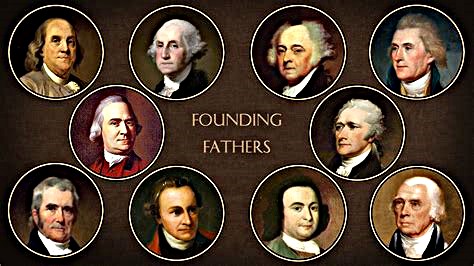
It appears so far that the election process unfolded as designed, with no accusations or evidence of widespread glitches or fraud, despite the plethora of different voting procedures across the fifty states.  That process—which, by deliberate decision on the part of the landed gentry known as the Founding Fathers—leaves the final choosing of the chief executive in the hands, not of the people, but a select group of electors from each state.  America is still exceptional in this, I suppose, given it’s the only nation in the world to rely on an Electoral College.
Simplistically stated, democracy implies that majority rules, no matter how slim that majority.  In a tri-cameral system—executive, legislative, and judicial—it is rare that one party will capture the Presidency and both branches of the legislature.  But at the time of writing, the Presidency, the House of Representatives, and the Senate have apparently fallen to one party in this recent election.  The popular vote count, although not overwhelmingly one-sided, was decisive.

It’s worth remembering that democracy is not ordained, merely proposed and tried.  Churchill called it “the worst form of government, except for all the others.”  Still, it endures for now, and should certainly not be dismissed because it yields an electoral result not satisfactory to a segment of the population.

Whether this recent result is good or bad is based upon one’s point of view.  My own opinion is that it bodes ill for the future of the nation, and perhaps the world, but my opinion matters little.  American politicians are fond of proclaiming, “This is who we are as Americans!”, or conversely, “This is not who the American people are!”  Although neither statement is accurate, both can be apt in any given instance, depending on how Americans’ behaviour matches or clashes with those politicians’ ideological leanings.  For example, public demonstrations or protests are often acclaimed and disparaged simultaneously by opposing political factions.  At the very least, any occasion represents only who some Americans are and who other Americans are not.

One thing for sure is true, however: the entire population of 346-million+ cannot rightly be dubbed ‘the American people’.  Across all spectra—political, social, economic, religious, ethnic, gender, rural/urban—Americans, like other nations’ citizens, comprise a distinct array of diversity, not a homogeneous collective.  Americans, unsurprisingly, do not all think alike or cherish the same values. 

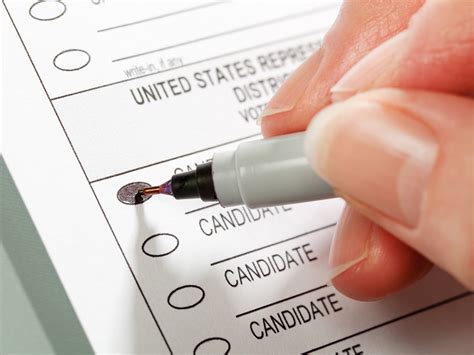
Nevertheless, it is clear the recent election was decided by the American people who were eligible to vote—those who exercised their right and those who did not, those who swung one way and those who went the other.  Democracy in action.

Like it or not, people’s understanding as to whether something is right or wrong, good or bad, is inevitably shaped by the outcome of any election.  Perhaps there is a true right and a true wrong in the moral universe, but it’s how those concepts are filtered through an ideological lens that matters most.  Did America decide wisely on its future this time, or foolishly?  Is liberal democracy the judicious choice, or corporate fascism?  Is an imperial Presidency the better model, or a checks-and-balances structure?  And does the worm always turn?
To paraphrase a timeworn sports adage, any nation is what its voters say it is, and it remains so until its voters say it’s something else.  That, I submit, is governance by and of the people.  Whether or not America’s recent election results prove to be for the people will likely become apparent over the next couple of years.

Ultimately, we all get the government we deserve.  America is no exception.

Our Own Worst Enemies

In the early seventeenth century, the poet John Donne wrote: No man is an island entire of itself; every man is a piece of the continent, a part of the main…

Almost two hundred years after he wrote that, I have just finished reading a book loaned to me by a friend, which warns of and laments the decline of democratic society in the USA, which has long proclaimed itself as the world’s greatest democracy.  Written by Tom Nichols, the book is titled, Our Own Worst Enemy: The Assault From Within On Modern Democracy.

On the one hand, the book agrees with Donne’s assertion—in effect ascribing the success of US democratic institutions thus far to the truism that each of us must be part of the greater whole.  Sadly, however, the book asserts that the nation is currently experiencing a rise of individualism that is tearing at the fabric of democracy.

Nichols is a professor at the US Naval War College, a columnist for USA Today, and a contributing writer at The Atlantic.  He is also the author of several other books, a former aide in the US Senate, and has been a Fellow of the International Security Program at the John F. Kennedy School of Government at Harvard.  In short, he knows whereof he speaks.

As I read the book, I fond myself wondering how closely my own country, Canada—and, indeed, other democracies around the world—might be following in the direction of our neighbour to the south.

Three of the chapter headings give a hint as to what lies inside the book’s covers: a) When Good Neighbors Are Bad Citizens; b) Democracy in an Age of Rage and Resentment; and c) How Hyper-Connection Is Destroying Democracy.

That last one is a central thesis in the book.  It seems, even as we become more and more connected virtually through our electronic devices, we are becoming less and less bonded in person.  Our communications, therefore, are untempered by any intimate knowledge we have of each other’s personalities and proclivities, or by any affection or consideration of each other’s feelings and opinions.  We have almost unfettered freedom to say anything online, to make whatever outlandish claims we want, with very little fear of repercussion or consequence.

The noted American writer, Isaac Asimov, wrote, There is a cult of ignorance in the United States, and there has always been. The strain of anti-intellectualism has been a constant thread winding its way through our political and cultural life, nurtured by the false notion that democracy means that my ignorance is just as good as your knowledge.

Of course, he wrote that long before the proliferation of the internet and the hyper-connectivity it has brought us, which has only exacerbated the trend—and not only in that country.  Everywhere, it seems, ignorant people are now free to spew their venom and disinformation on a worldwide platform unavailable to previous generations.

An unfortunate by-product of this trend is the propensity for each of us to believe everything we think—surely a dangerous practice—and to assume that what we think is always right.  It thus follows that, if I disagree with you on any issue of significance, you believe I must be wrong.

On a grand scale, where no one believes anything espoused by others holding different opinions or political affiliations, the very notion of democracy is threatened.  Democracy flourishes, after all, on a free exchange of contradictory and opposing ideas, and an earnest consideration of the merits of all, eventually leading to a consensus as to how best to proceed.

The Economist Intelligence Unit publishes an annual democracy index, ranking the nations of the world on their adherence to democratic principles.  The scores are based on five categories: electoral process and pluralism, civil liberties, the functioning of government, political participation, and political culture. Based on their scores on sixty indicators within these categories, each country is then itself classified as one of four types of regime: full democracy, flawed democracy, hybrid regime or authoritarian regime.

The USA of which Nichols writes in his book was ranked as a ‘flawed democracy’ in 2020, riven by acrimonious, partisan proselytizing, with no attempt to listen to or understand others’ points of view.  As Nichol’s title attests, Americans have become their own worst enemies.

By contrast, Canada—with all its own warts and blemishes—was ranked at # 5 in the ‘full democracy’ category, behind Norway, Iceland, Sweden, and New Zealand.

Those five nations are small by superpower standards, however, and thus able to exert only minimal influence on world affairs.  The USA, perhaps the most powerful nation the world has known, continues to influence global affairs on a massive scale.  If it were to drift from democracy to autocracy or dictatorship, it would surely draw along many others, some of whom—Brazil, China, Iran, North Korea, Russia, Saudi Arabia, Turkey—are already embarked on that path.

Plato wrote, Dictatorship naturally arises out of democracy, and the most aggravated form of tyranny and slavery out of the most extreme liberty.

After my reading of Nichol’s book, I wonder if I am seeing the beginning of that before my very eyes, where the islands of democracy are slowly shredding.  And if so, I hope we may yet resist, that we, with all our individual freedoms, will choose to remain a piece of the continent, a part of the main…

When the worst of us triumph, they get the government they want; when the best of us sit back, we get the government we deserve.