Virus Redux

In 1993, the film Groundhog Day made its debut, a comedy about a cynical weatherman who is forced to relive his day over and over in an endless loop while covering the Punxsutawney Phil event on 2 February.

Punxsutawney Phil. of course, is the legendary groundhog who emerges from his den on that date every year, and if he can see his shadow, it means we’ll be having six more weeks of winter.  If the groundhog casts no shadow, it’s a harbinger of early spring.

Over the years there have been several generations of Punxsutawney Phil, just as there have been for some of his less-famous but esteemed brethren—Wiarton Willie, Jimmy the Groundhog, Dunkirk Dave, and Staten Island Chuck, to name a few.

There are two things I find surprising about this whole groundhog mania.  The first is that so many people appear to give credence to the animals’ weather forecasts year after year, despite an absolute lack of evidence to back them up.

If Phil or his brethren see their shadows, meaning six more weeks of winter, we are told spring will arrive on or about mid-March.  But in all my life in Canada, during nine decades from the 1940s to the 2020s, I have never seen an end to winter that early.

Conversely, if the groundhogs do not see their shadows, that portends an early spring, presumably sooner than mid-March, which I have also never seen.  I give more credence to the old adage proclaiming that if March comes in like a lamb, she’ll go out like a lion, and vice-versa.

In my experience, the groundhogs’ either/or dichotomy is a neither/nor.

The second thing that surprises me about Groundhog Day is that so many of the same people who rely on the animals’ weather advice pay no attention to medical advice from virologists, epidemiologists, and research scientists with respect to the Covid pandemic that has swept the world.

These people refuse to be vaccinated against the disease, despite knowing the success of vaccines against many other diseases—diphtheria, influenza, hepatitis B, measles, meningitis, mumps, pertussis, poliomyelitis, rubella, tetanus, tuberculosis, smallpox, and yellow fever.  They cite a host of reasons for their opposition, such as—

  • the vaccines are experimental,
  • they alter a person’s DNA,
  • they use a live version of the coronavirus,
  • they contain a chip, or cause recipients to become magnetic, and
  • they cause fertility problems.

In fact, the virus that causes Covid-19 is related to other coronaviruses that have been studied for years, including severe acute respiratory syndrome (SARS) and Middle East respiratory syndrome (MERS).  They were not developed quickly.  

According to the US Center for Disease Control, none of the vaccines interact with anyone’s DNA (deoxyribonucleic acid); rather, they help the cells build protection against infection, but never enter the nucleus of the cell where the DNA lives.

None of the authorized vaccines use the live virus that causes Covid-19, and cannot give you the disease or cause you to test positive for an infection. Instead, they train the human body to recognize and fight the coronavirus by delivering a set of instructions to your cells to encourage your body to produce antibodies, or by using a harmless adenovirus that can no longer replicate to send a genetic message to your cells.

Contrary to rumours on social media, the vaccines do not contain metals or materials that produce an electromagnetic field.  They are also free from manufactured microelectronics, electrodes, carbon nanotubes, or nanowire semiconductors, as well as from eggs, gelatin, latex, and preservatives.

According to the CDC, there is no evidence that any inoculations, including the Covid-19 vaccines, cause fertility problems in women or men; in fact, vaccination is recommended for people who are breastfeeding, pregnant, or plan to get pregnant in the future.

Contrary to the trolls who perpetuate these myths—falsehoods so many people are duped into believing—virologists and epidemiologists do know how to bring this pandemic under control.  Covid-19 is an airborne disease that spreads mainly from person to person when an infected person—even one with no symptoms—emits aerosols when (s)he talks or breathes.  These infectious, viral particles float or drift in the air for up to three hours or more, allowing another person to breathe them in and become infected.

According to Harvard Medical School authorities and other experts, necessary steps to control the spread include—

  • getting vaccinated and boosted,
  • avoiding close contact with people who are infected,
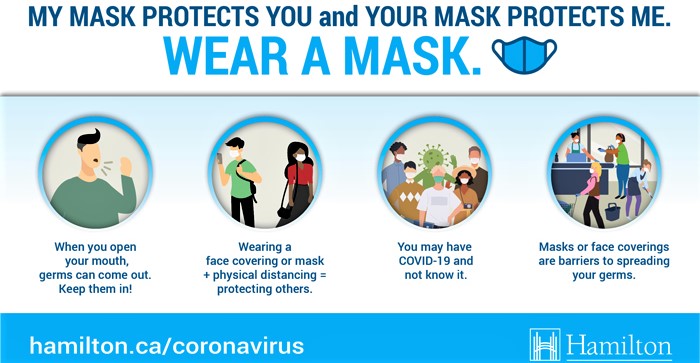
  • wearing a properly-fitted face mask when in public indoor spaces,
  • avoiding large gatherings, even outdoors, especially if poorly-ventilated,
  • isolating if sick,
  • testing frequently if unavoidably in congregant settings, in order to prevent spread to others, and
  • engaging in contact-tracing efforts.

It is mind-boggling to me that so many of us wilfully ignore this informed advice from medical experts in favour of opinions from quacks and trolls.  Since 2019, we have been through four successive waves of Covid-19, each version morphing from its predecessor, yet many of us continue to resist the best medical advice in favour of others’ quackery.

My parents taught me early about the futility of doing the same things over and over again in any endeavour, and hoping for a different result.  They also taught me to listen to those who are knowledgeable, as opposed to those who are merely loud, to weigh what they are saying, and to make an informed decision based, not on emotion, but on logic and empirical evidence.

Alas, so many seem doomed to spend one endless Covid-19 Groundhog Day after another, wallowing in their own ignorance.  And that hurts all of us.

Virus redux.
It’s Tolling for Them

COVID-19 is a killer, an indiscriminate killer.  And it is a determined despoiler.  Among those who fall victim to it, many who survive are assailed by debilitating after-effects that might last for the rest of their lives.

COVID-19 doesn’t care who you are, exalted or humble, although it targets most virulently, and disproportionately, those who are more vulnerable—the elderly, the frail, those with co-morbidities, and the economically-disadvantaged, especially those living in crowded conditions.

It doesn’t care about your religious or political affiliations, your gender or sexual identity, your ethnicity or colour, your marital status, your nationality.  COVID-19 is an equal-opportunity predator.  You might be the nicest person anyone has ever known, or the most vile, but that doesn’t matter to the virus.  You are nothing more than prey.

The virus is not a living thing.  Like all parasites, it relies on a living host to propagate.  And to achieve that end, it is a relentless invader, ruthless, uncaring, insensate—in short, a perfect killer.  The human immuno-suppressant system, in most cases, is no match for it.  Although the reasons are so far unclear, some people are infected but suffer no sickness; others are infected, become ill, then recover; and still others are infected, fall seriously ill, and succumb.  All of them, however, are spreaders of the virus at some point along the continuum.

There is no known cure for COVID-19.  The promised vaccines hold the hope that we may, at least temporarily, disrupt the link between infection and illness—although, for how long, no one yet knows.  Repeated vaccinations may be a fact of life going forward if we hope to protect ourselves from its ravages.

Up to now, the mitigation measures prescribed by various governments to fight the menace—masking, social-distancing, handwashing—have proven ineffective, not because they, themselves, are ineffectual, but because we have not assiduously adhered to them.  As it turns out, as a species, we are not the most dedicated warriors.

And, unfortunately, there exist among us the pro-hoaxers, the anti-maskers, and most recently, the anti-vaxxers, all of whom present a clear and present danger to the rest of us. They appear to adhere unwaveringly to their denials that COVID-19 is a worldwide pandemic, to their disavowals of science, to their claims that government edicts are an infringement on their God-given freedoms. They contradict the laws of physics, chemistry, and biology with their strident, pre-conceived opinions.

The problem is that they are relying on idiosyncratic belief systems, where science relies on immutable, though constantly-evolving, evidence.

In Canada, for example, the number of COVID-related deaths among the overall population nine months ago was inconsequential, fifty-three in a population of 37.6 million (although those deaths were immensely consequential to the families of those who died).  As of this writing, the number of deaths is exponentially higher, 14,000+ and rising.

In the United States, the number of COVID-related deaths in a population of 328.2 million was reported nine months ago at 493; today that number sits at almost 310,000, a wildly-exponential increase.  

And in both countries, these are only the deaths reported; the actual numbers are widely deemed to be much higher.

Even before the onslaught of COVID-19, I had never been seen as a noted risk-taker.  The risk-reward scales have, for me, invariably tilted to the safer side.  Although I am not an overly-cautious person, I have always preferred to rue a golden opportunity I might have missed, than to suffer a major blow as a result of a miscalculation.

Consequently, as you might expect, I have adhered as closely as possible to the mitigation measures set forth by the government, and have encouraged others to do so as well.  That being said, I do respect the right of others to determine their choices—but, only so far as those choices do not impinge upon my right to a safe existence.

Suppose, for example, that a gang of armed thugs was roaming through your neighbourhood, breaking into homes, raping and pillaging, claiming it was their right to do so.  And if you dare ask them why, they reply, “Because we can!”

I don’t know about you, but I’d be terrified.  And I would expect the authorities to put a stop to their depredations in order to protect the law-abiding citizenry.  No one in a free society should have to live in fear of scofflaws who carry on as if there are no consequences for lawless behaviour.

Increasingly, I feel the same way about the pro-hoaxers, the anti-maskers, and the anti-vaxxers whose actions threaten the rest of us.  Normally charitable toward others with whom I disagree, willing to listen to and consider their points of view, I nevertheless find I am increasingly hostile to these covidiots, who endanger, not only themselves, but potentially everyone with whom they come in contact.

It is difficult for me, I now find, not to wish them ill.

In my ruminations, I have affixed a name to COVID-19, a name with which you are probably familiar—Quasimodo, Q for short.  And I picture Q in a lonely bell-tower, pulling stolidly on a rope, sounding the solitary bell.  Hearing it, I wonder for whom that bell is tolling.

Regrettably, but undeniably, I realize I am beginning to hope it’s tolling for the disavowers.

It’s My Right!

In the midst of the global COVID-19 pandemic, the worst such event in more than a century, a prominent political leader recently told her constituents, If you want to wear a mask, go ahead.  You are free to do so.  If you don’t want to wear a mask, don’t be shamed into it.  That is your right.

Really?  In the middle of the pandemic, does this not seem illogical?  The best scientific evidence indicates pretty clearly that, by wearing a mask while around other people, we can severely limit the transmission of the virus—thereby protecting those around us, our family, friends, and fellow-citizens.

For comparison’s sake, I’ve modified the woman’s statement to apply to other situations, to see if they would make sense—to see if they might impinge on another person’s rights.  You be the judge.

If you want to stop your car at a red light, go ahead.  You are free to do so.  If you don’t want to stop, don’t be shamed into it.  That is your right.

Can you imagine the potential carnage?

If you want to wear seatbelts while driving, go ahead.  You are free to do so.  If you don’t want to wear them, don’t be shamed into it.  That is your right.

Can you imagine the increase in personal injury?

If you want to drive while sober, go ahead.  You are free to do so.  If you want to drive while impaired by alcohol or drugs, don’t be ashamed about it.  That is your right.

Can you imagine the inevitable devastation?

If you don’t want to smoke in a public setting, that’s fine.  You are free not to do so.  If you do want to smoke there, don’t be shamed by it.  That is your right.

Can you imagine the outcry?

If you want to use the store’s escalator to go up one floor, go ahead.  You are free to do so.  If you want to push your way back down on the up-escalator, don’t be ashamed to do it.  That is your right.

Can you imagine the confusion and anger?

Of course, there are all manner of situations where an individual person’s choice to do something, or not do it, will engender no meaningful effect on others.  For example, If you want to wear winter boots after a heavy snowfall, go ahead.  You are free to do so.  If you don’t want to wear boots, don’t be shamed into it.  That is your right.

Another example:  If you want to study for your final exams, go ahead.  You are free to do so.  If you don’t want to study, don’t be shamed into it.  That is your right.

And a third:  If you don’t want to wear a paisley tie with a striped shirt, plaid jacket, and check slacks, just don’t.  You are free not to do so.  But if you do want to, don’t be ashamed about it.  That is your right.

None of these three personal decisions is likely to have a profound effect on someone else’s autonomy, unlike the first statement and its five adaptations.  And that, of course, is the whole point.

A familiar maxim, first promulgated by an obscure legal philosopher, Zechariah Chafee, Jr., holds that a person’s right to swing his arms freely ends where the other person’s nose begins.  In other words, your personal rights are not allowed to impinge on mine.

John Stuart Mill, in his famous work, On Liberty, postulated:  The maxims are, first, that the individual is not accountable to society for his actions, in so far as these concern the interests of no person but himself. Advice, instruction, persuasion, and avoidance by other people if thought necessary by them for their own good, are the only measures by which society can justifiably express its dislike or disapprobation of his conduct.

Secondly, that for such actions as are prejudicial to the interests of others, the individual is accountable, and may be subjected either to social or to legal punishment, if society is of opinion that the one or the other is requisite for its protection.

I have long been of the opinion that Mill’s work provides us with a near-perfect definition of the boundary between our individual rights and our societal obligations.  And when I apply that definition to the exhortations of public health officials during the pandemic that we all wear a mask when out and about in the company of others, I find their pleas to be eminently logical.

It seems to me, therefore, that if government determines the actions of some people are, in Mills’s words, prejudicial to the interests of others—in this case, the general health and welfare of the citizenry—the wearing of masks in public places should be mandated by government officials.  I further believe that scofflaws who flout the requirement should, also in Mills’s words, be subjected…to legal punishment.

The same controversy will arise, I’m sure, when vaccines against COVID-19 become available to the general populace.  Some of us will line up eagerly to get it; others will dig in their heels, perhaps proclaiming, If I don’t want to get vaccinated, that’s my right.  I am free not to do so. 

To them, I would say, If you don’t want to get vaccinated, that’s fine.  That is your right.  But if you want to present yourself in community settings where people congregate—such as malls, schools, churches, or city parks—don’t be surprised when you are denied access.  That is our right.

Like any chain, our society is only as strong as its weakest link.