
The Lonely, Silvery Rain

Otter & Osprey Press, a mainstream, Canadian publishing house (a division of Northern Forest Publishing), has released a second edition of my novel, The Lonely, Silvery Rain, to bookstores and online retailers. It’s available in both print and e-book formats, including Kindle.
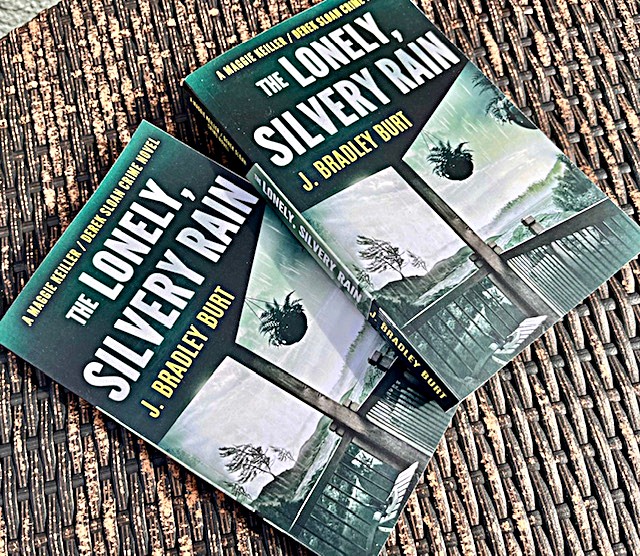
This book is the thirteenth in my Maggie Keiller/Derek Sloan crime series, and the first to be offered by a Canadian publisher. As a crime-fiction novel, some of the portrayed events and language are intended for an adult audience…..but the story, as one editor commented, is kickass!

Set against a background of reconciliation efforts between government and the fictional Odishkwaagamii First Nation, a gripping story of betrayal and murder unfolds in Port Huntington, a small resort town on Georgian Bay. Vandalism, extortion, and violence are unleashed in the community as a number of personal grievances boil to the surface. 

In 2018, the Ontario Superior Court of Justice awarded ten billion dollars to twenty-one First Nations in a vast area along the north shore of Lake Huron, to be paid equally by Canadian and Ontario governments. The settlement is compensation for unpaid annuities to those affected First Nations, annuities that were mandatory under the still-valid 1850 Robinson-Huron Treaty, whose terms committed the government to paying the affected First Nations annual stipends tied to actual resource revenues on their sovereign lands.

Over the years, billions of dollars in profits were extracted from First Nations lands for mining, timber, and fishing enterprises in Ontario, but the obligatory annual payments to First Nations were adjusted only once, thus depriving generations of First Nations people of revenues to which they were entitled.

Under the terms of the settlement, the Robinson Huron Treaty Litigation Committee, composed of Indigenous representatives, was tasked with determining how, and in what amounts, the funds would be distributed to the affected First Nations. While this story is a work of fiction, it is rooted in the very real question of how that money ought to be used. For the Odishkwaagamii, these debates boil over into deception and bloodshed.

Maggie Keiller and Derek Sloan are inextricably caught up in the turmoil, and it is only through their personal integrity and courage that they navigate the chaos.  Determined as always to defend their Port Huntington community, and themselves, they work to ensure justice will prevail.

This safe, universal link will afford you a preview of the story, and direct access to your preferred online retailer—

https://geni.us/thelonelysilveryrain

After publishing my books through Lulu Press since 2007, an American print-on-demand firm, I’m thrilled that a Canadian publisher has picked up my work, and I encourage you to take a look at their website—

https://www.northernforestpublishing.com/homepage

I hope you’ll explore the link to my book, which I believe you will enjoy. Other titles in the Maggie Keiller/Derek Sloan series may be found at this safe link—
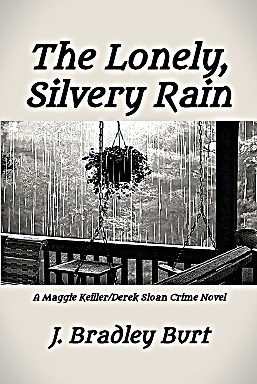
https://www.lulu.com/spotlight/precept

Another Excellent Read!

TEN BILLION DOLLARS AWARDED BY COURTS TO TWENTY-ONE ONTARIO FIRST NATIONS!

In the latest novel in my acclaimed Maggie Keiller/Derek Sloan crime series, the dramatic consequences of this actual treaty settlement unfold in Port Huntington, a small resort town on the shores of Georgian Bay.  And once again, Maggie and Derek become inextricably involved in personal grievances boiling to the surface among various interests, involving vandalism, extortion, violence, and murder.

Be sure to read this exciting story, available now for purchase at—

https://www.lulu.com/spotlight/precept

You will find complete information on my published books by pressing the My Books tab at the top of this page.

As always, thanks for reading my blog, and for your interest in my writing!

That’s A Pity

I have come to believe there is a deep reservoir of anger simmering only slightly below the surface of our so-called civilized society.  But always leery of believing everything I think, I am constantly on the lookout for evidence that will either prove or disprove my assumption.

As one example, can you imagine this hypothetical situation actually happening?  A driver is cut off in traffic, perhaps inadvertently, by another driver.  Angered by this, he tailgates the offending driver and, at the first opportunity, passes him and immediately cuts back in front of him.

When they stop at the next traffic light, the driver in the car behind jumps from his vehicle, runs forward, and kicks a dent in the door of the front car, angrily yelling and waving his arms all the while.  The driver of that car, startled by this assault, opens his door so forcefully that he hits the assailant in the face, breaking his nose.

With blood gushing from his nostrils, the injured man slams the driver’s door closed just as the driver is getting out, pinning him between it and the car, breaking his leg.  Enraged now, and in pain, the driver grabs a gun from his console, aims it at the bleeding man, and shoots him.

Can you imagine such a scenario?  Can you imagine the anger?  And the escalation?  I can, although perhaps the whole thing is a touch melodramatic.  So, consider this less-lethal example and see what you think.

A comedian on stage at an awards show cracks a rather tasteless joke about a woman in the audience, a woman who suffers from a physical affliction over which she has no control.  Her husband, offended by what he sees as a gratuitous attack, immediately rushes to the stage, approaches the comedian, and sucker-punches him with an open-handed slap.  He then returns to his seat in front of a dumbstruck audience of hundreds in the theatre, and millions more watching on live television.  Once there, he exchanges loud, profane threats with the comedian, who shortly thereafter exits the stage.

Several minutes later, that same husband is back on stage to receive an award for his acting accomplishments, an appearance the assembled audience greets with a standing ovation.  Can you imagine such a scenario where anger and violence are so freely condoned?

Of course, we don’t have to imagine this second example because it actually occurred.  But consider what might have taken place if things had unfolded differently.  Imagine instead if the angry husband had marched to the stage, approached the clueless comedian, and seized the microphone from his hand.  Imagine if he had then explained to the man, and to everyone in the audience, why he and his wife were offended by the joke, why it was in poor taste, and how it might have detrimentally affected others hearing it who are also afflicted with a physical disability.

Imagine if he had explained how humour doesn’t have to be hurtful in order to be amusing.  Imagine if he had asked the comedian to apologize, then and there, to anyone who might have been offended.  And finally, imagine if he had then told the man he forgives him for his mistake.  Had he done these things, I believe he would have returned to his seat to an even more enthusiastic and deserved standing ovation, this one in recognition, not of his acting achievement, but of his actions—an acknowledgment and appreciation of his ability to seize the opportunity and render it a teachable moment.

Violence and physical assault are never okay—not between disputatious individuals, not between warring gangs or political parties (the difference becoming less and less discernible all the time), and not between sovereign nations.  Violence and physical assault are never okay.

I regret the loss of civil discourse in our society, where people holding different points of view could meet in the middle to discuss matters rationally, civilly, and with a propensity to listen and learn from one another.  Instead now, we have people retreating in high dudgeon to their respective corners, where they launch slings and arrows at each other, designed to wound and demean their opponents, to deliberately spread calumny and misinformation.

We have become a degenerate society, one diminishing ever more rapidly as a result of our rush to anger, our seemingly-insatiable need to feel aggrieved.  Rather than seeking to lift each other up, to bolster and propagate our shared comity, we are rushing pell-mell toward the lowest common denominator.

And that’s a pity.