Cogito, Ergo Sum

Cogito, ergo sum—I think, therefore I am. 

So opined René Descartes in 1637, in his famous work, Discourse on Method, demonstrating what he regarded as the first step in the acquisition of knowledge.

Of course, we don’t know that he was right, but because enough of us have come to believe his posit, it is almost universally accepted.  Left unanswered is the question as to whether other living organisms are sentient, whether they also can think.

Some people believe they can—that creatures such as elephants, whales, and dogs are capable of thought—and they cite observed actions by these animals as proof of their belief.  But what of other animals, or fish, and what of plants and rocks?  To my knowledge, no one has as yet been able to prove (or disprove) the thesis that any lifeform other than human is capable of thought.

Regardless, it does seem likely that no form of life on our planet has attained the same level of high-order thinking that the human species has.  And if any have, they have hidden it from us remarkably well.  With physical brains somewhere between the largest and smallest in size among all living creatures, we humans appear to have outstripped them all in our capacity to think rationally.

The capacity to think is what allows many of us to read widely, listen to diverse sources of information, and weigh the relative merits of differing schools of thought before deciding on a course of action—critical thinking.  Alas, it is also what allows us to read narrowly (if at all), listen carelessly, and reject schools of thought that do not reflect our own preconceived notions.

Either way, thinking broadly or narrowly allows us to form opinions.  And those opinions, whether supported by evidence or not, often morph into staunch beliefs if we don’t continue to think about them, to test them against emerging information.  And inference plays a big role in that.

For example, if I waken one morning to the sound of thunder, and if I see flashes of lightning illuminating the drawn curtains of my bedroom, I might well infer that it’s raining outside.  But I have no proof of that until I actually see (or feel, or smell, or taste) the tangible rain.  I might throw open the curtains to discover there is no rain falling, despite the harbingers of storm; merely hearing and seeing those from inside my room would have drawn me into a false conclusion, yet one I believed until faced with proof of the opposite.

It points out the danger of choosing to believe everything we think, at least before we have evidence to support (or deny) our premises.  As sentient beings, we are compelled to seek answers to the baffling phenomena we observe around us, to find reasons why situations unfold as they do, to explain the arcane mysteries that bedevil us—like where we came from and where we’re going.

Our world is replete with examples of how we have gone about this—in religion, science, engineering, medicine, music, literature, and so many other fields.  The list of human accomplishments over the millennia is long and laudable.  Errors have been made along the way, and corrections applied, but the steady march of knowledge-acquisition has been relentless.
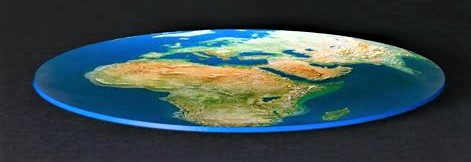
Many of our ancestors, for instance, once believed (and some still do) that the earth was flat, that any who got too close to the edge would topple off the edge, fall into the void, and be lost forever.  We know now, of course, that belief was untrue.  As an amusing aside, the Flat Earth Society still boasts today in its brochures of having chapters of believers around the globe!

Still other folks believed once upon a time that our planet was at the centre of the known universe, that the moon and sun revolved around us; those people’s skills of observation, primitive by today’s standards, and their earnest thinking about those observations, led them to that conclusion. Yet, it was also not true.

Nevertheless, despite our many errors and missteps along the way, our capacity to think rationally—and to forever question our thinking—has allowed us to advance our collective knowledge.  A key factor in continuing that progress is to avoid investing complete faith in any one thesis, regardless of its appeal at any given time; we must retain an appropriate level of skepticism in order to keep from falling into the acceptance of rigid dogma and blind ideology. 

As George Carlin is reputed to have said, “Question everything!”

Another key is to continue testing theses to reinforce their viability, to find evidence of their truth (or falsity).  But at the same time, we must remember that an absence of evidence of truth in the moment does not mean the same thing as evidence of an absence of truth.  In other words, just because we don’t have the facts to prove the legitimacy of a thesis right now does not mean that thesis is untrue; it may mean simply that we haven’t as yet discovered the facts to validate it.

The advance of knowledge is, to paraphrase Hemingway, a movable feast.

An exception to prove the truth of any thesis can always be found, of course—something that demonstrates the general truth of a thing by seeming to contradict it.  For instance: most of the teachers in that elementary school are female, and the one male teacher on staff is the exception that proves the rule.  The thesis is factual.

We also know the true merit of any pudding is put to the test in the eating.  But with one person’s taste being different from another’s, whose opinion is to be accepted as the truth?  Any decision there must be regarded as opinion, not fact.

It is interesting to note that Descartes did not write, Cogito, credo quod cogitare, ergo non est recta—I think, I believe what I think, therefore it is right.  Apparently, he understood that because we think something, even to the point of believing it, that does not necessarily make it true.

He also wrote, Non satis est habere bonum mentem; Pelagus res est ut bene—It is not enough to have a good mind; the main thing is to use it well.

Quaestio, semper quaestioquestion, always question!

Platitudes and Attitudes

Platitudes are trite, banal, or hackneyed statements, timeworn clichés people use because they allow us to sound like we know what we’re talking about, sometimes providing us a polite way to avoid difficult conversations.

Most of them are overused phrases or expressions that have lost their originality and power.  But because they’re expressed in a formulaic manner, their meaning is usually recognizable instantly.

While all of us probably resort to using clichés at one time or another, there are those among us for whom platitudes are the standard form of conversation.  We would be likely to hear phrases such as the following when we encounter these folks: it is what it is; it’s a no-brainer; it ain’t rocket science; time will tell; that’s life; or everything happens for a reason.

Such glib folks might themselves be described in cliché-form: all hat, no cattle; the blind leading the blind; or ignorance is bliss.

Beyond the simplistic ones, I find some platitudes to be downright cringy: all you need is love; love makes the world go round; if it’s meant to happen, it will; patience is a virtue; no pain, no gain; or good things come to those who wait.

I do enjoy many platitudes, though, if for no other reason than they give me the opportunity to counter them with snappy, little rejoinders of my own, reflecting attitudes perhaps better left undisturbed.  For example—

God helps those who help themselves; okay, but I hope God also helps those who get caught helping themselves!

Practice makes perfect; yeah, but only if it’s perfect practice!

Don’t criticize a man ‘til you’ve walked a mile in his shoes; right, because by then you’ll be a mile away and have his shoes!

What doesn’t kill you makes you stronger; except if it doesn’t!

You’ll find love when you’re not looking for it; maybe, but good luck with that if love isn’t also looking for you!

Absence makes the heart grow fond; perhaps, but fond of whom?

Stop and smell the roses; great idea, unless bees are gathering rose-pollen where you stick your nose in!

Better late than never; unless, that is, you weren’t invited in the first place!

One person’s trash is another person’s treasure; sure it is, if it’s not already a rotting pile of garbage!

He’s at his wit’s end; or on the other hand, he may just be halfway there!

It’s not what you know that matters, it’s who you know; perhaps, unless you don’t know anyone important!

Curiosity killed the cat; true, but satisfaction brought…well, you know!

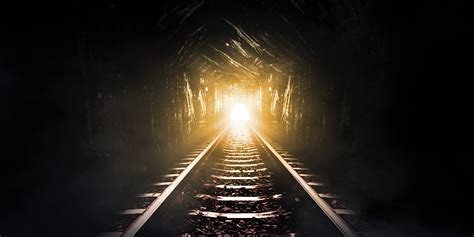
There’s always light at the end of the tunnel; there is, but it might be an oncoming freight-train!

Beauty is only skin-deep; that’s alright, I’m thick-skinned!

Two heads are better than one; fine, as long as they aren’t attached to the same torso!

There’s someone for everyone; and you would know this…how?

It is better to be by yourself than engaged in bad company; in that case, please excuse me!

Ah, those last two are a tad unkind, I must admit, but they tickle my funny-bone, anyway.  It has been said by someone far wiser than I that an idle mind is the devil’s workshop.  So, to foil that maleficent demon, I often occupy my idle mind with such trivial pursuits as this, and then write them down. 

I hope you have enjoyed some of the results.   

The Railwayman

Again this year, I know I’ll receive warm hugs and kisses from my daughters in recognition of yet another Father’s Day, the fifty-first such occasion.  It never grows old.

We fathers grow old, however, despite our best efforts.  And in so doing, we lose our own fathers as they board the last train to glory, to borrow from Arlo Guthrie.  My dad departed the station twenty years ago, but he remains with me almost daily in my reveries.  And never more so than on Father’s Day.

When I was a young boy, he would take me to local railroad crossings to watch the big steam locomotives and their endless caravans go storming by.  I treasured those occasions because I would have his undivided attention, a not-so-frequent circumstance in a family that eventually numbered five children. I’ve often wondered if, during those times with me, he might have been fondly remembering standing by the rails with his own father. 

He enjoyed the time with me, too, I’m sure; but he loved those trains even more than I did, a boyhood fascination he never lost.  If he could have been anything else in life but an insurance executive, I believe he’d have been an engineer on one of those behemoths. He was truly a railwayman, if only in his dreams.

https://s-media-cache-ak0.pinimg.com/736x/23/67/c0/2367c020ad92968a83fc8070d32a375d.jpg

At the time of his passing, I wrote these lines to commemorate what he meant to me, to express my love for him, and they comfort me still—

The Railwayman

You’d take me down beside the rails to watch the trains go storming by,

And tell me all those wond’rous tales of engineers who sat on high,

In cabs of steel, and steam, and smoke; of firemen in their floppy hats,

The coal they’d move, the fires they’d stoke, as o’er the hills and ‘cross the flats

The locomotives huffed and steamed, their whistles blowing long and loud.

And one small boy, he stood and dreamed beside his daddy, tall and proud.

Terrifying monsters were they, bearing down upon us two, who

Felt their force on that steel highway, hearts a-racing---loving, true.

I’d almost flinch as on they came toward us, with their dragon-face

A-belching, spewing, throwing flame and steam and smoke o’er ev’ry place.

But you’d stand fast beside the track, and, oh! the spectacle was grand.

So, unafraid, I’d not step back, ‘cause you were there holding my hand.

Oh, Railwayman, oh, Railwayman, I’m glad you knew when you grew old,

How much I loved you---Dad, my friend---who shared with me your dreams untold.

Oh, Railwayman, oh, Railwayman, if I, beside you once again,

Could only stand safe in your hand, awaiting with you our next train.

All aboard, Dad…all aboard!

And Happy Father’s Day to all who, like me, are both fathers and sons.  We are blessed.

[Slightly different versions of this tale have been published here twice before.]

The Sandbox

Over a period of years a long time ago, on my daily walks to and from work through a local community park, I used to watch groups of pre-schoolers playing in a very large sandbox.  I was always struck by their singular focus on the primitive sculptures and projects they were building.  Oblivious to events going on around them in the park, they directed all their energy towards the activities in the sandbox.

A few of the kids looked to be cooperating with each other, working diligently in pursuit of whatever objective they had settled on.  Their interactions were punctuated by short bursts of conversation, lots of smiles, and the occasional whoop of glee when something came to fruition.

Most of the others in the group played alone, apparently unconcerned with the endeavours of their companions—typical of that age and stage of development.  Quick flares of temper occasionally gushed forth, and angry exchanges, when one person’s endeavours somehow impinged upon another’s, but on the whole, the mass of children in the sandbox managed to coexist.

Their mothers—no fathers, alas—watched with a mix of pride and bemusement as their offspring played, secure and happy in the park.

As time passed, those children got older and left the sandbox, but they were replaced by a seemingly inexhaustible supply of similar youngsters, and the pattern remained the same.  And everyone in the sandbox was concerned only with what was happening within its confines, no one with the goings-on in the rest of the park.

I noticed changes in the park at large, however.  In the early years, it had been a sylvan haven for children and families—a place to gather with friends, to cool off under the trees on mid-summer weekends, to escape the pressures of the daily grind.  As time passed, though, I began to miss the family gatherings, as many of those parents, some of them working two jobs, were no longer able to come.  And at the same time, more and more older children began to frequent the area, not playing the sorts of games I was familiar with from my own childhood, but just hanging out.  Loud music could often be heard, smoke hung over many of the conclaves, and occasional fist-fights would erupt between different groups.  In time, the park became, not so much a family destination, as a place for the neighbourhood’s teenage kingpins to gather.

The children in the sandbox were affected by these changes, of course.  Now, they had to avoid issues with the older kids if they hoped to play their games.  But, for the most part, they were able to do that, and in their exuberance and innocence, they continued their childish pursuits, interacting with one another as their predecessors always had.  None of them cared that the de facto ownership of the park had been co-opted.

To be sure, it never became a dangerous place, one to be avoided.  I continued my daily walks with no fear, but I was aware of the changed dynamic, even if the sandbox urchins were not.

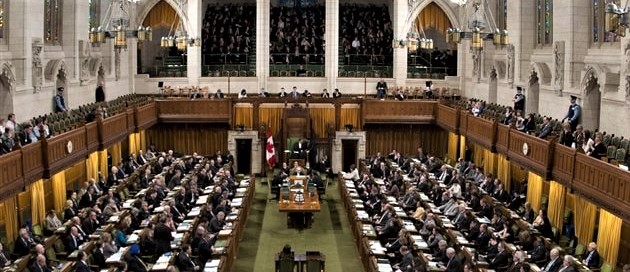
Today, long-since retired and no longer walking in that park, I think of it as an allegory of sorts to the present situation with our government.  When I watch Question Period, for example, whether federal or provincial, the elected denizens of Parliament focus so much of their energies and time on what seems to me nothing more than spurious activities, full of sound and fury, signifying nothing, as Shakespeare wrote.  As I watch and listen, I see again those pre-schoolers in their sandbox, engrossed in the small world they are occupying.

To be sure, legislation does get passed, much of it to the benefit of the country or province as a whole, even if never fully satisfying everybody.  And that’s good.  But I find it akin to the completion of those sandbox projects and sculptures that so pleased their creators—not insignificant, beneficial to their future growth and development, but accomplished only with such fuss and foofaraw as to be laughable.

A more serious situation, however, has developed outside the sandbox—the Parliament—in terms of who is really in control.  While elected officials busy themselves with their daily perambulations, much as those pre-schoolers did, private-sector interests are busy trying to take over the park, so to speak.  Be it wealthy, corporate entities, land-developers and real-estate companies, foreign-based media ownership, legal, banking, and financial firms, or myriad other lobbyist organizations, the environment around Parliament has undergone a radical change.

The ownership and culture of a local park are things to be gained or lost by the residents of the community in which it sits, according to their wishes and level of activism.  Depending upon how a community responds, their sandbox may be lost.

But the ownership and culture of our provincial and federal Parliaments are embedded in our constitutional rights—they belong to us, the citizens of this country.  Do we want to lose them?  Have we entrusted them to the finest possible stewards, our best and brightest?  Is there a fix for the encroaching, pernicious influence of the big-moneyed interests? What are we to make of foreign influence on our government?

More of us need to pay more attention to these questions, or all of us may end up losing our sandbox altogether.