Keep On Keepin’ On

[NOTE: IF THIS COMPLETE BLOG-POST LIES IN THE BODY OF THIS EMAIL MESSAGE, CLICK ON THE TITLE TO READ THE PIECE IN ITS NATURAL ENVIRONMENT ON MY BLOG- SITE. IF ONLY A LINK TO THE PIECE IS PROVIDED IN THE EMAIL, CLICK ON THAT TO TAKE YOU TO THE SITE.]

It has been postulated by persons wiser than I that time does not exist, neither past, present, nor future.  If our lives were a metaphorical hourglass—the top bulb representing the past, the middle stricture the present, the bottom bulb the future—we would find ourselves at the middle, living in the moment.  That moment, however, would be but the instant it takes for one grain of sand to pass through the stricture, followed by the next, and the next, ad infinitum, each gone too rapidly for us to grasp.  And therefore, the theory goes, the present cannot actually exist.  Similarly, because we have no conception of the bulb above us or the one below, no way to perceive them, the past and future also do not exist.

Perplexing, no?  But not a theory I agree with, and I would urge those who espouse it not to tell me time doesn’t exist. 

Given my longtime fascination with and study of history, I’ve always believed there to be a past.  Mind you, I’m able to consciously recall it only from the late 1940s onward; everything that happened before that, I must accept as it’s been told to me. 

I’ve always believed in the present, too, perceiving it not as a mere instant in time, but as a continuous progression or sequence of events in which I play a part—at least while I’m awake.  While sleeping, of course, I have no awareness of the present.

The existence of a future is something I’ve always taken for granted, as well, though I have more yesterdays behind me now than tomorrows ahead of me.

My parents, whose lives spanned parts of ten decades, nonagenarians when they died, are part of the past I remember.  My wife and two children are part of the present I inhabit.  And my grandchildren represent the future, most of which, alas, I shall never see.  But it’s my comprehension of these three elements—past, present, and future—that allows me to carry on.

I remember visiting my father as he neared the end of his life, and hearing him complain (for the zillionth time) about the number of prescribed medications he was taking.  He had a small, plastic pillbox to keep them organized on a weekly basis, a device I silently laughed at, so cocksure and smug in my late forties.

“I saw the doc last week,” my father said, “and I told him to take me off some of these damn pills.”

“What did he say?” I asked.

“Said he’d do that if I told him which ones to cut out.  Said he wasn’t sure which might be the ones keeping me alive.”

“So, what did you say?”

“I told him, in that case, forget it.  I’ll carry on with all of ‘em.”

“Good move, Dad!” I said.  “Keep on keepin’ on.”

We had that conversation thirty-five years ago, and my father’s been gone for more than twenty of those, a part of my past forever.  To my everlasting astonishment, I’ve now entered my own ninth decade, the octogenarian I never contemplated becoming, and my present looks more and more to me like his did to him back then.

I, too, have a plastic pillbox now to organize the eight medications I take daily, five of which are prescribed to control cholesterol, regulate blood pressure, promote prostate function, and bolster bone density.  The other three are over-the-counter supplements I like to think will help me compensate for my lost and lamented youth.

Oh, how the mighty have fallen!  I imagine my father, wherever he is, must be chuckling knowingly at my plight—my past making fun of my present.

I have a friend whose espoused goal in life is to live more years retired than he spent working.  It’s a noble goal, one I share, and that moment will arrive for me seven years from now.  Another of my goals is to accomplish what my parents did, living into a tenth decade, which will happen when I hit ninety, a mere nine years off in the future.  Both my folks remained mentally acute and physically viable almost to the end, a state I devoutly wish for myself. 

A third goal is to live life fully right up until I die—a sentiment I wrote a poem about, I Haven’t the Time, which you will find and enjoy at this safe link—

https://tallandtruetales.blog/2020/01/08/i-havent-the-time/.

Our two daughters visited us for a week in Florida recently, without their husbands and children.  Although we love being with them all, this annual visit from our girls is part of a future we look forward to every year, our ‘core four’ together again.  But the realities of past and present do have a way of inserting themselves. 

I encountered both of them on their first morning with us as I lurched into the kitchen—unshaven, hair askew, eyes still half-shut.  They offered a cheery good morning and warm kisses as I plugged in the kettle for my green tea—decaffeinated, of course—and watched me spill my pills into my hand from the pillbox.

“How many pills do you take every day, Dad?” the eldest asked.

I told her, explaining what each was for in more detail than she probably wanted to hear.

“Do you really need to take that many?” her sister asked.

“Maybe, maybe not,” I said, an unbidden image of my father flashing before my eyes.  “But I don’t know which might be the one I need to keep me alive, so I just carry on with all of ‘em, y’know?”

“Good decision, Dad!” the eldest said.

“Yeah,” her sister echoed.  “Just keep on keepin’ on!”

And so I shall—proud of the past, relishing the present, anticipating the future. Given what I know to be true, no one can tell me they don’t exist!

You Never Know

[NOTE: SUBSCRIBERS WHO FOLLOW THIS BLOG RECEIVE EACH COMPLETE NEW POST IN THE BODY OF AN EMAIL. BUT IF YOU CLICK ON THE TITLE AT THE TOP OF EACH POST, YOU CAN READ THE PIECE IN ITS NATURAL ENVIRONMENT ON MY BLOG SITE. READERS NOT SUBSCRIBED AS FOLLOWERS RECEIVE A SHORT MESSAGE FROM ME WITH A LINK TO EACH NEW POST, WHICH TAKES YOU AUTOMATICALLY TO THE SITE.]

The latest weekly prompt from my Florida writers’ group was to write a story featuring the phrase, ‘You never know!’ This is my response—

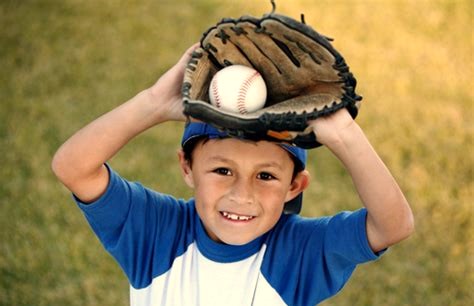
The ball leaps off the bat with a loud thwack! and soars skyward in a graceful parabola above the seven of us milling below, before curving back to earth, slicing right toward my little brother who prances nervously on the grass.  He’s using the almost-new fielder’s glove I let him have for this occasion, while I use my beat-up old one.

I’m twelve years old, which makes Allan nine, and he’s a fair bit smaller.  It’s the first time he’s been allowed to play ball with my friends—a game called 500, where we earn points for fielding balls hit to the outfield by a lone batter—and I’d coached him beforehand, especially emphasizing the need to call everyone off before making a catch so we don’t all collide under the ball.

“Just yell out to warn the guys you’re makin’ the catch,”I told him.  “Everybody else will back off.”

Now, as the ball plunges toward him, I see him raise the glove over his head, his other hand poised beside it, just the way I taught him.  “Call for it!  Call for it!” I yell.

And he does…sort of.  At the very last moment, he shouts, “Yours!” and ducks away.  The rest of us watch disgustedly, disbelievingly, as the ball thuds into the grass, bounces once, and lies still.

“You don’t call Yours!” I yell at my brother, embarrassed in front of my friends.  “You’re s’posed to call Mine! Mine!  And then catch the ball!”  Allan just offers that shamefaced grin he affects when he knows he’s disappointed me. 

One of the other guys, a kid I don’t really like that much, gets right on my brother, shouting, “What a dork!  What a chicken!  What’re you even doin’ here?”  Allan quails in the face of the attack, drops my glove on the ground, and trudges off to the sidelines, head down.

“Shut up, Gary!” I say to the kid, wondering if this is when we’re going to have that fight we both know is coming sooner or later.  “Leave him alone!” 

Gary glares at me, but chooses to let it drop.  He tosses the ball into the batter, and we all trot back to the game—all but Allan, who sits on the grass to one side, holding the old glove I tossed to him when I reclaimed my newer one.

He’s not there when the game ends an hour or so later, so I head home without him.  As I’m getting a glass of cold water at the kitchen sink, my mother says, “Where’s your brother?  Supper’s in about twenty minutes.”

“I thought he came home,” I say.  “I didn’t see him at the park when I left.”

“He’s probably still there,” she says.  “Go find him, tell him it’s suppertime.”

With an exaggerated sigh, I make my way grumpily back to the park, which is only across the street from our house, but the trip seems like an unfair burden on me.  Nobody else is there now, and I can’t see Allan anywhere.  As I’m about to turn homeward, I hear a strangely-familiar noise coming from behind the maintenance shed on the far side of the ballfield.

Bump-badaba-badaba-badaba-thunk!  Bump-badaba-badaba-badaba-thunk! 

I trot across to the shed, and behind it I find Allan tossing a ball over and over onto the slanted roof of the shed.  Each time he tosses it, the ball lands, rolls erratically down the torn and curled shingles, and bounces off the gutter, where my brother waits, trying earnestly to catch it in that beat-up glove.

Bump-badaba-badaba-badaba-thunk! 

And now I remember why I recognized the sound!  I used to practice the same drill by myself a few years ago, when I’d been told I wasn’t good enough to play with the big guys.  Allan doesn’t know I’m there, so I watch for a few minutes, and I hear him quietly calling Mine! before each attempted catch.  He drops more than a few because the gutter deflects the ball’s expected trajectory at the last moment, but he keeps trying.

And then he spots me.  “What?” he says defensively.  “You used to do this.”

“Yeah, I did,” I reply, ashamed now of my reaction in front of my friends earlier.  “You wanta know a trick I learned to make it easier to catch ‘em?”

He nods, so I demonstrate how to hold back a bit as the ball rolls down the roof, then step into it at the last moment, tracking the bounce off the gutter.  “It’s easier to catch the ball when you’re movin’ towards it,” I say.  And we spend the next little while with me throwing the ball onto the roof and him catching it, more frequently now. 

Bump-badaba-badaba-badaba-thunk! 

And every time he moves in for the catch, he yells, “Mine!”

We’re interrupted all of a sudden by my father’s gruff voice right behind us.  I don’t know how long he’s been standing there watching us, but he says,  “Boys!  Your mother’s waitin’ supper.  We gotta go!”

Allan runs to him excitedly.  “Didja see me catchin’ the ball, Dad?  I’m catchin’ most of ‘em now!  Jamie says I’m doin’ good!  Didja see me?”

“Yeah, I saw you, son,” my father says, tousling my brother’s hair with one big hand.  Throwing his other arm around my shoulder, he leads us back across the park.

“I’m gettin’ better, Dad,” Allan says.  “You think the big guys will let me play with ‘em tomorrow?”

“You never know,” my father says, giving my shoulder an affectionate squeeze.  “They might, but you never know.”

“Yeah, they will,” I say, “or they’ll be playin’ without me!”  And my father squeezes my shoulder again.

The Name On the Front

There is a timeworn adage in team-sports that may be familiar to many of you: It’s the name on the front of the jersey that matters, not the name on the back.

In other words, the objectives and achievements of the team must always take precedence over individual team-members’ accomplishments.  That is the only route to collective success.  No doubt, individual accomplishments do help the team to succeed, but individual glory is secondary to team triumph.

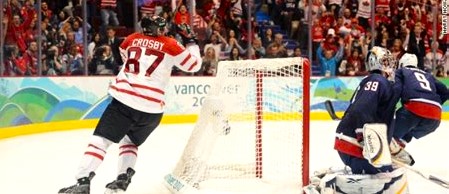
If you’re a sports fan, you may remember Sidney Crosby’s ‘golden goal’ in 2010, which won an Olympic gold medal for Team Canada in ice-hockey.  And you can be sure the joy on Crosby’s face as he celebrated with his rapturous teammates was not because he scored the goal; rather, it was because the team won that coveted prize.  Sid the Kid was and is a consummate team-player.

This lesson was drummed into my psyche from the time I first started playing team-games—hockey and baseball—around the age of ten, until I finished my last game nearing the age of sixty.  Given the vicissitudes of age as I complete my eighty-first trip around the sun, I don’t miss playing those games now, but I’m awfully glad I had the opportunity while yet I could.

Over all those years, I came to realize that the lesson implicit in that old adage might well apply to all of life.  In this country, for example, all of us wear a jersey with the same name on the front: CANADA.  Politically speaking, however, there is a plethora of different names on the back of those jerseys, as there is for any team: LIBERAL, CONSERVATIVE, NDP, SPECIAL INTERESTS, LOBBYIST, and many more.  Ideally, given the name on the front, we would all be playing for the greater good of the team, pulling together to advance our collective best interests.

Alas, all too often, our elected representatives in Parliament push their selfish interests to the forefront.  They choose to heckle and yell, rather than listening to one another; to dismiss differing viewpoints out of hand, rather than trying to understand them; to criticize and condemn, rather than seeking compromise and consensus.  Question period—which is a made-to-order opportunity to seek honest answers and debate them sincerely in an effort to advance a common cause—has become a travesty that would shame an unruly class of six-year-olds.

During my working career, I learned and frequently made use of a valuable strategy for helping bring people to consensus.  On the assumption that agreement is impossible without understanding, I would assign a person (or group) to listen carefully as someone presented an idea.  Next, I would require that person (or group) to ‘play it back’ in their own words in such a fashion as to indicate they had grasped the concept.  If the original presenters agreed they had, we could safely go on to debate the merits of the idea, knowing no one harboured—unknowingly or deliberately—misconceptions about it.  The debate was thus based on a common set of understandings.

If the original presenters believed the listeners had missed the point, I would  have them present it again, and the process would repeat.  If nothing else, it forced people to listen to and focus on what they were saying to each other, rather than just waiting for a chance to refute what they thought they were hearing.

It’s no secret that our country—indeed the entire planet—is having to deal with a number of issues and concerns right now: among them are the prospect of another pandemic for which we are sorely unprepared; the re-emergence of fascism as a political force; a lack of affordable housing; economic and social inequities; famine and drought; the twin-scourges of racism and xenophobia; and the incessant wars being waged around the world.  And towering over and above all of these in scope and consequence, there looms the existential threat of climate change.

On planet Earth, the only home we have, there is but one team.  And the name on the front of that team’s jerseys is HUMANKIND.  But, just as with any other team, the names on the backs of those jerseys are different—in this case, the names of the political, cultural, economic entities we know as nation-states: CANADA, CHINA, EU, GERMANY, INDIA, JAPAN, RUSSIA, UK, and USA, to name but a few.  All but the first on this list might rightfully be deemed a superpower, which Britannica defines as “a state that cannot be ignored on the world stage and without whose cooperation no world problem can be solved.”

The biggest problem facing Team HUMANITY, however, is that these individual players are not cooperating to find solutions to the crises facing the planet.  Rather, they are in pursuit of individual accomplishment, usually to the detriment of each other, as if they are playing a zero-sum game in which, for every winner, there must be a loser.  In hockey terms, it’s as if twelve players are on the ice, each with a puck, firing it at random in every direction, with no concept of who the opposition might be, what team-play looks like, and what winning or losing is.

In the battles our planet is experiencing, there will definitely be a loser, but it won’t be the planet.  It will survive in some fashion or other, perhaps greatly changed from the sanctuary we have come to know, but still circling the sun.  It is we who will be the losers, Team HUMANITY, unless, collectively, the individual players stop paying attention to the names on the backs of their jerseys.

Will we prove able to do that?  I don’t know, of course, but I’m not optimistic.  I despair of the future, though I’ll surely not be around for a whole lot more of it.  As a species, we are as dysfunctional a team as ever I have seen, each of our players strutting and brandishing his own name on the back of his own jersey.

But here’s the one, indisputable thing—in life, as in team-sports, it’s the name on the front that matters.