
~ CLICK ON THE TITLE IN THE BODY OF THIS EMAIL NOTICE TO READ MY BLOG POST IN ITS NATURAL SETTING ~
Do you make your bed right after you get up in the morning? Or after you’ve washed and dressed? Or at all?
I do, and have for almost eighty years. It’s the first thing I do after stumbling out of bed—or maybe the second if the bathroom beckons urgently. The only exception to the rule is if my wife is still abed when I awake, but that is not a frequent occurrence.
It was my mother who got me started, around the time I was five years old if memory serves. She was a stickler for cleanliness and neatness, and I, being the eldest of five siblings, was her first opportunity to test her mothering skills.
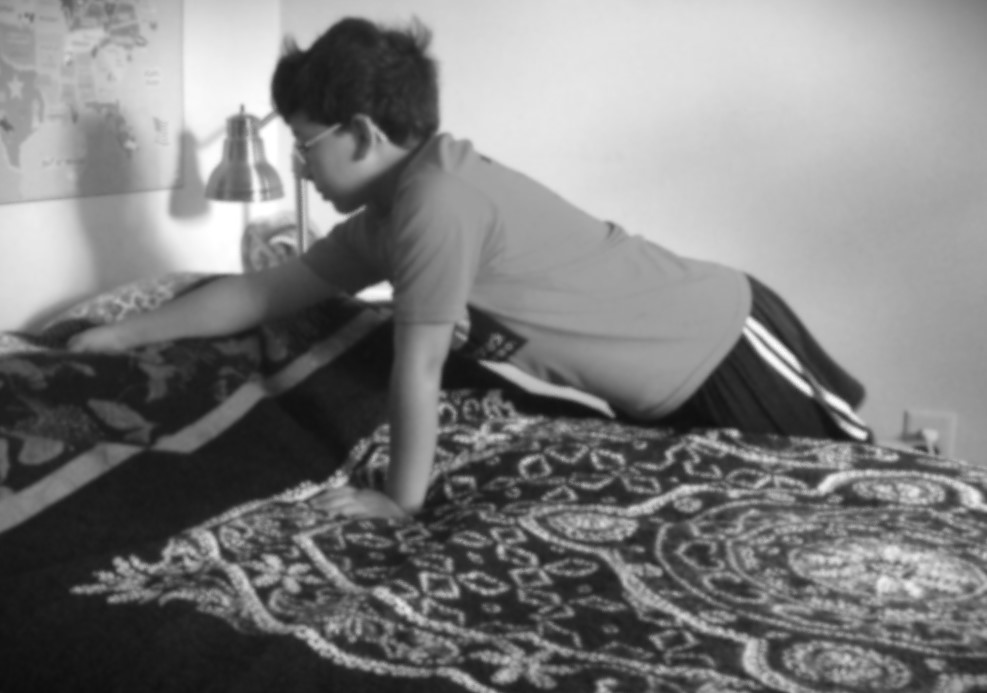
Her instructions were quite specific, and I still follow them to this day. Begin by brushing wrinkles out of the bottom sheet with my hand, then tuck in its corners—no contoured sheets in those bygone days. Next, pull the top sheet up to neck-level, then do the same with the blankets on top of it (usually two in number), smoothing them as I go. Plump up my pillow and straighten the pillowcase, then centre it below the headboard. And finally, drape the bedspread atop everything, ensuring it hangs evenly off the floor on both sides of the bed, and at the bottom, then tuck the top neatly under the front edge of the pillow.
Complicating matters was the fact that my bedcover had three wide, brown stripes running top to bottom on its beige base colour, and woe betide me if those stripes didn’t run parallel to the edges of the bed when I was finished. I can remember mornings when I was sent back upstairs from the kitchen two or three times to remake the bed before I was allowed to start eating. I hated cold oatmeal, so it didn’t take me long to learn the valuable lesson that a job worth doing is worth doing right…the first time!
My brother, three years younger than I, eventually faced the same challenges. I can still see that little boy studying me intently, trying to mimic my every move on the twin bed that sat opposite mine. He didn’t like cold oatmeal either!
My mother’s bed, shared with my father, was always made up immaculately, of course, except on washing day, when she’d strip the bed down to the mattress, turn it or flip it if she thought it necessary, then remake the bed with a clean set of sheets.

The day came when my brother and I had to do the same with our beds, another learning exercise we didn’t enjoy. Eventually, so too did my sisters, but I always thought they were given more leeway than my brother and I received.
I’m sure I asked my mother more than once why we had to go through this exercise every day. “We’re gonna hafta un-make it tonight!” I probably whined.
As best I recall, her reasoning ran like this: making my bed when I got up meant that, no matter what else I might do that day, I’d have accomplished something!
In the beginning, I probably had to ask what that big word meant, but I must have got the gist pretty quickly. My mother was all about accomplishment, achievement, the attaining of goals, and she imbued her five children with that attitude.
Nevertheless, now that I’ve attained a ripe, old age, the question could be asked why I persist to this day in making my bed. The answer might be habit, I suppose, and an aversion to change, for I do value predictability and stability. Or perhaps I’m secretly trying to please her still, long after she has left the stage. Maybe I possess the same inner drive for order and perfection that defined her, that impelled her. Whatever the reason, it seems a little late in the game for me to learn to love a messy, unmade bed.
The bed I make up now is quite different from the one I started with, of course. A king-size model, it requires me to climb atop it to straighten the sheets and blankets in the middle, where I can’t reach them while standing on the floor. Manhandling the bedcover into place—now called a sham, a coverlet, a counterpane—is a man-sized chore, even as my man size is diminishing steadily.
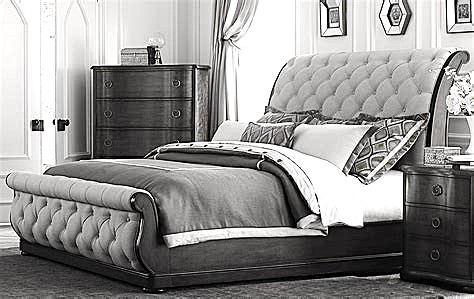
Rather than one pillow, or even two, to plump and place, there are ten in all—two my wife and I rest our heads on overnight, two larger ones in fancy slipcases to be placed in front of those, and six smaller ones to place on the bed, not haphazardly, but precisely, symmetrically, and balanced.
There are days when I feel I need a nap after pulling it all together, but alas, I lack the will to pull the covers down when I’ve just made them up.
So, I soldier on, making my bed every morning, always glad when I enter the bedroom later in the day to see the display of my fidelity to the lessons I was taught. And best of all, it allows me to think of my mother every day, to thank her for the lessons she insisted I learn.
I must confess, though—I have never learned to fancy cold oatmeal!



 tallandtruetales