Speaking Shakespeare

For some readers, this post will appear in its entirety as an email in your inbox. To access the post in its true blog-setting, click on the title to read it.

The challenge in this piece was to have the story’s characters speak only the words of Shakespeare.

The three academics had been droning on in their usual fashion for more than an hour. Annabelle Fotheringham, widowed Professor Emeritus of the Classics, was still sipping daintily at her first glass of single-vintage Madeira. Her brother and colleague, Yorick Entwhistle, Dean of the College, was already on his third, yet mostly lucid. Arthur Wellesley, a great-great-great-grandson of the Duke of Wellington, and the College’s Distinguished Professor of English Literature for more than forty years, was savouring his second glass. All three friends appreciated the wine’s characteristic nuttiness, and its hints of caramel, toffee, marmalade, and raisins.

They were alone in the vaulted faculty lounge, each in a leather wingback chair in front of the stone fireplace that dominated the room. A dozen portraits of tweedy, long-since-departed faculty members gazed down austerely from musty portraits mounted on the walls between the leaded-glass windows that sheltered the lounge from a grey, drizzly, winter afternoon. Not one of the portraits was of a woman.

After packing his pipe with the fine Virginia tobacco he preferred, Wellesley struck a sulfurous match and puffed deeply, releasing plumes of bluish smoke into the cloistered air. Neither of his colleagues smoked, but they did enjoy the aroma that seemed to be soaked into the polished wooden walls of their surroundings.

“As flies to wanton boys are we to the gods,” Wellesley opined, replying to something Fotheringham had just said. “Lord, what fools these mortals be.”

“Misery acquaints a man with strange bedfellows,” Fotheringham said, nodding sagely. “Some are born great, some achieve greatness, and some have greatness thrust upon them.”

“Yes, but the devil can cite scripture for his purpose,” Entwhistle ventured. He lifted the decanter as he spoke, refilled his goblet. “There is a tide in the affairs of men, and we are such stuff as dreams are made on.”

The crackling fire was the only reply to that until Wellesley said, “We have seen better days, alas, but what’s done is done. When sorrows come, they come not as single spies, but in battalions.”

“For goodness’ sake, what a piece of work is a man!” Fotheringham scoffed. “To be or not to be, that is the question. All the world’s a stage, and all the men and women merely players.”

“Ay, there’s the rub,” Entwhistle replied. “But come what may, good men and true must give the devil his due.”

A blast of rain lashed the windows just then, followed by a thunderclap, as if the very devil he spoke of were seeking entry.  

“Knock knock! Who’s there?” Wellesley chuckled, tapping the dottle from his pipe into the burnished, brass ashtray-stand beside his chair. “Blow, winds, and crack your cheeks…full of sound and fury! Come what may, even at the turning of the tide, the lark at heaven’s gate sings.”

“Alas and alack,” Fotheringham cried, “indeed, you set my teeth on edge. Misery acquaints a man with strange bedfellows, ‘tis true, and now is the winter of our discontent. But this is much ado about nothing.”

Busily repacking his pipe, Wellesley had no reply to that. The rain continued to pelt the windows, but the contrapuntal crackle of the fire served as a soothing counterpoint to its bluster.

“As good luck would have it, we bear a charmed life,” Entwhistle murmured, his words slightly slurred from the effects of the wine. “We are more honoured in the breach than in the observance, more sinned against than sinning. But the short and the long of it is that we shall shuffle off this mortal coil, so we must stiffen the sinews.” Gesturing around the room with one arm, he finished, “Here is not the be-all and the end-all.”   

“’Tis neither here nor there,” Wellesley intoned, yellowed teeth clamped around his pipe-stem. “We have seen better days, but though this be madness, yet there is method in it.”

“A plague on both your houses!” Fotheringham declared, finishing her wine. “Come what may, ‘tis a foregone conclusion, cold comfort, a fool’s paradise. In my heart of hearts, I know all our yesterdays, filled with the milk of human kindness, will stand like greyhounds in the slips.”

Neither of her companions was entirely sure what she meant, and in truth, neither was she.

“The lady doth protest too much, methinks,” Entwhistle muttered as he added more Madeira to his goblet.

“Yorick, the better part of valour is discretion,” Wellesley cautioned him, afraid his friend might offend the lady. “The smallest worm will turn, being trodden on. Best you throw cold water on it.”

Entwhistle merely grumbled to himself, and his chin sagged onto his chest.

“Too much of a good thing!” Fotheringham said, pointing to Entwhistle’s goblet as he began to snore softly.

“Alas, poor Yorick! No more cakes and ale?” Wellesley smiled at his sleeping friend.

“And thereby hangs a tale, Arthur!” Fotheringham said archly as she rose to depart. “Such a sorry sight, my own flesh and blood!”

Wellesley got up, as well, and the two of them struggled to pull their inebriated colleague to his feet, his arms over their shoulders. “Once more unto the breach, dear friends, once more,” Wellesley sighed as they staggered with him to the door. “We cannot allow this to sully his spotless reputation.”

“Mum’s the word!” Fotheringham said. “The quality of mercy is not strained.”

“A ministering angel shall my sister be,” Entwhistle mumbled as they assisted him from the lounge.

Moments later, all that could be heard in the empty, cavernous room was the crackle of the fire and the relentless rain against the mullions.

All’s well that ends well, indeed.

What to Believe?

For all readers, this post will first appear as an email in your inbox.

For those whose email contains a link, click on it to access the post in its true blog setting.

For those whose email simply shows the post in its entirety, click the title to read it in its true setting.

I was raised a Christian lad, not by proselytizing parents, but by a father and mother who passively practised the religion they’d been taught by their own parents.  As an infant, I was baptized in the Church of England; as a boy, I attended Sunday School, where I learned the Anglican liturgy. In my early teens, I publicly professed my learned faith in a confirmation ceremony; as a young man, I married my bride in a Christian church.

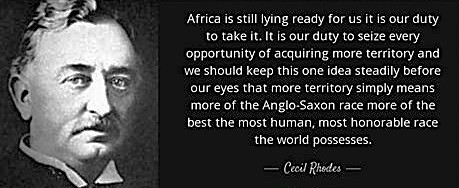
Growing up, I was enamoured of the tales of derring-do by British adventurers who set out to dominate the world—Richard the Lionheart and the Crusader knights; Sir Francis Drake and other explorers and privateers; Sir Cecil Rhodes and the rapacious conquerors of Africa and Asia. All of them ventured forth under the cross of St. George, ostensibly to bring Christianity to the heathen masses. Or so I was taught.

I wasn’t dissuaded by the troubling outcomes that sometimes occurred to me, arising from those teachings. For example, had I died before being baptized, I was taught I would not have gone to heaven; I was told that children of other faiths, unless they converted to Christianity, would not go to heaven; I believed none of us, being sinners, would go to heaven if we did not sincerely repent and swear never to repeat our sinful actions; and it was ingrained in me that those who did not go to heaven would be damned to eternal hellfire.

It didn’t dawn on me until much later how ludicrous it was that the God of love held dominion over me through fear. Still, I’ve never had doubts about the essential teachings of Jesus, as I understand them from the several writers of the Bible who have reported them—love; forgiveness; humility and service; empathy and trust; repentance and redemption; compassion and mercy. It seems to me that if everyone, Christian or not, practiced those teachings, the issues that plague our world would disappear.

From earliest times, my favourite part of being in church was listening to and singing the glorious hymns, accompanied by the mighty strains of a pipe organ. Because of the early, emotional indoctrination I experienced through my parents, they prickle my skin to this day when I hear them rendered—to name a few: Abide With Me; Blessed Assurance; Guide Me, O Thou Great Redeemer; Jerusalem; Joyful, Joyful, We Adore Thee; Nearer My God to Thee; O God, Our Help In Ages Past; and Rock of Ages.

A good number of hymns, I discovered later, were written by British lyricists and set to the melodies of classical composers, many of them Germanic. One of those, Glorious Things of Thee Are Spoken (by John Newton, who also wrote Amazing Grace), is sung to the same Joseph Haydn melody that graces the German national anthem, Deutschlandlied (formerly Deutschland über Alles).

Given the 20th century history of conflict between those two nations, I always found it strange that they shared a love for such glorious music. Even more so, I found it preposterous that soldiers of both Christian countries were killing each other on battlefields, in direct contravention of their shared God’s commandment.

Yes, God is with us! Nein, Gott ist mit uns!

But perhaps that isn’t so strange, given the militaristic character of many of those hymns. Take these lyrics for example—

Stand up, stand up for Jesus! ye soldiers of the cross;
Lift high His royal banner, it must not suffer loss:
From vict’ry unto vict’ry, His army shall He lead,
Till every foe is vanquished, and Christ is Lord indeed.

Implicit in those words is the instruction that good Christians must overthrow those who do not believe. I found that to be in contravention of the Christly teachings mentioned earlier, which always struck me as invitational rather than compulsory. I was taught, after all, that God had gifted us with free choice.

Mind you, George Duffield, Jr., the American clergyman who wrote the lyrics in 1858 and set them to an original melody by Franz Schubert, may not have intended them to sound militant or jingoistic. But that is how they ring in my ear. And it is such sentiments that crusaders and conquerors of the past cited to justify their conquests.

If you doubt it, consider also the lyrics of such hymns as Onward, Christian Soldiers, We’ll Go Out and Take the Land, or The World Must Be Taken For Jesus.

In fact, many Christian buccaneers and swashbucklers set out to plunder the world for reasons far more crass than what they professed. Bringing Christianity to the heathen masses was, at best, a by-product of their colonialist ravages, and at worst, an excuse for them. As for those Indigenous peoples subjected to the messianic zeal of 19th century Christian missionaries, I’ve always wondered how their forced conversions could be deemed proper when similar depredations imposed on Christian victims during the 8th century Moorish invasion of Europe were considered barbaric. Did both aggressions not have the same effects on those who suffered and died? Were they not the same thing, save for the religious faith driving them?

Might makes right, some say. To the victors go the spoils. And history—the history I grew up learning—was written by those victors. The synoptic gospels have Jesus saying, “Render unto Caesar the things that are Caesar’s…” A venerable phrase translated from the Latin has Caesar claiming, “I came, I saw, I conquered!” The emphasis, of course, is on that final word.

So now, with more yesterdays accumulated than tomorrows to anticipate, I find I am no longer the Christian lad I once was…not with how Christianity, particularly the degraded, evangelical sort, has come to be defined in this 21st century. I do believe in free choice, and I choose not to believe Jesus was all about conquest and subjugation.

Further, I do believe in the wisdom of the aforementioned teachings of Christ, although I do not need the backing of a supernatural mythology to support my belief. I regard those as universal truths shared by Christianity, Islam, Hinduism, Buddhism, and Judaism, among other religions…and indeed, by many folk who profess no religion. Those teachings promote adherence to the Golden Rule, compassion for and kindness to others, the valuing of family and community, and the pursuit of a moral life.

I’ve long believed that the evils of this world are caused, for the most part, by extremism—unbridled nationalism, greedy capitalism, and apocalyptic religions. How might it be if only we gave those universal truths a chance to show what they could do instead?

In closing, lest this screed be mistaken for apostasy or advocacy, let me assure you it is no more than a statement of personal belief, refined over many years of observation and experience. Despite the sage admonition not to believe everything I think, I have always felt that believing in something is important, so as not to fall for anything.

The question, of course, is knowing what to believe. And for me, seeking that knowledge will be an ongoing journey until, inevitably, the road comes to an end.