Making Friends

Almost a half-century ago, an older colleague advised me to surround myself with friends who were, not only my age, but younger and older, as well. “With friends your age and younger, you’ll be sharing memories you’ve made together while still able to create new ones. And when you make friends with older people, you’ll learn a lot from their sharing with you the experiences they’ve had.” He didn’t tell me one is silver, the other gold, but I got the drift.

His advice made a lot of sense to me, and to this day, my wife and I can claim friends who are in their nineties and others in their twenties. “You never want to see older friends die,” my colleague said, “but they will. And when that happens, you’ll find solace in the company of the younger ones.”

 That same colleague also told me, tongue-in-cheek, “I don’t need to make more friends. I have trouble keeping up with the friends I already have!”

I didn’t get it at the time, but nearly fifty years on, I better understand what he was saying. We have many friends we barely get to see anymore, given the obligations we all have, the distance we live away from each other, and the vicissitudes of getting older. If it weren’t for social media, I doubt we’d even be in touch with some of them. It’s not that we don’t consider them friends anymore; rather, it’s an inability to keep up.

I first met the friend I’ve known longest when we were fifteen, and sixty-seven years later, that friendship endures. But we see each other in person only two or three times a year now, and even those few meetings seem to require a good deal of advance planning. Moreover, there’s always the chance that one or other of us will have to cancel because of unexpected illness.

I remember my mother in her later years, living longer than my father and most of her friends. Near the end, there was but one longtime friend left, and their children would drive them to an afternoon get-together. Eventually, though, even that proved impossible, and they were reduced to talking by phone—a poor substitute. I dread that day’s arrival for me and my friend.

On a brighter note, my wife and I have acquired five new adult friends over the past half-dozen years. Our five grandchildren have all attained the age of majority now, and are attending university or, having graduated, are working full-time. They all live away from home—two from our eldest daughter and her husband, three from our youngest and hers—but close enough to us that we see them frequently on holidays and family occasions.
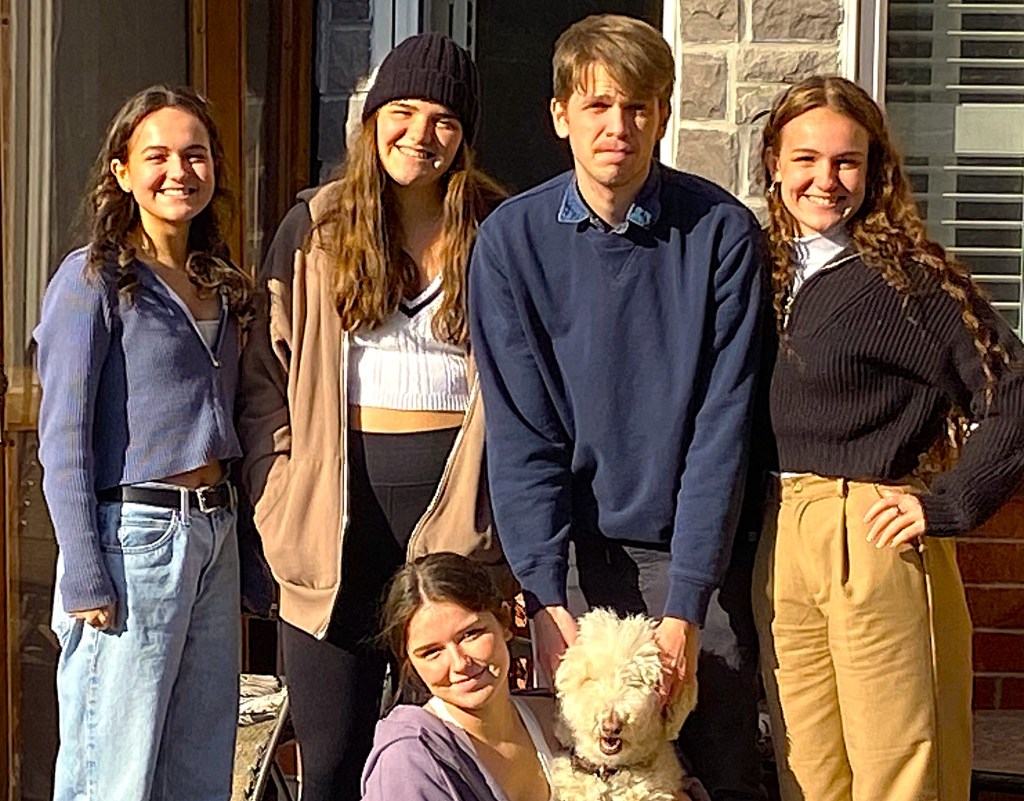
When they were children, we interacted with them lovingly, but with the slightly patronizing manner typical of conversations between elders who’ve seen and done it all and youngsters who are still finding their way. We never spoke to them in ‘baby-talk’, always recognized their unique intellect and agency, and considered them, not friends, but beloved grandchildren. And they regarded us, I think, as loving grandparents.

It’s different now, though. They’re still beloved by us, of course, and we by them; nothing could change that. But as they’ve grown into adulthood, they’ve become friends, not just grandkids. They’ve developed their own sets of values—thankfully, not identical to ours, nor to each other’s, but not in contradiction, either. They have their own viewpoints on issues facing them, and feel free to discuss those with us. They no longer accept everything we say as gospel, but they’re polite in their disagreements. And they back up their points of view with rational thought.

No longer are they participants in our world; instead, we have become participants in theirs.

As a young teacher, I remember cautioning parents of my students that, by helping children learn to think critically, we must accept the likelihood that they’ll think differently than we do about many things. It’s a delight now to find that is the case with our grandchildren. And a greater delight that it’s given us so much to talk about.

Three of them have come to visit us in Florida during the past year or so, all with boyfriends. So, we’ve been included in their conversations with each other, heard what they think about goings-on in the world, which has opened up new avenues of perspective for us. We’ve listened to their music, and they to ours. We’ve gone with them to the beach, to the mall, to restaurants, to the pool—all things we used to do with our older friends in years gone by.

When my colleague first told me the wisdom of cultivating friends of all ages, I confess I never anticipated some of those would be our grandchildren. But so it has turned out, and we are blessed.

As the familiar ditty advises, Make new friends, but keep the old…

Past, Present, Future

In 1905, George Santayana famously wrote, Those who cannot remember the past are condemned to repeat it. The statement is from his five-volume book, The Life of Reason: The Phases of Human Progress.

In 1943, Eugene O’Neill wrote, There is no present or future—only the past happening over and over again—now. That declaration is from his stage play, A Moon For the Misbegotten.

In his 1950 novel, Requiem For A Nun, William Faulkner echoed the notion when he wrote, The past is never dead. It’s not even past.

Although I could never be confused with those three literary giants, I too wrote on the same theme, more poetically: What’s past is the past—so quickly it passed—But it’s not where I want to stay. Those are the last two lines in the third stanza of my seven-stanza poem entitled, I Haven’t the Time

https://ppens1blog.wordpress.com/2025/07/01/i-havent-the-time/

But I also wrote of the future in that same poem: When all has been said, I still look ahead /To life’s next opening curtain. The premises of the poem are that life marches resolutely forward, that I haven’t the time to concern myself with its past, that I eagerly embrace its future.

Nevertheless, I’ve often wondered if there even exists a past or a future. Perhaps, as James Joyce stated in a 1935 interview with Jacques Mercanton, There is not past, no future; everything flows in an eternal present.

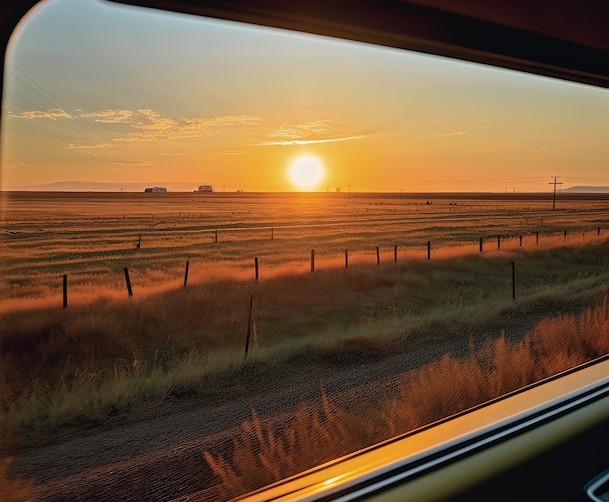
It may be, perhaps, that my poetic curtain is opening, not on some ephemeral future, but only on more of the ever-morphing present. I’ve long appreciated the analogy that life’s progress is akin to riding a train from one’s point of embarkation to one’s final destination, with innumerable stops along the way. People get on, share the ride with me, and every now and then, some get off—perhaps because their journey has ended, perhaps to continue their journey on another train. Indeed, I change trains from time to time myself, although my journey still continues.

My train moves from whence to hence, but I, gazing through its windows at the passing parade, remain aboard in my encapsulated present. The views change constantly, but my surroundings on the train remain, for the most part, constant and familiar. Locales no sooner flash by the window into the past in one direction, than future ones appear from the other. Riding the train is like being everywhere at once while never leaving the same place—Joyce’s eternal present.

Despite these musings, however, I find myself reflecting on the past more often these days—because of my age, maybe, now that my tomorrows are vastly outnumbered by my yesterdays. Although memory is an increasingly unreliable tool, it’s still easier to remember what’s transpired than it is to predict what’s yet to come.

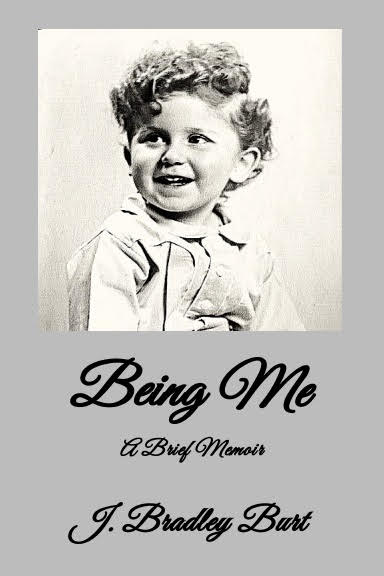
I recently published a short memoir for family and close friends, Being Me, and the exercise both surprised and cheered me. For instance, I re-affirmed that I have lived a blessed and privileged life to this point, surrounded by people who love me. And happily, I discovered I have almost no regrets about events from the past. The few I do have are less the consequence of my own actions and more the result of external forces acting on me, forces I could not control. With the exception of those, I realized there’s virtually nothing I would seek to change, had I the power to do so.

Writing the memoir took me back to places I’d been along the way, and I grasped anew how much I had enjoyed being there—my parents’ hearth, my own homes with my wife and daughters, our trips to foreign lands, my various career stops. I have no wish to return to any of them, to be sure, for I enjoy where I am right now too much. But I greatly appreciate that I had those experiences and opportunities—even if I see them now as only images flying past the windows of my train.

The future holds no fear for me. Curiosity? Anticipation? Of course! Those next opening curtains still claim my attention. I have no idea when my train will drop me at my final destination, but the present journey continues to be enjoyable and fulfilling. I have no clear understanding of what awaits when I shall disembark for the last time, although I do suspect the past, present, and future all will end at once. After all, Einstein held that the distinction between the past, present and future is only a stubbornly persistent illusion.

I imagine there to be an entirely different matrix awaiting after my consciousness has ceased, where time has no meaning, where eternity reigns…well, eternally. In the meantime, I hearken to this advice from St. Luke: …live for today, because yesterday is gone and tomorrow may never come.

My journey’s end will come, however, and I look to it in this fashion—

When that day is nigh, as ‘twill be by and by,
I hope it will be widely said,
That as man and boy, I strove for the joy
Of living until I was dead.