The Lonely, Silvery Rain

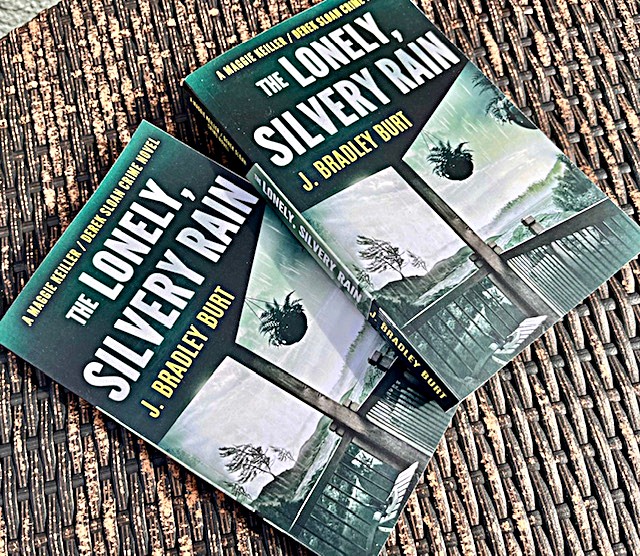
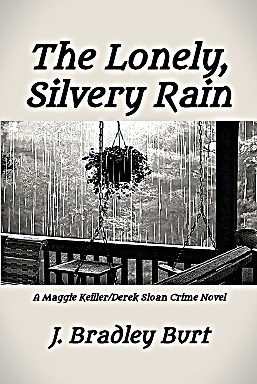
Otter & Osprey Press, a mainstream, Canadian publishing house (a division of Northern Forest Publishing), has released a second edition of my novel, The Lonely, Silvery Rain, to bookstores and online retailers. It’s available in both print and e-book formats, including Kindle.

This book is the thirteenth in my Maggie Keiller/Derek Sloan crime series, and the first to be offered by a Canadian publisher. As a crime-fiction novel, some of the portrayed events and language are intended for an adult audience…..but the story, as one editor commented, is kickass!

Set against a background of reconciliation efforts between government and the fictional Odishkwaagamii First Nation, a gripping story of betrayal and murder unfolds in Port Huntington, a small resort town on Georgian Bay. Vandalism, extortion, and violence are unleashed in the community as a number of personal grievances boil to the surface. 

In 2018, the Ontario Superior Court of Justice awarded ten billion dollars to twenty-one First Nations in a vast area along the north shore of Lake Huron, to be paid equally by Canadian and Ontario governments. The settlement is compensation for unpaid annuities to those affected First Nations, annuities that were mandatory under the still-valid 1850 Robinson-Huron Treaty, whose terms committed the government to paying the affected First Nations annual stipends tied to actual resource revenues on their sovereign lands.

Over the years, billions of dollars in profits were extracted from First Nations lands for mining, timber, and fishing enterprises in Ontario, but the obligatory annual payments to First Nations were adjusted only once, thus depriving generations of First Nations people of revenues to which they were entitled.

Under the terms of the settlement, the Robinson Huron Treaty Litigation Committee, composed of Indigenous representatives, was tasked with determining how, and in what amounts, the funds would be distributed to the affected First Nations. While this story is a work of fiction, it is rooted in the very real question of how that money ought to be used. For the Odishkwaagamii, these debates boil over into deception and bloodshed.

Maggie Keiller and Derek Sloan are inextricably caught up in the turmoil, and it is only through their personal integrity and courage that they navigate the chaos.  Determined as always to defend their Port Huntington community, and themselves, they work to ensure justice will prevail.

This safe, universal link will afford you a preview of the story, and direct access to your preferred online retailer—

https://geni.us/thelonelysilveryrain

After publishing my books through Lulu Press since 2007, an American print-on-demand firm, I’m thrilled that a Canadian publisher has picked up my work, and I encourage you to take a look at their website—

https://www.northernforestpublishing.com/homepage

I hope you’ll explore the link to my book, which I believe you will enjoy. Other titles in the Maggie Keiller/Derek Sloan series may be found at this safe link—

https://www.lulu.com/spotlight/precept

That Was That!

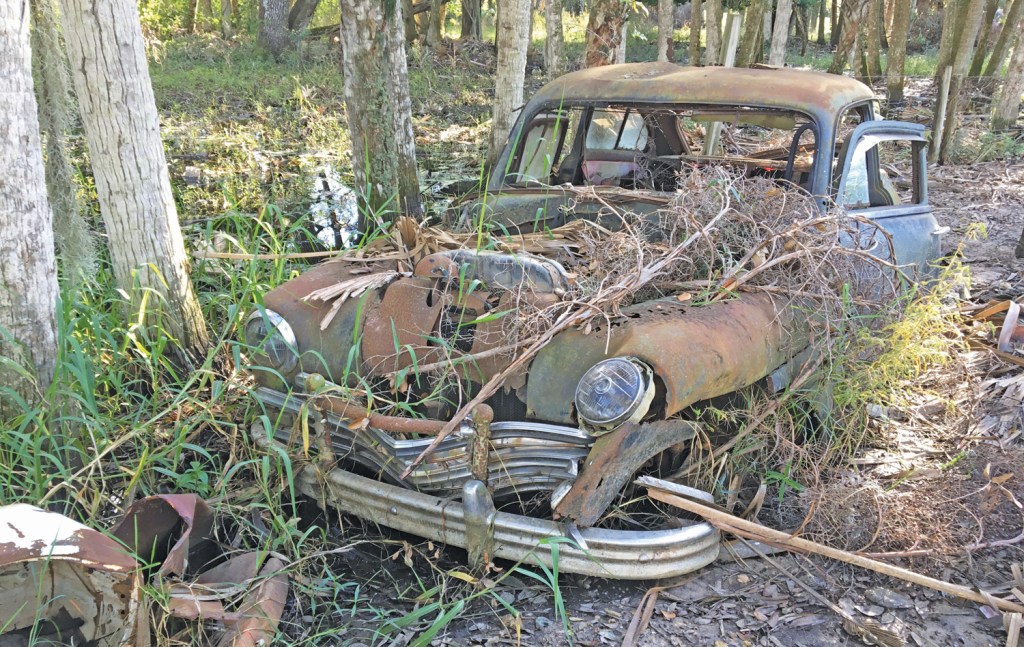
The following piece is my response to a prompt for the Florida Weekly 2025 writing contest, to write a story no more than 750 words, about the accompanying photo of an old car abandoned in the woods.

“Nosiree!  I plumb don’t b’lieve that, Jed!”  A trail of acrid smoke rose into the cool, autumn air from the pipe clenched in the old man’s mouth.

“I’m tellin’ ya, Ezra, it’s the honest-to-Jehosophat truth.  My daddy tol’ me hisself afore he passed.  That there vee-hicle’s been rottin’ in the woods since you an’ me was puppies!”

“Yessir, that part’s true, but all’s I can say ‘bout t’other part is your pappy was mistook!  That vee-hicle was built in Dee-troit city in the 1940s, ‘bout the time you an’ me come into the world.  Bonnie an’ Clyde was killed by revenooers back in the dirty-thirties, so no way they was gallivantin’ ‘round in that vee-hicle!”

The old men were rocking in ancient chairs on the decrepit porch of Jed’s cabin, a jug of homebrew on the floor between them.  Idly watching leaves fluttering to the ground in the gentle breeze, they were chewing over a favorite topic of conversation in their backwoods community.

Jed took a deep draw on his own pipe.  “Well, if’n you’re so sure ‘bout that, what’s your story?  How else could that ol’ wreck come to roost in the middle of the woods?”

“Way I heard it,” Ezra opined, wiping his mouth after a swig from the jar, “some city-slicker come to town drivin’ ‘er, an’ he run afoul of ol’ man Jackson.”

“Sheriff Jackson?” Jed asked, reaching for the jug.  “Ol’ Hick’ry?  He was a mean ‘un, so’s I ever heard.  Not a boy to fool with!”

“My ol’ man thought so,” Ezra nodded, banging his pipe against the side of his chair.  Watching the dottle fall to the wooden floor, he waited a moment to ensure it was extinguished.  “Daddy got hisself locked up more’n once by that boy.”

“Yeah, my ol’ man, too!” Jed said with a toothless grin.  “But what ‘bout that there city-boy?  What happened to him?”

“You ever looked inside that vee-hicle?” Ezra asked.

“Nosiree!” Jed declared.  “Laid eyes on ‘er once or twice through the trees while huntin’, but never wanted to get close.  Word is, she’s haunted!  Way I heard it, Bonnie an’ Clyde is still inside!”

“Bullcrap!” Ezra exclaimed.  “I already tol’ ya, they was dead an’ gone afore that vee-hicle ever rolled off the Dee-troit line!  But you’re right, she is haunted, sure as I’m sittin’ here!  Way I heard it, that city-slicker’s still inside, sittin’ behind the wheel big as life…only dead as a doornail.”

“What in tarnation happened to him?”

“Like I said, he got hisself mixed up with Ol’ Hick’ry.  Folks say it was over messin’ with the ol’ man’s daughter, if mem’ry serves.  My daddy said she was a right pretty gal.”

“Messin’ with her?” Jed echoed, taking another swallow.  “Messin’ how?”

“Not sure,” Ezra shrugged as he repacked his pipe with low-country, natural Virginia.  Striking a match on the side of the rocker, he puffed deeply a few times, then finished, “But she was a right pretty gal, like I said.”

“Don’t ‘member her,” Jed said.  “Sounds like I mighta missed somethin’.”

“Nah, she was way older’n us, Jed.  When her an’ that city-boy was mixin’ it up, you an’ me woulda still been pullin’ girls’ pigtails in grade school.”

“I only got to grade eight,” Jed said, “but by cracky, I was pullin’ more’n pigtails by then!”

The lifelong friends laughed at that, then sat in silence for several minutes, puffing and drinking contentedly, happy in the autumnal forest they’d never left.

“You really think that city-boy’s still in that vee-hicle?” Jed asked finally.  “Be nothin’ much left by now, if’n he is.”

“Hard to say,” Ezra replied.  “I ‘spect all’s we’d find if we was to go lookin’ is a pile of old bones, maybe a skull grinnin’ at us.  But don’t matter, nohow.  My ol’ bones ain’t gonna skedaddle that far, not no more.”

“I hear ya,” Jed agreed.  “But listen, what happened to Ol’ Hick’ry’s daughter?  Where’d she get to?  Maybe she’s out there in the vee-hicle with him.”

“Dunno,” Ezra said, brushing a fly from his forehead.  “All’s I know is Bonnie an’ Clyde ain’t out there.  Not ‘less they rose up from the dead like Laserman…that guy in the Bible!”

“You sure?” Jed said.

“Yessiree!” Ezra said, smacking the arm of his chair.  “An’ I’ll tell ya why.  That there vee-hicle out there’s a Stoodiebaker, but Bonnie an’ Clyde drove ‘emselves a Dodger!”

And that was that!

The Landlord

The prompt from my weekly writers group in Florida was to write a piece focusing on an aspect of character development. This post is an excerpt from a chapter in one of my novels, ‘Delayed Penalty’. Can you discern the personalities of these two characters from their conversation?

“Yeah, she lives here.  What’s this all ‘bout?  She in trouble?”  Dicky Lister was slouched in the doorway to the landlord’s apartment, a beer can in his hand.

“When did you last see her?” Detective Billie Radford asked.

Scratching his head, Lister said, “I dunno.  Coupla days ago, maybe.  Me an’ the tenants don’t exchange Christmas gifts, y’know.”  Radford noticed flakes of dandruff on his shoulders as he scratched his hair.

“Did you happen to see her sometime on the twenty-fourth, Christmas Eve?”

“Yeah, I guess, but early on.  Me an’ Lizzie don’t hang up our stockin’s for Santa together, neither,” he smirked knowingly.  “Wouldn’t of minded, though.”

“Her name is Lissa,” Radford said, “not Lizzie.  She’s been missing since Christmas Day, and I’d like to see her room.  I need you to let me in.”

Lister drew back a step, took a swig from the can.  “Nah, I can’t do that, Detective.  I got a key an’ all, but I never go in somebody’s room if they ain’t ‘round.”

Radford smiled disarmingly.  “Oh, I’m sure you don’t, Mr. Lister.  But it’s very important that I check her room, and I’m asking you once more, politely, to open it for me.  Otherwise, I can come back with a warrant, and in that case, we’ll make a point of searching the entire building.  That will be a lot more aggravation for you, I can assure you.”  As she spoke, she made a point of turning to look up at the ceiling in the hallway behind her.

“Whatta you lookin’ at?”

Nothing really, and that’s a problem!  I don’t see smoke-alarms or sprinkler-heads in the corridor, which, as I’m sure you know, is a violation of code for a rooming-house.  That’s not something I’d normally concern myself with, but I’m wondering if the fire marshal’s office has granted you an exemption for that?”

Lister’s beady eyes narrowed.  “Oh, so you’re gonna report me for that?  You friggin’ lady-cops, man!  You got nothin’ better to do?”

“I do have something better to do,” Radford said, still smiling.  “I have to write a report about my visit here today, but if I don’t have a look at Lissa’s room, I won’t have anything to report.  So in that case, I suppose I’ll have to report the code violations.”

“You friggin’ cops!” Lister hissed again.  “Always makin’ trouble for us little guys.  Wait here a second ‘til I get the key.”  He closed the door unceremoniously in her face.

As she waited, Radford sent a text to the fire marshal’s office about the violations.

“Only thing worse’n a real cop is a lady-cop!” Lister sniffed a few moments later on the way to Lissa’s room.  As they passed through what passed for a front vestibule, he tossed his empty beer can on top of an overflowing garbage can.

Once he had the door unlocked, Radford said, “Thank you, Mr. Lister.  I’ll let you know when I’m finished here.”

After she closed the door on him, Lister offered a middle-digit salute before stamping back to his apartment to fetch another beer.  “Cops suck!” he yelled, knowing she’d be able to hear him through the paper-thin walls.  “You better not report me!  An’ I’m gonna tell Lizzie a cop was goin’ through her stuff!”

Ignoring his threats, Radford did a cursory walk-through of the bedroom and bathroom, saw nothing out of the ordinary for a young woman living on her own.  A more thorough search of her closet, dresser, and bedside table also yielded nothing of much interest.  The only curious thing that caught her eye was a black bra in the top drawer of the dresser—curious because it was flecked with what looked like…dandruff.

Yeah, he never visits tenants’ rooms when they’re out!  The pervert!

After taking a picture without disturbing anything, Radford put on a pair of plastic gloves and placed the bra in a plastic evidence-bag.  

On her way out, she taped two strips of yellow crime-scene tape diagonally across the door to the room, and photographed that, too.  Back in the vestibule, still gloved, she took a picture of Lister’s discarded beer can on the garbage can, then put it inside another evidence-bag.

Might be nothing.  But if the guy lied about never going into tenants’ rooms, maybe he’s lying about Lissa’s whereabouts, too.  We’ll check the DNA.

She didn’t bother to tell Lister she was leaving.

Another Excellent Read!

TEN BILLION DOLLARS AWARDED BY COURTS TO TWENTY-ONE ONTARIO FIRST NATIONS!

In the latest novel in my acclaimed Maggie Keiller/Derek Sloan crime series, the dramatic consequences of this actual treaty settlement unfold in Port Huntington, a small resort town on the shores of Georgian Bay.  And once again, Maggie and Derek become inextricably involved in personal grievances boiling to the surface among various interests, involving vandalism, extortion, violence, and murder.

Be sure to read this exciting story, available now for purchase at—

https://www.lulu.com/spotlight/precept

You will find complete information on my published books by pressing the My Books tab at the top of this page.

As always, thanks for reading my blog, and for your interest in my writing!

The Cannabis Murders

I’m excited to announce that The Cannabis Murders, my eleventh novel in the Maggie Keiller/Derek Sloan crime series, will be released early in February!

The riveting story unfolding in this book is set against a backdrop of rising public concern over the extent of covert Chinese interference in political and corporate affairs in Canada, and across North America.

The story itself is tied to the legal production and distribution of cannabis products, as a global producer with Chinese connections attempts to establish a manufacturing facility near the resort town of Port Huntington on Georgian Bay.  In so doing, the company encounters community opposition, and runs up against Indigenous land-claims to the property in question, both of which throw up major stumbling-blocks to its plans.

To everyone’s dismay, repeated vandalism, threatened extortion, violence, and eventually murder soon follow.  Maggie and Derek become caught up in events through her support of a young, Indigenous woman trapped in the turmoil that follows, and through his involvement as a negotiator for the First Nation land-claims.  And both are drawn further into the mayhem because of their connection to the government’s pending inquiry into the secretive operations of Chinese interests in the area.

Resolute as always to protect their community, and themselves, Maggie and Derek work closely with police to bring the evil perpetrators to justice.

I know you will enjoy this story, and I’ll post notice here when the book becomes available.  In the meantime, the ten earlier novels in this series, together with my eight anthologies of tales, can be found for a free preview or purchase at this safe link—https://www.lulu.com/spotlight/precept

Thanks to all of you who read my blog-posts. If you enjoy them, you are sure to love my books!

The Gun

The August prompt from my Florida writers’ group is to use a “hook” within the first few lines to draw readers/listeners in to the story.  This is my offering—

I discovered the gun in the drawer of my husband’s bedside table this morning.  I’d been looking for the bottle of Xanax he’d borrowed from me last night, and I found it lying beside the gun.

To say I was shocked would be an understatement.  I sat down numbly on the bed, staring vacantly at the gun, wondering why on earth my husband would have such a thing.

It looked huge—an ugly, metallic-sheened obscenity lying there like a wide, upper-case L, one arm shorter than the other, a curled stem sticking from between its two arms like an erect, male appendage.  The shorter arm was pebbled with three shallow curves on its inside edge, obviously the arm someone would use to hold the gun and point it.  The longer arm was straight, with a round, black hole at its end.

Loath to touch it at first, I eventually gave in and picked it up between thumb and forefinger.  It was heavy, and oily to the touch, almost reptilian.  After a moment, I clasped it in my other hand and pointed it at my reflection in the mirror on the back of the bedroom door opposite.

The sight frightened me to the point I cried out and dropped the gun on the carpet.  It landed with a soft thud, then lay at my feet, pointing back at me.  Gingerly, I stirred it with my toe to point it away.

Why does Frank have this…this thing in his drawer?  What’s he afraid of?  And why didn’t he tell me he has it?

The gun was still on the carpet when I came back upstairs after lunch.  I knew I couldn’t just leave it there, but I had no idea what to do with it.  Without knowing why Frank even had the thing, I couldn’t put it back where I’d found it.

What if he’s planning to use it on me?

Sitting on the bed again, I swallowed a Xanax from the bottle still lying in Frank’s drawer, then tossed the bottle to my side of the bed.  As I did, a light went on in my anxious brain.  I picked up the gun carefully, walked around to my bedside table, and put it in my own drawer.  The pill bottle followed it, and I closed the drawer firmly.

There!  Problem solved!

Downstairs again, I couldn’t stop asking myself why Frank had the gun in the first place.  We’ve had our share of arguments over the years like any married couple, maybe more in the past few months.  But there’s never been anything leading either one of us to contemplate violence.

What am I missing?  Is there something different lately?  Is he tired of me?  Is there someone else?

Dinner was unusually silent, mostly because I replied to Frank’s conversation in monosyllables.  By dessert, he’d stopped trying, and he scurried off to his den afterwards to watch a game.  I busied myself reading in the living room.  Or tried to.

Why is he so quiet?  What’s he planning?

The old grandfather clock in the vestibule was chiming eleven as I climbed the stairs, dreading entering the bedroom, not knowing what might be waiting for me.  Frank had headed up half an hour ago, so if he had something planned, he’d had time to get ready.  I wondered if he’d found the gun in my drawer.

He was lying in bed reading when I came in.  “I took another Xanax from your bottle,” he said sleepily.  “Had a rough day.”

I slowly got undressed before visiting the bathroom, not understanding how he hadn’t found the gun when he got the pill from my drawer. 

Maybe he did!  Maybe he’s got it under the covers…

When I came back from the bathroom, his light was off.  I carefully crawled in beside him, lay quietly for several minutes until I could no longer hold it in.  “Frank?  Are you still awake?”

“I am now,” he mumbled.

“Frank, why do you have a gun in your drawer?”

“A what?”

“A gun!  Why is there a gun in your drawer?”

“What are you on about?” he said, his voice sharper now.  “I don’t have a gun!”

“I found it this morning,” I said, my own voice rising.  “Don’t tell me you don’t have a gun!  It’s right here in my drawer now.”

Rolling over, Frank opened one eye.  “Have you been taking your meds?  You’re talking crazy!”

“Crazy?  Crazy?  Okay, then what’s this?”

I slid out of bed, yanked open my drawer, pulled out the gun.  Pointing its ugly snout at him, I said, “This is a gun, Frank!  And I found it in your drawer this morning.”

He stared at me in disbelief for a moment, then rolled his back to me again.  “You’re delusional, Emma.  Take your pill and let me get some sleep.”

Infuriated by his nonchalance and denial, I took a deep breath, closed one eye, and pulled the trigger.  The gun jerked violently in my hand, hurting me, and the loud Bang! deafened me.  And then…and then…

I wakened in a cold sweat.  Frantic, I turned to my husband, but he was snoring peacefully beside me.  And despite my frenzied search in the darkened room, there was no gun to be found. 

When I awaken again, it’s almost ten o’clock.  The sun is streaming its narrow beams around the edges of the shades, still pulled down, and I see dust motes floating lazily in its warmth.  Frank has dressed and gone to work.  I lie there for a few minutes, reliving the dream.

Thank God that’s all it was!  Imagine if it had been real!

As I’m washing my hands in the bathroom, I wince at a tinge of pain in my right palm, and I see that it’s lightly bruised.  After dressing, I remember to take my pill before heading downstairs.  On the way out of the bedroom, I hesitate a few moments at the door.

Don’t be stupid!  There’s nothing there!  Forget it!

 Nevertheless, I decide to check, and to my horror, I discover the gun in the drawer of Frank’s bedside table.

But He Didn’t!

The Gulf Coast Writers Association in southwest Florida recently announced the winners of their 2023 writing contest. I’m pleased to say I won First Place in the fiction section with this piece, But He Didn’t!

The GCWA provides a forum for fellowship, education, and information for writers, and its well-regarded contest draws a wide-range of authors.   Based in Fort Myers, the organization attracts members from throughout Southwest Florida, including published as well as unpublished writers, and professional editors, agents, and publicists.  The literary genres run the gamut from poetry, adult fiction and nonfiction, to children’s and young adult, historical fiction, romance, mystery/thriller, memoir, essays, and screenplay.  Members include full-time writers, as well as corporate professionals, teachers, and business owners, all still working or retired. GCWA’s website is https://gulfwriters.org/ 

I hope you’ll enjoy But He Didn’t!

* * * * * * * * *

After the wife died, I started talkin’ to myself.  Not ‘cause I’m some crazy coot who’s lost the cream-fillin’ outta his Twinkie, but just so’s the house wouldn’t be so quiet.

I got in the habit when I’d hike myself onto the barstool in the rec room downstairs an’ see myself in the mirror.  I’d pour a shot, raise it high, an’ say, “Here’s lookin’ at you, kid!”

Not that I was a kid.  I was in my early-sixties when the wife died, an’ my reflection looked every bit of that.  For the longest time, I was the only one doin’ the talkin’, but at some point the guy in the mirror joined in. Lookin’ back, I think it was when I told him the wife had always been a nagger, but now I sorta missed her constant yammerin’.  “She’d rattle on an’ on,” I said, “but that was okay ‘cause if I got mad, she’d know to shut up.”

Mine, too.  Had a nasty mouth when she set her mind to it, but every now an’ then, I’d drop the hammer.

His voice sounded like mine, maybe flatter on account of it was bouncin’ offa the mirror.  The more we talked, the better we got to know each other; an’ the better we got to know each other, the more we talked.  Turns out, he was retired, like me, an’ we told each other funny stories ‘bout the jobs we worked, an’ the jerk-off bosses we had.

“I sometimes miss the job,” I said after a long swallow.  “But not the bosses!”

Me, too!  I actually punched one out after he got on my case for somethin’.  Got fired, but it was worth it!

He told me his name was Michael—which is my name, too, what the wife used to yell in capital letters every time she got teed off.  I told him I’d call him Mike.

Both of us enjoyed our drinkin’ time, which started around four in the afternoons.  Mike was left-handed, which I noticed when we poured our shots, an’ whenever we raised our glasses. 

He always arrived when I did, an’ got up to leave every time I headed back upstairs.  I always turned at the stairs for one final glance in the mirror, an’ we’d wave.  Mike was real good company, an’ I didn’t feel so alone anymore.

“I got two kids,” I told him one day.  “But I ain’t seen neither of ‘em since the wife died.  It’s like they blame me for her dyin’.”

That’s exac’ly like my kids!  You think I ever hear from ‘em?  Not a freakin’ word!  I used to call ‘em, but never once heard anythin’ back!

Sometimes we’d sit quiet for the longest time, nursin’ our drinks, thinkin’ our own thoughts.  Neither of us ever offered to buy a round ‘cause we always had our own bottle. 

We had other stuff in common, too.  He was fightin’ with the IRS, like me, over back taxes.  He liked the Rollin’ Stones, an’ we both thought the Beatles were fairies.  He loved the Red Sox, but neither of us could afford tickets to Fenway.  We both still saluted the flag an’ stood up for the anthem, but neither of us went to church anymore.

“I gave that crap up after the wife died,” I said.  “Between the church an’ the undertaker, I shelled out more’n a thousand bucks for her funeral!  Nothin’ but bloodsuckers, all of ‘em!”

You got that right!  I had the wife cremated, an’ I still hadda fork out for a casket.  An’ all’s I got at the end of the whole thing was a little cardboard box, sealed up tight, s’posed to have her ashes inside.  How do I know if it does or not?  I sure as hell ain’t gonna open it!

“I got the same thing,” I said.  “Plus, my kids got twisted in a knot over the whole cremation thing.  Said their mother should be buried whole, like she wanted.  I hung tough, though, an’ still got stiffed for the dough.”

The only thing I regret is the wife an’ me had a fight the day she died.  Real shame!

“What were you fightin’ ‘bout?”

Nothin’ really.  When I came into the kitchen, she started yappin’ at me, so I told her to stifle herself.  She said somethin’ back, wavin’ her wooden spoon in my face, an’ a piece of whatever she was cookin’ landed on my cheek.  Hurt like hell!  So, without thinkin’, I hit her.  Not hard, but she staggered back, caught her foot in the floor-mat, an’ fell backwards.  Hit her head on the countertop when she went down.  I heard the crunch, an’ then she just lay there.

“Holy crap!  Was she dead?” I asked.

Stone dead, just that quick.

“So…you killed her?” I said.

No, don’t be stupid!  Wasn’t me that killed her, it was the granite countertop. 

“Yeah, but you hit her…”

I know, but by mistake.  She tripped on the floor-mat! 

“So, what’d you do?” I asked.  I was completely…memorized, or whatever the word is.

 I called 9-1-1, told ‘em my wife was on the kitchen floor, said I couldn’t wake her up.  I started bawlin’ my eyes out, was still doin’ that when the ambulance arrived.

“What’d you tell ‘em?” I asked.

Told ‘em I’d been sleepin’ while she was cookin’ dinner, woke up when I could smell the food burnin’, found her on the floor.

“An’ they believed you?”

Yeah, no reason not to.  I hadda talk to the cops a coupla times, but everythin’ I told ‘em added up, so they called it…death by missed adventure…somethin’ like that.

I poured myself another shot, as did Mike.  “Yeah, but still…”

The whole house stunk like burnt food, an’ that’s what I said woke me up, so that prob’ly helped.

“Lucky you,” I said, takin’ another swallow, watchin’ him do the same.  Like I said, we both liked our drink.

Yeah, but I never could get those pots clean.  Hadda throw ‘em all out. 

I didn’t sleep much that night, thinkin’ ‘bout what Mike had told me.  I ‘preciated that he trusted me, but I couldn’t shake the idea that what he did was wrong.  I mean, it’s one thing to do somethin’ bad, even like an accident, but it’s a whole other thing to cover it up.  I think they call that rationin’…some word like that.

Anyways, I didn’t go downstairs for a drink the next day, but while I was gettin’ my supper ready—baked beans on toast an’ a slice of fried ham—I thought some more ‘bout what he’d said.  An’ because I wasn’t payin’ attention, my toast got burnt an’ the beans stuck to the bottom of the pot.  I pictured myself in Mike’s kitchen on account of the smell, got sick to my stomach, an’ couldn’t finish my supper.  Couldn’t get the burnt beans offa the bottom of the pot, neither, so the whole thing went in the trash.

I was on my barstool the next afternoon, though, got there just as Mike did.  We poured ourselves a shot, like usual, an’ raised our glasses.  After a good, long sip, I said, “You’re gonna hate me, Mike, but before I came downstairs, I called the cops, told ‘em what you told me ‘bout how your wife died.  They’ll prob’ly be gettin’ here soon.”

Why’d you do that?  I thought I could trust you.

“Yeah, I’m real sorry,” I said, takin’ another sip.  “But after you told me what you did, I figured I couldn’t live with knowin’ what really happened.  You shoulda kept it buried inside your head, y’know?  But once it was out there, I figured I hadda do somethin’, right?  So, I told the cops everythin’.”

We stared at each other without talkin’ for awhile, an’ then I saw two policemen enter the rec room, move up behind Mike, put his hands in cuffs behind his back.  I got up to leave when he did, feelin’ like they were leadin’ me away, too.

Like always, I paused at the bottom of the stairs, peered over my shoulder at the mirror, saw my friend lookin’ back at me, a cop on each side of him.  “Sorry, Mike,” I said sadly.  “I enjoyed knowin’ you.”

I’m not Mike, you poor sod!  You are!  I’m just your reflection!  You’re the one who killed your wife!

“Don’t be crazy!” I cried.  “You’re the killer!”  But even as I spoke,  my wrists were chafin’ from the cuffs, my shoulders hurtin’ under the grasp of the two big cops.  As they manhandled me out of view of Mike, I shouted desperately, vainly, “You’re not my reflection!  You killed your wife!”

But he didn’t.

Hot Off the Press

The latest full-length novel in my Maggie Keiller/Derek Sloan crime-fiction series is hot off the press and available for Christmas-giving!

Three decades ago, a predatory high school Principal in the Northern Highlands District School Board sexually assaulted a number of his female students, one of whom subsequently took her own life.  Despite the courage of one fifteen-year-old girl who reported the assaults to the Director of Education at the time, nothing was done to stop the Principal’s depredations.

Now, thirty years after the assaults were first reported, that former Principal is murdered in his home by an unknown assailant.  Within a week of his killing, two more men are murdered—the Director of Education who had done nothing about the original report, and the board’s lawyer at the time, who was complicit in the cover-up.  Police begin investigating the killings, and as usual, Maggie Keiller and Derek Sloan are drawn into the unfolding events.

This riveting story is set against the backdrop of a truckers’ blockade organized and funded by a coalition of western-separatist, white-supremacist groups, who seek to disrupt the flow of trade and commerce in Ontario and force the government to resign. 

In a heart-stopping finish to the story, Maggie and Derek are confronted by the vengeful killers at their home on Georgian Bay, and are themselves threatened with death as they try to protect the woman at the centre of everything.

*  *  *  *  *  *  *

This paperback book is intended for mature audiences, and is available for preview and purchase at this safe site— https://www.lulu.com/spotlight/precept 

Or, you can visit the publisher’s bookstore at https://www.lulu.com/search?page=1&q=J+Bradley+Burt&pageSize=10&adult_audience_rating=&sortBy=PUBLICATION_DATE_DESC  

All my published novels and anthologies of tales are displayed on these safe sites. Once you’ve added any of the books to your cart, tap the cart icon in the upper right of your screen and you will be taken to a safe payment page.

If you have read any of the previous books in this exciting series, or if you are a regular reader of my blog, I know you will enjoy this book.

Coming Soon!

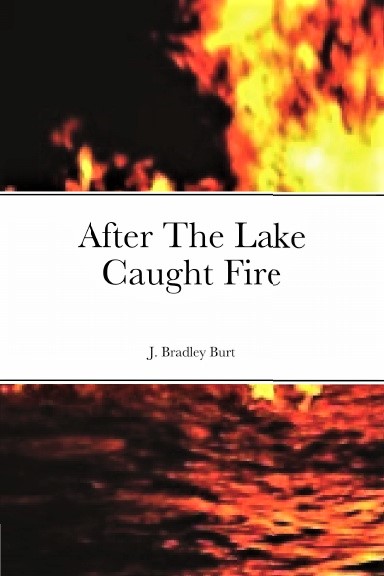
After The Lake Caught Fire, the eighth novel in my Maggie Keiller/Derek Sloan crime-fiction series, will be published and available for purchase by mid-November.

The pristine shoreline of Georgian Bay north of the Ontario resort town of Port Huntington is threatened by voracious developers planning to build a vacation condominium development.  Several local municipalities and community organizations are opposed to the plans, and the struggle soon becomes acrimonious.

At the same time, environmental testing reveals that the land proposed for development is a toxic wasteland, a result of chemical dumping by a long-ago munitions manufacturing company.  Although the Russian-backed developer is undeterred, the public outcry increases dramatically after several unmarked graves are uncovered at the site of a former Indigenous residential school located on the property. 

When a prominent, outspoken community leader is murdered by persons unknown, Maggie Keiller and Derek Sloan are drawn into the ensuing police investigation.  That alarming murder is shortly followed by two more killings and the abduction of a young girl, frightening the entire district.

As the scandalous involvement of the provincial government in ensuring approval for the development comes under close scrutiny, several players step forward with plans of their own to enrich themselves.  Matters worsen quickly, and Maggie and Derek, immersed in the midst of these fast-unfolding crises, suddenly find they are under attack from the same malign forces.  In order to save themselves and protect the interests of the Port Huntington community, they must use every means at their disposal. 

Like the seven books before it in the series, mayhem and skullduggery abound in After The Lake Caught Fire, a gripping, contemporary story that will hold your interest from start to exciting finish.

In plenty of time for Christmas giving, the book will be available to order by mid-November at this safe link, where the seven previous novels in the series will also be found—

https://www.lulu.com/spotlight/precept

Birth of the Beast

As a response to this week’s prompt from my Florida writers’ group, to write a story using the five senses, I’m posting a piece I hope will allow you to see, hear, smell—perhaps even taste and feel—the events portrayed.

The piece is the draft prologue to my next crime novel, my eighth—working title, After the Lake Caught Fire—which I expect to see published later this year (or early in 2022).

No one was there to witness the birthing of the beast.  Speculating afterwards, people said it was most likely caused by a strike from the surly skies overhead—a bolt of heat-lightning that ignited the oily, gummy crust floating on the lake’s surface.  But nobody knew for sure. 

The flames spread slowly across the water, hungrily devouring the layers of filthy grunge, sending a greasy black smoke into the sky to blend with the heavy overcast.  Later on, people figured the fire burned for most of the first day, all that night, and well into the following day before exhausting its run.

Had anyone been there that Saturday, the smell was the first thing they’d have noticed—an acrid, unpleasant odour, distinctly repellent, entirely hostile.  On that sticky, humid day, it saturated the moist air, cloying and pervasive, unmistakably out of place in the forest setting.

Had someone been there that night, they’d have seen greedy tongues of flame, nearly invisible in the daytime—a greenish-blue inferno flecked with orange, like a propane camp-stove turned low.  The fire lent a Dante-esque glow to the darkness, roiling and surging atop the lake like the awakening beast it was.  

The small kettle-lake, unnamed, had been devoid of life for years.  No fish swam in the depths of its half-a-square-kilometre bowl, their remains having long since mouldered on the bottom or rotted on shore.  No ducks, or geese, or iconic loons splashed down on its surface during their migratory travels.  No small animals came to drink from its water, or to hunt the frogs and crawfish that had once inhabited the shoreline.  The lake was dead beyond reclamation, a silent, toxic cesspool, the perfect breeding ground for the catastrophe it was spawning, a poisoned promise to the future.

By the following morning, Sunday, the beast had reached the sloping terrain of the eastern shore, an expanse of granite covered in stiff lichen, furry moss, and low, prickly scrub.  Dead leaves, twigs, and branches littered the rising slope, sere and brown in the summer heat.  Pockets of smoke appeared near the bottom of the grade, and gradually moved upward, tracing the path of the smouldering monster in the cracks and fissures of the rock.  By mid-afternoon, the first small flames sprang to life—not explosively, not aggressively, but languidly, as if the oppressive heat of the day was more than they could tolerate.  The abundance of dead, dry vegetation on the ground allowed the flames to spread, moving in every direction from the centre, climbing the slope, consuming everything in their path.

On the flatter shoreline areas—gravel-covered beaches, bare of vegetation, where no fire should have found purchase—the flames nevertheless spread haphazardly, as if drawing on some unseen source of fuel.  Black tendrils of smoke traced their route from the lake’s edge toward the forest, their odour the same as that arising from the water-borne gunk.

Late on Sunday afternoon, before the fire could spread uncontrollably, the rains came, one of those sudden, summer downpours, appearing almost out of nowhere, lasting perhaps an hour, leaving behind an azure, cloudless sky and setting sun.  For a while, the rainwater on the surface of the lake evaporated as soon as it landed, replacing the smoke with mists of steam, scarcely different in appearance.  But eventually, the rain’s sheer volume quenched the flames, already diminishing as a result of their relentless consumption of the oleaginous scum they’d been feeding on.

From the forest floor, rainwater rushed pell-mell down the slopes of granite to the lake, drowning the smouldering monster before it could reach the treeline, leaving large swathes of black soot across the pink-hued rock.  And the flames creeping across the gravel-laden flats were similarly quelled, with wispy threads of acrid smoke rising lazily from the chemical-soaked ground, pale tendrils striving futilely against the rain. 

On Monday morning, when the men came back in their growling trucks laden with more barrels from the factory—tailings sloshing in a chemical stew—they were startled by the scene that greeted them.  But the fire was already out, the greedy slurry-pits were waiting, and the bosses at the plant would have no tolerance for excuses.  After a few minutes of muted chatter, the men dumped their loads as usual, and headed back for more. 

Most of them, lifelong residents of the Northern Highlands district, understood what was happening.  But no one could afford to lose their job by being the one to sound the alarm and abort the nascent disaster.

And the bosses, who also knew and understood, did nothing.

The beast was born.