He Is Us!

Back in the late 1940’s, when I was in my formative years, a savvy and prescient social observer said, “We have met the enemy and he is us!”

pogo 6

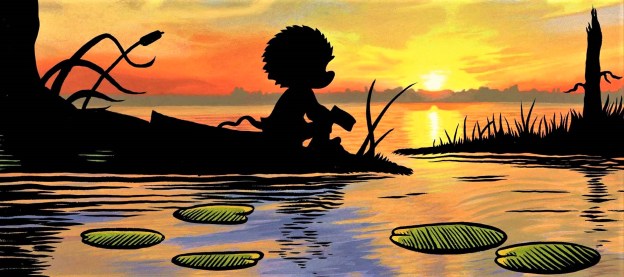
The speaker was Pogo Possum, an unprepossessing denizen of the Okefenokee Swamp, which straddles the border separating Florida from Georgia.  During the next fifty years, Pogo would go on to become an American icon, famous the world over for his gentle, yet scathing, commentary on the world around us.

Strangely, many people today have never heard of him, but from the time I first took an interest in comic strips, Pogo was one of my favourites.  And he remains that to this day—all the more so, considering where we presently find ourselves.

Pogo was the creation of Walt Kelly, a cartoonist extraordinaire who lived from 1913-1973, and it is Kelly’s inspiration that put words into the mouths of Pogo and his many friends and acquaintances in the swamp.

pogo-banner

Among them were:  Porky Pine, a gloomy, misanthropic soul, perhaps Pogo’s closest pal, an Okefenokee version of A.A. Milne’s Eeyore; Albert Alligator, extroverted and garrulous, often the comic foil for Pogo; Howland Owl, a self-proclaimed perfesser and fount of all knowledge; Churchy LaFemme, a hapless, superstitious mud turtle; Miz Mam’selle Hepzibah, a beautiful French skunk who often pined for Pogo; Beauregard Bugleboy, a hound dog who, as his grand name might suggest, fancied himself a dashing figure, often recounting tales of his own heroics in the third-person; and Miz Beaver, a corncob pipe-smoking washerwoman with scant regard for menfolk.

Pogo himself was a mild-mannered soul, described by Kelly as “the reasonable, patient, soft-hearted, naive, friendly person we all think we are.”  Almost always portrayed hanging with friends, picnicking or fishing, he seemed the wisest, most laid-back, most down-to-earth swamp denizen, doggedly determined to avoid trouble.  Alas, to his chagrin, he was often taken advantage of by those same friends.

The issues they faced in their wilderness home so many years ago presage many of those we face today—pollution, overcrowding, segregation and racism, and corrupt, self-interest politics.  Listening to the utterances of the various characters on the concerns of their day resonates as much today as when they first spoke.  Take, for example, the challenges facing governments as they tackle the Covid-19 scourge:

Y’see, when you start to lick a national problem you have to go after the fundamentables.
We are confronted with insurmountable opportunities.
Having lost sight of our objectives, we redoubled our efforts.

Or, think of the swelling cries from so many, bemoaning the encroachment of government on civil liberties during these trying times, refusing to comply with measures to ensure public safety:

I ain’t said much but I is been pushed around ee-nuf!  I is gone stand up for my rights!  And I got rights I ain’t hardly used yet!
The minority got us outnumbered.

majority 1

The lovable swamp critters sometimes proposed radical solutions, just as many do today:

You want to cut down air pollution? Cut down the original source…breathin’!
Don’t take life so serious. It ain’t nohow permanent.

Occasionally, a familiar note of resignation crept into their musings:

Now is the time for all good men to come to.
If you can’t win, don’t join them; learn how to lose.

And, of course, there were commentaries on the political leaders of the day—some of which, I believe, apply to certain (unnamed) charlatans in power today:

Y’know, ol’ Albert [or a name of your choice] leads a life of noisy desperation.
In like a dimwit, out like a light.

Of all the Okefenokee witticisms, though, the one I like best, and which seems truest of all today, is Pogo’s observation that the enemy is us.  When I survey the planetary problems presently facing us—the most urgent of which right now is Covid-19—how many have we brought upon ourselves through our callous disregard for our global village and its residents?

To name a few of these enemies:  world hunger, increasing poverty, global warming, pandemic outbreaks, nuclear proliferation, mass migration, and pollution of land, sea, and air.

To pose the question in a more positive way, how many of these same enemies could we actively and successfully confront through a united effort spread across all humankind?

Most, if not all, is the answer, I believe.

Sadly, however, I fear it may never be.  For, as Pogo so eloquently told us in those bygone times, we have already met our greatest enemy.

pogo 9

And indeed, he is us!


Powerless

On a warm August afternoon in 2003, as we lazed on the dock at our home on the lake in cottage-country, basking in the sun, chatting amiably, the electric power grid shut down.  Boom!  Just that quickly.

cottage2

We didn’t know, of course, not right away.  Not until one of us headed up to the house to replenish our drinks and shouted the news back down to the rest.  And even then, none of us worried much about it.

Power outages were a fact of life in our rural setting.  Living in the north was a glorious experience, one we enjoyed for fifteen years, but the infrastructure was not nearly so sophisticated as in large, urban areas.

Telephone service was usually reliable, the operative word being usually.  But everything else in the house depended upon electricity—heating, all appliances, lights, the internet (rudimentary as it was back then), and most importantly, running water, which flowed through an elaborate purification system in our basement, powered by a pump submerged in the lake.

On the many occasions we had lost power in the past, it never lasted long.  Thinking back on it now, I realize how naïve we were, how foolish not to have a generator on stand-by.  But we didn’t.  The need had never arisen.

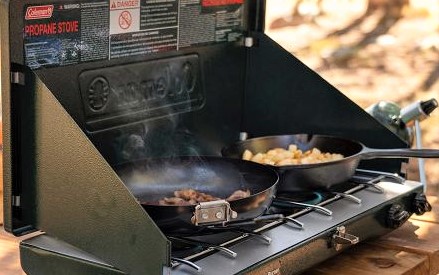
As this latest outage dragged into the early evening hours, we decided to ‘rough it’, which meant cooking everything but the meat (which we always did on the barbecue) on an old propane camping-stove I hauled down from its shelf in the garage.  Afterwards, we stowed the dirty dishes in the dishwasher for cleaning, fully expecting the power to come back on momentarily.

The-Best-Propane-Camping-Stoves-of-2019-Ranked

Before dusk gave way to the almost-total blackness of night, when the forest seemed to creep closer around us and the stars winked on by the thousands in the sky overhead, I lit our two propane lanterns, complaining, I’m sure, about how long the outage had lasted.

And then we went to bed.

By morning, the power was still not up and running.  I trundled large pails of water from the lake to the house, placing one in each bathroom to refill toilet tanks after flushing.  We resurrected the old cottage credo, When it’s yellow, let it mellow; when it’s brown, flush it down.

Another large pail went to the kitchen for boiling in a pot on the camping-stove.  We opened the refrigerator as little as possible, the freezer not at all.  And we washed our dishes in the sink.

Both our daughters were home from school for the summer, working at a resort restaurant some distance from the house.  The phone was working, and they found out after calling that the place was also affected, and would stay closed until power was restored.

Absent electricity, we had no way, short of phoning neighbours and family in the city, to ascertain what was happening.  The news we got from them described a huge power blackout encompassing much of the eastern seaboard, both in Canada and the U.S.

blackout2

Resigned to that, we enjoyed another lovely summer day, boating, swimming, sunbathing, all the time expecting the power back at any moment.  Around mid-afternoon, we began to plan for another camp-style dinner, just in case.  I had begun to feel like the pioneers, I think, hardy souls who could manage off-the-grid.  I remember remarking to my wife that we could probably survive like this indefinitely, thanks to a ready, natural food supply.

She had long been cultivating a large truck-garden behind the house, full of asparagus, lettuce, peas, beans, radishes, beets, tomatoes, and a variety of herbs.  Poppies had been strategically planted, too, to keep the deer from harvesting the crop before we could.  Eating that fresh produce was a season-long delight, and one which we now gave renewed thanks for.

The lake was stocked with fish, as well, and we had enjoyed many a fine feast of bass and pickerel over the years.

Nevertheless, my wife was not enamoured of my clueless remark.

On the following morning, day 3, we were still powerless.  Our early-morning swims were taken with soap, something we normally did not do for fear of fouling the water, but which was proving necessary, given the lack of hot water for baths and showers.  That was especially important for the girls, who were called into work that day when the power came back on in the sector where the restaurant was located.  We rejoiced at the news, fully anticipating the same thing for our neighbourhood.  Alas, it was not to be.

Following their shift, the girls drove home in the dark to find us huddled around the propane lanterns in the living-room—sunk in a funk, to be honest, in contrast to our usual sunny, optimistic natures.  The initial excitement of roughing it had given way to resentment at our plight, still engulfed in blackness when everyone around us (we had begun to imagine) had been restored to the light.

Day 4, another wondrous late-summer morning, brought more of the same.  By now, we had emptied the freezer, either cooking the items before they thawed and spoiled, or throwing out those we could not get to.  The girls had brought bags of ice home after work, and we had packed perishable goods from the refrigerator into two large coolers.  We were still wonderfully self-sufficient and in control, or so I tried to assure myself.

cooler

Except, we no longer cared about that!  The bloom was long off the rose by then, and all we wanted was our old lives back.  By mid-afternoon, when the girls were readying to leave for work, my wife and I decided enough was enough.  After a hasty phone call to book a room at the resort where the restaurant was located, we threw a few things in our overnight bags and jumped in the car with the girls.

I could tell you that we never went back, but that would be untrue.  In fact, we returned the next day after electricity was finally and fully restored in our area, and resumed our enjoyment of the summer.  Powerless no longer.

I’ve been thinking a lot lately about that experience back in 2003, as I sit now in our condo home in the city, older and wiser (I hope), confined by the pandemic sweeping the globe.  And as much as I like to think we can survive this indefinitely, I know from experience that just isn’t so.

We are so dependent upon so many others to maintain the supply-chains for our food and medications, our communications, our hospitals and other essential services.  And every one of those is reliant upon that one indispensable need: electricity.

power

I pray we will not become powerless again.

Listening to My Mother

As a young boy, lo, those many years ago, I listened to my mother—not because I always wanted to, but because I quickly learned that not doing so could have severe consequences.  She’s been gone ten years and more, and yet I find I’m still listening, especially now, living in this pandemic world in which we find ourselves.

“Wash and brush your teeth first thing,” she’d say, “and brush your hair.  Make your bed before you get dressed, then come down for breakfast.”

bedroom

She didn’t tell me to shave, of course, my being but a stripling who had no need to do so.  But I was told to put my pyjamas away and drop my dirty clothes into the hamper on my way to the kitchen.

I didn’t need telling every day, but the reminders were frequent enough.  And woe betide me if I neglected any of the tasks.

Fast forward to today, and you’d see this past-mid-seventies man I have become still making my bed right after returning from my first visit of the day to the bathroom (where, of course, I wash and brush my teeth).  I still don’t shave, at least not every day, but I do brush my hair assiduously.

After slipping my PJ’s under the pillow, I get dressed (always neatly, if not stylishly), gather up any laundry, and head for the kitchen.

My mother always had breakfast ready when I got there, sometimes preceded by my brother and sisters, and she watched closely to ensure we ate everything—juice, oatmeal porridge, toast, and milk.

eating

“Sit up tall,” she’d say.  “Lift your spoon to your mouth.  Lean over your bowl.  Hold your spoon properly.”

My remembering it like this might make her sound like a martinet, but she was not.  Neither was she a nag.  She simply wanted each of us to be the best we could be, and she had strong opinions as to what the best looked like.

Today, my breakfast might consist of cottage cheese with fresh fruit mixed in, and a couple of oat biscuits; or granola with fresh fruit and yogurt.  Green tea has replaced the glass of milk, but juice is still a staple.  And while I am eating, I sit straight, careful not to lower my chin to the bowl.

“Don’t leave your dishes on the counter,” my mother would say when we’d get up to leave the table.  “Put them in the sink.  And make sure you fold your napkin and push your chair back in.”

To this day, my napkin is rolled carefully into the napkin ring, the chairs in my kitchen sit squarely around the table, pushed in just so.  And no dirty dishes adorn the countertop (although a dishwasher has replaced the sink to receive them).

I Love School

Our reward back then, as we tumbled out the door to school, was a smiling kiss from our taskmaster.  We expected it, looked forward to it, and remembered it often throughout the day.

Looking back, I think these instructions from my mother helped prepare us to face the world in front of us.  The subtle sense of accomplishment we gained from completing such simple chores, even if we weren’t consciously aware of it, instilled a sense of confidence in us that we were more than up to the task of dealing with whatever might befall us.

Of course, we were uncomplicated souls back then, my siblings and I.  As a senior citizen today, I would have expected myself to be much more jaded by now, much less naïve, not so likely to be swayed or influenced by simple rewards for elementary tasks.

Yet, here I am, confined to home because of the dreaded pandemic swirling around us, unsure as to what might lie ahead, needing that jolt of confidence more than ever.  I’m making my bed first thing every day, brushing my teeth, sitting up straight at the table.  I’m doing the dishes, the laundry, the numerous other household chores that keep my shrunken world from toppling over the edge into chaos.

And why?  Well, the answer to that is simple.

Mum

I’m still listening to my mother.

Golfing Legends

In the long-ago summer of ’67, I went with a couple of friends to a day-long golf match at the Toronto Golf Club, the third-oldest course in North America.  We were there to watch two of the game’s leading players go head-to-head for Shell’s Wonderful World of Golf, a very popular TV program of the time.

Screenshot_2020-03-17 Home - Toronto Golf Club

American Mickey Wright, a winner of 82 LPGA championships and 13 majors, was matched against a young Canadian amateur, Marlene Stewart, who went on to become the only person ever to win the Australian, British, Canadian, and U.S. Amateur Championships.  Both women have since been elected into the World Golf Hall of Fame in St. Augustine, Florida.

My friends and I were rooting for the Canadian, of course, and after nine holes, she was up by one.  We had rushed ahead and strategically placed ourselves behind the ninth green, by the path the players would use on their way to the tenth tee.

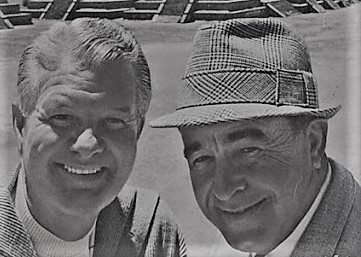
As they left the green, the women stopped to be interviewed by the co-hosts of the program, two revered PGA golfers, Jimmy Demaret and Gene Sarazen, by then both retired from the game.  Demaret had won 31 tour events during his career, and was the first three-time winner of the Masters.  Sarazen, known as ‘The Squire’, had won seven major championships, and is one of five golfers to have won a career grand slam—a U.S. Open (twice), a PGA Championship (three times), the British Open, and the Masters.  Both of them are also in the Golf Hall of Fame.

sarazen and demaret

These four people were, indeed, superstars, and there they were, standing right in front of me as the camera rolled, taping proceedings for the hour-long telecast scheduled for later in the season.

I don’t remember what was asked and answered during the interview; it took place, after all, fifty-three years ago.  Nor do I remember being conscious at the time that I might be captured on film directly behind the celebrity foursome.  And I do not remember ever seeing the program when it was eventually broadcast.

–  0  –  0  –  0  –

Many years later, my eldest daughter, Tara, had married a young CPGA golfer, head professional at one of Ontario’s premier golf courses.  We went with them on a week-long golfing holiday to Myrtle Beach, where we played several of the outstanding courses in the area.  At the end of one particular day, after enjoying a lovely dinner, the two couples withdrew to our separate bedrooms to read, watch TV, or, in my case, fall asleep.

Sometime shortly after I had done just that, my daughter burst into our room, face alight with excitement.

“Dad!  Dad!” she cried.

I wakened immediately, alarmed, worried something was wrong.

“Dad!” she said, plopping herself on the bed beside me.  “Did you ever go see a golf match at the old Toronto Golf Club?”

“Huh?” I managed.

“Dad, years ago, Marlene Stewart played a match with Mickey Wright, and it was taped for Shell’s Wonderful World of Golf.  Were you there?”

shell

Sitting up now, I tried to remember.  “Yeah, I think maybe I was.  I would’ve been in my early twenties, before I got married.  Why are you asking me now?”

“I knew it!” my daughter said, clapping her hands.  By now, our son-in-law, Adam, had joined her in our room.

“This is unbelievable,” he said.  “I was fooling with the remote and stopped on the Golf Channel.  By chance, there was an old black-and-white program showing a game in Toronto, so we watched it for a bit.  The guys hosting it were interviewing the two women playing the match, and there was a young guy standing behind them, right in the middle of the screen.”

My daughter cut in.  “I thought, ‘Holy cow!  That guy looks a lot like my dad, but younger.’  And just as I was thinking that, Adam said, ‘I think that might be your dad standing there.  How old is this program?’  So, it was you?”

The memories were slowly creeping back.  “I guess so, yeah,” I said.  “I was standing really close to them after the front nine, and I think you’re right.  They did stop to be interviewed.”

“Did you get an autograph from any of them?” Tara asked.

“Nope,” I said, seeing it again through the mists of time.  “As I recall, Marlene Stewart wasn’t much older than I was, and kinda cute.  I’d have been more likely to ask for a date.”

They laughed at that, even my wife, and then my son-in-law said, “I’ve seen you play.  You should have asked for a lesson!”

lessons2

We all laughed at the truth of that, but honestly, I’d been much too shy at the time to ask for any of those things—an autograph, a date, or a lesson.

To this day, I have never seen that program.  And I know my memories of being there at the match have been warped by the intervening years.  But I do remember those  people—Demaret, Sarazen, Wright, and Stewart—just as they were then, frozen in time.  Golfing legends.

I was certainly starstruck in the moment.  And I could never have imagined reliving the experience through the eyes of a grown daughter half a century later.

Wonderful world of golf, indeed!

By Myself

No one, I don’t think, would ever mistake me for a recluse, a loner, a solitary wayfarer along the road of life.  I am, generally speaking, among the Hail fellow, well-met! sorts of people, one who enjoys lively conversations and adventures with friends and family.

But I must admit, there do come those times when I like to get off the well-trod path and retreat into a little world of my own.  It may be that you, too, enjoy doing the same thing, so mine may not be a completely unique peccadillo.

However, the things I prefer to do when I’m by myself may be different from what others choose.  For me, the top three include riding my bicycle, playing my harmonicas, and writing all manner of things—poetry and prose, articles, blogs, and books.

I got my first bike, brand-new, when I was ten years old—for forty dollars, of which my parents paid half.  Within a month, it was stolen!  I remember being outraged and heartbroken, both.  But the worst insult was learning that, if I wanted to replace it, I’d have to save up half the cost again.  Life seemed particularly unfair at that point.

I did it, though, and purchased an identical bike—maroon, coaster-brakes, a new lock.  During the next half-dozen years, until driving the family car became an option, riding my bike opened up new worlds for me.  I could ride forever, it seemed, miles further than I could ever have walked, in and out of places no larger vehicle could navigate.

That bike served as my horse when we were playing cowboys in the park; a motorcycle when we were playing drag-racers in the schoolyard (complete with stiff cardboard cut-outs clipped to the rear fork to make a loud, chattering noise as the spokes battered them); and a tow-truck to pull my cartload of newspapers on pre-dawn deliveries.  I loved my bicycle.

Different bikes over the years served me just as well, especially as a young father when one or the other of my wee daughters would ride in the seat attached behind me.  Up hills and down, my wife and I spent many hours cycling with our girls on their own bikes, well into their teenage years.

bike

Today, long into retirement, I still love to ride, mostly by myself now, able to go as slow or as fast as I like—or whatever my body dictates.  Lost in thought, I ride the roads, the trails, even cow-paths sometimes, marvelling at the changing surroundings, enjoying the peace and solitude.  It’s one of my favourite things to do by myself.

It’s the same when I play my harmonicas—my mouth organs, my harps.  I started playing when I was about the same age as when I got my first bike.  I remember asking Santa for a Hohner Marine Band, the small one, and was overjoyed to find it beside my stocking one Christmas morning.

I still have it, the very same one.  Some of the reeds are damaged, of course—that Christmas was about sixty-five years ago—but I’ll never let it go.  I still play recognizable songs on it (recognizable to me, at least), even if some of the notes are audible only to me.  Do you know O, Susanna?

Other harmonicas followed as time went on, all Hohners—a couple of which I still have.  They’re dented here and there, discoloured in spots, but the sound is almost as good as ever.  I spent many a frustrating hour trying to learn how to play a chromatic harmonica well, eventually resigning myself to an acceptance of mediocrity.  And I listened whenever I could to such giants of the instrument as Toots Thielemans, Little Walter, and Big Mama Thornton.

harmonicas

Abraham Lincoln reportedly said, Two of my favorite things are sitting on my front porch smoking a pipe of sweet hemp, and playing my Hohner harmonica.  I’ve done the very same thing many, many times—but not with Abe, and without the hemp.

I do it still today, usually when no one is home.  The music sounds as sweet to me while I’m playing as ever it did, but I’ve learned that, to the ears of others, it may not be quite as pleasurable.  And so, to spare them, playing the harmonica by myself is one of my favourite things to do.

The third, of course, is writing—an example of which you’re reading right now.  Writing is, almost by definition, a solitary endeavour, even selfish, thanks to its exclusion of others and the distractions they bring.  Ideas spring into my head at any time, anywhere, even in the dead of night.  On more occasions than I care to remember, I’ve staggered to the keyboard in a pre-dawn darkness, so as not to lose the next brilliant idea.

Writing fiction is like playing God.  After something has been recorded in an early chapter, let us say, but then overtaken by a contrary (and better) idea in a later chapter, it is nothing to go back and erase the original draft, to revise the very history I’ve created.  I can change people’s names, their appearance, the things that happen to them, all at a whim.  It’s a form of omnipotence—albeit, very limited.

I usually write with music playing softly in my earbuds, almost always from the classical repertoire.  It serves to mask ambient noise from elsewhere in the house, focus my thoughts on the subject at hand, and free my imagination for long stretches at a time.  I wonder sometimes if Mozart might ever have envisioned this solitary writer listening to his symphonies and sonatas, creating a literary piece that has never existed before, just as he did with his music.

I know.  Probably not.

author2

But that doesn’t matter.  It’s the freedom and peace I enjoy, whether riding, making music, or writing.  I don’t believe I’d like being lonely; but I do appreciate having the opportunity to be alone now and then, able to engage in my favourite things.

By myself.

You’ll Never Know

The melody was as familiar as my mother’s cheek on mine, the words had long ago been committed to heart.  The singer was Aunt Marie, my mother’s older sister, her voice reedier now than in her youth, her pitch a trifle off.  But the emotion she felt shone through in every chord.

You’ll never know just how much I love you,

You’ll never know just how much I care…

You'll Never Know

The occasion was the fiftieth anniversary of her marriage to Uncle Bob, and six of us were celebrating on the deck of my home overlooking the lake—my wife and I, my mother and father, and Marie and Bob.  She was standing by the railing, singing to him as he sat in the old, wicker rocking-chair.

They’d married in the summer of 1942, enjoying a three-day honeymoon in Halifax, Nova Scotia, before saying a tearful goodbye when he was shipped overseas to join his regiment.  It was three years before they saw each other again, when he returned home, battered but unbroken, a couple of weeks after V-E Day.

ve day

As my aunt sang on, her shoulder-length hair, salt and pepper now, fluffed and fell in the gentle breeze off the water.

…And if I tried, I still couldn’t hide my love for you,

Surely you know, for haven’t I told you so

A million or more times…

Within a month of returning home from Europe, Bob had gone off again, this time to the gold mines of Kirkland Lake in northern Ontario, where his degree in mining engineering had landed him a job.  Marie joined him three months later, leaving her job and family in Toronto, and they stayed in that booming gold-town for the next twenty-five years.

I spent almost every summer of my childhood with them, for they never had children of their own.  I thought of them as my second parents, certainly my favourite aunt and uncle, and to this day, the times I had with them rank among the most enjoyable of my life.

mile of gold

I used to hear them sing together after I’d been tucked into bed, she in a dusky alto, he in a clear tenor befitting his Irish heritage, and it was from them I developed my lifelong love of singing.

The last ten years of Bob’s career had brought them back to the city, working in the provincial Ministry of Mines.  Although they were closer, I saw them less often, having married and begun a family of my own.  But they remained as dear to me as ever.

Leaning against the railing by now, my aunt’s voice had begun to quaver, the sentiment of the song assailing her.

You went away and my heart went with you,

I speak your name in my every prayer…

Within a few years of their retirement, my uncle had gone away again—this time to fight a war he could not win against the pernicious onset of dementia.  But on that momentous day on the deck by the lake, he’d been with us for awhile—alert, engaged, and as happy as ever.  Inevitably, though, he’d drifted off, as was happening much more often by then, his eyebrows knitted quizzically above a thousand-yard-stare we could never penetrate.  He was a part of us still, yet apart from us irrevocably.

Alzheimer Dementia Brain Disease

My aunt had continued her song, voice choked with emotion.

If there is some other way to prove that I love you,

I swear I don’t know how…

And she stopped right there, unable to finish, tears welling, rolling slowly down her weathered cheeks.  None of us knew quite what to do, so we just sat there, watching her watch her husband, not a sound to be heard.

And then, the most touching thing happened.  Bob had slowly turned toward his wife, perhaps wondering why the song had been cut off.  Then, rising from the rocker, he’d shuffled over to stand in front of her.  As their eyes joined, he lifted her hands to his shoulders and placed his own on either side of her waist.

And softly, he sang the closing lines to her.

You’ll never know

If you don’t…know…now.

Bob died before the year was out, mercifully for him, sadly for us.  But I’ve never forgotten that song they shared on the day of their golden anniversary.

couple

And I believe they both knew in that moment how very much they were loved.

A Christmas Story

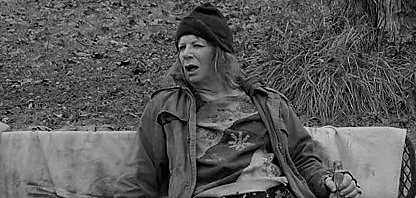
On a cold park bench, enveloped in stench,

Slumped a woman—haggard, old,

With long, straggly hair, face wrinkled with care,

Clothes ragged—shivering, cold.

As I passed her by, idly wondering why

She was there, and whence she came,

She disturbed my cheer as Christmas drew near.

A mystery—and a shame!

woman1

But one little lad approached her, quite sad,

Stood quietly by her side.

They spoke not a word—least not that I heard—

And the woman softly cried.

The boy bowed his head and something was said

Between them.  What could it be?

Then after a while, with a tearful smile,

She lifted the boy to her knee.

*   *   *   *   *   *   *   *   *

He offered the hag a gift from the bag

He had purchased for his Mum.

A porcelain cup from which she could sup,

That had cost a tidy sum.

And from his worn purse a coin he disbursed

Into her scarred, bony hand.

It wasn’t too much, but oh, it was such

A gesture—humble, yet grand.

boy2

So I stole away, embarrassed I’d say,

Compared to that little lad.

I hadn’t stopped there to show her some care;

He’d given her all he had.

When he left the crone on the bench alone,

Dark came to subdue the light.

The snow gently fell, I heard the church bell,

As day surrendered to night.

*   *   *   *   *   *   *   *   *

At Christmas Morn’s dawn, the old hag was gone,

As quickly as she’d appeared.

I heaved a great sigh as I hurried by

To the church that I revered.

But on my way back…on the bench, a sack,

Tied gaily in Christmas wrap.

On the card, the name of the lad who came

To sit on the woman’s lap.

*   *   *   *   *   *   *   *   *

He opened it up and pulled out the cup,

Ablaze now, silver and gold.

Reflecting the light, it blinded my sight—

My terror could not be told.

I fell to my knees, immediately seized

By shame for how I had erred,

Ignoring the crone, bereft and alone,

When my love I should have shared.

cup2

Though it sounds absurd, in my head I heard

The Lord’s voice, loving but stern—

You have been measured; I am displeasured.

Now you must listen and learn.

In all of your town, just one boy I found

Who took time to pay Me heed.

He came to My aid, together we prayed

In My hour of greatest need.

*   *   *   *   *   *   *   *   *

With sorrowful face, I asked for the grace

Of forgiveness, mercy, love.

His next words were clear, they rang in my ear,

Admonishing from above—

Take care how you treat the poor in the street,

They, too, are My children, you see,

And whate’er you do unto these wretched few,

You do it also to Me.


Remembering a Friend

A good friend of mine died earlier this year, and I was asked to speak at a gathering of family and friends to celebrate his life.

This is what I had to say.

Every memory I have of my friend brings a smile to my face.  Every one.  It was fifty years ago that we first met, as young teachers.  We clicked right away, and spent many hours playing tennis, going on ski-holidays with our wives, and spending many New Year’s Eves together.  During all those occasions, we enjoyed a lot of delicious food washed down with cheap wine.

And although it might be hard to believe these many years later, legend has it that he and I were a lethal pass-and-catch combination on the flag-football field.  Or so we told our wives.

team formulating a plan

Early on in our teaching careers, my friend and I contemplated applying for promotion to vice-principal.  As the deadline grew near, however, he seemed somewhat hesitant about taking the step—having second thoughts because he really enjoyed working in the classroom.  Many of his colleagues—and I for sure—encouraged him to go for it.  We all thought he was more than ready, and I was sure we’d both be successful.

After much consideration, despite his reservations, he did apply.  And guess what?  My friend, the reluctant one, got that coveted promotion!

While I, the gung-ho guy, did not!  Go figure!

But two good things immediately came out of that experience.  The first was when my friend took me aside—I assumed to console me over my disappointment.  Not so.  He had an urgent, almost breathless tone to his voice when he was excited, and here’s what he said.

“Brad!  Brad!  Listen!  Just because I’m a VP now, you don’t have to call me Sir!”

Of course, he said it with that mischievous, little smile I was so familiar with when he was having me on.  I miss his sly, Irish sense of humour.

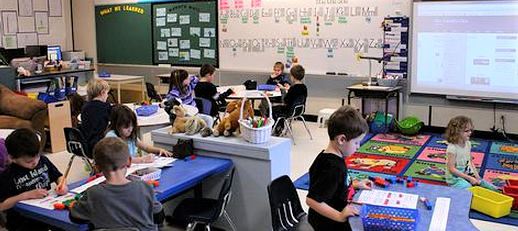
The second good thing from his promotion was that his first VP assignment was with the same principal who had hired me out of teachers’ college a few years earlier.  That man showed my friend and me more about child-centred education than anyone else we ever worked for.  He believed children came to school, not to be taught, but to learn; it was our job, therefore, not to teach them, but to guide them in their learning.

classroom1

My friend took that philosophy to heart, as did I.

Our mutual mentor could be somewhat unpredictable, though.  On the very first day of school that September, just before my friend’s very first staff meeting at the very first school where he was VP, where he knew almost no one on the staff, his new principal told him he would have to chair the meeting because something unexpected had come up that couldn’t wait.

Now, my friend was never, by nature, a cannonball-into-the-deep-end-of-the-pool sort of guy.  He much preferred to examine every situation six ways from Sunday before committing himself to any course of action.  He might eventually jump into that very pool, but not until he’d scoped it out thoroughly.

In this situation, however, the principal dropped the news on him at the very last moment, so you can imagine his reaction.  He must have told me the story at least a dozen times over the years.

“Brad!  Can you imagine?  Just before the meeting was supposed to start!  I was petrified!  I had no idea what I was doing!”

But, as with everything he did, my friend carried it off with aplomb.

Over the years, he and I enjoyed professional-development opportunities together as our careers advanced, almost in parallel.  Many of these were at annual conferences we attended, where we always roomed together.  There were three reasons for that:  one, we trusted each other not to drink too much and stumble back to our room in the wee, small hours; two, back in those days, neither one of us snored; and three, most important, we really liked each other’s company.

The two of us spent a lot of time at those retreats, walking the trails, talking about the challenges we faced as principals, about strategies for coping with those challenges, and about how we could make our schools into true centres for learning—for students and staff.  We both benefited greatly from our professional affiliation, as well as from our friendship.

Our most influential professional development excursion was a real eye-opener for both of us.  We had applied to visit four inner-city schools in a large American city, knowing we would probably be assigned at some point to similar special-needs schools in our own jurisdiction.  I still remember stopping at a gas-station to ask directions to the first school—in those days, there was no GPS, but there were still service-station attendants.

The attendant said, “You two are going to that school?”

When we nodded eagerly, he pointed the way and said, “Keep your doors locked and your windows rolled-up!”

My friend and I looked at each other, wide-eyed, wondering what we might be getting into.

inner city2

Within minutes, we found ourselves—two naïve waifs, far from home—driving through a neighbourhood in our bright-yellow rental car, hard to miss, where the only faces we saw around us belonged to people of colour.  Nobody looked like us!  Nobody!  But a lot of them seemed to be looking at us.

We were never in any danger, but it was the first time in our lives, I think, that we both understood, at a gut-level, how it felt to be outside the mainstream—to be a person of colour in our predominantly white society—to be different, to be the other.  It was a visceral awakening.  Neither of us had ever experienced what it was like to be a visible-minority person until that day, when we realized we were.

The people in the schools were very gracious to these two trusting wayfarers who tried to absorb everything we were hearing and seeing.  It was an experience that forever-after shaped our approach to children in our own schools who came from different backgrounds, different cultures, who had different skin-colour and strange names—all of whom wanted nothing more than to live and learn together in their adopted homeland.

I’m so glad I shared that experience and learned those lessons with my friend.

Part of his DNA, I think, was a natural empathy for the underdog in any situation; he always rooted for the little guy.  Our experience in those inner-city schools certainly underscored and reinforced that quality.

Because of this empathy, it was no surprise that, later in his career, he became supervising principal for special education in our school board.  In that role, he saw it as his mission to find the best learning environment for every child with special needs, sometimes with individualized instruction, where she or he could most closely realize their potential.

i on 1 2

Finding placements for them was never just a numbers game.  Like every principal worth their salt, my friend took these decisions personally.  He took them to heart.

He was a good teacher, a good principal, and a good man.

It has been said that no one has ever truly died until the last person who remembers them has passed on.  If that is so, then my friend will live a long time in the minds and hearts of his family and friends.

In fact, there are countless other people out there, people I shall never meet, people who remember my friend as their principal, or as their teacher.  And I think many of them, when they sent their own children off to their first day of school, might have had this thought in mind.

“I hope they get a teacher like I had.  I hope they get a teacher like him.”

And that is perhaps the greatest tribute.

I mentioned at the beginning that memories of my friend make me smile.  And I’m smiling still because I knew him for fifty years, and was honoured that he counted me his friend.

walking9

Godspeed!

Before the Fall

Once upon a time, it seemed summers would never end.  From the day school let out until the first fall-fair fell upon us, our days were blissful, carefree, and limitless.  Eat breakfast and rush outside to play.  Dash home for lunch, then go back outside.  Trudge home for supper, then head outside yet again.

ball3

Such were the halcyon summers of childhood I enjoyed.

But I grew up, in spite of myself, married, found work as a teacher, and became a father.  And those summers suddenly became more finite.

The calendar tells us that summer ends with the autumnal equinox in late September, but the end always came much sooner.  It was marked, not by an arbitrary calendar, but by the requirement to go back to school.  And once I became a school principal, I had to head back to work ahead of the students if I had any hope of being ready for their return after Labour Day.

For many folks, I suppose, the coming of fall is a time of new beginnings, of anticipation.  They think in terms of the flaming fall-colours, the brisk autumn days, evenings spent curled up with a book in front of a cozy hearth.  They look forward to the change of seasons.

autumn

Not I, though!  I’ve always tended to think of it as a gloomy time—the conclusion of summer, and the close of so many pleasurable things that vanish with the coming of September.

Let me cite a few examples.  With the end of the warm, sunny weather, there came the end to my carefree habits of dress.  No more swimsuits or running shorts; no more open sandals or ancient running shoes; no more tank-tops or faded team sweaters.  Instead, it meant a return to the straitjacketing drill of collars and ties, pressed slacks, knee-high socks, and polished dress shoes.

The end of summer put a stop to the treasured luxury of shaving every two or three days, depending upon what activities were planned.  And it called a halt to the wearing of old ball caps as an alternative to brushing my hair.

The onset of fall wrote fini to three or four leisurely cups of coffee with the morning paper, and an end to mid-morning breakfasts on the back porch.  It heralded, in their stead, the beginning of hurried showers and breakfasts-on-the-run.  It marked the re-entry into the exciting world of daily traffic reports, as I attempted to find the shortest, quickest route into and out of the city.
traffic

In short, summer’s end brought to a close the lazy, drifting vagaries of summer living I tried so vainly to hang on to.

Coming back to the real world was a jolt to my entire system.  It was like going from childhood to adulthood all over again!  I mean, once was enough.

I’ve never wanted to be the type of person who wishes his life away, always yearning for something different than what is.  But, in a sense, I guess I used to do just that.  For me, the year was divided into two seasons, summer and not-summer.  When the autumn of the year rolled around, and not-summer was upon us once again, I would start repeating my mantra:  Next is Christmas, then Easter, and then it will be summer again!  Everything in between was just wished away.

I remember so many glorious summers-almost-ended, when I’d have one last camping trip planned for up north.  My cutoffs and hat would be in my bag, my shaving-kit left behind. Together with my wife and daughters, I’d be off for one final fling in the glorious realm of summer.  Hiking, swimming, paddling, exploring, picking berries, roasting marshmallows, singing our hearts out around the campfire, sleeping the sleep of the innocent in timeworn sleeping-bags—I would be like a child again.

roasting-marshmallows-over-campfire-horizontal-banner-susan-schmitz

Even now—retired, when every day is like a Saturday—as September approaches, I’m going to pretend, yet again, that summer will never end, that I’ll never have to grow up and give it up.  There is so much left to do.

Before the fall!

Testicle

One of my great preoccupations, as readers of this blog might assume, is playing with words.  Spending a couple of hours with the NY Times Sunday crossword is a regular part of my week.  Figuring out the theme of each one can be frustrating, of course, and I sometimes seek out help with individual squares or words.  But for the most part, I find it immensely entertaining and satisfying.

I have long been an aficionado of the iconic word game Scrabble—and in recent years, with the similar online game Words With Friends.  The first is played with the traditional board and tiles, which lends a pleasing tactile element to the game.  The second is played on the internet, sometimes with actual friends, other times with complete strangers.

My online handle is anagramps, coupled with a photo of a Mesopotamian oracle, to identify me to opponents.  The handle is intended to convey both my status as a grandpa, and my affinity for anagrams, an essential skill if one is to play the games successfully.

anagramps

The photo is meant to be intimidating.

There is a feature in the online game to allow players to converse with each other via messages, but in my experience, that doesn’t happen very often.  I’m sometimes tempted, when I’ve dropped a bombshell-word on an opponent, to type Sorry! with a rueful-looking emoji accompaniment (although I’m never actually sorry on those occasions).

rueful 2

Or, when my opponent has produced something similar against me, I occasionally have the urge to message a mock-angry Grrr!

I rarely do, however.  Mercy is seldom shown on either side.

Over the years, I have become quite good at these games (if I may be permitted so immodest a claim).  My winning percentage online is in the high .600’s, roughly double a high, major-league baseball batting average.  I fully expect to win each game I play—although, in the interests of full-disclosure, I must confess I sometimes sulk when I do not.

06_CP1453_GRUMPY-OLD-MAN

It’s not pretty, that, but there it is.

In my own defense, I never gloat when I win.  If it’s been a particularly close game, I often send a message of congratulations/condolences to my opponent, and a request for a return match.  When I’ve won by a wide margin, I wait diplomatically to see if my opponent wants to challenge me to another match.

There are a very few players out there who bedevil me, winning matches with annoying frequency.  One of those is my wife, another my daughter.  It seems they draw especially good, high-scoring tiles when we oppose one another (or so I tell myself).  Because the online game is based on algorithms, not random chance, I can occasionally convince myself the system is deliberately trying to take me down a peg or two.

My wife and daughter merely laugh.

It was with my wife, however—or rather, against her, and against her mother—that I had my greatest moment.  I, a callow youth of nineteen, assiduously courting the lass who would become my life-partner, was playing a game of Scrabble at their home.  Late in the game, I discovered a word I might play, using all seven letter-tiles, which would come with a fifty-point bonus.  Not only that, but because there was already a letter on the board in the lower, left-side column I planned to use (an S from one of their earlier words), I would be able to start and end my word on a triple-word square.  In my head, I totalled the score I was about to receive—558 points!  Oh!  My!  Stars!

There was a problem, though.  My future mother-in-law was still getting to know me, and I her.  This was a critical sizing-up period for me.  It was important that I not do anything to offend her, thus dooming my chances with her daughter.  I had to think long and hard about whether to use the word, for fear of blowing everything.

mother

The word was TESTICLE.

In the end, I seem to remember convincing myself that there were other girls in the world, but such a high-scoring opportunity might never come my way again!  I’m sure I didn’t really think that, but it’s how I tell it these many years later.

In any case, I played the word, trying mightily to be nonchalant.

“What’s that?” my mother-in-law-to-be said.  “Is that a word?”

Flustered by the questions, and fearing the loss of my points if the word was not deemed acceptable, I sputtered, “Yeah, of course.”

“What does it mean?” she said.

“What does it mean?” I repeated stupidly.

“Yes, what does it mean?”

I was too nonplussed in the moment to realize she was playing me.  “It means…it means…you know…the private parts of a man’s…you know…reproductive system.”  Sweat was beading on my forehead.

reproductive

And then she broke into laughter, joined quickly by my future wife.  “Okay,” she said, “as long as you know what it means.”

My immense relief and towering sense of accomplishment were short-lived, however.  The two of them told me the rules were clear—the fifty-point bonus for using all seven tiles had to be added after, not before, the point-total of the word was tripled and re-tripled.  Thus, my true total was 158, a colossal 400 short of my expectation.

But by then, I didn’t care.  My status with my future in-laws was preserved, I had managed to play my perhaps-once-in-a-lifetime word without forsaking my betrothed, and…oh, yes, I won that game.

Anyway, if you are a devotee of Words With Friends, and if you care for an online game sometime, look for me—anagramps.  I promise no R-rated words!