Until It Isn’t

They were twenty years old, two houses across the road from one another in the Florida golf community where my wife and I live for six months of the year.  Identical models—two bedrooms, two bathrooms, den, double-car garage, large screened-in lanai—the stucco walls of one were painted mist-green, the other taupe.

I was surprised one day to see the green house completely shrouded in plastic sheeting, two large hoses snaking from a truck parked in the driveway to the house.  A neighbour told me the owners had discovered termites and had promptly called in the exterminators to ‘tent’ the house for fumigation.  It was a week or more before the residents could move back in, by which time we had gone back north.

Six months later, after arriving back in the community, I drove down the same street, only to discover the taupe house was completely gone.  All that was left was a starkly-white concrete pad between the adjacent houses, the paving-stone driveway leading to where the garage had been.  Weeds were sprouting between the pavers, and the scene was sadly incongruous, like a missing tooth in an otherwise-gorgeous smile.

The same neighbour told me that during the summer, the roof over the spare bedroom had collapsed.  No one was home at the time, fortunately, but an inspection of the house led to its being deemed inhabitable.

“Termites!” the neighbour said.  “All through the place.  Little buggers had likely been gnawin’ away for years, accordin’ to the insurance adjuster.  When the studs couldn’t support the roof any longer, down she came.”

I had long known of the perils of termite infestation, and was conscientious about looking for signs in our own house.  But they are hard to find—windows or doors that jam unexpectedly, mud tubes around the outside foundation, tiny pinholes in the painted drywall indoors, small piles of sawdust.  An awareness of the prospective danger is needed, and diligence.

The neighbour shrugged when I asked him if the owners were planning to rebuild their home. “Eventually, I guess, if’n they get the insurance money to cover it.  Otherwise, somebody else will prob’ly buy ‘em out an’ put up a brand new place.”

It seemed so unfair to me that those two lovely homes, both of which had steadfastly withstood numerous external threats for years—blistering sun, torrential rain, flooding, hurricane-force winds—had been attacked by stealth from within.  And only one had been saved, perhaps providentially, while the other had been destroyed.

I’ve been reflecting on that lately, considering how the scenario might be analogous to the state of our democratic form of governance.  In both Canada and the U.S., most of us appreciate the freedoms we enjoy—although some of us might too often take them for granted. But fewer of us, it seems, recognize the responsibilities that accompany those freedoms.

A partial list of such rights might include the right to elect those who govern us, to assemble peacefully, to speak freely, to enjoy an unencumbered press, to worship according to our conscience, to receive equal treatment under the law, and to be safe in the privacy of our homes.

Alas, in both countries, our history shows that not everyone has benefited from an equal application of those rights, although as Martin Luther King, Jr. declared, “the arc of the moral universe is long, but it bends toward justice.”

Our two democracies have, so far, successfully repelled all attacks on us launched directly or indirectly by malign forces from abroad.  We are aware of, and perhaps readying to defend ourselves against, future existential threats like climate change and pandemic diseases.  Despite our individual differences, we have always rallied together to defeat external foes.

But what of the stealthy foe from inside the house, the metaphorical termite gnawing away at the foundations of our democracy?  Are we ready for that fight?

Even in hitherto strong democracies such as ours, there seems to be a growing threat of authoritarianism, a drift toward mis- and disinformation, a widening chasm between people of different political persuasions, a greater tendency to hurl insult and vitriol at one another, rather than listening to each other’s respective points of view.

Too many of us appear to be increasingly adopting and promulgating viewpoints that reflect our preconceived notions—confirmation bias—instead of keeping our minds open to alternative opinions that might modify our thinking and help us to learn and grow—and most importantly, to understand one another better.

So many are becoming increasingly tribal in our affiliations, whether based on race, religion, politics, or culture.  We are growing ever more selfish about, and protective of, what we deem our rights, too often without an acceptance of the responsibilities we bear in the exercise of those rights.  Too many of us seem willing to violate the rights of others in pursuit of our own self-centred aims.

For too many of us, the distinction between fact and falsehood, between integrity and mendacity, has become blurred to the point where we begin to declare the only truth is ‘my truth’.

The choice our countries are facing, in my opinion, is threefold:  1) we blithely allow ourselves to be attacked from within by those who would dissuade us from our most precious assumptions about democratic governance; 2) we choose to ignore, despite the signs, that the attack is occurring; or 3) we acknowledge the attack and take appropriate measures to deal with it.  

As Abraham Lincoln said in 1858, drawing from the Bible, “A house divided against itself cannot stand.”  The enemy from within is always the more dangerous, and the termites certainly proved the truth of that in the destruction of the taupe house in my community.  I cannot imagine that the owners of those two houses blithely allowed such an attack, but it is clear the owners of the green house took effective action as soon as they became aware of the problem.

With similar due diligence and swift measures by its owners, the collapse of the taupe house could have been stopped.  But it was not.

And in the same way, the insidious attack on our democratic form of governance from within is preventable. 

Until it isn’t.

That’s A Pity

I have come to believe there is a deep reservoir of anger simmering only slightly below the surface of our so-called civilized society.  But always leery of believing everything I think, I am constantly on the lookout for evidence that will either prove or disprove my assumption.

As one example, can you imagine this hypothetical situation actually happening?  A driver is cut off in traffic, perhaps inadvertently, by another driver.  Angered by this, he tailgates the offending driver and, at the first opportunity, passes him and immediately cuts back in front of him.

When they stop at the next traffic light, the driver in the car behind jumps from his vehicle, runs forward, and kicks a dent in the door of the front car, angrily yelling and waving his arms all the while.  The driver of that car, startled by this assault, opens his door so forcefully that he hits the assailant in the face, breaking his nose.

With blood gushing from his nostrils, the injured man slams the driver’s door closed just as the driver is getting out, pinning him between it and the car, breaking his leg.  Enraged now, and in pain, the driver grabs a gun from his console, aims it at the bleeding man, and shoots him.

Can you imagine such a scenario?  Can you imagine the anger?  And the escalation?  I can, although perhaps the whole thing is a touch melodramatic.  So, consider this less-lethal example and see what you think.

A comedian on stage at an awards show cracks a rather tasteless joke about a woman in the audience, a woman who suffers from a physical affliction over which she has no control.  Her husband, offended by what he sees as a gratuitous attack, immediately rushes to the stage, approaches the comedian, and sucker-punches him with an open-handed slap.  He then returns to his seat in front of a dumbstruck audience of hundreds in the theatre, and millions more watching on live television.  Once there, he exchanges loud, profane threats with the comedian, who shortly thereafter exits the stage.

Several minutes later, that same husband is back on stage to receive an award for his acting accomplishments, an appearance the assembled audience greets with a standing ovation.  Can you imagine such a scenario where anger and violence are so freely condoned?

Of course, we don’t have to imagine this second example because it actually occurred.  But consider what might have taken place if things had unfolded differently.  Imagine instead if the angry husband had marched to the stage, approached the clueless comedian, and seized the microphone from his hand.  Imagine if he had then explained to the man, and to everyone in the audience, why he and his wife were offended by the joke, why it was in poor taste, and how it might have detrimentally affected others hearing it who are also afflicted with a physical disability.

Imagine if he had explained how humour doesn’t have to be hurtful in order to be amusing.  Imagine if he had asked the comedian to apologize, then and there, to anyone who might have been offended.  And finally, imagine if he had then told the man he forgives him for his mistake.  Had he done these things, I believe he would have returned to his seat to an even more enthusiastic and deserved standing ovation, this one in recognition, not of his acting achievement, but of his actions—an acknowledgment and appreciation of his ability to seize the opportunity and render it a teachable moment.

Violence and physical assault are never okay—not between disputatious individuals, not between warring gangs or political parties (the difference becoming less and less discernible all the time), and not between sovereign nations.  Violence and physical assault are never okay.

I regret the loss of civil discourse in our society, where people holding different points of view could meet in the middle to discuss matters rationally, civilly, and with a propensity to listen and learn from one another.  Instead now, we have people retreating in high dudgeon to their respective corners, where they launch slings and arrows at each other, designed to wound and demean their opponents, to deliberately spread calumny and misinformation.

We have become a degenerate society, one diminishing ever more rapidly as a result of our rush to anger, our seemingly-insatiable need to feel aggrieved.  Rather than seeking to lift each other up, to bolster and propagate our shared comity, we are rushing pell-mell toward the lowest common denominator.

And that’s a pity.

April Cometh

Another April is almost upon us.  I have always looked forward to its coming, its showers sweet, its promise of spring—only to be disappointed all too often by its refusal to let go of winter.  I wonder which we will get this year, the beautiful warm month of soft showers, or the cruel bringer of winter’s final ravages.

Poetry is one means I use to express my anticipation of April, sometimes optimistic, full of hope, and other times doubtful and despairing.  And I find the Japanese haiku form especially appropriate—three lines of five, seven, and five syllables, respectively—to convey this conflicted state of mind.

Here are five haiku dealing with April, each with a picture in harmony with my outlook.  I leave it to you, the reader, to decide which of my moods is being conveyed by each—

peekaboo
sun plays peekaboo,
dancing 'cross the wint'ry lake---
heralding the spring
teasing
april is cruel---
so the poet says---teasing
us falsely with spring
spring
joining in our walk,
tentatively, yet warmly---
sweet spring has returned
april fool
april can't fool me,
that false harbinger of spring---
may is the gateway
in the rain
dancing in the rain,
neither of us wet or cold---
warmly wrapped in love

May the spring blossom anew for all of you…..in April, or whenever it arrives!

I Won’t Go Back Again

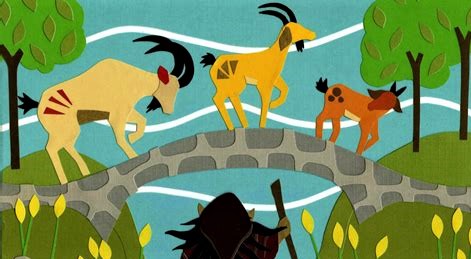
Each month, wordpress.com, the host of my blog, issues a writer’s prompt. This month’s prompt is the word BRIDGE, and this is my submission.

On the day my wife and I visited Venice, the city was flooding—a precursor, I fear, to what is to come.  Some of the streets alongside the canals were underwater, deep enough that we couldn’t venture into them without rubber boots.

In the Piazza San Marco, the main square of the city, elevated boardwalks had been erected to allow tourists to pass from one side to the other.  Outdoor cafes, their tables waiting for customers, were untended because they sat in several inches of water.  A few children romped and splashed in the accidental lake that covered much of the square, their squeals of delight piercing the general hubbub.

I wondered, sadly, how much longer tourists like us would be able to visit the legendary city.

We made a point of visiting the famed Rialto Bridge—to say we’d been there, of course, but also because our youngest daughter accepted a marriage proposal on that very spot several years ago.  We found it quite romantic, despite the crowds.

Until, suddenly, it wasn’t!

I had stopped to take a couple of pictures of the staircase leading from the bridge to the street below, when I was roughly jostled from behind.  I almost dropped my cellphone.

“Outta the way!” a voice growled.  “You’re blocking the way!”

The speaker, about my age, held the hand of a little girl, perhaps six or seven, and they started down the steps past me.

“I’m taking pictures,” I said.  “You should watch where you’re going.”

“What did you say?” he demanded, turning back, his English accented but fluent.  And angry.  “You shouldn’t even be here!” he exclaimed.  “You tourists are spoiling our city, all you people!”  He was quite excited by then.

“Why don’t you calm down?” I said, wondering where this was headed.  “Before you frighten your granddaughter.”

“I’ll calm down when you are gone,” he said, still looking up at me.

There was a momentary pause as a flurry of thoughts flashed through my mind.

Who is this guy?

What’d I do?

What if he assaults me?

And what about the little girl?  What if she gets hurt?

And what if the police come?

How do I get into these messes?

The man, apparently having second thoughts of his own, turned away abruptly, and started down the stairs, the little girl in tow.  “We can’t even walk around our own city anymore,” he complained loudly, one arm gesticulating.  “All you people, you come here, you block the streets, you ruin everything.  You should stay home, stay wherever you come from…”

His voice faded away, and within seconds he and the little girl were swallowed up in the crowded street, lost to sight.  No one else seemed to have noticed the altercation.

I was shaken, of course, although convinced I had done nothing wrong.  After a few minutes, we retreated to the bridge to collect ourselves before resuming our walking tour of the remarkable city.

Later that evening, reflecting over a glass of wine, I wondered if the man’s anger was not so much with me, as with the fact that I was but one of hordes of tourists overrunning his city, even as the marshy land it sits on sinks into the sea.  In fact, more than 30 million people visit Venice each year, a city with a population of approximately 50,000 souls.

In his anger, I heard echoes of complaints from people in nations all over the world—people opposed to the influx of immigrants and asylum-seekers to their countries, people afraid their jobs will be taken, their culture destroyed, their language lost.  Their fear is real and their resentment palpable.  Politicians cater to it.

I’m awfully glad we visited Venice when we did, and I’m happy we stood on the Rialto Bridge where our daughter’s beau proposed to her.  It is an indelible memory for us both. 

But I won’t go back again.

The Way I Sees ‘Em

I’m excited to let you know that my brand-new anthology of stories has just been released—I Calls ‘Em The Way I Sees ‘Em: Tales of a Capricious Critic. It joins six previous books of tales, along with eight crime fiction novels, in my published portfolio.

The story goes that a long-ago baseball umpire was explaining his method for calling balls and strikes. “They ain’t nothin’ ‘til I calls ‘em,” he declared. “An’ I calls ‘em the way I sees ‘em!”

That’s what I have tried to do in this collection of short essays and poems, addressing some of the issues facing all of us today—questions and concerns about the society we live in from my perspective as a capricious critic of our world with all its systemic injustices and prejudices.

The book is available for preview at this safe link—https://www.lulu.com/spotlight/precept

There are easy calls, hard calls, and poetic calls described in the book, plus a few tales explaining why I bother to make the calls at all. I hope you’ll take time to check them out because, if you enjoy reading my blog, I think you’ll enjoy the tales I’ve spun.

To whet your appetite, here is an example of one of those poetic calls, written shortly after my father’s death to commemorate our relationship—

The Railwayman

You’d take me down beside the rails to watch the trains go storming by,
And tell me all those wond’rous tales of engineers who sat on high,
In cabs of steel, and steam, and smoke; of firemen in their floppy hats,
The coal they’d move, the fires they’d stoke, as o’er the hills and ‘cross the flats
The locomotives huffed and steamed, their whistles blowing long and loud.
And one small boy, he stood and dreamed beside his daddy, tall and proud.

Terrifying monsters were they, bearing down upon us two, who
Felt their force on that steel highway, hearts a-racing ---loving, true.
I’d almost flinch as on they came toward us, with their dragon-face
A-belching, spewing, throwing flame and steam and smoke o’er ev’ry place.
But you’d stand fast beside the track, and, oh! the spectacle was grand.
So, unafraid, I’d not step back, ‘cause you were there holding my hand.

Oh, Railwayman, oh, Railwayman, I’m glad you knew when you grew old,
How much I loved you---Dad, my friend---who shared with me your dreams untold.
Oh, Railwayman, oh, Railwayman, if I, beside you once again,
Could only stand safe in your hand, awaiting with you our next train.

All aboard, Dad…all aboard!

Please visit https://www.lulu.com/spotlight/precept to have a look at this new collection of tales, and all my books—and please pass this information along to any friends who might be interested.

Tap the Title

Regular followers of this blog will know that you receive a message in your email inbox each time a new post appears. What you might not know is that, by tapping on the title of that email message (in blue at the top), you will be able to read the post in the original tallandtruetales format, rather than in the unadorned body of your email.

Hot air, flights of fancy, and roads not taken…

Reading each post in the tallandtruetales format will also allow you easy access to all the menu items in the blog—HOME, ABOUT ME, GALLERY, MY BOOKS, and PREVIOUS POSTS.

If you haven’t already tried tapping the title, do it with this brief post…..I think you’ll enjoy the full webpage format.

And thanks for following me on my blog!

Didn’t Miss Nothin’

As a writer, I’ve long been fascinated by the tantalizing ‘What if…?’ question we sometimes ask, as it pertains to history.  How would the world have unfolded if certain noteworthy events had happened differently?  The question can lead us to propose all manner of delicious theories, both fact- and conspiracy-based, and as a lifelong history buff, I love it.

A recent prompt from my Florida writers’ group asked us to consider this very question.  Here is the piece I came up with, Didn’t Miss Nothin’, focused on an alternative reality for something that happened almost sixty years ago.

The prospective assassin opened the window wide, felt the noon heat wash over him.  Although he knew it was ready, he checked the rifle yet again, more by feel than actually looking at it.  The gun was as familiar in his hands as the contours of his wife’s back.  Concealed behind a pile of cardboard boxes he’d stacked in front of the window that morning, he realized he was remarkably calm.  Only a slight tremor in his fingers betrayed a sense of excitement, or maybe fear.

Nevertheless, he was resolute.

Outside the building, six storeys below his perch on the southeast corner, a sizable, noisy throng had gathered to await the motorcade.  Lined along both sides of Elm Street, the crowd comprised men, women, and children, most of them eager to see their President, whether or not they liked him or his politics.

The sightline the determined assassin had chosen would place him squarely behind the presidential limousine after it turned off Houston Street and slow-rolled away from him, angling towards the triple underpass.  He settled on the thin cushions he’d placed on the hardwood floor, watching impatiently for the motorcade’s arrival.

Meantime, out of sight of the assassin, another crowd was gathering near the confluence of Elm, Main, and Commerce Streets where they ran parallel beneath the underpass.  Roughly forty-five men in number, none of them armed, they were deeply disaffected by the President’s policies and determined to interrupt his presence in the city.  Their plan was simple—sit down on the pavement in front of the underpass and peacefully block Elm Street completely. 

They were in place, some sitting, some still standing, by 12:20 pm.  The street had been closed earlier by city police in anticipation of the motorcade, so no traffic was affected by their presence.  The first vehicles they expected to see would be the motorcycle outriders leading the presidential procession.

“Five minutes out!” one of the organizers yelled, holding a CB radio to his ear.  “Get ready, boys!  She’s happenin’!”

Another radio was crackling in the ear of another man at the same time, one of the Secret Service agents riding in the lead escort vehicle behind the motorcycles.  After a moment, he tapped the shoulder of the driver.  “Change of route,” he snapped.  “Buncha yokels got Elm blocked off at the underpass, so we’re stayin’ on Houston.  We can pick up the Stemmons Freeway a coupla blocks further on.” 

As the driver nodded understanding, the agent radioed the change to the cars following behind.  When he finished, the driver said, “This’ll get us to the Trade Mart a few minutes earlier.  Might wanta let them know, too.”

In the presidential limousine, the Governor turned in his jump-seat to tell the President about the protesters and the change in plan.  The President acknowledged the information, then turned to his wife. 

“Too bad.  The crowds have been much bettah than we thought they’d be.  But at least we’ll get to the Trade Maht soonah, out of this heat.”

The First Lady offered a fetching smile, still clutching the bouquet of blood-red roses she’d been given at the airport.

The assassin saw the flashing lights of the motorcade as it turned right off Main Street onto Houston a block away.  He checked the rifle one last time, then hoisted it to his shoulder, careful not to stick the barrel through the window until the procession had turned left onto Elm.  He waited….waited…

A loud shout of disappointment swelled from the crowd on the street below.  The startled assassin quickly realized the procession had continued rolling north on Houston Street, past the building, irretrievably gone from sight.  Pounding his knee with his fist a number of times, he mouthed several silent curses.  Above the cries from the disappointed crowd ringing Dealey Plaza, he heard ragged cheers from somewhere near the underpass.

Knowing he had to hide the rifle before his co-workers re-entered the building, the frustrated assassin jogged to his locker, where he stowed it safely away.  Then he took the stairs down to the second-floor lunchroom.  He had a bottle of soda in his hand when the first employees drifted back in.

“What happened?” the foiled assassin asked one of the men.  A simple shrug was the only answer.

A second man shouted, “Hey, Lee, the yella belly never showed, jus’ like I figgered.  Jus’ tucked tail an’ ran!  You didn’t miss nothin’!”

Government

Over the past month or so, a number of people in Canada have been demonstrating against the government in various locations, including the nation’s capital.  Some of these demonstrators have been calling for an overthrow of the current government to address their demands.  However, government in Canada is not chosen by coup. 

Canada is a constitutional monarchy within the British Commonwealth of Nations, and our head of state is the Governor General, representing the Crown.  The government is defined under the terms of the Constitution Act, 1867, the Statute of Westminster, 1931, and the Canada Act, 1982.

Under the GG, there are two branches of government—Parliament (legislative) and the Supreme Court (judicial).  Parliament consists of two bodies, the House of Commons and the Senate.  Members of the Commons (MPs) are elected in 338 single-seat ridings across Canada, electoral districts based on population as determined by official census.  There are currently six political parties represented in Canada, and it is difficult, though possible, for someone other than a party member to be elected.  The party that has the most members elected to the Commons is asked by the GG to form a government, and that party’s leader (chosen by party members in a separate forum) becomes Prime Minister (PM).

The party receiving the second-most votes in an election is considered to be Her Majesty’s Loyal Opposition.

The Senate is comprised of 105 members appointed by the GG on the advice of the PM, who since 2016 is advised by an Independent Advisory Board for Senate Appointments.  Senators are drawn from four regions, each of which is allotted twenty-four seats (Ontario, Quebec, the Maritime provinces, and the Western provinces), with the remaining nine seats allocated to Newfoundland and Labrador (six) and the three northern territories—Northwest Territories, Nunavut, and Yukon (one each).  Senators must resign at the age of seventy-five.

The Commons is the dominant chamber, being composed of elected not appointed members, but approval of both bodies is required for the passage of legislation. 

The Supreme Court consists of nine Justices appointed by the Governor in Council, on the advice of the PM, and Justices must also retire at the age of seventy-five.  The Court—which sits at the apex of a broad-based pyramid of provincial and territorial courts, superior courts, and courts of appeal (whose judges are appointed by those jurisdictions), and a few other federal courts—constitutes Canada’s final court of appeal, and may consider criminal, civil, and constitutional matters of law.

Federal elections must be held in Canada at least every four years, but may be held more often if the GG, on the advice of the PM, chooses to dissolve Parliament and call an election.  Certain votes in Parliament are designated ‘confidence votes’, and any government that loses one of these must resign.  In any case where Parliament is prorogued, the GG may call an election, or (more unlikely) may choose to ask one of the other party leaders to form a government.

After any election, Canada will have either a majority or minority government.  The first occurs when the leading party’s MPs outnumber the combined opposition parties’ members, thus allowing the government to win any vote (so long as party solidarity prevails).  The minority situation requires the leading party to win votes from a number of opposition members sufficient to ensure passage of legislation.

The government at the time of writing is a minority Liberal (CLP) government led by PM Justin Trudeau, and the Loyal Opposition is the Conservative (CPC) party under interim leader Candice Bergen.  Other parties represented in the Commons are the Bloc Quebecois (BQ), New Democratic (NDP) Party, and Green (GPC) Party.  There are no elected members from the People’s (PPC) Party, nor are there any independent members.  

At any time when concerned citizens decide to call for changes to government policy, they are entitled to mount public demonstrations to advance their grievances.  This right to peaceful assembly is guaranteed under the Charter of Rights and Freedoms, 1982, and a number of such demonstrations are what we have been witnessing lately.

However, it is unlawful for any group of citizens to argue for or seek to impose a change in government by arbitrary means.  The only way to choose a government in Canada is through a democratic election conducted under the authority of the Canada Elections Act. Thus, citizens with grievances must seek to influence voters in order to sway their votes in a subsequent election, rather than advocating for an overthrow of the duly-elected government.

Among the demonstrators currently protesting and airing their grievances, the small but vocal faction calling for an overthrow of the government is acting illegally, and must eventually be held accountable.  A recent editorial in the Globe & Mail newspaper summed up my feelings concisely, and this is an excerpt—

…Canada has seen many protests of the legal variety. For example, Toronto last weekend saw one of its regular anti-mandate and anti-vaccine demonstrations. A few hundred people assembled at Queen’s Park and then, carrying signs and banners, they marched down streets that police had temporarily closed for their benefit. Then they went home. You can  disagree with their views and we do but their protest was perfectly legal.

What’s happened at multiple border crossings, and on the streets of Ottawa, is an entirely different story. These aren’t legal protests. They are blockades. As such, they enjoy no protection under our laws. They are, on the contrary, a threat to the rule of law and democratic government itself. The blockades have generally been non-violent, but they are nonetheless an attempt by a tiny minority of Canadians to impose upon the large, silent, law-abiding majority of their fellow citizens.

…[R]easonable people can disagree on all sorts of things. But there can be no disagreement on this: A handful of protesters don’t get to decide which streets will be open and which will be closed, or which bridges and borders will be open to trade and which will not.

Who elected these blockaders? Who gave them this power? Not you. Not anyone.

Government in Canada is not chosen by coup. 

Asking Questions

“Anyway, what do you think, Gramps?”

We’re in the midst of a long conversation where my granddaughter has been explaining the options lying ahead as high school graduation approaches.  She’s university-bound for sure, but where and to do what are still up in the air.  She already has acceptances from five schools, pending submission of final marks and other documentation, and the choice really is hers.  An array of forms from the different schools is scattered on the table in front of us.

My first post-secondary foray began more than sixty years ago, so I’m hardly an informed source for her to be consulting, but this conversation has more to do with our relationship than with my expertise.  All five of my grandchildren—siblings and cousins—have always afforded me this courtesy when faced with decisions affecting their lives.

I attribute that to the upbringing they’ve received from their parents—my two daughters and their husbands.  My wife and I benefit from the affection and respect for elders that has been inculcated in the children in both families.  Even as we become increasingly irrelevant, we remain cherished.

The kids have always been encouraged by their parents to make intelligent choices when they face significant decisions, but more importantly, they’ve been helped to learn strategies for doing that.  They’ve learned to distinguish between fact and opinion, between truth and falsehood, between goodwill and venality.  They’ve learned to assess the multitude of sources of information they encounter—and to favour those that are fact-based, that are truth-oriented, that appear to advance the common good.

They were encouraged to learn from their mistakes, too, and to understand that failure can be a springboard to important learning.

Along the way, their parents also learned an important lesson, just as my wife and I did while raising our girls: when you help children learn to think for themselves, be prepared for the fact that they may eventually think differently on certain issues than you do.

In any event, here I am being asked my thoughts about my granddaughter’s options going forward.  Stroking my chin thoughtfully, I say, “Do you have a particular favourite at this point?”

“I like a couple better than the others, I guess.  But they’re all good.”

“What are the things you like that might sway your thinking?”

After a moment, she begins talking about how the academic opportunities at each school might best blend with her as-yet-unfinalized career decisions, including co-op work experience.  She talks about where her friends might be going; about the advantages of living in residence, away from home; about the extra-curricular opportunities at each school; about part-time job possibilities around campus; and about the costs associated with each choice.

“Well, you’re certainly considering a lot of factors,” I say.  “Are there any deal-breakers or must-haves?”

“There were,” she says.  “And I’ve already eliminated schools that don’t offer things I feel are important.”

“What about dead-ends?” I ask.  “What are the chances you could find yourself constrained at any of the schools if you decide to switch majors a year or two in?”

She nods as she takes this in, jots a quick note to herself on a sheet of paper listing all the schools.

“That could happen,” I add, reflecting on my own experience those many years ago, when I switched universities after finally deciding on a teaching career following graduation from a journalism program.

“Yeah, and I need to consider the possibility of post-grad work, too,” she says, circling the names of two of the schools.

“For sure!” I say, marvelling at her long focus.

“Okay, Gramps, thanks for your advice!” she says, gathering up her papers.  With a kiss on my cheek and a loving hug, she bounces out of the room.

Advice?  All I did was ask a few questions.  You don’t need advice from me!

“Let me know what you decide,” I call after her.  And I comfort myself that perhaps asking questions was the best thing I could have done because, like my other four grandchildren, this little girl knows how to think for herself.

And what do I think?  I think that’s good!

Virus Redux

In 1993, the film Groundhog Day made its debut, a comedy about a cynical weatherman who is forced to relive his day over and over in an endless loop while covering the Punxsutawney Phil event on 2 February.

Punxsutawney Phil. of course, is the legendary groundhog who emerges from his den on that date every year, and if he can see his shadow, it means we’ll be having six more weeks of winter.  If the groundhog casts no shadow, it’s a harbinger of early spring.

Over the years there have been several generations of Punxsutawney Phil, just as there have been for some of his less-famous but esteemed brethren—Wiarton Willie, Jimmy the Groundhog, Dunkirk Dave, and Staten Island Chuck, to name a few.

There are two things I find surprising about this whole groundhog mania.  The first is that so many people appear to give credence to the animals’ weather forecasts year after year, despite an absolute lack of evidence to back them up.

If Phil or his brethren see their shadows, meaning six more weeks of winter, we are told spring will arrive on or about mid-March.  But in all my life in Canada, during nine decades from the 1940s to the 2020s, I have never seen an end to winter that early.

Conversely, if the groundhogs do not see their shadows, that portends an early spring, presumably sooner than mid-March, which I have also never seen.  I give more credence to the old adage proclaiming that if March comes in like a lamb, she’ll go out like a lion, and vice-versa.

In my experience, the groundhogs’ either/or dichotomy is a neither/nor.

The second thing that surprises me about Groundhog Day is that so many of the same people who rely on the animals’ weather advice pay no attention to medical advice from virologists, epidemiologists, and research scientists with respect to the Covid pandemic that has swept the world.

These people refuse to be vaccinated against the disease, despite knowing the success of vaccines against many other diseases—diphtheria, influenza, hepatitis B, measles, meningitis, mumps, pertussis, poliomyelitis, rubella, tetanus, tuberculosis, smallpox, and yellow fever.  They cite a host of reasons for their opposition, such as—

  • the vaccines are experimental,
  • they alter a person’s DNA,
  • they use a live version of the coronavirus,
  • they contain a chip, or cause recipients to become magnetic, and
  • they cause fertility problems.

In fact, the virus that causes Covid-19 is related to other coronaviruses that have been studied for years, including severe acute respiratory syndrome (SARS) and Middle East respiratory syndrome (MERS).  They were not developed quickly.  

According to the US Center for Disease Control, none of the vaccines interact with anyone’s DNA (deoxyribonucleic acid); rather, they help the cells build protection against infection, but never enter the nucleus of the cell where the DNA lives.

None of the authorized vaccines use the live virus that causes Covid-19, and cannot give you the disease or cause you to test positive for an infection. Instead, they train the human body to recognize and fight the coronavirus by delivering a set of instructions to your cells to encourage your body to produce antibodies, or by using a harmless adenovirus that can no longer replicate to send a genetic message to your cells.

Contrary to rumours on social media, the vaccines do not contain metals or materials that produce an electromagnetic field.  They are also free from manufactured microelectronics, electrodes, carbon nanotubes, or nanowire semiconductors, as well as from eggs, gelatin, latex, and preservatives.

According to the CDC, there is no evidence that any inoculations, including the Covid-19 vaccines, cause fertility problems in women or men; in fact, vaccination is recommended for people who are breastfeeding, pregnant, or plan to get pregnant in the future.

Contrary to the trolls who perpetuate these myths—falsehoods so many people are duped into believing—virologists and epidemiologists do know how to bring this pandemic under control.  Covid-19 is an airborne disease that spreads mainly from person to person when an infected person—even one with no symptoms—emits aerosols when (s)he talks or breathes.  These infectious, viral particles float or drift in the air for up to three hours or more, allowing another person to breathe them in and become infected.

According to Harvard Medical School authorities and other experts, necessary steps to control the spread include—

  • getting vaccinated and boosted,
  • avoiding close contact with people who are infected,
  • wearing a properly-fitted face mask when in public indoor spaces,
  • avoiding large gatherings, even outdoors, especially if poorly-ventilated,
  • isolating if sick,
  • testing frequently if unavoidably in congregant settings, in order to prevent spread to others, and
  • engaging in contact-tracing efforts.

It is mind-boggling to me that so many of us wilfully ignore this informed advice from medical experts in favour of opinions from quacks and trolls.  Since 2019, we have been through four successive waves of Covid-19, each version morphing from its predecessor, yet many of us continue to resist the best medical advice in favour of others’ quackery.

My parents taught me early about the futility of doing the same things over and over again in any endeavour, and hoping for a different result.  They also taught me to listen to those who are knowledgeable, as opposed to those who are merely loud, to weigh what they are saying, and to make an informed decision based, not on emotion, but on logic and empirical evidence.

Alas, so many seem doomed to spend one endless Covid-19 Groundhog Day after another, wallowing in their own ignorance.  And that hurts all of us.

Virus redux.