
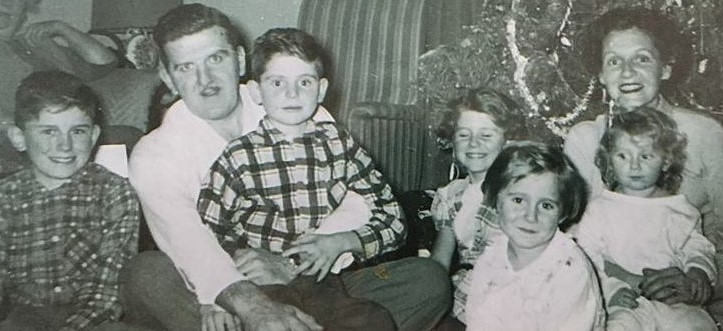
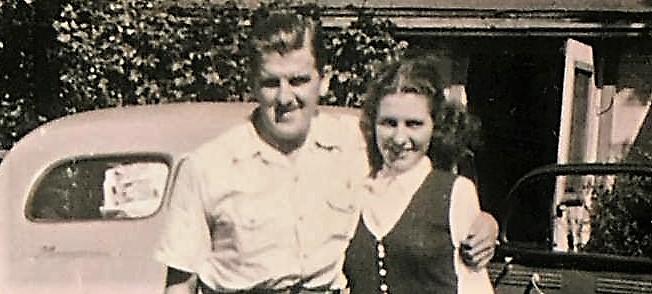
Earlier this week, I celebrated my wedding anniversary—fifty-eight years, all married to the same woman, the lissome lass I first dated when she was but sixteen. We married four years later, embarked upon fulfilling careers, raised two lovely daughters, and retired to the life we now enjoy together…sixty-three years gone in the blink of an eye, it now seems. Egad!
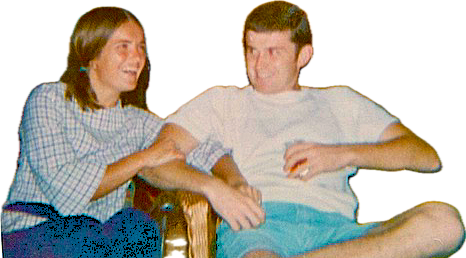
Friends probably view the longevity and success of our union from my wife’s point of view as a triumph of iron will over probability. From my viewpoint, however, it’s unquestionably a victory of blessed good fortune over whatever random fate I would otherwise have encountered.
Recently, at the behest of our daughters, we each decided to write a short memoir of our lives, intended only for family and close friends. Mine, titled Being Me, is finished and in the hands of those I care most about; hers, titled My Story, is nearing completion. The trick, as we discovered in the writing, lay in knowing, not what to include, but what to leave out.
As we wrote, we shared memories sparked by old photos, slides, and home-movies produced through the years. We were amazed by how much we had forgotten over time, and by how different our fuzzy memories sometimes were as we discussed the same events.
“That’s not how it happened!” I found myself declaring more than once, only to have my wife show me a faded snapshot that proved otherwise. Admittedly, I’ve always had trouble remembering dates, so casting back to those bygone years wasn’t child’s play for me.
By the way, that trouble with dates persists even now, alas. I recently showed up for a colonoscopy procedure after enduring the requisite purging prior to the visit, only to find I had the right day, the right time, but the wrong year! I was a whole year early! I’m still living that one down.
Through most of our marriage, my wife and I were enthusiastic participants in sports—baseball, curling, golf, hockey, tennis, skiing, swimming, to name but a few—both competitively and recreationally. As we eased our way through middle age, entering inevitably into our senior years, many of those began to fall away. We found we could no longer glide across the arena or playing field with the same visions of grace and glory we’d previously enjoyed. Father Time vanquishes everyone, we discovered, no matter how skilled or practised we might be.
An example for me was falling down in my follow-through a few times on the tee-boxes while smoking drives I’d always hit routinely…well, maybe not always, but occasionally. My playing partners advised me to start wearing a bicycle helmet if I wanted to continue playing.

My exercise today consists of activities where I can’t fall down or off something. I favour the rowing machine, the treadmill (if I hang on), the stationary bike, or exercises conducted while lying on the floor. Although not a Latin scholar, I find myself chanting under my breath as I work out: sic transit gloria mundi!
As with many things in a long marriage, my wife and I found we had to adjust and change to meet these new demands. She spends the bulk of her time now, when she’s not reading or doing jigsaw puzzles, making gifts for family and friends out of clay, dichroic glass, and wood, an accomplished artisan. I call her my boon companion in the arts.
Much of my time, of course, is spent writing—novels, anthologies of tales and poems, and posts on my blog—and listening to classical music. I’m a prolific reader, as well, and give thanks constantly for online libraries.
Perhaps the biggest change for us is that we no longer find our children and grandchildren to be part of our lives, sharing our experiences; rather, we have become part of their lives, eagerly sharing their accomplishments and happenings. It is we who are the supporting actors now, and they the stars in the unfolding movies of their lives. We’ve also discovered that this change is very comforting, to be loved and cared for by these essential people in our lives, even as ours wind down.
We still look ahead, however, to each new adventure that might come our way. One of my haiku poems illustrates that philosophy quite clearly—
more yesterdays now
than tomorrows, but it’s the
tomorrows that count

the sails of our youth,
once hoist, are mostly furled now---
though the winds still blow
Back in 1964, when we were still dating prior to marrying, a popular singer, Al Martino, released one of his biggest hits, I Love You More and More Every Day. We adopted that as ‘our song’, and we used to sing snatches of it to each other. Over the years, it faded for some reason from our minds, although we never abandoned its premise. But I thought of that song on my recent anniversary day, and began to sing it to myself. I had to look up the lyrics, of course, after all this time, but the melody was etched in my memory.
On a whim, I decided to record myself singing it on a karaoke track to present to my wife. Although I used to sing bass in a men’s a cappella barbershop chorus, my octogenarian voice is a tad quavery and shrill now, and my range is somewhat limited. Nevertheless, the sincerity of my singing has not abated, and she at least recognized the song. Sort of.
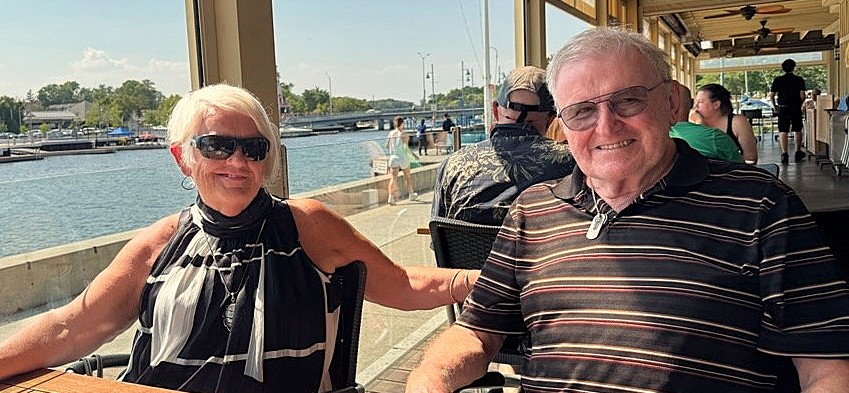
As I think back to when she and I first met, as I try to remember all that has happened since, as I marvel at the lasting of our union, I find myself overwhelmingly grateful that we celebrated this latest anniversary together, and I offer this haiku to her to reflect those sentiments—
impossible dream!
many might have thought so, but
you made it come true

trusting all that’s passed,
moving forward in good faith,
hands clasped as always

 tallandtruetales