
What to Believe?

For all readers, this post will first appear as an email in your inbox.

For those whose email contains a link, click on it to access the post in its true blog setting.

For those whose email simply shows the post in its entirety, click the title to read it in its true setting.

I was raised a Christian lad, not by proselytizing parents, but by a father and mother who passively practised the religion they’d been taught by their own parents.  As an infant, I was baptized in the Church of England; as a boy, I attended Sunday School, where I learned the Anglican liturgy. In my early teens, I publicly professed my learned faith in a confirmation ceremony; as a young man, I married my bride in a Christian church.

Growing up, I was enamoured of the tales of derring-do by British adventurers who set out to dominate the world—Richard the Lionheart and the Crusader knights; Sir Francis Drake and other explorers and privateers; Sir Cecil Rhodes and the rapacious conquerors of Africa and Asia. All of them ventured forth under the cross of St. George, ostensibly to bring Christianity to the heathen masses. Or so I was taught.

I wasn’t dissuaded by the troubling outcomes that sometimes occurred to me, arising from those teachings. For example, had I died before being baptized, I was taught I would not have gone to heaven; I was told that children of other faiths, unless they converted to Christianity, would not go to heaven; I believed none of us, being sinners, would go to heaven if we did not sincerely repent and swear never to repeat our sinful actions; and it was ingrained in me that those who did not go to heaven would be damned to eternal hellfire.

It didn’t dawn on me until much later how ludicrous it was that the God of love held dominion over me through fear. Still, I’ve never had doubts about the essential teachings of Jesus, as I understand them from the several writers of the Bible who have reported them—love; forgiveness; humility and service; empathy and trust; repentance and redemption; compassion and mercy. It seems to me that if everyone, Christian or not, practiced those teachings, the issues that plague our world would disappear.

From earliest times, my favourite part of being in church was listening to and singing the glorious hymns, accompanied by the mighty strains of a pipe organ. Because of the early, emotional indoctrination I experienced through my parents, they prickle my skin to this day when I hear them rendered—to name a few: Abide With Me; Blessed Assurance; Guide Me, O Thou Great Redeemer; Jerusalem; Joyful, Joyful, We Adore Thee; Nearer My God to Thee; O God, Our Help In Ages Past; and Rock of Ages.

A good number of hymns, I discovered later, were written by British lyricists and set to the melodies of classical composers, many of them Germanic. One of those, Glorious Things of Thee Are Spoken (by John Newton, who also wrote Amazing Grace), is sung to the same Joseph Haydn melody that graces the German national anthem, Deutschlandlied (formerly Deutschland über Alles).

Given the 20th century history of conflict between those two nations, I always found it strange that they shared a love for such glorious music. Even more so, I found it preposterous that soldiers of both Christian countries were killing each other on battlefields, in direct contravention of their shared God’s commandment.

Yes, God is with us! Nein, Gott ist mit uns!

But perhaps that isn’t so strange, given the militaristic character of many of those hymns. Take these lyrics for example—

Stand up, stand up for Jesus! ye soldiers of the cross;
Lift high His royal banner, it must not suffer loss:
From vict’ry unto vict’ry, His army shall He lead,
Till every foe is vanquished, and Christ is Lord indeed.

Implicit in those words is the instruction that good Christians must overthrow those who do not believe. I found that to be in contravention of the Christly teachings mentioned earlier, which always struck me as invitational rather than compulsory. I was taught, after all, that God had gifted us with free choice.

Mind you, George Duffield, Jr., the American clergyman who wrote the lyrics in 1858 and set them to an original melody by Franz Schubert, may not have intended them to sound militant or jingoistic. But that is how they ring in my ear. And it is such sentiments that crusaders and conquerors of the past cited to justify their conquests.

If you doubt it, consider also the lyrics of such hymns as Onward, Christian Soldiers, We’ll Go Out and Take the Land, or The World Must Be Taken For Jesus.
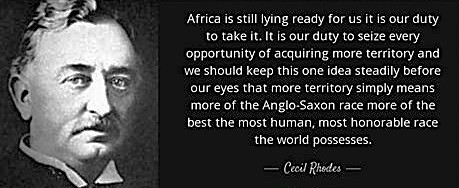
In fact, many Christian buccaneers and swashbucklers set out to plunder the world for reasons far more crass than what they professed. Bringing Christianity to the heathen masses was, at best, a by-product of their colonialist ravages, and at worst, an excuse for them. As for those Indigenous peoples subjected to the messianic zeal of 19th century Christian missionaries, I’ve always wondered how their forced conversions could be deemed proper when similar depredations imposed on Christian victims during the 8th century Moorish invasion of Europe were considered barbaric. Did both aggressions not have the same effects on those who suffered and died? Were they not the same thing, save for the religious faith driving them?

Might makes right, some say. To the victors go the spoils. And history—the history I grew up learning—was written by those victors. The synoptic gospels have Jesus saying, “Render unto Caesar the things that are Caesar’s…” A venerable phrase translated from the Latin has Caesar claiming, “I came, I saw, I conquered!” The emphasis, of course, is on that final word.

So now, with more yesterdays accumulated than tomorrows to anticipate, I find I am no longer the Christian lad I once was…not with how Christianity, particularly the degraded, evangelical sort, has come to be defined in this 21st century. I do believe in free choice, and I choose not to believe Jesus was all about conquest and subjugation.

Further, I do believe in the wisdom of the aforementioned teachings of Christ, although I do not need the backing of a supernatural mythology to support my belief. I regard those as universal truths shared by Christianity, Islam, Hinduism, Buddhism, and Judaism, among other religions…and indeed, by many folk who profess no religion. Those teachings promote adherence to the Golden Rule, compassion for and kindness to others, the valuing of family and community, and the pursuit of a moral life.
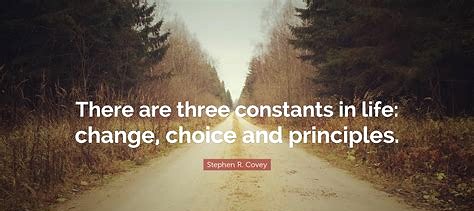
I’ve long believed that the evils of this world are caused, for the most part, by extremism—unbridled nationalism, greedy capitalism, and apocalyptic religions. How might it be if only we gave those universal truths a chance to show what they could do instead?

In closing, lest this screed be mistaken for apostasy or advocacy, let me assure you it is no more than a statement of personal belief, refined over many years of observation and experience. Despite the sage admonition not to believe everything I think, I have always felt that believing in something is important, so as not to fall for anything.

The question, of course, is knowing what to believe. And for me, seeking that knowledge will be an ongoing journey until, inevitably, the road comes to an end.

Winding the Watch

While sitting in church a few months ago, attending the funeral service for a former colleague, I beheld a curious sight.

During the eulogy, delivered by the minister in his solemn, stentorian tone, a man sitting one pew ahead of me began to polish his glasses.  Slowly, assiduously, he wiped the front and back of each lens.  In between wipes, he held them up to the stained-glass window off to one side, as if expecting a divine ray of light to beam down upon him through the glass.

KONICA MINOLTA DIGITAL CAMERA

Such a commonplace exercise; and yet, I thought, so seemingly out of place in that crowded church.  I couldn’t help but wonder if he was paying attention to the words being spoken.  Or was he as distracted by his little task as I was?

When he had finished the job to his own satisfaction, he replaced his glasses, smoothed the hair over his ears, and settled back to listen to the rest of the funereal tribute.  I breathed a silent sigh of relief.

But the episode took me back a long, long way—back to when I was a small boy, attending church with my grandparents.  We used to go regularly—to a huge, cathedral-like edifice with o’er-vaulting arches, windows that turned the sun’s beams to every colour in the spectrum as they streamed through the glass, massive stone walls, and aged oaken altar.  Every time I entered, experiencing as if for the first time the great hush that filled the soaring space, I felt small and awed by its majesty.

Everyone spoke to my grandfather, a rector’s warden for many years, and to my grandmother, a pillar of the ladies’ auxiliary.  They spoke to me, too, usually while ruffling the auburn curls I wore back then.  I smiled forbearingly through it all.

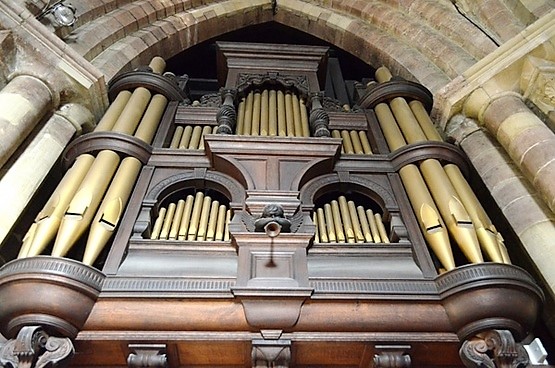
I used to enjoy being there, though, because I loved the tremendous, swelling music of the massive pipe organ, and the grand singing of the choir.  To this day, the sound of the old hymns sends a shiver through me—A Mighty Fortress Is Our God; Abide With Me; O God, Our Help In Ages Past; Blessed Assurance; and so many more.

old_organ_in_the_church_200879

But I always dreaded the point during the service when the minister would climb high into the pulpit to deliver his sermon.  Not that his messages were inappropriate; I was probably too young to understand them, anyway.

No, I dreaded it because my grandfather would always take that time—when there was no sound in all that hushed hall, save the minister’s voice—to wind his watch.  To my cocked ears, sitting right alongside him, that winding was louder than the most thundering organ oratorio.

Once a week, without fail, he would wind his watch.  And I, in my childish way, was mortified that he should choose to do it there.  And amazed that I seemed to be the only one who noticed.

Today, as a grandfather myself, I see it a little differently—as an analogy of sorts.  I’ve come to believe that, just as he wound the watch to keep good time through the following week, so, too, was he rewinding his spirit, sitting there in church, to see him safely through the week to come.

I have that watch now, still on one end of the gold chain he wore across the front of his waistcoat, with a weighted fob at the other end.  It sits in a drawer in my bedroom, and I take it out from time to time.  Even after all these years, it keeps good time—when I wind it.

Digital StillCamera

Seeing that man in church the other day, wiping his glasses so diligently, I remembered my grandfather.  I could almost hear the sound that used to embarrass me so—and I’m embarrassed now that I was embarrassed then.

I still miss him.  I wish he could be sitting there beside me once again, smelling comfortingly of bay-rum after-shave and pipe tobacco.

And winding his watch.

Is It Still?

Even at this late stage in my life, there are still so many questions and so few answers.

For example, is golf still golf if one doesn’t walk the course?  Since retiring, I have devoted countless hours to flailing away at a little white ball, following it down fairways that are too narrow, poking and prodding it close enough to the hole that I can pick it up—a gimme in golf parlance.

Xmas31.JPG

But I almost never walk the course.  Instead, I ride a golf cart along paved pathways, across swaths of mowed grass, stopping too often by bunkers full of granulated sand.  The only exception is when I fail to hit a rider—more golf parlance for a shot that doesn’t travel far enough to warrant climbing back aboard the cart to ride to the next shot.

Golf is a game invented to test one’s physical, mental, and psycho-emotional endurance, and it has forever involved walking.  If one drives the course, is it still golf?

Another question concerns an issue that plagues me in moments of idleness, of which there are many.  Is it still okay for a gentleman to hold a door open for a lady?  And if one does, should one expect a ‘thank-you’ as the lady sweeps through?

More often than not, I rush ahead when in the company of ladies to man the door.  Being not the most graceful of people at my advancing age, I frequently bang into someone in my haste.  Or regrettably, I approach the door from the wrong side, making it necessary to push in front of my companions to open it.  Once in a while, I’ve even been known to let go of the door too soon (usually because the strength in my arm gives out), which provides a none-too-gentle bump on the derriere of the unfortunate lady caught on the threshold.  I rarely hear a smiling Thank you!

A third example has recently become a concern.  Is it still acceptable for one such as I to look at pretty young women?  During a lifetime of doing so, I’ve gone from being considered precocious in my pre-teens, to flirtatious in high school; from admiring in my early working years, to bold in middle-age; from cute in my early senior years, to…what?  Lecherous?

Now, when so many pretty girls are the age of my granddaughters, is it still okay to appreciate their youth and beauty?

Despite the fact I’m a grandfather, I continue to be plagued by these questions.  For instance, there’s the matter of leaving one’s bed unmade after getting up in the morning.  You know, as long as no one is expected to drop by.  Or is one supposed to honour the teachings of one’s mother even now, so many years later?

Though she’s been gone many a year, I still imagine her tread on the stairs, coming to inspect my bedroom before breakfast.  The stripes on the bedspread had to be straight, from the pillow to the footboard; the hem had to be off the floor, and uniformly so, along the length of the bed; and, although I never had to bounce a dime off it in military fashion, the top had better be smooth, with no wrinkles showing through.

Is it still necessary to make one’s bed every morning?

There are so many questions!  If it doesn’t have a hole in the middle, is it still a doughnut?  Is it still correct to say one dials a number, now that there’s no longer a dial on the phone?  Is it still de rigueur to doff one’s hat in an elevator, when so many around us eat in restaurants with their hats on?  Is it still the Olympics with no truly amateur athletes extant?

I know there are folks who could not care less about such questions.  Political correctness has mandated the answers in many cases, anyway, and general indifference often covers the rest.  But how else might I occupy my time, except by considering such weighty matters?

Is it still Sunday if not everyone goes to church?  Is it still winter if there’s no snow?  Is it still cream if it’s made from petroleum products?  Is it still my car if I’m only leasing it?  Is it still democracy if hardly anybody votes?

I don’t remember having the inclination in years gone by to ponder these questions.  Or perhaps I thought I had all the answers back then.  Regardless, I now regale friends—those who hang around long enough—with rhetorical queries and enquiries, in hopes they’ll engage with me in the pursuit of answers.  I’ve chosen to interpret their glazed eyes and pained expressions as a devoted effort to help.

The greatest barrier to learning, I read a long time ago, is the failure to ask.  And so I do.  Endlessly. Repetitively.  Annoyingly, even.

Is it still okay?