
A few years ago, I wrote about a favourite high school English teacher who challenged us one day to make sense of the following sentence he’d written on the chalkboard: It was and I said not but.
It took me a while, but by adding proper punctuation, I was able to solve his riddle: “It was ‘and’,” I said, “not ‘but’.”
But that was a long time ago, as you might have reckoned, given the chalkboard reference. Making sense of situations today, however, especially when they so often seem totally out of whack, requires a modicum of common sense, comprehensive and comprehendible rules, a set of transferable skills, and the discipline to apply them.
Common sense, it seems to me, is an amalgam of accrued wisdom derived from both successes and failures—our own, from which we can learn immediately, and those of people before us, from which we can learn vicariously. Despite being labelled common sense, it can imply different things to different people.

For instance, jogging across a busy street, dodging traffic, might seem like common sense to a person who is not willing to walk further to a crosswalk, whereas another person might believe the common sense approach is to cross in safety at the crosswalk. Ironically then, common sense can be individualistic, although it does fall within a broad range. For example, no one I know would consider it common sense to race an onrushing freight train to the level crossing.
Common sense helps us make sense of our world.
The rules I mentioned—social, cultural, and legal—are learned at home, at school, in the neighbourhood, in the workplace, and in the broader community. Some are hard and fast, others optional; some are social customs, others merely personal affectations. Some bestow favourable consequences upon those who follow them, others impose dire punishment for scofflaws who violate them. And there are others, too, that seem almost whimsical or frivolous, which can be adhered to or ignored as one sees fit.
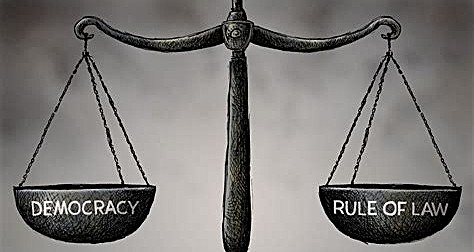
But it’s those rules that inform us, that guide us, as we wend our way through our workaday lives. Without the semblance of order the rules bring, life would be chaotic, anarchic. Imagine that same busy street without traffic lights, or that railway crossing without flashing lights and barriers. Rules, which some people consider constricting, are what free us to exist in relative safety; they guarantee the welfare of our community as a whole.
Comprehensive, comprehendible rules help us make sense of our world.
Skills have long been part of our toolbox, from ancient times right up to now. But transferable skills are more necessary than ever before if one is to succeed in navigating the perils and pitfalls of modern life. Once upon a time, a person might learn the skills of a smithy, a clockmaker, an apothecary, a harvester, and stay in that role for a lifetime. It was even possible to eke out an existence with no discernible skills at all, save the willingness to perform menial labour.

Our modern world requires more than that of most of us, although across the planet, many are unfortunately unable to acquire even the most rudimentary skills. It is safe to say, I think, that the more skilled we are, and the more skills there are in our toolbox to draw upon, the more success we will have in coping with the complexities of the increasingly bewildering world we inhabit. Both in school and in the workplace, it is incumbent upon society to provide people with opportunities to train and retrain in the skills they will need,
Transferable skills help us make sense of our world.
Discipline can mean many things, among which the dictionary lists: training or conditions imposed for the improvement of physical powers and self-control; systematic training in obedience to commonly agreed-upon behavioural rules; improved behaviour resulting from such training; punishment or chastisement; and finally, a branch of learning or instruction.
The discipline I referred to at the beginning has to do with requiring of oneself the determination to apply common sense to situations one encounters, to abide by the common rules of society, to acquire and practice the skills needed to do all that. But without self-discipline, none of those others can have much effect.
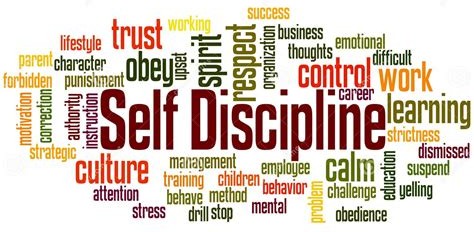
But where does it come from, this self-discipline? Is it inherent, part of us from the moment of birth? Is it acquired? And if so, how? From whom? The nature/nurture dialogue speaks to these questions, and I (admittedly not a behavioural scientist) suspect the answer lies more on the nurture side. I favour that conclusion because a good part of my life was spent observing and interacting with children along a broad spectrum of development.
Along the way, I encountered many children who were rarely or never exposed to discipline (and I don’t mean punishment, which is reactive; by discipline, I mean a proactive modelling by parents and caregivers of restraint and consideration for others, which, if effective, will greatly reduce the need for punishment). I suspect the incidence of such cases is higher today than when I was involved.
It’s well-established that most self-disciplined people enjoy a healthy self-image. And a healthy self-image is based, at least in part, on accomplishment, on achievement. Success begets success, even from an early age. The formative years, from birth to about four, are critical to a child’s brain development and social growth, and a disciplined, supportive home environment contributes greatly to that.

Children learn through play, through discovery, through guided instruction, and in all those modes, it’s vitally important that they understand there are expectations for them, expectations in keeping with common sense and the rules that govern our coexistence. Children who are given the opportunity to rise to these expectations, and who succeed, gain a sense of self-worth. Children who are unsuccessful at first, if given more opportunities, will also respond favourably. It is only from those of whom nothing is expected that nothing will be attained.
Children left to their own devices (figuratively and literally) will, by default, have less chance of assimilating and integrating the sense of discipline they will need as they grow into adulthood. And that will severely disadvantage them as they try to make their way—to learn common sense, to learn the rules, to acquire the needed skills.
Self-discipline helps us make sense of the world.
And really, what more can we ask as we try to cope with this messy, random, tumultuous world we inhabit than the wherewithal to make sense of it all? As a species, we constantly seek order, clarity, certainty, predictability—conditions that are too often in scarce supply. Summoning order from the chaos is essential to our survival.
That’s just common sense.



 tallandtruetales