Nature Will Prevail

Many years ago, my wife and I followed after the outgoing tide in the Bay of Fundy, along with our two young daughters, marvelling at the wonders we spied on the surface of the seabed.  We laughed as our footprints gradually disappeared behind us in the spongy, soaked sand, and we strayed unmindfully farther and farther from shore. 

When the tide reversed its course and began to flow back in, we dallied until the water was sloshing around our ankles before turning for shore.  To our surprise, the rising surge outpaced our progress, the four of us able to move no faster than two pairs of tiny legs could muster.  When the water got to our mid-calf level, we picked the girls up in our arms and picked up our pace, more than a touch anxious that we had underestimated our own capabilities.

We finally made it safely to higher, drier ground, but not before the water had soaked our buttocks, and to this day, I remember the knot of fear that had settled in my stomach, the certain knowledge that I was powerless against the relentless force of nature pursuing us shoreward.

Nature is like that—unrelenting, uncaring, inexorable.  In our arrogance, we humans like to call it Mother Nature—in the same way we have anthropomorphized so many presumed deities and abiding mysteries.  But nature is the furthest thing from a maternalistic, loving parent.

Since our planet first began its orbit around the sun, a natural environment has existed, an environment that eventually spawned life in its most primitive form.  We humans are but a relatively-recent expression of that life-force, and we fancy ourselves its most highly-developed manifestation.  From our very beginnings, we have sought to discover, understand, and control our surroundings—and to be fair, we have certainly done that to some extent.

Nevertheless, we find ourselves still subordinate to the forces of nature—feasts and famines, pestilence and disease, floods and droughts, tides and winds, wildfires and glacial melting, rising sea-levels, earthquakes and volcanic eruptions, to name a few.  We have managed to mitigate the damage of such events to some degree, but we have not been able to eliminate them.  In fact, the cataclysmic effects of nature’s actions have, over time, led to the extinction of many forms of life; taxonomists estimate that more than ninety-nine percent of all species that have ever existed are extinct.  And so, the question naturally arises, could that same fate await our species?

The International Union for Conservation of Nature (IUCN) publishes a Red List of Threatened Species, an inventory of the global conservation status and extinction risk of biological species.  It includes 2.16 million current animal species, almost surely an underestimate, the most numerous of which is insects, almost half the total.  In descending numerical order, the other groups are: molluscs, arachnids, crustaceans, fishes, reptiles, birds, amphibians, mammals, and corals.

We humans are just one species among the mammals, the second-smallest of the ten groups, a mere 0.003 percent of the total.  Our group numbers more than 6500 recognized species, and of those, we are the most numerous (with rats being second).

In addition to the 2.16 million animal species on the planet, there are more than sixty thousand other species of life, including protozoa, plants, chromists, fungi, bacteria, and archaea.  Among these, bacteria—the smallest, simplest, and most ancient cells—exert a tremendous influence on human life. 

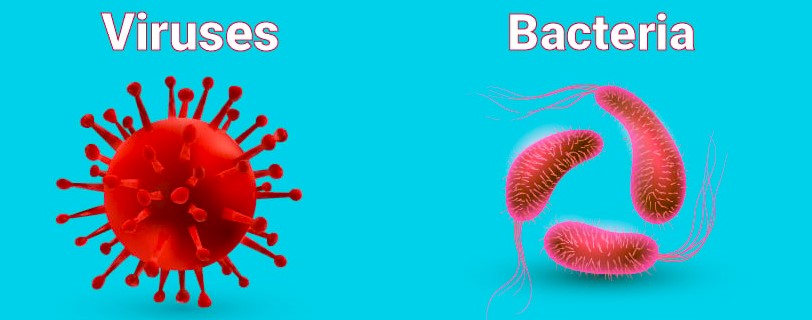
In our bodies, bacteria inhabit our digestive system, live on our skin, and contribute to our general wellbeing.  But there is a downside, too; infectious diseases caused by bacteria have killed more than half of all humans who have ever lived, through pandemics such as the bubonic plague.  Other examples of disease caused by bacteria include tuberculosis, whooping cough, sexually-transmitted infections, and e-coli.  Because bacteria can reproduce themselves in less than an hour, mutations can emerge and accumulate rapidly, causing significant change, such as resistance to antibiotics.

Viruses, by contrast, are not living organisms.  Rather, they are an assembly of different types of molecules that assume different shapes and sizes, but they can be as dangerous to human life as bacteria.  Unlike bacteria, they cannot reproduce on their own, but need to enter a living cell to replicate and evolve.  Once inside, they take over the cellular machinery of their host and force it to make new viruses.  They can infect humans, other animals, plants, and even bacteria, and are able to evolve and jump from other animal forms to humans.  They cause diseases like the flu, the formidable common cold, and SARS-CoV-2.
In the face of many perceived threats to our survival, a group of prominent researchers in Australia, the Commission for the Human Future, identified a list of risks to life on the planet: climate change, environmental decline leading to species extinction, nuclear weapons proliferation, resource scarcity (especially water), food insecurity, dangerous new technologies (such as AI), overpopulation, chemical pollution, pandemic disease, and denial and misinformation.  Six of the ten are clearly within nature’s purview; the other four would be the result of human miscalculation.

What our species does about these ten existential threats in the next few years will determine whether present and future generations face a safe, sustainable, and prosperous future or the prospect of collapse and even extinction, the report said.

It also stated, Understanding science, evidence, and analysis will be key to adequately addressing the threats and finding solutions. An evidence-based approach has been needed for many years.  Under-appreciating science and evidence leads to unmitigated risks…

Shaping [the human future] requires a collaborative, inclusive, and diverse discussion.  We should heed advice from political and social scientists on how to engage all people in this conversation…

Imagination, creativity, and new narratives will be needed for challenges that test our civil society and humanity.

I confess to some doubt as to whether our species, tribalistic and combative as we are, will be able to manage that collaborative approach.
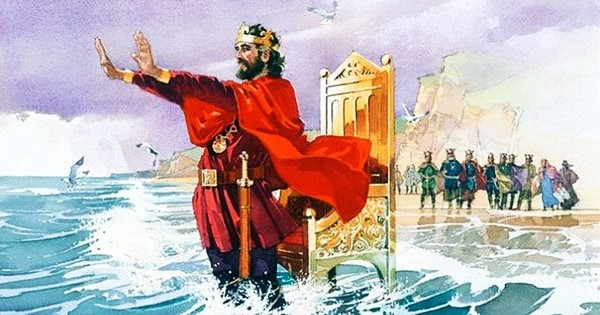
And I think back to the apocryphal story of King Canute, trying to hold back the tide—knowing full well he could not—in an attempt to teach his flattering courtiers that an earthly monarch could exert no control over the natural elements.  True or not, the story illustrates the conceit of humankind in thinking we can ever be in control of nature.

As my wee family found out so long ago on the shores of the Bay of Fundy, we are most definitely not.

Nature will prevail, I fear.  And the planet will continue its evolutionary journey around the sun, perhaps without us, until that star, too, is extinguished.

Hall of Infamy

In times of distress and uncertainty, many of us turn to respected leaders from days of yore to find solace or encouragement from their words.  A number of their declarations deservedly occupy a place in the hall of fame for inspiring messages.

But I have often wondered if there might be a hall of infamy for utterances that do just the opposite: reveal hateful philosophies that denigrate and belittle the spirit of humankind.  Goodness knows, there is no shortage of despicable characters from our history to whom we might turn for such messages.

We might think, for example, of Hitler, Stalin, Saddam Hussein, Al Capone, Mao Zedong, Lenin, even Caligula.  All men, they made many dystopian claims during their respective reigns of terror.

A small sampling of these follows—

What good fortune for governments that the people do not think.

To read too many books is harmful.

A lie told often enough becomes the truth.

Make the lie big [and] simple.  Keep saying it…eventually people will believe it.

The victor will never be asked if he told the truth.

Politics is saying you are going to do one thing while intending to do another.

Vote early and vote often.

Death is the solution to all problems.  No man, no problem.

One death is a tragedy; one million deaths is a statistic.

It is true that liberty is precious; so precious that it must be carefully rationed.

Religion is the opiate of the masses.

I don’t care if they respect me, so long as they fear me.

despots

Any search on the internet will turn up dozens and dozens of such statements by these men and others.  And it’s interesting to note that those who said these things might have actually believed them.  Even if we find their sentiments monstrous, they could have been telling the truth as they saw it.

Or, conversely, they might have been deliberately making such utterances, knowing they were false, to further their own ends.

But what of today?  Are there statements like these being made in our own time, perhaps believed by the person uttering them, even if misanthropic and obviously false?

Let us consider this next sample in the context of the coronavirus pandemic currently sweeping the planet—

Looks like the story was an exaggeration…Fake News…

It’s one person coming in from China, and we have it under control.

One day, it’s like a miracle, it will disappear.

We’re doing a great job with it.  Just stay calm.  It will go away.

I felt it was a pandemic before it was called a pandemic.

If somebody wants to be tested right now, they’ll be able to be tested.

I see the disinfectant, where it knocks it out in a minute…is there a way we can do something like that, by injection inside or almost a cleaning?

We’ve taken the most aggressive actions…the most aggressive by any country.

Cases, Cases, Cases! If we didn’t test so much and so successfully, we would have very few cases.

Now we have tested almost 40m people. By so doing, we show cases, 99% of which are totally harmless.

Nothing would be worse than declaring victory before the victory is won.

We’re on our way to a tremendous victory. It’s going to happen and it’s going to happen big.

How likely is it, do you suppose, that the person who made these statements truly believed them at the time they were uttered?  Could anyone in a major global-leadership position be that deluded?  That ignorant of science?

Or perhaps he knew what he was saying was false, but did it anyway to advance his own agenda.  Could that be so?

Each of us must make of it what we will.

us map1

The bigger problem, of course, is that the person who has spoken these words is the democratically-elected leader of more than 330 million people—just a tad more than four percent of the planet’s population—whose nation is presently being overwhelmed by almost twenty-five percent of Covid-19 infections in the world.

More tragically, at the time of writing, the number of deaths is almost one-quarter of the worldwide total.  One-quarter!

All this from a country ranked first in the world in 2020 in GDP (gross domestic product)—presumably the best-equipped nation to deal with such a crisis—yet only the fifty-eighth safest nation in the world in the face of the pandemic.

So bad is the situation that four of the fifty states of the union occupy spots in the list of top-five world nations for Covid-19 infections.

When future generations seek an explanation for all of this, they may well focus on leadership—or its absence—at the very highest level.  And they may study carefully the statements made by the man at the pinnacle, some of which were listed above, to ascertain how effectively he grasped the dire situation, owned it, and set about to vanquish it.

If so, they may have to look no further than this remarkable statement from that very man—

I don’t take responsibility at all!

For the Hall of Infamy, I nominate…

trump2

Things Happen

Things happen.

We don’t always know about them, of course—not right when they occur, and sometimes not ever.

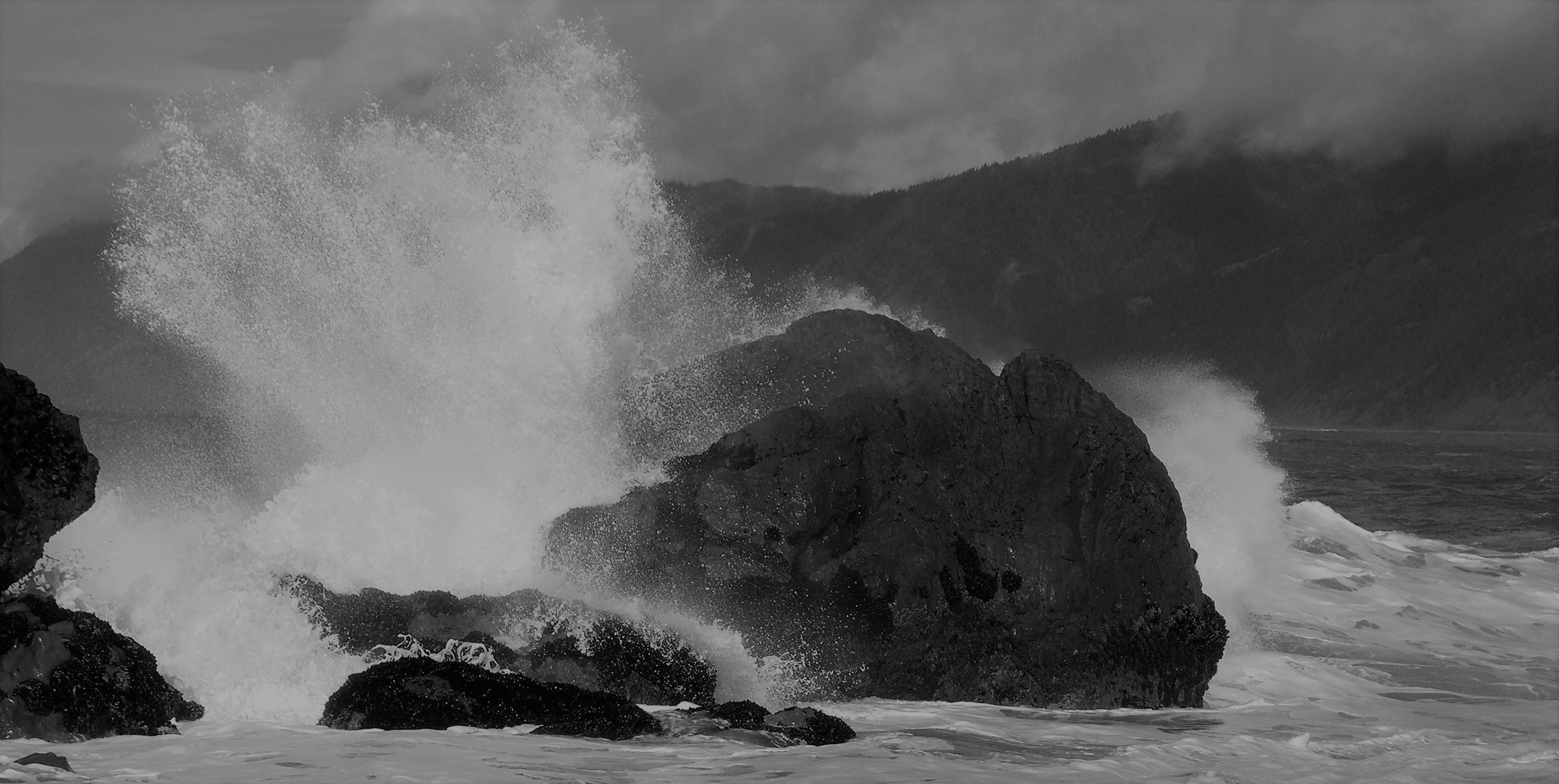
Trees topple loudly in the forest all the time when no one is present, waves smash spectacularly on solitary shorelines, birds plummet exhausted from the sky to die on uninhabited barrens.  And nobody is there to bear witness.

waves-crashing-between-rocks-6

It has ever been that way, from the first appearance of our human species until the present day.  Things happen, even when we do not know.

But that truth has become increasingly hard for many folk to accept.  In this age in which we live—one of marvellous, instantly-accessible, graphic, digital reality—it has become easy instead to believe that, unless we are told something happened, or see it on our screens, or experience it first-hand, it did not occur.

If it’s not up and viral on the web, if we aren’t personally in the loop, it cannot have happened.

How foolish we have become!

devices

And there is another problem.  Much of the information we avidly soak up from our handheld devices is misleading—sometimes inadvertently, sometimes deliberately so.  Too many users, alas, are ill-equipped to assimilate the plethora of information assailing us, to differentiate, to assess, to form coherent conclusions about it all.

Today, many of us assume if it is up and viral on the web, bringing us personally into the loop, it must certainly have happened.

So, what is real and what is fake?  Hemingway wrote, …there is no one thing that’s true.  It’s all true.  And, in many ways, his observation has proven accurate—at least in the sense that it’s all there in front of us, waiting for us to choose from it.

There is a problem with that, though—one associated with our all-too-human tendency to embrace those opinions we are already in agreement with, and to reject those to which we have a preconceived aversion.

Don’t bother me with facts! we seem to say.

Unfortunately, even so-called facts can be fabricated by malevolent purveyors of misinformation, leaving us even more confused and more susceptible to manipulation.  That may not be overly-problematic if we’re being influenced to buy one brand of toilet tissue over another, for example; as an aside, a friend once told me, “On the (w)hole, they’re all pretty good!”

But it might be calamitous if we are being callously misled about the relative merits of one political leader over another.

Political_Banner

Which of these two imaginary politicos would be more palatable to the average voters, do you suppose?  The one who tells them exactly what they want to hear, who panders to their fears and prejudices, even if (s)he has no intention of fulfilling the empty promises?  Or the one who dares speak about the looming climate crisis, for instance, despite knowing the warnings might fall on deaf ears among the electorate?

Which of the two would be more favoured to win, the one who croons the siren-song of making things better—the way they used to be—or the one who tells of the hard slog ahead to deal with climate change, the existential crisis of our time?

The answer, I suspect, is the person who most-closely approximates the baked-in attitudes and ideas of us who are the voters.  Or the majority of us, anyway.  The relative merits of the candidates’ positions come secondary to that.

Facts no longer seem to matter because, while they used to be considered unassailable, almost sacrosanct, they are today viewed as permeable and malleable.  Where they used to be built on a rock foundation, they stand today on shifting sand.

Facts are, in this worldwide web of deceit and falsity, whatever any shill or charlatan wants us to believe they are.

But in a way, none of this matters for the planet.  Not really.  For, in spite of what we are told about this critical issue of our time—whether it’s the truth or a lie, whether we heed or ignore it—there is one fundamental reality that does not change.

Things happen.  Whether we choose to know about them or not.

Glaciers shrink and shed meltwater all the time when no one is present, permafrost thaws in the isolated, wind-swept tundra, animals disappear from our planetary menagerie, never to be seen again.  And too many of us choose to look away, refuse to listen to those who are compelled to bear witness.

The planet will go on, regardless.  But what of us, wrapped in our imperious cloak of superiority?  Will humankind survive?

Things happen.

reaper

Do Better

Only the seriously stupid or wilfully resistant among us can deny that this planet Earth, our interstellar home, is changing.  Even if one were to disregard or dispute the vast array of credible evidence of global warming and environmental degradation we are presented with on an almost daily basis, it would be hard to challenge the notion that, over time, since its very beginning, the planet has evolved from its original state.

Across billions of years—4500 million of them is the best estimate—this third rock from the sun has passed through numerous iterations: the largest of these are defined by science as the Hadean, Proterozoic, and Phanerozoic eons, each of which is further subdivided into eras, periods, epochs, and ages.  During the first of these, the hot rock we now call home cooled to the point that water began to form on the surface, enabling the creation of the earliest life forms.

earth

According to the fossil record so far unearthed, human life first appeared during the mid-Pleistocene Epoch, five to seven million years ago, following an environmental cataclysm that destroyed about 75% of all plant and animal species then existing.  This demonstrates that for 99.5% of the planet’s existence, humankind did not exist, mainly because the conditions necessary for our survival and propagation were not present—evidence that, over four billion years, the planet evolved from its original state to a stage that supported human existence.

Why, then, should anyone today suppose that the earth has somehow ceased its evolutionary journey?  It is ridiculous to think that it has somehow morphed into stasis, an unchanging organism destined to remain for always as we would like it to be.

Of course it is evolving!  Of course the climate is changing!  As it always has.

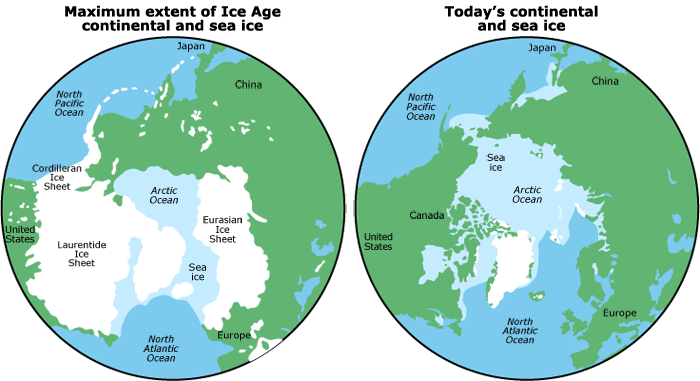
During the relatively short period of time human life has existed, the planet has experienced as many as six ice ages, the last of which was about twelve thousand years ago, and four periods of temperature variation warmer than today’s, the last of which was approximately 160,000 years ago.  It is worth noting that the temperature variation of the planet today is creeping ever closer to that of the last warm period.

icemaps

Had we been alive at the end that last ice age, we would have witnessed the retreat of continental-shelf glaciers from what is now Canada and the northern USA as the ice melted during a warming period—just as we see happening in the Antarctic and Arctic regions today.  The waters are rising.

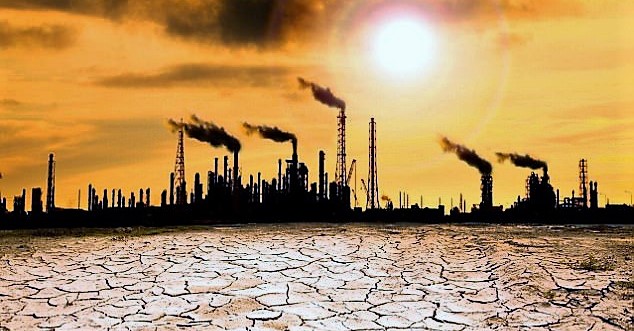
Really, the question is not whether the earth is changing, or whether we are truly plunged into a period of global warming.  Only the seriously stupid could doubt that.  The question is: has this change been exacerbated by the great spewing of carbon-based emissions we have caused?  The question is: are we, as self-preoccupied residents of the planet, ensconced in our oft-warring, sovereign nations, able to sacrifice our creature comforts in order to slow down the rate of warming?  The question is: are we even willing to do that?

And the critical question is: even if we do decide, globally, to take meaningful action now, not thirty years on, is it already too late?

The humans who walked the planet during the last warm period were not like us today.  Humankind has changed mightily since then.  It is likely that, if our species is to survive the earth’s latest evolutionary cycle, however long that may last, those remaining will be far different creatures than we are today—perhaps as unrecognizable to us (if we could still be here to see them) as our distant homo erectus progenitors would be (if we had been around to see them).

When I read of the potential devastation to the populations of the planet by the end of this twenty-first century—made worse by our wilful ignoring of humankind’s destructive aggravation of the evolutionary changes naturally occurring—it is of some comfort to me that I shall not be here to suffer through it.

warming

But I wish we could do better.