Love, Through Their Eyes

The weekly prompt from my Florida writers group was to write a piece about seeing things ‘through their eyes’, and this is my offering—

Two short poems, each exquisitely written, capture exactly—exactly—how I feel about this brief moment in time I know as my life, about the relationship I have with the love of my life, and about what will happen when I am gone.

The first, When You Are Old, by William Butler Yeats, the greatest of the Irish poets, portrays a woman through the eyes of her departed husband, as he speaks of his love for her, even beyond death, and where she might find him—

When you are old and gray and full of sleep
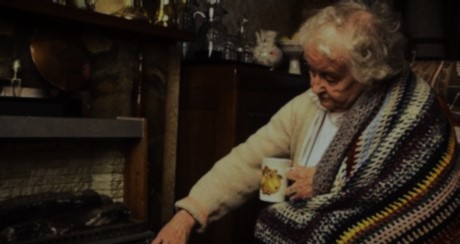
And nodding by the fire, take down this book
And slowly read, and dream, of the soft look
Your eyes had once, and of their shadows deep.

How many loved your moments of glad grace,
And loved your beauty with love false or true,
But one man loved the pilgrim soul in you,
And loved the sorrows of your changing face.

And bending down beside the glowing bars,
Murmur, a little sadly, how love fled
And paced atop the mountains overhead,
And hid his face amid a crowd of stars
.

I find that sentiment so uplifting, so reassuring, that love, triumphant over death, is waiting ‘midst a crowd of stars.

I no longer believe, as I did as a child, in life eternal, in the idea of earth and heaven, the now and hereafter.  Rather, I believe the life-force presently empowering me—what I might call a soul—is but a fragment of the energy that fuels our expanding universe, a spark of light presently encased in my mortal being.  And when I, the shell that hosts the spark, will have finished my course, when I have expired, that life-force animating me will simply rejoin the universe.  It will be as if I am carrying on beyond death, but with no memory of my life—just as I have no memory now of what came before my birth.

The mortal I shall die, but my life-force will not, for if it did, the universe would shrink at the loss of that fragment of energy.  Science tells us, however, the universe is expanding, not shrinking, so it must be that no energy is ever lost.
But where will my immortal life-force go, and in what form, I wonder?  And what of my love whom I will have left behind?  Happily, I find an answer to these questions in the second of the poems I number among my favourites.  Written by David Jones, a Liverpool poet, from his collection titled Love and Space Dust, I find it moving and profound—

And in the end
I will seek you
Out amongst the stars.

The space dust
Of me will
Whisper ”I love you”
Into the infinity
Of the universe.

So, no life eternal, but something better—love eternal.  According to these two poets, as seen through their eyes, the pilgrim soul who shares this life with me will find my spark of energy—my soul—waiting somewhere in the stars for her, calling I love you into the void until she hears me.

And I choose to believe she will hear me.

David Jones: https://www.goodreads.com/author/quotes/5241391.David_Jones

W. B. Yeats: https://www.poetryfoundation.org/poets/william-butler-yeats

The Ins and Outs

Some friends were chatting recently in the park about the ins and outs of aging, a not-unusual activity for a group of greying septuagenarians, I suppose.  After listening for awhile, I excused myself from that rather depressing conversation, preoccupied by the thought that there seem to be far more ins than outs as one grows older.

Warming-the-Bones

It’s as if the in-words are in, and the out-words are out.  In roughly alphabetic order, I’ve identified some of those nasty in-things we were talking about.

The first was the inability to do many of the things we used to take for granted—running up the stairs, for example.  It’s more likely now that we’ll fall down those stairs.

There is the foreboding spectre of incontinence lurking, an affliction that has already befallen some of my comrades—leaving them, to their chagrin, in-diapers.

Ailments such as that—and others too numerous to count—can be the source of a profound sense of indignity unless one is possessed of a massive sense of self-worth.  We are lessened, somehow, when we lose our pride in self.  As we read in Ecclesiastes, Vanity of vanities, all is vanity!

With some of us (and I do concede for me, too), there can be a greater tendency toward infantile behaviour as we age, particularly when we don’t get our way—in a domestic disagreement, perhaps.  Whenever I discover I am moving in that direction, I try to remind myself that my wife is not my mother, and so I should abjure childish behaviour.

temper

That’s not always easy.

In many such situations, I find myself adopting a gratingly ingratiating manner in order to convert, or perhaps cajole, my wife to my way of thinking.  Prostrating myself, as it were, to attain my desires.

Hah!  Never happens.

So, when it doesn’t, and because I have fewer inhibitions now about my deportment, I occasionally fall into a visible funk, sink into a sulk, and refuse to talk further.  I just clam up.  But my silence, I’ve found, is always more appreciated by my wife than by me!

However, I am never so injudicious as to remain non-communicative for very long.  Dinner-time inevitably rolls around, and my wife—the head-chef to my sous-chef/clean-up guy—is long-past the stage of guessing what I’d like for supper.  If I don’t speak up, I could well be fasting ‘til dawn.

That possibility is at-all-costs to be avoided, for during the course of my seventy-plus years, I have learned that failure to eat leads my body to a virtually inoperative state, placing me indeed in-peril.

Despite all these puerile behaviours, I am quite a nice person (or so I’ve been led to believe by folks who are still my friends).  Therefore, I try not to present as insufferable to those around me, lest they will no longer be.

Intransigence on my part—on any subject, at any time—is more likely to lead to a parting of the ways with my friends than to any kumbaya coming-together.  So, I make every effort to remain amenable and open-minded.  It kills me sometimes.

lonely (1)

Perhaps the most difficult of the in-words as one ages is the realization that we risk becoming ever-more invisible—overlooked by the younger generations as they rush pell-mell through their daily routines.  No one ever wants to think (s)he has become unimportant in the world we still inhabit, but many of us come to fear it is so.

Anyway, the next time I’m chatting with those same greybeards whose conversation prompted these gloomy contemplations, I think I’ll try to present them with some out-words that might lend a more optimistic tone to our stage of life.

Words like—outgoing, outlaughing, outliving, outplaying, outspokenness, outstretching, outperforming, outworking.

And outrageous.  We greybeards need to be more outrageous.

We need more outs than ins!