Cogito, Ergo Sum

Cogito, ergo sum—I think, therefore I am. 

So opined René Descartes in 1637, in his famous work, Discourse on Method, demonstrating what he regarded as the first step in the acquisition of knowledge.

Of course, we don’t know that he was right, but because enough of us have come to believe his posit, it is almost universally accepted.  Left unanswered is the question as to whether other living organisms are sentient, whether they also can think.

Some people believe they can—that creatures such as elephants, whales, and dogs are capable of thought—and they cite observed actions by these animals as proof of their belief.  But what of other animals, or fish, and what of plants and rocks?  To my knowledge, no one has as yet been able to prove (or disprove) the thesis that any lifeform other than human is capable of thought.

Regardless, it does seem likely that no form of life on our planet has attained the same level of high-order thinking that the human species has.  And if any have, they have hidden it from us remarkably well.  With physical brains somewhere between the largest and smallest in size among all living creatures, we humans appear to have outstripped them all in our capacity to think rationally.

The capacity to think is what allows many of us to read widely, listen to diverse sources of information, and weigh the relative merits of differing schools of thought before deciding on a course of action—critical thinking.  Alas, it is also what allows us to read narrowly (if at all), listen carelessly, and reject schools of thought that do not reflect our own preconceived notions.

Either way, thinking broadly or narrowly allows us to form opinions.  And those opinions, whether supported by evidence or not, often morph into staunch beliefs if we don’t continue to think about them, to test them against emerging information.  And inference plays a big role in that.

For example, if I waken one morning to the sound of thunder, and if I see flashes of lightning illuminating the drawn curtains of my bedroom, I might well infer that it’s raining outside.  But I have no proof of that until I actually see (or feel, or smell, or taste) the tangible rain.  I might throw open the curtains to discover there is no rain falling, despite the harbingers of storm; merely hearing and seeing those from inside my room would have drawn me into a false conclusion, yet one I believed until faced with proof of the opposite.

It points out the danger of choosing to believe everything we think, at least before we have evidence to support (or deny) our premises.  As sentient beings, we are compelled to seek answers to the baffling phenomena we observe around us, to find reasons why situations unfold as they do, to explain the arcane mysteries that bedevil us—like where we came from and where we’re going.

Our world is replete with examples of how we have gone about this—in religion, science, engineering, medicine, music, literature, and so many other fields.  The list of human accomplishments over the millennia is long and laudable.  Errors have been made along the way, and corrections applied, but the steady march of knowledge-acquisition has been relentless.

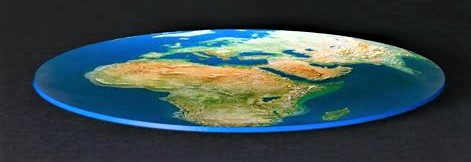
Many of our ancestors, for instance, once believed (and some still do) that the earth was flat, that any who got too close to the edge would topple off the edge, fall into the void, and be lost forever.  We know now, of course, that belief was untrue.  As an amusing aside, the Flat Earth Society still boasts today in its brochures of having chapters of believers around the globe!

Still other folks believed once upon a time that our planet was at the centre of the known universe, that the moon and sun revolved around us; those people’s skills of observation, primitive by today’s standards, and their earnest thinking about those observations, led them to that conclusion. Yet, it was also not true.

Nevertheless, despite our many errors and missteps along the way, our capacity to think rationally—and to forever question our thinking—has allowed us to advance our collective knowledge.  A key factor in continuing that progress is to avoid investing complete faith in any one thesis, regardless of its appeal at any given time; we must retain an appropriate level of skepticism in order to keep from falling into the acceptance of rigid dogma and blind ideology. 

As George Carlin is reputed to have said, “Question everything!”

Another key is to continue testing theses to reinforce their viability, to find evidence of their truth (or falsity).  But at the same time, we must remember that an absence of evidence of truth in the moment does not mean the same thing as evidence of an absence of truth.  In other words, just because we don’t have the facts to prove the legitimacy of a thesis right now does not mean that thesis is untrue; it may mean simply that we haven’t as yet discovered the facts to validate it.

The advance of knowledge is, to paraphrase Hemingway, a movable feast.

An exception to prove the truth of any thesis can always be found, of course—something that demonstrates the general truth of a thing by seeming to contradict it.  For instance: most of the teachers in that elementary school are female, and the one male teacher on staff is the exception that proves the rule.  The thesis is factual.

We also know the true merit of any pudding is put to the test in the eating.  But with one person’s taste being different from another’s, whose opinion is to be accepted as the truth?  Any decision there must be regarded as opinion, not fact.

It is interesting to note that Descartes did not write, Cogito, credo quod cogitare, ergo non est recta—I think, I believe what I think, therefore it is right.  Apparently, he understood that because we think something, even to the point of believing it, that does not necessarily make it true.

He also wrote, Non satis est habere bonum mentem; Pelagus res est ut bene—It is not enough to have a good mind; the main thing is to use it well.

Quaestio, semper quaestioquestion, always question!

People Who Know Everything

People who assume they know everything are annoying to those of us who do!

Thus spake a friend of mine (in jest I think) during a conversation about smarmy politicians who claim to have solutions to the ills that plague our society.  All we have to do is vote them into office and our worries will be over.  Or so they promise.

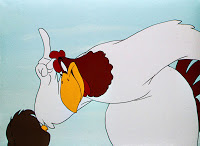
I confess I, too, become annoyed whenever someone presents as a know-it-all—not, as my friend joked, because I think I know everything, but because I think no one does.  Whenever I hear someone bloviating loudly on any subject, I remember a character from the Saturday morning cartoon shows of my childhood, Foghorn J. Leghorn.  I still picture him as a blustering, southern senator, speaking a mile a minute, pausing only intermittently to check with his listeners.

the-foghorn-leghorn-11

“Pay attention to me, boy!  I’m not jus’ talkin’ to hear my head roar!”

“I keep pitchin’ ‘em, son, an’ you keep missin’ ‘em!”

“Any o’ this gettin’ through to you, son?”

The theory, I suppose, is that no one can contradict you if you won’t allow them a chance to speak.

The problem is, the world is a complex place where almost any issue has more than one truth attached to it.  Draining a swamp, for example, might be considered a fine idea by a developer who wants to convert it to a new mobile home community, but not such a good thing for the alligators, herons, and muskrats who already make it their home.  One’s perspective always plays a part.

If the swamp denizens are afforded no chance to speak on their own behalf, if they’re out-shouted and overwhelmed by those who know everything, by those who have the financial and political wherewithal to dominate the conversation, they are doomed.  In such cases, although both sides of the argument may have merit, only one side gets heard.  And that side usually prevails.

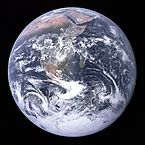
My experience with know-it-alls is that they seldom want to be confronted with facts or evidence that might support a view contrary to their own.  The flat-earth society comes to mind.  When presented with the famous ‘blue marble’ photograph of our planet, shot from an Apollo spacecraft, the society’s response was, “It’s easy to see how a photograph like that could fool the untrained eye.”

the_earth_seen_from_apollo_17-1

There are numerous other situations where those claiming to know everything reject scientifically-based information in favour of pre-determined positions: holocaust deniers, global-warming skeptics, and tobacco users are but a few.  The staunch refusal of these deniers to entertain an opposing point of view effectively cuts off any possibility of meaningful discussion, and imposes their peculiar world-view on everyone.  In the words of the Borg, from the Star Trek television series, “Resistance is futile.”

It is instructive to reference Susan Glaspell, a Pulitzer Prize journalist and novelist, who wrote:  One never denies so hotly as in denying to one’s self what one fears is true…

I don’t know the ‘honest truth’ (if there is one) about any of these controversial issues.  But I instinctively doubt those who claim to know it, especially in the face of possibly-contradictory evidence.  Surely both sides of any argument (or however many sides there may be) should be weighed and assessed before conclusions are reached.

And in cases where such rigorous debate has occurred, the resultant conclusions should still remain open to further examination and challenge as new information comes to light.  But certainty is the enemy of an open mind, and an open mind is the enemy of those who claim to know everything.

I’m reminded of a snatch of dialogue from a long-ago film that illustrates the point.  While arguing about something, one character states his opinion in no uncertain terms, clearly brooking no challenge.

“You really think so?” his companion asks.

“I don’t think,” the first one declares.  “I know!”

After a meaningful pause, the second character says, “Good, ‘cause I don’t think you know, either.”

confused

Indeed.

Is It Still?

Even at this late stage in my life, there are still so many questions and so few answers.

For example, is golf still golf if one doesn’t walk the course?  Since retiring, I have devoted countless hours to flailing away at a little white ball, following it down fairways that are too narrow, poking and prodding it close enough to the hole that I can pick it up—a gimme in golf parlance.

Xmas31.JPG

But I almost never walk the course.  Instead, I ride a golf cart along paved pathways, across swaths of mowed grass, stopping too often by bunkers full of granulated sand.  The only exception is when I fail to hit a rider—more golf parlance for a shot that doesn’t travel far enough to warrant climbing back aboard the cart to ride to the next shot.

Golf is a game invented to test one’s physical, mental, and psycho-emotional endurance, and it has forever involved walking.  If one drives the course, is it still golf?

Another question concerns an issue that plagues me in moments of idleness, of which there are many.  Is it still okay for a gentleman to hold a door open for a lady?  And if one does, should one expect a ‘thank-you’ as the lady sweeps through?

More often than not, I rush ahead when in the company of ladies to man the door.  Being not the most graceful of people at my advancing age, I frequently bang into someone in my haste.  Or regrettably, I approach the door from the wrong side, making it necessary to push in front of my companions to open it.  Once in a while, I’ve even been known to let go of the door too soon (usually because the strength in my arm gives out), which provides a none-too-gentle bump on the derriere of the unfortunate lady caught on the threshold.  I rarely hear a smiling Thank you!

A third example has recently become a concern.  Is it still acceptable for one such as I to look at pretty young women?  During a lifetime of doing so, I’ve gone from being considered precocious in my pre-teens, to flirtatious in high school; from admiring in my early working years, to bold in middle-age; from cute in my early senior years, to…what?  Lecherous?

Now, when so many pretty girls are the age of my granddaughters, is it still okay to appreciate their youth and beauty?

Despite the fact I’m a grandfather, I continue to be plagued by these questions.  For instance, there’s the matter of leaving one’s bed unmade after getting up in the morning.  You know, as long as no one is expected to drop by.  Or is one supposed to honour the teachings of one’s mother even now, so many years later?

Though she’s been gone many a year, I still imagine her tread on the stairs, coming to inspect my bedroom before breakfast.  The stripes on the bedspread had to be straight, from the pillow to the footboard; the hem had to be off the floor, and uniformly so, along the length of the bed; and, although I never had to bounce a dime off it in military fashion, the top had better be smooth, with no wrinkles showing through.

Is it still necessary to make one’s bed every morning?

There are so many questions!  If it doesn’t have a hole in the middle, is it still a doughnut?  Is it still correct to say one dials a number, now that there’s no longer a dial on the phone?  Is it still de rigueur to doff one’s hat in an elevator, when so many around us eat in restaurants with their hats on?  Is it still the Olympics with no truly amateur athletes extant?

I know there are folks who could not care less about such questions.  Political correctness has mandated the answers in many cases, anyway, and general indifference often covers the rest.  But how else might I occupy my time, except by considering such weighty matters?

Is it still Sunday if not everyone goes to church?  Is it still winter if there’s no snow?  Is it still cream if it’s made from petroleum products?  Is it still my car if I’m only leasing it?  Is it still democracy if hardly anybody votes?

I don’t remember having the inclination in years gone by to ponder these questions.  Or perhaps I thought I had all the answers back then.  Regardless, I now regale friends—those who hang around long enough—with rhetorical queries and enquiries, in hopes they’ll engage with me in the pursuit of answers.  I’ve chosen to interpret their glazed eyes and pained expressions as a devoted effort to help.

The greatest barrier to learning, I read a long time ago, is the failure to ask.  And so I do.  Endlessly. Repetitively.  Annoyingly, even.

Is it still okay?