I Wonder Why?

If this whole story appears in the body of your email, click the title to read it in its natural blog setting.

In all the time I’ve known her, sixty-three years and counting, the woman who has been my companion and wife for most of that period has uttered this phrase more frequently than any other: “I love you!”

She has said it to me, of course, to our daughters and their husbands, to our grandchildren, to other family members, and to friends (of whom she has many). And we all appreciate it greatly.

Her next most-frequently uttered phrase is a question: “I wonder why?” I assure you, however, she is not wondering why she loves us. The two phrases are completely separate.

My wife is an accomplished woman of insatiable curiosity, a bona fide lifelong learner. There is very little that happens around her that does not provoke that critical question.

“I wonder why the fruit store is sold out of bananas today?”

“The forecast said it would rain today. I wonder why it didn’t?”

“I wonder why the mail carrier is late?”

“I wonder why more people don’t follow the science?”

“I wonder why…?”

Once upon a time, I didn’t realize that more than just a few of these utterances were rhetorical. I mistakenly assumed she wanted me to essay an answer to all her questions, but I’ve been disabused of that notion. And that’s just as well, because for many of them, I had no idea of the answer, anyway. In those cases, in order to appear attentive, responsive, and a willing participant in the conversation, I would simply make something up.

“Ah…I think the banana-pickers are on strike.”

“Um…atmospheric conditions shifted when the sub-arctic air flow was diverted by wind-shear.”

“Hmm…the mail truck probably broke down.”

“Well…a lot of folks don’t understand science. Or don’t care to.”
Being an intelligent woman, my wife saw through these lame attempts to satisfy her curiosity, and scoffed at or ignored my answers. That, naturally, put me in a position of having to champion them—to defend the indefensible, as it were. As a reasonably intelligent person myself, I soon decided not to bother. Nonsense is nonsense, whether defended or not.

Mind you, asking questions, seeking answers, are innately human things to do. We are naturally a pattern-seeking species. We seek to know who we are, why we are here, what happens after we die, and so much more about the world around us.

My wife is a sterling example of that trait—always probing, questing, examining, interrogating, quizzing, grilling—ever in search of an answer to satisfy her curiosity.

I, on the other hand, although not a completely incurious clod, am much more willing to accept things at face value. In most cases, when presented with a situation, I am less likely to ask why something happened, more likely to get on with accommodating it.

“Who cares why?” I tend to ask. “It happened, so let’s just deal with it.”

Consequently, my fallback position when faced with my wife’s questions has morphed into a sort of fatalism, stoicism, ‘take-it-as-it-comes-ism’. Over time, I developed variations on a standard answer that, I hoped, would satisfy any question my wife might ask.

For instance, if she were to ask, “I wonder why the grass on our lawn is dying?”, I might reply, “Who knows? It could just as easily die next door. It’s random.”

Watching birds flit about on a walk, she might ask, “I wonder why some birds can fly, while others can’t?”, I might say, “Random selection. Nothing more.”

If she were to ask, “I wonder why Tom got sick after the party, when no one else did?”, I’m likely to answer, “No reason. Illness strikes randomly.”

A wise person once wrote that asking pointed questions is the gateway to knowledge. I certainly can’t dispute that, and have in fact done that very thing all my life in areas of study that interest me. But I confess I do not have the unquenchable thirst to know the reason for everything, for I fear my poor brain could not accommodate it.

In truth, I do not believe there even has to be a reason for everything. I tend to think some things truly are random happenstances. I know a tree will fall when it rots from within, for example, but I don’t trouble myself to question why this tree and not that one.

Of course, if I happened to be napping under one of those trees, I might care to know…but never mind.

On occasion now, familiar with this idiosyncrasy of mine, my wife will ask, “I wonder why you’re like that?”

At my age, I’ve ceased to worry about it. “Who knows?” I’ll reply. “Just the way I am, I guess. Random.”

Thank goodness, despite everything, she still utters that other phrase—“I love you.”

And sometimes, I do have to admit, I wonder why.

The Cancer

Some years back, my wife received the news that absolutely no one ever wants to hear.  We were seated beside each other in front of her doctor’s desk as he told us the tests she’d undergone confirmed that she did, indeed, have Cancer.

In that instant, every item on our life’s to-do list faded to insignificance.  The scourge of Cancer immediately leapt to number one on our life-agenda.  We were, in a word, gobsmacked.

Over the next few weeks, we dragged ourselves through the same range of emotions so many other people have experienced, I’m sure—disbelief, anger, denial, terror, uncertainty, guilt, anxiety.  And then gradually, resolve, hope, and action.

A few years later, I received the same grim diagnosis, from a different doctor this time, but with the same gamut of emotions tumbling out in the wake of the news.  And with the same re-ordering of life’s priorities.  I suspect anyone who has received such a shock has experienced a similar phenomenon—every other issue of importance in one’s life comes to a jarring halt, at least for a time.

In both our situations, the Cancer had been growing inside our bodies for some while before we ever became aware of its presence.  And it had continued to grow during the time it took us to obtain medical advice, to undergo tests, and to receive the results back.  Our initial diffidence and slowness to act were based on a purely human trait, a perhaps-understandable reluctance to admit, even to ourselves, that something might be amiss, that something might disrupt the normalcy of our lives.

But Cancer, we discovered, is constrained by no such hesitancy.  It exists insidiously, mindlessly, remorselessly, bound by no laws except its own biological imperative to metastasize, to survive.  As with viruses, Cancer has no regard for our human concerns.  It has no mercy.

As I write this, both my wife and I have outdueled the scourge, at least for now.  But the possibility of recurrence is ever in our minds, even as our own innate optimism buoys us.  It fooled us once, but we are more vigilant now, and readier to act more quickly if the need arises.

Once bitten, as the old saw has it, twice shy.

But our personal experience reminds me, unhappily, of the situation in which we, as a species inhabiting this planet Earth, presently find ourselves.  For some time, a looming catastrophe has been growing, a sort of Cancer very few of us seem ready to acknowledge.  We are perhaps so wrapped-up with the management of other crises and issues of importance—pandemic disease, pollution and environmental degradation, malnourishment and hunger, government corruption and a rise in authoritarianism, regional wars, terrorism, substance abuse, domestic violence, to name a few—that we are unable to pause to re-order our priorities.

But like all other Cancers, this one will prove indifferent to our ignoring of its presence.  It will dwarf our other concerns, smother them, render them insignificant in the big picture, and will leap to the fore as humankind’s number one agenda-item.  It will continue to grow exponentially until such time as we resolve to take immediate, aggressive, and effective action to curtail it.  And by then—perhaps already—it may be too late.

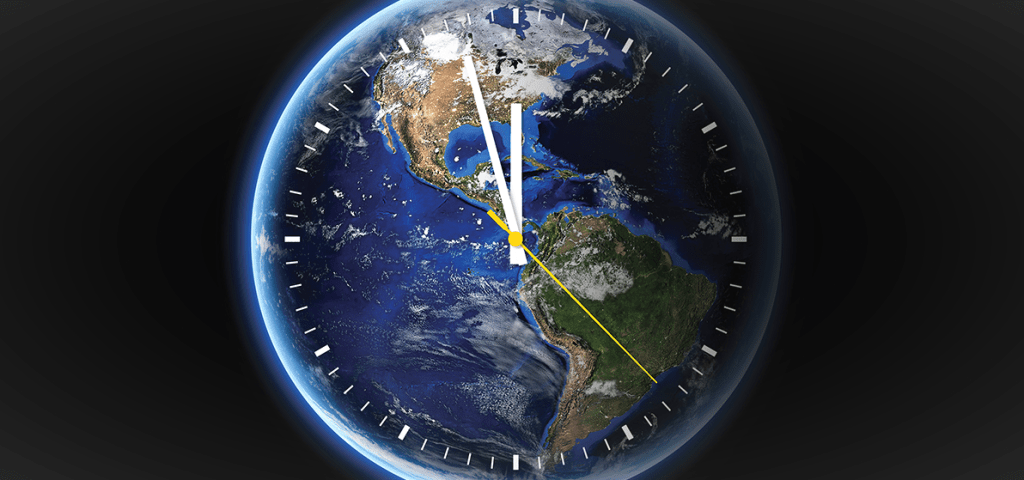
Our planet, the only home we have in the vast reaches of the known universe, is overheating, so far uncontrollably.  It has been doing so for a long time now, since before we became aware of it, and has shown no sign of slowing down, even though some of the more learned and wise among us have finally acknowledged it. 

Glaciers melt, ocean-levels rise, moderate zones become sub-tropical, drought ravages formerly-fertile lands, famine spreads, extreme weather-events increase in frequency worldwide, wildfires rage.  And most ominously, global freshwater reservoirs are shrinking.

Like the oncologists my wife and I depended on to deal with our own Cancers, earth-scientists have conducted their tests, studied the results, and announced their diagnoses.  As they see it, climate change is the existential crisis of our time, the Cancer that has the potential to bring about the demise of human life on Earth as we know it. 

We ignore these warnings at our peril.

The hope, of course, is that advances in science and technology will merge with the ingenuity of humankind to arrest the changes that are upon us.  But even the most optimistic do not profess to believe the changes can be reversed.  Just as there is no guarantee my wife and I will remain Cancer-free forever, there is no assurance our Earth will fully recover from the climate-Cancer assailing it.

But we must deal with it.  And soon.

The Cancer has no mercy.

The Supreme Power

Rudyard Kipling wrote these lines in 1902, the beginning to a small poem about his daughter:

I keep six honest serving-men/(They taught me all I knew);/Their names are What and Why and When/And How and Where and Who…

Five of those interrogative words, whether rendered in English or any other language, enable us to ask the fundamental questions of all mankind.

What is the meaning of life?  Why are we here?  When did life begin?  Where are we headed?

And the most fundamental of all:  Who created us?

Throughout the millennia, mankind has striven to find meaningful answers, and has codified those answers in various constructs: dogma, commandment, or science.  The first of these forms the basis for religious belief, the second for a stable, civil order, the third for progress.

One may ask, however, whether the answers so far obtained have been beneficial to our understanding of our existence.  It might be argued, for example, that the plethora of religious beliefs espoused by so many have led us, not to an utopian bliss, but into almost-endless warfare as we seek to establish the predominance of our own set of beliefs.  Think of wars fought in the name of Judaism, Christianity, or Islam, either to preserve or spread those creeds.

wars

Or consider the nearly-numberless dictators and rulers over the ages who have demanded fealty and obedience from their subjects, only to have their empires crumble into disarray: Persia, Athens and Sparta, Egypt, Carthage, Imperial Rome, the Ottoman Empire.  Their names are legendary—Cyrus the Great, Leonidas, Rameses the Great, Hannibal, Augustus Caesar, Suleiman the Magnificent—but their legacies are reduced to historical footnotes.

And what of more modern empires, be they economic or military—the British Commonwealth, America, Russia, China?  Are they truly stable models of order and good government, destined to last forever?

Even science, that bastion of fact-based evidence, can mislead us.  At various times in history, scientific evidence demonstrated conclusively (at least to some) that the world is flat, the earth is at the centre of the solar system, there are canals on Mars, and life as we know it would end on Y2K.  So, who is to say the theories we espouse today are any more reliable—that evolution, not creation, has brought us to our present state; that our very existence is imperilled by global warming; or that the universe we inhabit is endlessly expanding?

The most fundamental question (Who created us?) can be deconstructed into two oppositional queries.  The first:  were we, in fact, created by some supreme power?  And the contrary second:  did we create the notion of a supreme power to help explain our existence?

Worldwide, the answer from untold billions of people to the first of these is Yes!  And, perhaps not so strangely, the answer to the second, from different people, is also Yes!

Truth be told, I have offered up affirmative answers to both queries at various points in my life, believing each at the time.  I have flip-flopped on many occasions.  But even as I answer, more questions form in my mind.

If there is a supreme power (variously portrayed paternalistically in different religions as Yahweh, Jehovah, Allah, Krishna, and so many more), why did it create us?  Is there some magnificent purpose behind it all?  Were we put here to love and nurture one another, in a grand homage to our creator?  Or were we created to murder each other, providing a somewhat cruel spectacle for the amusement of our maker?  Was there, perhaps, no purpose at all, just a random experiment quickly forgotten by a supreme power that is, at one and the same time, our initiator and destroyer?

god 3

Conversely, if there is not a supreme power—if, in fact, mankind created that notion to soothe our fears and protect us from our most base instincts, lest we annihilate ourselves—then what?  Are we alone in the universe, left to our own devices?   Are we nothing more than a tiny fluke in the cosmic sea?

Religious folk, theists, profess to both adore and fear their maker, as well they might in their longing for life-eternal, rewarding their faithfulness.  Non-religious folk, atheists, proclaim no god (though some may fear an unknown afterlife).

And those in the middle—the ones too sophisticated to fall for the charade of a supreme power, yet too fearful to deny its existence—what of them?

I do not know the answers to any of these questions.  But I favour the idea that there is a creator, that we and our universe could not have sprung spontaneously from nothing.  That’s not provable, mind you.  It’s faith.

This much, however, I do know to be true.  As I survey the world around me—with its endless stream of callous and fervent punishments inflicted on some of us by others of us, and with the threat of nuclear or environmental destruction looming ever more forbiddingly in our future—I despair.

If there is a supreme power, but one uncaring toward, and indifferent to, our plight, (s)he must be laughing hysterically at our hapless ways.

Equally, if a supreme power exists as a loving and compassionate being, (s)he must look upon us with pity and sorrow.  And weep.

And most frightening of all:  what if there really is…..nothing?

nothing