
Nothing Added?

If this whole story appears in the body of your email, click the title to read it in its natural blog setting.

It occurred to me recently that, nicely embarked upon my ninth decade, I am a man of all my parts. I have been mercifully spared the need for implants, transplants, bypasses, or replacements. In fact, almost nothing has been added to the original package. It’s true that I have endured two or three removals of bits and pieces over those years, but everything still inside or attached to me is my own.
Friends sometimes tell me how fortunate I am to have my hair, how lucky to have my own teeth, how blessed to have retained the hips and knees I was born with, and all my fingers and toes. And I always assure them that I do not take any of it lightly.

Although I need occasional assistance from a walking stick now, and do require eyeglasses for reading and writing, I have no need of hearing aids. My ears function well enough still to allow me to hear everything I choose to hear.

If I were a manufactured product, my label would probably read: Proudly made in 1943! No substitute parts. Mind you, there might also be a Best Before date, but never mind.

There can be no doubt, however, that my original parts have suffered a goodly amount of wear and tear over the intervening years.

My memory remains tip-top, both long-term and short-term. But admittedly, things that happened a good while ago are not recalled as sharply or as accurately as they might be; nevertheless, they are not forgotten. I may be guilty in the eyes of some for having a selective memory, but not a sloppy one.
Brain function, as best I can self-determine by using that brain, has not eroded to any significant degree. Reaction time—the ability to respond in a timely manner to stimuli, especially of the unexpected type—is somewhat less than it once was, but I have so far eluded onrushing juggernauts of whatever sort.

The supple muscles that always allowed me to cavort with abandon on so many fields of play have now stiffened, and they respond to my frequent stretching endeavours with painful protest. Alas, the skin that covers them has not contracted to the same degree, and now seems to hang loosely in places where once it was tight.

Gravity wins, apparently.

And speaking of skin, I find mine is now dotted all over my body with blotches, blemishes, and scaly eruptions my annoying dermatologist likes to call barnacles or carbuncles. My skin even bleeds occasionally for no apparent reason, and when I look at my hands, I see my father’s.

The strong bones I’ve ever taken for granted, which have never broken despite numerous tumbles and collisions on those same playing fields, are more brittle now, according to my physician, who has prescribed medication to offset mild osteoporosis. I no longer choose to jump down from a footstool; in fact, I rarely ever step up on a footstool now. Discretion has always been the better part of valor, after all.
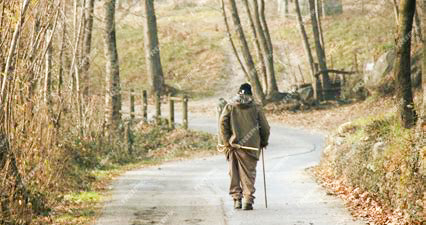
I still walk a fair bit, but more slowly now. When accompanied by my wife, I often feel like the late Queen’s prince consort, doggedly trailing a few steps behind. When I speed up to catch up, momentum takes over, making me fear I’m about to pitch forward into a face-plant.

My face certainly has no need for that! I reckon it has received a hundred stitches or more during my lifetime, most from sporting endeavours, some from a head-on vehicle collision I was involved in. The earliest of these were the old, black thread type, worn almost as badges of honour, like dueling scars; the more recent were the dissolving type. And once or twice, I’ve had facial cuts glued back together.

On one long-ago occasion, I was bemoaning the ravages of the latest sewing job, and a teammate said, “Don’t sweat it, Ace! With that face, you’re not going anywhere, anyway!”

At least there was no visible scarring left behind, although the same can’t be said for my torso, where those removals I referred to earlier took place. I was opened on two different occasions—‘from stem to gudgeon’, as my mother phrased it—and I bear shiny, white scars in a capital I shape, running from just below my breastbone to just above…well, you know. Those scars don’t really bother me, not now, although I rarely take off my shirt in public.

Which is just as well, I suppose, because there was never a great demand for me to do so, even before the surgeries.

To my chagrin, the seventy-one inches of height I enjoyed during my all-too-brief prime have shrunk; either that, or I stand with a slight stoop now. Still and all, even with the depredations of aging, virtually nothing has been added to my body—save, perhaps, for a few pounds which I try to carry well. Not for me the ‘chest at rest’ my father used to joke about in his later years.
In Ecclesiastes, we are cautioned: …vanity of vanities; all is vanity. And there is some truth to that, I suppose. It is the rare person among us who can pass a mirror without at least a sidelong glance—and I am not that person. But it has come as quite a shock to see, when I do sneak a peek, an old man staring back at me.

“Are you really me?” I murmured silently on a recent occasion.

And the old man replied, “Yes I am! But don’t despair, because all of this is you. And despite what you think, a great deal has been added to your original package.”

“Only the years,” I sighed resignedly, “and the number of yesterdays.”

“And tomorrows,” the old man declared. “Don’t forget the tomorrows that are yet to be added! And don’t discount the experiences you’ve already accumulated. You are a part of all you have met!”
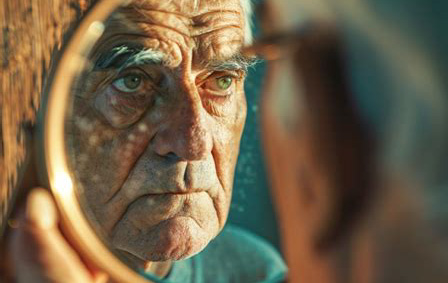
As I gazed reflectively at the old man, listening to his buoyant assurances, I realized there was indeed something else he was adding: an unshakable conviction that the best is yet to come.

And for that, and for however long it lasts, I’m grateful.
My Emergency Room Visit

I had occasion recently to visit a friend in hospital, a spanking-new facility in our community.  I had no trouble parking, finding the elevators, or locating his room, and we enjoyed a half-hour or so of conversation before I left.

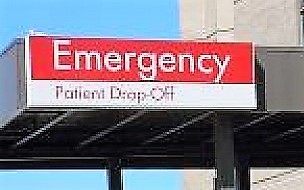
It was quite a contrast to what I had experienced a year or so earlier, when I paid an unexpected visit to the emergency department of the old hospital, a facility reminiscent of the dark ages of medicine.

emergency-room_265898

My wife was away for the weekend with friends, and I was home alone.  That in itself is never a good idea.

While attempting to open a can with our idiot-proof can-opener, I managed to slice my index finger rather badly.  When my muddling efforts to stanch the bleeding were unsuccessful, I decided—very reluctantly, mind you—to drive myself to the hospital to have the injury stitched.

With a gauze wrapping the size of a small fist encasing my finger, I managed to make the trip without incident.  Not having needed emergency care for quite some time, however, I’d forgotten how long such a simple first-aid procedure could take.

The first clue that I might be in for a long stay came when I had to wait for a spot in the emergency parking lot.  The guard on duty wouldn’t let me in until a metered space opened up, despite my wagging my mangled finger at him.  That word—emergency—takes on a whole new meaning when one enters upon hospital property; Hurry up and wait might best describe what I was about to endure.

Once I finally got the car parked, I had to find the parking meter (at the far end of the lot from where I was, of course!), fumble some coins into it, then trudge back to the car to place the parking pass on the dashboard.  I might have been whimpering softly by this point, although I can’t be certain.  I next proceeded to the emergency room entrance, following the brightly-coloured signs with their pointing arrows, and limped up to the reception desk.

I’m not sure, looking back, why I was limping; after all, it was my finger I had injured.  Perhaps I was subconsciously trying to influence the admissions staff to whisk me right through.  I could almost hear the PA system blaring forth:

Prep the O.R. immediately!  This patient has a severe digital incision requiring prompt attention.  Alert the trauma unit!  We’re on our way up!

Hah!  Faint hope!  I leaned on the reception desk, moaning strategically, waiting for the receptionist.  She was on the telephone, apparently fighting to get off, but losing.  Finally, to my delight, another woman came behind the counter, set down the coffee and bun she was carrying, and approached me.

“Last name?” she inquired.

“Burt,” I responded.  “I’ve cut my finger pretty badly on a tin can, and I can’t get the bleeding…”

“Take a seat,” she interjected, indicating a row of chairs to my left with a jerk of her head.  I meekly joined the other eight or nine folks already sitting there—none of them, to my eye, as much in need of help as I.  Every few minutes, just to emphasize that point, I groaned audibly.

During the next forty-five-or-so minutes, every one of them was called into one of two small cubicles, behind a curtain.  I never saw anyone emerge.  But I was impressed with the efficiency of it, even ‘though I had to wait quite a while to be included.

When I finally heard my name, I smugly entered a cubicle ahead of the people who had arrived after me, every one of them fixing me with a malevolent stare for having the nerve to think I was in greater need than they.  Inside, I was told to sit down in front of a large computer screen.  A different woman sat opposite me.

“Proof of health insurance?” she asked.  “Been treated here before?”

“Yes,” I whined, “but it’s out in the car.  In my wallet.  I don’t think I’ve been in here before.”

“We’ll need it,” she said.

Slowly and somewhat resentfully, I carried my sore finger all the way back to the parking lot to fetch my wallet.  Then I trudged back to the cubicle.  By now I was limping even more noticeably.  Of course, someone else was now inside with the woman and her computer, so I had to wait my turn once more.

At long last, I made it through the data collection process and was ushered through the rear door of the cubicle to what I hoped was the treatment room.  Alas!  It was another, larger, waiting-room, and the whole world, it seemed, was ahead of me.  Including some of the people who had apparently resented me earlier, now happy they had passed me in line.

96-waiting_room_hospital

Three magazines, two washroom breaks, and one half-cold cup of coffee later, I was called into an honest-to-goodness treatment room.  After sitting on the padded table for a quarter-hour, trying not to wrinkle the protective paper pulled over top of it, I finally decided to lie down.  Precisely at that point, a doctor (I greatly hoped) bustled in, scanned my data sheet, donned her latex gloves, then removed the sodden wrapping I had been clutching around my wound.

“Do you need this finger?” she asked abruptly.

“Do….do I need it?” I croaked in horror.

“No, no, no.  I mean, do you need it for your work?  What sort of work do you do?  We can freeze it and stitch it if you need your finger; otherwise, we’ll clean it, glue the skin, and tape it for you.”

My relief was palpable.  All my anger and frustration at having waited an eternity vanished in a flash.  I was so grateful she was going to save my finger, I was seized by an impulse to hug her.

But she wasn’t there long enough for me to act on it.  In not much more than five minutes from the time she’d entered, I was all taped up.  And the bleeding had stopped.

“Good to go,” she said, “unless that limp is a problem.”

“Uh, no, it’s not,” I quickly replied.  “It’s really nothing.”

In no time at all, I was outside on the way to my car.  And to the parking ticket on the windshield, reminding me that I had stayed too long!