Ready For The Fall

The prompt from my Florida writers’ group this week was to write a piece about fall. Here is what I came up with, and I hope it will conjure memories for you, too—
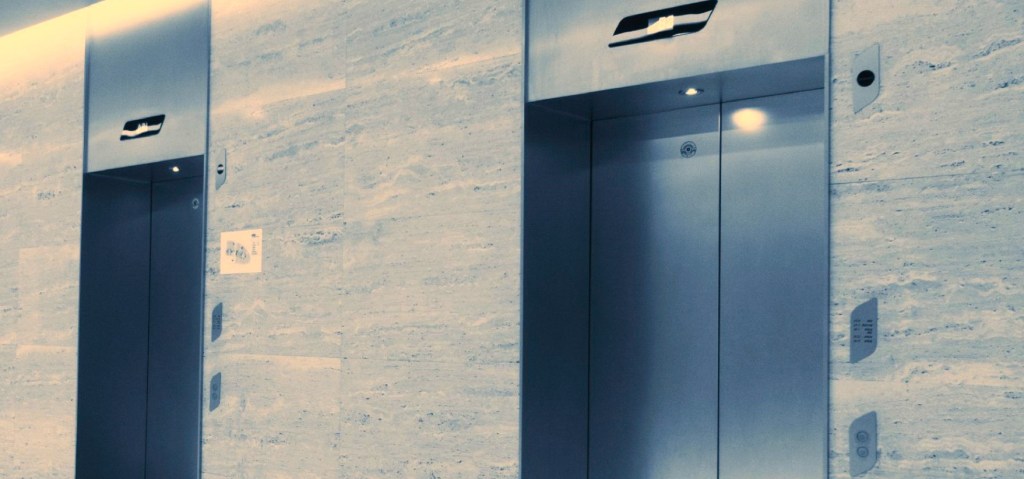
A middle-aged woman I didn’t know smiled as she entered the elevator with me one day last week.  “Are you ready for the fall?”

I cringed, steeling myself for an unwanted mini-sermon from a dogged do-gooder, a holy-roller.  “I…I guess so,” I stammered.  “I mean, I pray, I try to do good…”

A look of bewilderment creased the woman’s face, followed quickly by one of amused pity.  “No, no,” she corrected me patronizingly, “you misunderstand me.  I meant the autumn, not the apocalypse!”

“Ah…of course,” I sighed, embarrassed by my mistake.  “Sorry…”

As the elevator doors opened on the eighteenth floor, the woman stepped out, still amused by my obtuseness.  “No need to apologize,” she said.  “At your age, I imagine it’s best to be ready for both!” The doors slid closed behind her before I could think of a suitably nasty retort.

Back in my apartment on the twentieth floor, I reflected on our conversation as I unpacked the groceries I’d been carrying.  It seemed to me an honest mistake to make, an understandable one, and the woman’s parting shot was likely good advice.  But why did she have to be so rude?

Later, relaxing with my wife over a cup of tea, I talked about what had happened, and about getting ready for the fall.  “Remember when we were kids, it seemed summers would never end?” I said.  “From the day school let out until the first fall-fair arrived, our days were blissful, carefree, limitless.  Eat breakfast and head outside to play; dash inside for lunch, then back outside; trudge home for supper, then out again ‘til the streetlights came on.”

“I remember,” my wife said.  “But things sure changed when we grew up, in spite of our best intentions.  We got married, started working, became parents.  Those summers suddenly became  a lot more finite.”

I nodded agreement.  The calendar tells us summer ends with the autumnal equinox in late September, but the end always came much sooner for us.  It was marked, not by an arbitrary calendar, but by the requirement to go back to school.  Both of us were teachers in those long-ago days, and felt we had to get back ahead of our students if we had any hope of being ready for their return after Labour Day.

For many folks, I guess—like the woman on the elevator—the coming of fall is a time of new beginnings, of anticipation.  They think in terms of flaming fall-colours, brisk autumn days, evenings spent curled up with a book in front of a cozy hearth.  They look forward to the change of seasons.

Not I, though!  I’ve always thought of it as a gloomy time—the conclusion of summer, and the close of so many pleasurable things that vanish with the coming of September.

For example, with the end of warm, sunny weather, there came an end to my carefree habits of dress.  No more swimsuits or running shorts; no more open sandals or ancient running shoes; no more tank-tops or faded team sweaters.  Instead, it meant a return to the straitjacketing drill of collars and ties, pressed slacks, knee-high socks, and polished dress shoes.

The end of summer put a stop to the treasured luxury of shaving every two or three days, depending upon what activities were planned.  And it called a halt to the wearing of old ball caps as an alternative to brushing my hair.

The inevitable onset of fall wrote fini to three or four leisurely cups of coffee with the morning paper, and an end to mid-morning breakfasts on the back porch.  It heralded, in their stead, the beginning of hurried showers and breakfasts-on-the-run.  It marked the re-entry into the exciting world of daily traffic reports, as I attempted to find the shortest, quickest route into and out of the city.

In short, summer’s end brought to a close the lazy, drifting vagaries of summer living I tried so vainly to hang on to.  Coming back to the real world always provided a jolt to my entire system.  It was like going from childhood to adulthood all over again!  Once was enough!

“You know, I never wanted to be the type of person who wishes his life away,” I commented to my wife, “always wishing for something to be different than it is.  But, in a sense, I guess I used to do just that.”

“Me, too,” my wife said wistfully.  “For me, the year was divided into two seasons, summer and not-summer. And not-summer was not good!”

“Remember we’d take the girls on one last camping trip up north?” I said.  “My cutoffs and hat would be in my bag, my shaving-kit left behind.  It was always one final fling in the glorious realm of summer.”

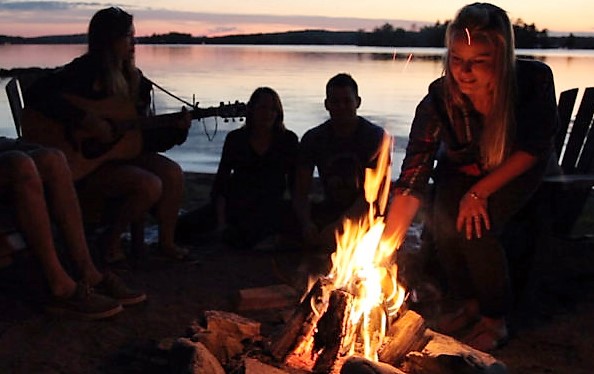
“I loved it,” my wife said, staring into the past.  “Hiking, swimming, paddling, exploring, picking berries, roasting marshmallows, singing our hearts out by the campfire, sleeping the sleep of the innocent in those old sleeping-bags—it was like being children all over again.”
“Even now,” I said, “when every day is like a Saturday, I still pretend summer will never end, that I’ll never have to grow up and give it up.  It still seems there’s always so much left to do.”

“At least we have Florida now,” my wife smiled.  “Year-round summer! Before the fall ever arrives, I’m already planning what I’ll pack.”

During the course of our happy reminiscing, I managed to forget my annoyance with the supercilious woman in the elevator.  But by chance, we happened to ride the elevator again yesterday, going down this time.  As she stepped aboard, I could tell she recognized me as the confused old fart from a week ago—but this time, it was I who spoke first.

“Before you ask, I’m ready for Ar’geddon!” I smiled.

“Our what?” she said, head cocked.

“Ar’geddon!” I repeated.  “I’m ready to go!”

The same pitying look as last time spread across her face, the same condescending smile.  “Sir, you mean Arma-geddon.  You’re mispronouncing the word.” She shook her head disdainfully, appalled by my lack of acuity. 

Waiting a beat to spring the trap I’d plotted, I said very quietly, “Whatever!  It’s not the end of the world!”

We rode the rest of the way in icy stillness, a long, silent fall from the eighteenth floor to the parking garage.

No!

The weekly prompt from my Florida writers’ group was to write a piece where one of the characters in the story is ‘forced to say No’. This is my offering, and I hope it will bring back fond memories for those of you were parents—

“No!” he declares vehemently.  “I will not say No to them!”

“No, you won’t say No?” she replies incredulously.  “That doesn’t make sense!  It’s a double-negative.  Surely you mean Yes, you won’t say No.”

“No, I don’t mean Yes!” he says, exasperated.  “And yes, I mean No!  Are you trying to tell me what I think?  And did you just call me Shirley?”

“No, I didn’t call you Shirley,” she says wearily.  “The word was surely!  And no, I’m not telling you what to think!  But are you honestly telling me you won’t say No to them?  Are you afraid of them?  Are you worried they’ll laugh at you?”

“Yes, no, and no,” he says.

“Well, if you’re not worried about what they’ll think or do when you tell them, just say No and get it over with.  They’re our children, not your boss!”

“Yes they are, and no I won’t!” he snaps.  “Are you trying to force me to say No?”

She raises her arms skyward, rolls her eyes dramatically.  “No, I’m not trying to force you to say No!  But yes, I’m trying to convince you to say No!  Is that so hard to understand?”

“No,” he says.  “But, since I’m determined to say Yes, stop trying to talk me into saying No!”

They’ve been sitting at the kitchen table for an hour, the supper dishes still in front of them, the remains of dinner crusted and cold.  The children are watching TV.

“So you think you know what’s best?” she says, jabbing a finger in his direction.  “You think I’m stupid?  You think you’re smarter than me?”

“Yes, no, and no once again,” he says.  “And by the way, that should be ‘smarter than I’, not ‘smarter than me’!”

His correction is met with a venomous glare.  “No, I don’t believe this!” she says icily.  “Here I am, trying to help you make a difficult decision, and you think you can do that…better than I?”

“Okay,” he says, trying a different tack, “You think I should tell them No instead of Yes, right?  Can you not see that Yes is a better answer than No?”

“Yes, I do think you should tell them No,” she says, still miffed.  “And no, I guess I can’t understand why Yes is a better answer than No.  Can you explain it to me like I’m a three-year-old?”

“Yes, I can,” he says, resisting the urge to toss out the obvious wisecrack.  “But you should have said ‘as if I’m…’, not like I’m…’!”

“Are you correcting me again?” she sputters indignantly, sitting back in her chair.  “You think I don’t know how to speak the Queen’s English?”

“Yes and yes,” he replies smugly.  “And it’s the King’s English now, remember?  The Queen is dead.”

It is all she can do not to hurl one of the supper plates at him.  “Yes, I remember she died,” she says acidly.  “And yes, I know it was over a year ago.  But no, I still do not understand why you can’t simply tell the children No.  You still haven’t explained it to me…you know, as if I’m a three-year-old.”

He remains silent, seemingly at a loss for words.

“You do know I’m a functioning adult, right?” she says.  “A mother of two children?  Or do you think I actually am a three-year-old?”

“Yes, yes, and no,” he says.

“So, explain it to me then!” she demands, pounding one fist on the table, rattling the cutlery.  “Why won’t you say No to them?”

“Okay,” he says, “I want to say Yes, not No, because I don’t want to hurt their feelings.  I don’t want them to think Daddy is the bad guy.”

“That’s cray-cray!” she says, spreading both arms wide.  “Sometimes Daddy has to be the bad guy, as you put it.  It’s important that they learn that we’re in control, not them!  You get that, don’t you?”

“Yes, but I still want to say Yes, not No!  And I won’t be forced into saying No!”

As she throws up her hands in frustration yet again, the children come tumbling into the kitchen, the burning question bursting from their lips.  “Daddy!  Daddy, can we stay up late to watch the vampire movie?  You said you’d tell us after supper.”

He looks at his wife, who smiles sweetly, eyes narrowed.  “What’s it going to be?” she whispers so only he can hear.  “Is it Yes or No?”

He stands up, knowing the moment is at hand.  Without warning, he spins and heads for the kitchen door.  Just as he disappears from sight, he calls back, “Ask your mother.”

A Crowd of Stars

The youngest of my brothers-in-law died recently, following a long period of worsening, physical incapacity and illness.  He was the second of my generation to go, my younger brother having passed three years ago, and I suspect his death brought the spectre of the end-times somewhat closer to us all.

In addition to my sister, he left behind four children, three of whom are married, giving him three grandsons and two wee granddaughters.  At his private interment, his daughter and three sons spoke of him as a loving and beloved father, and there is no greater tribute I can imagine.  Eighteen of us exchanged reflections and prayers that day, spoken to each other and to him, designed to bring a sense of closure and peace to us all.  We were saddened, of course, by his passing, but relieved that his suffering was ended.

He was married to my sister for forty-five years, a loving union that brought credit upon them both.  I still remember dancing at their wedding, when none of us—so young and brash and full of piss-and-vinegar—could have imagined this day coming.  But it has now for him, as it must someday for all of us.

Deliberate and intentional in word and deed, especially as he grew older, my brother-in-law was rarely intemperate or harsh in his dealings with others.  A man of deep faith, he was loving and giving, and forgiving of others’ shortcomings.  Throughout his tribulations, he was confident that, as he approached the final crossing, he would meet his saviour on the other side.  I hope he has.

In her remarks, my sister said something I thought perfectly summed up his life and faith—from Matthew 25:23, “Well done, good and faithful servant; thou hast been faithful over a few things…enter thou into the joy of thy Lord.”

My wife shared many of those same understandings about what is to come with him, and I remember them engaged in deep conversation over the years, communicating their ideas and beliefs, their hopes for the hereafter.  By contrast, given my differing views, the exchanges I had with him tended to be temporal more than spiritual, though always sincere and affectionate.  He had a way of thinking before he spoke, and I constantly found myself leaning in to be sure not to miss what he might have to say.

The day after he passed, I wrote the following note to my sister—

When we get old, as some of us have, we think differently about death than when we were younger.  I won’t say we ever look forward to it, but we perhaps stop fearing it.

We think of death as a companion on our journey through life—way back in the throng at the beginning, but gaining on us as we begin slowing down.

We think of death, not as a spectre that will end things, but as an usher who will open the next door and allow us in.

Just as life ushered us in at the beginning of our journey through the here and now, death ushers us into the beginning of our next journey.  None of us knows what that journey will look like, but faith sustains us.

When I think of him now, and where he is, I think of these lines, adapted from the poem High Flight, by John Gillespie Magee, Jr.—

Oh!  he has slipped the surly bonds of earth
And dances the skies on laughter-silvered wings…
He has topped the wind-swept heights with easy grace…
Put out his hand and touched the face of God.

With that note, I also included one of my favourite poems, When You Are Old, by William Butler Yeats, the greatest of the Irish poets.  I imagine it as the song my brother-in-law might be singing now to my sister from wherever in this vast universe he finds himself, and I hope it comforts them both—

When you are old and grey and full of sleep,
And nodding by the fire, take down this book,
And slowly read, and dream of the soft look
Your eyes had once, and of their shadows deep;
How many loved your moments of glad grace,
And loved your beauty with love false or true,
But one man loved the pilgrim soul in you,
And loved the sorrows of your changing face;
And bending down beside the glowing bars,
Murmur, a little sadly, how Love fled
And paced upon the mountains overhead
And hid his face amid a crowd of stars.