On Thinking

The French philosopher, Rene Descartes, is remembered among other things for his thesis: I think, therefore I am.  The notion is most commonly expressed, not in French or English, but in Latin: Cogito, ergo sum.

His premise was not, as is widely believed, that he exists because he can think; rather, it is that he is aware he exists because he is able to think.  That assumption presupposes that so-called lower forms of animal life, being non-sentient as far as we know, exist without knowing they exist.

Descartes appears not to have considered the possibility that some humans may also exist without full awareness, largely because of their demonstrated inability or willingness to think rationally.  But I digress.

In conversation with other folks, I occasionally hear them offer their opinion by beginning with the phrase, So, I think to myself…  I find that phrase redundant, because I can contemplate no other way of thinking; by definition, all thinking is to oneself, is it not?  Unless, as some would have it, a person is thinking out loud, which strikes me as verbalizing, not thinking.  Better, I suggest, to think first, speak second.

But as a counterpoint to that, people might deem praiseworthy the ability some folks have to think on their feet—to offer an opinion, receive feedback, and modify that opinion, all in the course of one conversation.  That facility is admirable, I suppose, but it can happen, of course, only if they’re standing; if they were seated, they would surely be thinking…well, on their tush, right?  And somehow, blowing it out their…you know…doesn’t seem as impressive.

I’ve long thought of thinking as a fluid process, a constant progression, a multi-directional flow, rather than as a static, linear plod from point A to point B.  And if that is so, then a graphic tracing of my thinking pattern would appear, not as a straight line, but as a higgledy-piggledy, zig-zagging line—frequently interrupted and intercepted, but always arcing upward toward higher illumination, I would hope.

As a writer, it’s my thinking that takes me far from my physical surroundings, even to the point of forgetting all about time and place.  As I wrote in haiku verse some time ago—

my thoughts, unbridled,
take me to worlds I ne’er will see,
nor have ever seen

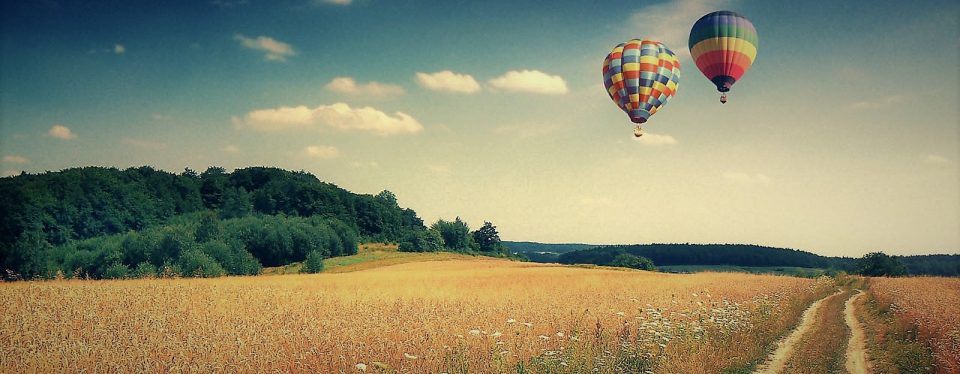
my boundless thoughts are
like hot air balloons, slipping
bonds that tie me down

I wander freely
throughout the universe, yet
never leave my chair

There are two adages on thinking that I try to hold to, at least presently, and they both grace the résumés and bios that appear on my online, social-media sites.  The first is, Certainty is the enemy of an open mind…I think.  And the second is, Don’t believe everything you think.  Regular readers of this blog will know whether or not I’m successful in living up to those.

Certainty plagues many people after they’ve thought a subject through—or even when they have not—and then adopt a position they think is accurate or true, and stubbornly cling to that opinion, come hell or high water.  But I think every opinion we hold should be subject to periodic, critical study, the more frequently the better, in order to test its validity in the face of facts and evidence that can change from time to time.  Being overly-certain about one’s opinion can stifle that sort of examination.

The irony with this adage, however, is that I can’t be certain it’s correct, for to be so would violate its basic premise.  Like every other opinion I hold, it requires my constant scrutiny…at least, I think it does.

The notion of believing everything we think, just because we think it, likewise can lead to cognitive stagnation.  In everyday interactions, our behaviours are governed by what we think we should say or do at any given time, and there’s nothing wrong with that.  Guidelines are preferable to social anarchy.  But if, for example, I believe it’s safe to jaywalk across a busy thoroughfare just because I think it’s safe, and if I persist in that belief, the consequences to me could be catastrophic.  Better, I think, to examine my thinking in the light of facts before committing it to belief-status.

The irony with this second adage is it presents a danger that one will never commit to believing in anything.  I think that, too, could present a problem.

For those who’ve read this far, let me finish with an anecdote about two people engaged in a mild argument over some inconsequential subject.  “So, is that what you really think?” the woman asks, a touch of incredulity tinging her tone.

“I don’t think!  I know!” the man replies smugly. 

With barely a pause, the woman smiles condescendingly and says, “You know what?  I don’t think you know, either.”

And that could well be the case for all of us.  Even when we think we know, even when we are absolutely certain of it, we still might be mistaken.  The wise carpenter’s advice—measure twice, cut once—could easily be adapted and applied to our thinking process: think, rethink, then act.

I’ve done just that in this post…I think.

What say you?

Nature Will Prevail

Many years ago, my wife and I followed after the outgoing tide in the Bay of Fundy, along with our two young daughters, marvelling at the wonders we spied on the surface of the seabed.  We laughed as our footprints gradually disappeared behind us in the spongy, soaked sand, and we strayed unmindfully farther and farther from shore. 

When the tide reversed its course and began to flow back in, we dallied until the water was sloshing around our ankles before turning for shore.  To our surprise, the rising surge outpaced our progress, the four of us able to move no faster than two pairs of tiny legs could muster.  When the water got to our mid-calf level, we picked the girls up in our arms and picked up our pace, more than a touch anxious that we had underestimated our own capabilities.

We finally made it safely to higher, drier ground, but not before the water had soaked our buttocks, and to this day, I remember the knot of fear that had settled in my stomach, the certain knowledge that I was powerless against the relentless force of nature pursuing us shoreward.

Nature is like that—unrelenting, uncaring, inexorable.  In our arrogance, we humans like to call it Mother Nature—in the same way we have anthropomorphized so many presumed deities and abiding mysteries.  But nature is the furthest thing from a maternalistic, loving parent.

Since our planet first began its orbit around the sun, a natural environment has existed, an environment that eventually spawned life in its most primitive form.  We humans are but a relatively-recent expression of that life-force, and we fancy ourselves its most highly-developed manifestation.  From our very beginnings, we have sought to discover, understand, and control our surroundings—and to be fair, we have certainly done that to some extent.

Nevertheless, we find ourselves still subordinate to the forces of nature—feasts and famines, pestilence and disease, floods and droughts, tides and winds, wildfires and glacial melting, rising sea-levels, earthquakes and volcanic eruptions, to name a few.  We have managed to mitigate the damage of such events to some degree, but we have not been able to eliminate them.  In fact, the cataclysmic effects of nature’s actions have, over time, led to the extinction of many forms of life; taxonomists estimate that more than ninety-nine percent of all species that have ever existed are extinct.  And so, the question naturally arises, could that same fate await our species?

The International Union for Conservation of Nature (IUCN) publishes a Red List of Threatened Species, an inventory of the global conservation status and extinction risk of biological species.  It includes 2.16 million current animal species, almost surely an underestimate, the most numerous of which is insects, almost half the total.  In descending numerical order, the other groups are: molluscs, arachnids, crustaceans, fishes, reptiles, birds, amphibians, mammals, and corals.

We humans are just one species among the mammals, the second-smallest of the ten groups, a mere 0.003 percent of the total.  Our group numbers more than 6500 recognized species, and of those, we are the most numerous (with rats being second).

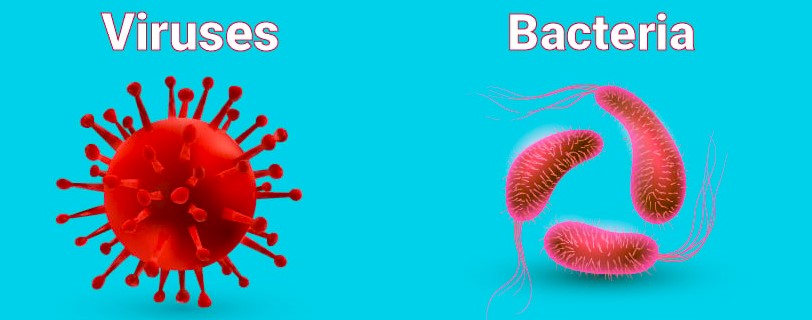
In addition to the 2.16 million animal species on the planet, there are more than sixty thousand other species of life, including protozoa, plants, chromists, fungi, bacteria, and archaea.  Among these, bacteria—the smallest, simplest, and most ancient cells—exert a tremendous influence on human life. 

In our bodies, bacteria inhabit our digestive system, live on our skin, and contribute to our general wellbeing.  But there is a downside, too; infectious diseases caused by bacteria have killed more than half of all humans who have ever lived, through pandemics such as the bubonic plague.  Other examples of disease caused by bacteria include tuberculosis, whooping cough, sexually-transmitted infections, and e-coli.  Because bacteria can reproduce themselves in less than an hour, mutations can emerge and accumulate rapidly, causing significant change, such as resistance to antibiotics.

Viruses, by contrast, are not living organisms.  Rather, they are an assembly of different types of molecules that assume different shapes and sizes, but they can be as dangerous to human life as bacteria.  Unlike bacteria, they cannot reproduce on their own, but need to enter a living cell to replicate and evolve.  Once inside, they take over the cellular machinery of their host and force it to make new viruses.  They can infect humans, other animals, plants, and even bacteria, and are able to evolve and jump from other animal forms to humans.  They cause diseases like the flu, the formidable common cold, and SARS-CoV-2.

In the face of many perceived threats to our survival, a group of prominent researchers in Australia, the Commission for the Human Future, identified a list of risks to life on the planet: climate change, environmental decline leading to species extinction, nuclear weapons proliferation, resource scarcity (especially water), food insecurity, dangerous new technologies (such as AI), overpopulation, chemical pollution, pandemic disease, and denial and misinformation.  Six of the ten are clearly within nature’s purview; the other four would be the result of human miscalculation.

What our species does about these ten existential threats in the next few years will determine whether present and future generations face a safe, sustainable, and prosperous future or the prospect of collapse and even extinction, the report said.

It also stated, Understanding science, evidence, and analysis will be key to adequately addressing the threats and finding solutions. An evidence-based approach has been needed for many years.  Under-appreciating science and evidence leads to unmitigated risks…

Shaping [the human future] requires a collaborative, inclusive, and diverse discussion.  We should heed advice from political and social scientists on how to engage all people in this conversation…

Imagination, creativity, and new narratives will be needed for challenges that test our civil society and humanity.

I confess to some doubt as to whether our species, tribalistic and combative as we are, will be able to manage that collaborative approach.

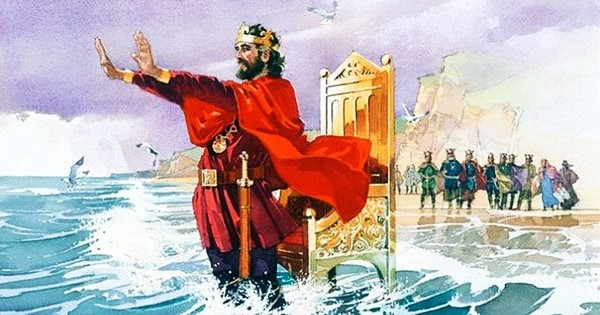
And I think back to the apocryphal story of King Canute, trying to hold back the tide—knowing full well he could not—in an attempt to teach his flattering courtiers that an earthly monarch could exert no control over the natural elements.  True or not, the story illustrates the conceit of humankind in thinking we can ever be in control of nature.

As my wee family found out so long ago on the shores of the Bay of Fundy, we are most definitely not.

Nature will prevail, I fear.  And the planet will continue its evolutionary journey around the sun, perhaps without us, until that star, too, is extinguished.

Who Counts?

[ ED. NOTE: If you are an official FOLLOWER of this blog, you are receiving my posts fully displayed in the body of the email notifying you of each new post. To read the post in my actual blog-site format, click on the title at the top of the story in your email, and you will find it a much more enjoyable experience.]

Like many of you, I suspect, I was raised by a mother generous in the love she gave, and wise in her ways.  My four siblings and I benefited greatly from her counsel, and agree to this day that she was right about almost everything.

Whenever I was angry with my brother or one of my sisters, for example, she would caution me, If you have nothing good to say, don’t say anything at all.

Many of our relatives in my mother’s large, extended family were gregarious, well-informed on most subjects, opinionated, and frequently argumentative, so holiday gatherings occasionally became loud and disputatious.  At such moments, my mother would advise me, Sometimes it’s better to say nothing, even if they might think you don’t understand, than to open your mouth and prove it.

Occasionally, I would arrive home from school with some juicy bit of gossip, and she would say, If your friends are talking about other people behind their backs, you can be sure they talk about you when you aren’t there.  And when I would nod as if I understood, she would add, It’s always best to stick up for people who aren’t there.

Decades later, I encountered that last advice again in a landmark book by Stephen Covey, who exhorted his readers: Defend those who are absent—one of my mantras to this day.

A good number of my mother’s admonitions were homespun, she having been raised by descendants of  Scots/Irish farming-stock who had emigrated to eastern Ontario in the mid-nineteenth century.  It’s a long road that has no turning, she would tell me when I’d recount a tale of woe, feeling sorry for myself.  If I’d had a quarrel with a schoolmate, she would say, The road to a friend’s house is never long.  Or if I was sad and blue when things weren’t going well, she’d tell me, When things are dark, try to be the light that someone else can turn on.

I think of my mother often these days, and I miss her wisdom.  I wonder what she’d have to say about this world we live in now, with all its strife and turmoil. 

No one in our family was ever subjugated by an invading people, exploited and dispossessed of our native land.  None of us has ever been despised and disenfranchised because of our nationality, our ethnicity, our skin-colour, our religious beliefs, our gender orientation, our political preferences, our wealth or lack of it, our age, or any perceived disability.  Throughout our lives, in fact, we have been among the privileged of the earth.

Such is not the case for the human species as a whole, however.  Worldwide, a huge number of people are victimized by war, famine, drought, disease, and genocide, some to the point of death.  And for many of those who survive, barely, there is scant relief offered by others of our species.

The product of a random, evolutionary progression over millennia, we human beings at our most primal level are forever a tribally-oriented species.  We seek to be with our own, and are suspicious of any who are different.  We are intelligent, yes, but also egocentric, selfish, aggressive, predatory, manipulative, superstitious, and too often unforgiving.  And because these character traits often override the intelligence factor, is it any wonder we currently find ourselves in such a mess?

Many of the several wars consuming the planet right now, for instance, are the result of clashes among opposing superstitious beliefs—what we sanctimoniously call religion—where each protagonist claims there is no god but our own.  And as if that doesn’t constitute folly enough, consider that many historic wars were waged by our predecessors who claimed allegiance to the same god, even as they prayed to that deity by different names. 

Such foolishness, when earthly power was truly the false god they all desired!

We humans have allowed ourselves—perhaps through a callous disregard for our collective well-being, or maybe due gross ignorance of the consequences we soon shall face—to approach a point of no return.  We seem not to realize that the civilization we profess to admire is but the thinnest of veneers, perched precariously atop the baser instincts of our species.

My mother used to say, The circle is not complete until everybody is inside.  We should always try to make the circle wider, so that everyone can come in.

Decades later, I chanced upon remarkably similar advice, this time in one of Michael Connelly’s crime-novels, spoken by one of his fictional characters, Harry Bosch:  Everybody counts, or nobody counts.

Would our current state of world-affairs be better, I wonder, if we humans could ever adopt that premise?  If we could set aside our preoccupation with the many issues differentiating and separating us, and instead take up the humanistic character-traits we share that might bring us together?

I mean, who counts?

No Longer There

The weekly prompt from my Florida writers’ group was: tell a story from the point of view of an inanimate object.  This is my offering—

I first espied your home millennia ago, long before your primitive, bi-pedal predecessors first walked upon your insignificant rock and thought to look up at me.  And you, the survivors of eons of mingling and melding with each other, can see me still, as I wend my way to you across billions of years from a source no longer there.

That source, my home—originally anonymous, a mere speck in the vast cosmic dust of the universe—would have been invisible to you, had it not finally flamed out and vanished into a massive black hole of anti-matter, succumbing to the irresistible, terrible pull of gravity.

But I, the sole survivor of that massive, thermonuclear firestorm, endured to bear witness to its existence.  A blast of energy and light radiating out from its core, I traverse the interstellar darkness at the speed of light, my destination unknown ad infinitum.

At some distant point in time-past, one of your forebears was the first to spot my leading edge.  From that creature’s vantage-point, I was but one of uncounted pinpoints of light in the night-time panoply overhead, each of which, like me, had begun its journey after a cataclysmic conflagration—very much like the one your own star will eventually experience.

Along the way, I was assigned a name by one of your ancestors—although I remain undistinguished in the infinite reaches of the cosmos, which is indifferent to the affairs and conceits of your species.  I am but one of billions upon billions of similar bursts of energy, light-sources too numerous even to catalogue, let alone adorn with a patronym.

I have seen you for some time with my leading edge, and if you look into the darkened sky, you will spot me there—a seemingly-static but ultimately-endless burst of light.  You and your entire species will be lost to the annals of time, of course, long before my trailing edge arrives in your vicinity—at which point I, too, will vanish from the view of living things, if any, that might be left on your rock to notice.

But, unlike your species, I will not perish.  My light, from leading to trailing edge, will speed on forever, relentlessly pursuing the far reaches of the ever-expanding universe, which knows no bounds.

Much like the person who named me to honour one of the fanciful gods your species has pretended to worship in order to satisfy the unanswerable questions you persist in asking, you fancy yourself at the centre of existence, the very master of all you perceive.  But you were nothing before my infinite journey even began, and you will be nothing again in the blink of a cosmic eye.

If my leading edge could speak to my trailing edge when it eventually reaches what is left of your earthly abode, it might ask, “What do you see?  Is anyone there?”

“Nothing!  I see nothing,” my trailing edge will answer.

To which my leading edge might reply, “I saw them when I first passed by—a self-absorbed species busily erecting their ant-hills and lauding their advances, even as they warred upon one another and suffocated their planet.”

“Well, there is no one now,” the trailing edge will observe uncaringly.  “If once life existed on this barren rock, it is no longer there.”

Pity, that.