
If this entire post appears in the body of your email, click the title to read it in its tallandtruetales blog setting.
In the sixty-plus years since I attained voting age, I have never run for public office. Nor, at my age, am I about to do so.
Folks who know me well are likely heaving a sigh of relief at that.
To the best of my recollection, however, I have voted in every election affecting me—federal, provincial, municipal, even neighbourhood. And I always voted for the candidate who had persuaded me her or his position on the issues I deemed important was superior to the others.

Unlike my parents, lifelong conservatives both personally and politically, I was never an habitual devotee of any particular political party. Early in my teaching career, exposed to a wide variety of familial and economic conditions under which children had to live, increasingly cognizant of the privileged status I had enjoyed in my own childhood, I became a much more liberal, progressive thinker than earlier generations of my family.
I never held or professed extreme views, though. My stance was, and is, centrist, leaning more left than right. Politically, I would describe myself as socially and culturally liberal, fiscally conservative—which is to say, I favour social programmes that benefit the less fortunate, but without running up unsustainable deficits.
That is easier said than done. But then, anyone with nary a thought as to how it might be accomplished should probably not be standing for office.
As a teacher, my approach with students was to appear less as one teaching them what I thought they should know, and more as one helping them learn what they wanted and needed to know. In my classrooms, there was always more discovery than lecture happening. I strove to be a guide on the side, rather than the sage on the stage, as one aphorism had it.

My objective was to win my students’ trust in the pursuit of their studies, rather than to instruct them as to what they must do simply because I said so.
Later on, as a principal and eventually CEO of two school districts, I tried to use the same approach. Explaining issues to the people whose work I was overseeing proved to be much more effective than issuing fiats from my office. My belief was that, once folks understood why I was planning to do something, and after they had an opportunity to discuss it and have their questions answered, they would more likely be convinced of its wisdom.
In practice, some of those discussions and question/answer sessions convinced me to switch directions, having seen the wisdom of others’ arguments. They won me over in such cases, and we all benefitted.
Alas, such is not the case in politics—not in my experience. Only rarely have I felt a politician seeking my vote wanted me to truly understand why (s)he deserved it. In almost every case, I feel as if I’m being told to vote for that person, told to agree with her or his position, told why other candidates are not worthy.
Increasingly over the past few years, I’ve been told by so-called leaders on the world stage that the truth doesn’t matter; that caring for and assisting one’s less fortunate fellow-citizens is socialism, and must be avoided; that women must be prevented from making decisions concerning their own health; that trans people are lesser citizens than the rest of us; that immigrants, especially people of colour or of different faiths, are a threat to national well-being; that trickle-down economics works for everyone; that LGBTQ+ people are somehow aberrant; that taxing lower-income folks makes more sense than taxing billionaires; that certain books, many heretofore considered classics, must be banned; and on and on.
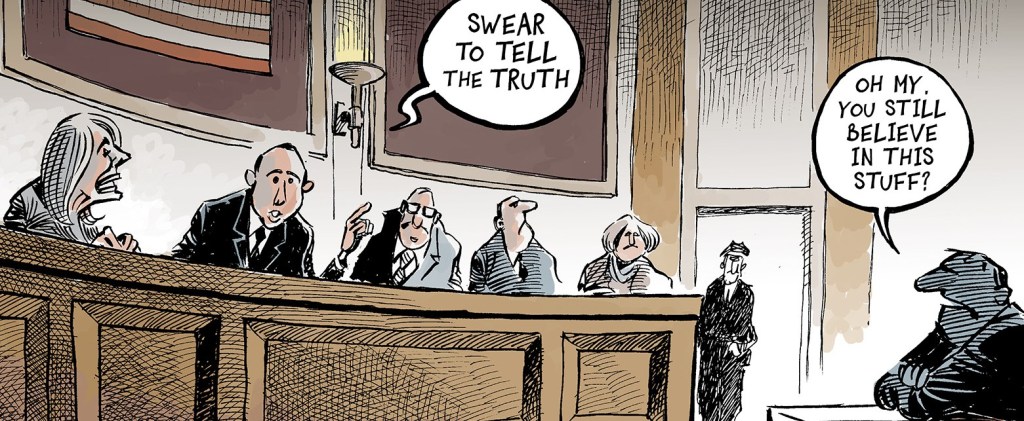
And for most of my voting life, most of the people telling me such things have been white men—wealthy white men more often now. Men who, it seems, wish only to preserve their own standing, their own influence and power, while the less fortunate must submit and accept their fate.
I’m a white man myself—comfortable in my retirement, not wealthy when compared to these would-be demagogues—but I have never ascribed to the idea of telling people what they must do, what they must believe.
It’s better, I believe, to try to explain. Seek questions and answer them. Win people over. And be open to being won over in turn.
John Stuart Mill wrote this among his many published works: So long as we do not harm others we should be free to think, speak, act, and live as we see fit, without molestation from individuals, law, or government.
Mankind are greater gainers by suffering each other to live as seems good to themselves, than by compelling each to live as seems good to the rest.
He believed actions are right and good if they produce the greatest happiness for the greatest number of people.
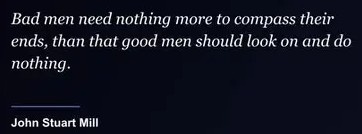
And, of course, he acknowledged that such utopian ideals may not always be attainable, and that breaches of a common moral standard must be dealt with: The only purpose for which power can be rightfully exercised over any member of a civilized community, against his will, is to prevent harm to others.
I am no expert on Mill, but the little I do know resonates with me. And so, when I vote, I favour the person who has best managed to explain herself or himself to me. I never vote for the one who demands I do so.
And I never choose the candidate who disparages the idea of helping others, lifting them up—basic humanity—by calling it socialism.
My vote goes elsewhere.
 tallandtruetales