
If this entire post appears in the body of your email, click the title to read it in its natural blog setting.
During the grand opening ceremonies of a worldwide sporting event the other day, six military jets in tight formation roared over the stadium, low in the sky, trailing coloured vapour plumes to match the host country’s flag. Their presence lasted but an instant; they weren’t there, then they were, then they weren’t.
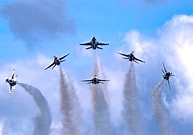
It occurred to me that, prior to their arrival, no one in the crowd was likely thinking about them. In the brief moment they were overhead, everyone was. But mere seconds after they were gone, most had likely forgotten all about them again, attention shifted to what was happening next.
I considered the scene analogous to the ever-shrinking attention span of our human species. We tend to focus on what is right in front of us, but only while it’s in front of us. Once it isn’t, we switch attention to whatever is next in front of us. Like scrolling.
Thinking, rather than being a critical, contemplative brain activity, is being reduced to bits and bites lasting only seconds. Reacting, in fact, not true thinking at all. Stimulus/response in place of thoughtful consideration and planning.
We would be doomed, I think, if we were required to focus our whole being on something for an extended period of time, as our distant ancestors had to while stalking game for food on distant savannahs. Had they allowed themselves to be distracted as easily as we do, they’d have starved to death, and none of us would be here today.
Life is much like the appearance of those jets in a way. As individuals, first we weren’t here, now we are, and eventually we won’t be. Collectively, going back perhaps 300,000 years, modern humans, homo sapiens, weren’t here; now we are; eventually, if the fate of other species is any indicator, we may not be.
Science tells us that more than ninety-nine percent of all species of life that have ever inhabited Earth are now extinct. When one considers the enormous number of life-forms still extant and sharing the planet with us today, the overall number of living creatures that once were here and now are not is staggering.
Individually, we are similar to dandelions, if you think of it. We might look out the window one day and spy a dandelion despoiling the pristine, green expanse of our lawn. If we leave it to its own devices, the dastardly weed will grow apace (doubtless in company with scores of comrades); then it will spread its seeds, miniature, white parachutists blown on the wind; and then finally, it will wither and die.
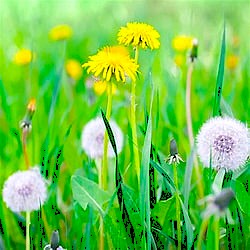
Or, we could choose to interrupt its life-cycle by stomping it under our heel, exposing it to toxic chemicals, uprooting it, or even turning it into wine. Either way—whether we leave it or interfere with it—it wasn’t there, then it was, then it wasn’t.
We are the same. Many of us live out our proverbial threescore-and-ten—some less, some more—spreading our seed as we go, and then die a natural death. Others of us, beaten down ‘neath the harsh heel of neglect and apathy, die prematurely. Still others, afflicted with a wasting disease, perhaps exposed to toxic chemicals intended to stem its progress, slowly wither and die. And still more are violently uprooted from their homes by violence or starvation or natural disaster, and are left to die alone.
Mortality is a subject I think about more often now than when I was younger. I contemplate my own, of course, though I do not fear it. Fearing death is like fearing the sunrise; it’s going to happen whether it’s feared or not, so why waste time dwelling on it? As I wrote in one of my poetic offerings—
I haven’t the time to dwell on life’s finish,
‘Though I know it lurks, that’s certain.
When all has been said, I still look ahead
To life’s next opening curtain.
I confess, however, that the demise of our human species is something I do think about. Not because it will affect me directly; I’ll be long-embarked on whatever journey is next for me by then.
But increasingly, it seems to me, humankind is separating itself into two broad factions: the many drones who think rarely for themselves and react self-servingly to whatever stimuli they encounter, content with the base pleasures they eke out; and the despoilers, fewer in number, who think deeply and conspire self-servingly to enrich themselves at the expense of the rest.
I’m pretty sure there is a third group, much smaller, who think first of others, not themselves, and who fight the good fight against the drones and despoilers. But alas, they are running out of time to win that fight. All harbingers are pointing to cataclysmic changes in the earth’s traditional, heretofore dependable cycles, patterns we have known and depended on for our entire lives.
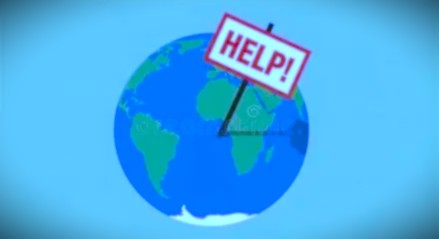
But the effects of those changes aren’t here yet, not in sufficient abundance to alarm the majority of us. It seems that, as a species, we won’t admit they exist—just as that crowd in the stadium didn’t know about the jets in advance.
We’ll know when the effects begin to announce themselves fully, though—earthquakes, floods, wildfires, drought, increasing temperatures, rising sea-levels, climate-forced migration, and, of course, mass death. We’ll pay attention then.
My fear is that, unlike the other examples I’ve mentioned, where things aren’t here, then are, and then aren’t again, the massive changes rushing pell-mell at us will not disappear. They will linger to become the new normal for millennia to come.
And thus, it is we of whom some far-in-the-future, interstellar observer might say, “Human beings? Yeah, they weren’t there, then for hundreds of thousands of years they were, and then they weren’t.”
I console myself that perhaps the dandelions will survive.
Discover more from tallandtruetales
Subscribe to get the latest posts sent to your email.
 tallandtruetales
You’re not one of the scrollers. You think deeply!
LikeLike
Wait, wait…..I need you to tell that to my wife! 😇
LikeLiked by 1 person
Love the metaphors in this!
LikeLike
Sometimes I think life itself is but a metaphor…but for what? Enlightenment still awaits, I guess.
Thanks for commenting.
LikeLike