Making Friends

Almost a half-century ago, an older colleague advised me to surround myself with friends who were, not only my age, but younger and older, as well. “With friends your age and younger, you’ll be sharing memories you’ve made together while still able to create new ones. And when you make friends with older people, you’ll learn a lot from their sharing with you the experiences they’ve had.” He didn’t tell me one is silver, the other gold, but I got the drift.

His advice made a lot of sense to me, and to this day, my wife and I can claim friends who are in their nineties and others in their twenties. “You never want to see older friends die,” my colleague said, “but they will. And when that happens, you’ll find solace in the company of the younger ones.”

 That same colleague also told me, tongue-in-cheek, “I don’t need to make more friends. I have trouble keeping up with the friends I already have!”

I didn’t get it at the time, but nearly fifty years on, I better understand what he was saying. We have many friends we barely get to see anymore, given the obligations we all have, the distance we live away from each other, and the vicissitudes of getting older. If it weren’t for social media, I doubt we’d even be in touch with some of them. It’s not that we don’t consider them friends anymore; rather, it’s an inability to keep up.

I first met the friend I’ve known longest when we were fifteen, and sixty-seven years later, that friendship endures. But we see each other in person only two or three times a year now, and even those few meetings seem to require a good deal of advance planning. Moreover, there’s always the chance that one or other of us will have to cancel because of unexpected illness.

I remember my mother in her later years, living longer than my father and most of her friends. Near the end, there was but one longtime friend left, and their children would drive them to an afternoon get-together. Eventually, though, even that proved impossible, and they were reduced to talking by phone—a poor substitute. I dread that day’s arrival for me and my friend.

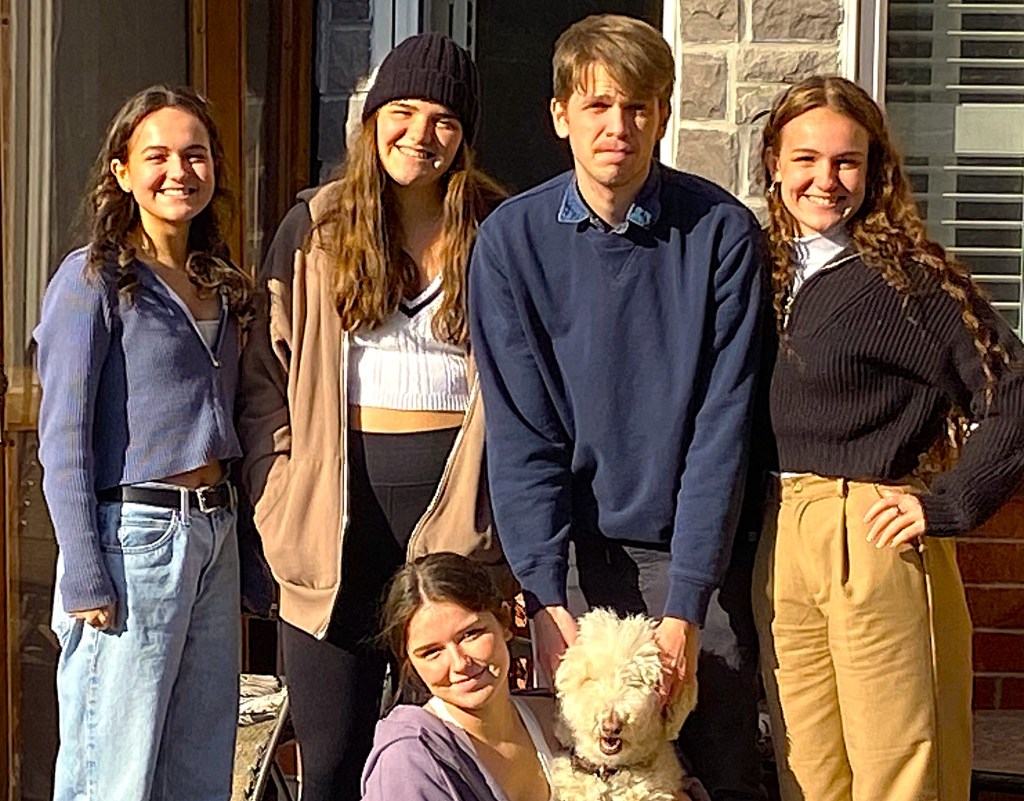
On a brighter note, my wife and I have acquired five new adult friends over the past half-dozen years. Our five grandchildren have all attained the age of majority now, and are attending university or, having graduated, are working full-time. They all live away from home—two from our eldest daughter and her husband, three from our youngest and hers—but close enough to us that we see them frequently on holidays and family occasions.

When they were children, we interacted with them lovingly, but with the slightly patronizing manner typical of conversations between elders who’ve seen and done it all and youngsters who are still finding their way. We never spoke to them in ‘baby-talk’, always recognized their unique intellect and agency, and considered them, not friends, but beloved grandchildren. And they regarded us, I think, as loving grandparents.

It’s different now, though. They’re still beloved by us, of course, and we by them; nothing could change that. But as they’ve grown into adulthood, they’ve become friends, not just grandkids. They’ve developed their own sets of values—thankfully, not identical to ours, nor to each other’s, but not in contradiction, either. They have their own viewpoints on issues facing them, and feel free to discuss those with us. They no longer accept everything we say as gospel, but they’re polite in their disagreements. And they back up their points of view with rational thought.

No longer are they participants in our world; instead, we have become participants in theirs.

As a young teacher, I remember cautioning parents of my students that, by helping children learn to think critically, we must accept the likelihood that they’ll think differently than we do about many things. It’s a delight now to find that is the case with our grandchildren. And a greater delight that it’s given us so much to talk about.

Three of them have come to visit us in Florida during the past year or so, all with boyfriends. So, we’ve been included in their conversations with each other, heard what they think about goings-on in the world, which has opened up new avenues of perspective for us. We’ve listened to their music, and they to ours. We’ve gone with them to the beach, to the mall, to restaurants, to the pool—all things we used to do with our older friends in years gone by.

When my colleague first told me the wisdom of cultivating friends of all ages, I confess I never anticipated some of those would be our grandchildren. But so it has turned out, and we are blessed.

As the familiar ditty advises, Make new friends, but keep the old…

Past, Present, Future

In 1905, George Santayana famously wrote, Those who cannot remember the past are condemned to repeat it. The statement is from his five-volume book, The Life of Reason: The Phases of Human Progress.

In 1943, Eugene O’Neill wrote, There is no present or future—only the past happening over and over again—now. That declaration is from his stage play, A Moon For the Misbegotten.

In his 1950 novel, Requiem For A Nun, William Faulkner echoed the notion when he wrote, The past is never dead. It’s not even past.

Although I could never be confused with those three literary giants, I too wrote on the same theme, more poetically: What’s past is the past—so quickly it passed—But it’s not where I want to stay. Those are the last two lines in the third stanza of my seven-stanza poem entitled, I Haven’t the Time

https://ppens1blog.wordpress.com/2025/07/01/i-havent-the-time/

But I also wrote of the future in that same poem: When all has been said, I still look ahead /To life’s next opening curtain. The premises of the poem are that life marches resolutely forward, that I haven’t the time to concern myself with its past, that I eagerly embrace its future.

Nevertheless, I’ve often wondered if there even exists a past or a future. Perhaps, as James Joyce stated in a 1935 interview with Jacques Mercanton, There is not past, no future; everything flows in an eternal present.

It may be, perhaps, that my poetic curtain is opening, not on some ephemeral future, but only on more of the ever-morphing present. I’ve long appreciated the analogy that life’s progress is akin to riding a train from one’s point of embarkation to one’s final destination, with innumerable stops along the way. People get on, share the ride with me, and every now and then, some get off—perhaps because their journey has ended, perhaps to continue their journey on another train. Indeed, I change trains from time to time myself, although my journey still continues.

My train moves from whence to hence, but I, gazing through its windows at the passing parade, remain aboard in my encapsulated present. The views change constantly, but my surroundings on the train remain, for the most part, constant and familiar. Locales no sooner flash by the window into the past in one direction, than future ones appear from the other. Riding the train is like being everywhere at once while never leaving the same place—Joyce’s eternal present.

Despite these musings, however, I find myself reflecting on the past more often these days—because of my age, maybe, now that my tomorrows are vastly outnumbered by my yesterdays. Although memory is an increasingly unreliable tool, it’s still easier to remember what’s transpired than it is to predict what’s yet to come.

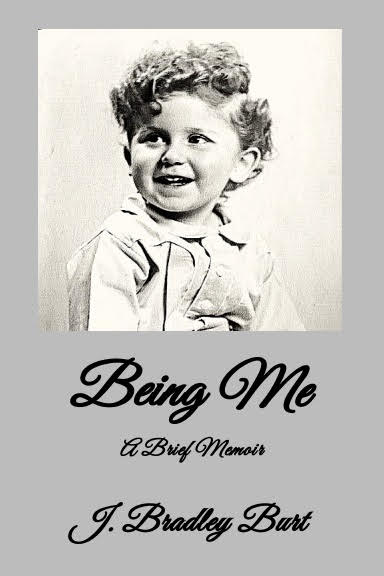
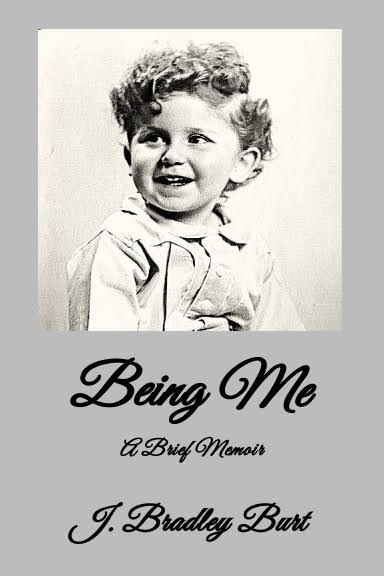
I recently published a short memoir for family and close friends, Being Me, and the exercise both surprised and cheered me. For instance, I re-affirmed that I have lived a blessed and privileged life to this point, surrounded by people who love me. And happily, I discovered I have almost no regrets about events from the past. The few I do have are less the consequence of my own actions and more the result of external forces acting on me, forces I could not control. With the exception of those, I realized there’s virtually nothing I would seek to change, had I the power to do so.

Writing the memoir took me back to places I’d been along the way, and I grasped anew how much I had enjoyed being there—my parents’ hearth, my own homes with my wife and daughters, our trips to foreign lands, my various career stops. I have no wish to return to any of them, to be sure, for I enjoy where I am right now too much. But I greatly appreciate that I had those experiences and opportunities—even if I see them now as only images flying past the windows of my train.

The future holds no fear for me. Curiosity? Anticipation? Of course! Those next opening curtains still claim my attention. I have no idea when my train will drop me at my final destination, but the present journey continues to be enjoyable and fulfilling. I have no clear understanding of what awaits when I shall disembark for the last time, although I do suspect the past, present, and future all will end at once. After all, Einstein held that the distinction between the past, present and future is only a stubbornly persistent illusion.

I imagine there to be an entirely different matrix awaiting after my consciousness has ceased, where time has no meaning, where eternity reigns…well, eternally. In the meantime, I hearken to this advice from St. Luke: …live for today, because yesterday is gone and tomorrow may never come.

My journey’s end will come, however, and I look to it in this fashion—

When that day is nigh, as ‘twill be by and by,
I hope it will be widely said,
That as man and boy, I strove for the joy
Of living until I was dead.

Them and Us, They and We

It’s always them, it’s never us
We like to blame for all the fuss
We must contend with on our way---
It’s never We, it’s always They.

It’s always They, it’s never We
Who take us out on stormy sea,
Into weather, harsh and grim---
It’s never us, it’s always them.

It’s always them, it’s never us
Who make us swear, who make us cuss
The sea on which we sail each day---
It’s never We, it’s always They.

It’s always They, it’s never We
Who cause our pain and tragedy,
Shake our wee boat, gudgeon to stem---
It’s never us, it’s always them.

It’s always them and never us?
That’s what we claim. Why is it thus?
Is there a chance the truth would say
It’s mostly We, not always They?

It’s not just They, it’s mostly We!
When will we learn, when will we see
Who rigs our sails, adjusts our trim?
The captain’s us, it’s never them.

Brown Paper Bags

My wife and I will soon be off for our annual, six-month sojourn in Florida, where we will join with our American friends on Veterans Day, 11 November, to honor the women and men who have sacrificed themselves in defence of freedom. This poem, published here once before, is intended as an homage to those brave souls. It can be read silently, read aloud, or sung to the chorus of the old, Irish ballad, ‘Black Velvet Band’.

His hair hung down to his shoulders,
His shirt was a tattered old rag.
Faded chevrons adorned both his worn, torn sleeves,
And his hands clutched a brown paper bag.

Gunny was the name we all called him,
A veteran, ‘though he never did brag.
He’d wander the streets of the neighborhood,
Snatching sips from his brown paper bag.

His only true friend was old Jarhead,
A mongrel with no leash or tag.
When he died, he left Gunny alone again,
Alone with his brown paper bag.

We never saw Gunny get angry,
He was never a scold or a nag.
When we passed him by, he would nod a sad smile,
And drink from his brown paper bag.


In the summers we often would see him,
With the kit-bag that held all his swag,
On a park bench alone in the warm sunshine,
Holding tight to his brown paper bag.

Then last winter with snowstorms a-swirling,
And temperatures starting to sag,
Gunny died forlorn in the homeless camp,
He’d drunk his last brown paper bag.

When they opened his kit, they discovered
A folded American flag,
And a Congressional Medal of Honor,
Sealed tight in a brown paper bag.

They tried hard to find Gunny’s family,
But their efforts all hit a snag.
So, they buried him with full honors,
With his Medal and brown paper bag.

Gunny rests now with his fallen comrades
‘Neath a cross in a field filled with flags.
UNKNOWN BUT TO GOD and those warriors—
Free at last from those brown paper bags.

Semper Fi, Gunny!

I Can Help With That!

Well into middle-age, I would often ask my parents questions about our family’s history.  Most of the time, those questions were based on simple curiosity, but occasionally they’d be prompted by something more important, like the medical history of family members that might impact me or my children.  Aging aunts and uncles were also a source of information, and always seemed happy to reminisce about such things.

Old photo albums were a rich source of material, too, as were scrapbooks and journals, and I remember poring over them as a child, eager to soak up the ethos and culture of my family.  Alas, when I look at some of those monochrome snapshots now, I find I recognize hardly anyone.

But now, of course, there’s no one to ask.  Both my parents and all my aunts and uncles are long departed, and I am the eldest of my family.  My three younger sisters will sometimes remember events from our shared past quite differently than I, but now we have no arbiter to call upon.

My two daughters, in their fifties now (Egad!), have taken to asking me and my wife the same sort of questions about our respective families that I used to ask my elders.  We answer them to the best of our memories, but our memories aren’t the best anymore.  I come away from some of those conversations with the uneasy feeling that I might have made stuff up to fill the gaps.

One of our daughters suggested recently that we sit down for a few interview sessions with her, where she could record our recollections.  We’ll be happy to do that, but the suggestion prompted another idea, one I immediately acted on.

I’ve written a memoir, a brief history of my life intended for family only—my wife, my daughters and their husbands, my five grandchildren, and my three sisters—plus one friend of almost seventy years.  The book, a mere 135 pages in length, is titled Being Me, and is not meant to be an exhaustive examination of my life to date.  Rather, it’s a glimpse at who I was as a boy, who I became as a husband, father, and educator, who I am well into a blissful retirement, and who I strove to be throughout my life. It deals with those events I deem significant, things that might be of interest now or in future to my limited audience.  The challenge I faced was not trying to decide what should be included, but what should be left out.

I’d love to think there’ll be enough yet to come to justify a sequel, but that seems rather unlikely.  Dying holds no fear for me, but I will harbour a sizable amount of regret if that grim reaper lurches in too soon, for I’m having too much fun to want to leave.

It’s been said no one is ever truly dead to the world until the last person who remembers her or him is gone, and I think there’s something to that.  My paternal grandfather died just before Christmas 1948, when I was five years old.  But because I still remember him, vaguely—the only one in my family who does—he’s still alive in a way.  When I finally pass, so, too, will he.

But I’m hopeful I’ll live on, as he has for me, in the memories of those precious ones I leave behind.  And I pray those memories will be fond ones, at least for the most part, and that they’ll evince more laughter than tears.

I have more yesterdays now than tomorrows, but the inevitability of aging is but one aspect of life.  If we so choose, we can relegate aging to a mere physical phenomenon, not one that has to affect our emotional outlook.  The person looking out on the world from behind my eyes today is not the man whose image I see in the bathroom mirror every morning; rather, he is still the boy I always was—

from my aging eyes,
the boy I once was looks out---
hardly changed at all.
the sails of my youth,
once hoist, are often furled now,
‘though the winds still blow.

The winds do still blow, and I welcome them and am inspired by them, even if I can no longer respond as once I did.  My children and grandchildren, thankfully, are caring enough to include me in their lives; my next adventure with Donna is always just over the horizon; my next book is already forming in my febrile  imagination.  These are the winds I speak of, and the physical frailties that age sends to plague me are unable to fully constrain me.

Prompted by our daughter’s interview idea, my wife also decided to write her memoir, titled My Story, and has asked me to help.  As I read her recollections, I find many of the events she deems significant are those I also considered important.  That shouldn’t be surprising, I suppose, considering we’ve been a couple since our first date in 1963, and married for fifty-seven years.

Neither memoir, of course, will answer all the questions our daughters or their families may ask about their heritage.  But with any luck, they’ll go some way to filling in a few of the blanks.  And who knows? Maybe on some far-off day in the future, long after I’ve gone on to my next adventure, one of my grandchildren—or perhaps one of their children—will want to know something about the old-timer who preceded them by a generation or two.  No one will likely remember, but they’ll have my memoir to refer to for the answer.

I like to think it will be as if I’m still there to hear the question.  And to answer by responding, “I can help with that!”

Making the Bed

~ CLICK ON THE TITLE IN THE BODY OF THIS EMAIL NOTICE TO READ MY BLOG POST IN ITS NATURAL SETTING ~

Do you make your bed right after you get up in the morning?  Or after you’ve washed and dressed?  Or at all?

I do, and have for almost eighty years.  It’s the first thing I do after stumbling out of bed—or maybe the second if the bathroom beckons urgently.  The only exception to the rule is if my wife is still abed when I awake, but that is not a frequent occurrence.

It was my mother who got me started, around the time I was five years old if memory serves.  She was a stickler for cleanliness and neatness, and I, being the eldest of five siblings, was her first opportunity to test her mothering skills.

Her instructions were quite specific, and I still follow them to this day.  Begin by brushing wrinkles out of the bottom sheet with my hand, then tuck in its corners—no contoured sheets in those bygone days.  Next, pull the top sheet up to neck-level, then do the same with the blankets on top of it (usually two in number), smoothing them as I go.  Plump up my pillow and straighten the pillowcase, then centre it below the headboard.  And finally, drape the bedspread atop everything, ensuring it hangs evenly off the floor on both sides of the bed, and at the bottom, then tuck the top neatly under the front edge of the pillow.

Complicating matters was the fact that my bedcover had three wide, brown stripes running top to bottom on its beige base colour, and woe betide me if those stripes didn’t run parallel to the edges of the bed when I was finished.  I can remember mornings when I was sent back upstairs from the kitchen two or three times to remake the bed before I was allowed to start eating.  I hated cold oatmeal, so it didn’t take me long to learn the valuable lesson that a job worth doing is worth doing right…the first time!

My brother, three years younger than I, eventually faced the same challenges.  I can still see that little boy studying me intently, trying to mimic my every move on the twin bed that sat opposite mine.  He didn’t like cold oatmeal either!

My mother’s bed, shared with my father, was always made up immaculately, of course, except on washing day, when she’d strip the bed down to the mattress, turn it or flip it if she thought it necessary, then remake the bed with a clean set of sheets.

The day came when my brother and I had to do the same with our beds, another learning exercise we didn’t enjoy.  Eventually, so too did my sisters, but I always thought they were given more leeway than my brother and I received.

I’m sure I asked my mother more than once why we had to go through this exercise every day.  “We’re gonna hafta un-make it tonight!” I probably whined.

As best I recall, her reasoning ran like this: making my bed when I got up meant that, no matter what else I might do that day, I’d have accomplished something!

In the beginning, I probably had to ask what that big word meant, but I must have got the gist pretty quickly.  My mother was all about accomplishment, achievement, the attaining of goals, and she imbued her five children with that attitude.

Nevertheless, now that I’ve attained a ripe, old age, the question could be asked why I persist to this day in making my bed.  The answer might be habit, I suppose, and an aversion to change, for I do value predictability and stability.  Or perhaps I’m secretly trying to please her still, long after she has left the stage.  Maybe I possess the same inner drive for order and perfection that defined her, that impelled her.  Whatever the reason, it seems a little late in the game for me to learn to love a messy, unmade bed.

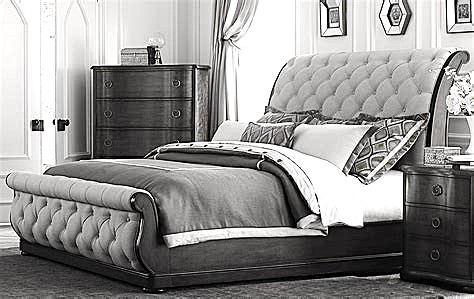
The bed I make up now is quite different from the one I started with, of course.  A king-size model, it requires me to climb atop it to straighten the sheets and blankets in the middle, where I can’t reach them while standing on the floor.  Manhandling the bedcover into place—now called a sham, a coverlet, a counterpane—is a man-sized chore, even as my man size is diminishing steadily.

Rather than one pillow, or even two, to plump and place, there are ten in all—two my wife and I rest our heads on overnight, two larger ones in fancy slipcases to be placed in front of those, and six smaller ones to place on the bed, not haphazardly, but precisely, symmetrically, and balanced.

There are days when I feel I need a nap after pulling it all together, but alas, I lack the will to pull the covers down when I’ve just made them up.

So, I soldier on, making my bed every morning, always glad when I enter the bedroom later in the day to see the display of my fidelity to the lessons I was taught.  And best of all, it allows me to think of my mother every day, to thank her for the lessons she insisted I learn.

I must confess, though—I have never learned to fancy cold oatmeal!  

Love, Through Their Eyes

The weekly prompt from my Florida writers group was to write a piece about seeing things ‘through their eyes’, and this is my offering—

Two short poems, each exquisitely written, capture exactly—exactly—how I feel about this brief moment in time I know as my life, about the relationship I have with the love of my life, and about what will happen when I am gone.

The first, When You Are Old, by William Butler Yeats, the greatest of the Irish poets, portrays a woman through the eyes of her departed husband, as he speaks of his love for her, even beyond death, and where she might find him—

When you are old and gray and full of sleep
And nodding by the fire, take down this book
And slowly read, and dream, of the soft look
Your eyes had once, and of their shadows deep.

How many loved your moments of glad grace,
And loved your beauty with love false or true,
But one man loved the pilgrim soul in you,
And loved the sorrows of your changing face.

And bending down beside the glowing bars,
Murmur, a little sadly, how love fled
And paced atop the mountains overhead,
And hid his face amid a crowd of stars
.

I find that sentiment so uplifting, so reassuring, that love, triumphant over death, is waiting ‘midst a crowd of stars.

I no longer believe, as I did as a child, in life eternal, in the idea of earth and heaven, the now and hereafter.  Rather, I believe the life-force presently empowering me—what I might call a soul—is but a fragment of the energy that fuels our expanding universe, a spark of light presently encased in my mortal being.  And when I, the shell that hosts the spark, will have finished my course, when I have expired, that life-force animating me will simply rejoin the universe.  It will be as if I am carrying on beyond death, but with no memory of my life—just as I have no memory now of what came before my birth.

The mortal I shall die, but my life-force will not, for if it did, the universe would shrink at the loss of that fragment of energy.  Science tells us, however, the universe is expanding, not shrinking, so it must be that no energy is ever lost.

But where will my immortal life-force go, and in what form, I wonder?  And what of my love whom I will have left behind?  Happily, I find an answer to these questions in the second of the poems I number among my favourites.  Written by David Jones, a Liverpool poet, from his collection titled Love and Space Dust, I find it moving and profound—

And in the end
I will seek you
Out amongst the stars.

The space dust
Of me will
Whisper ”I love you”
Into the infinity
Of the universe.

So, no life eternal, but something better—love eternal.  According to these two poets, as seen through their eyes, the pilgrim soul who shares this life with me will find my spark of energy—my soul—waiting somewhere in the stars for her, calling I love you into the void until she hears me.

And I choose to believe she will hear me.

David Jones: https://www.goodreads.com/author/quotes/5241391.David_Jones

W. B. Yeats: https://www.poetryfoundation.org/poets/william-butler-yeats

Too Late? Or Too Early?

TOO LATE FOR YOUR SUMMERTIME READING?

TOO EARLY FOR YOUR CHRISTMAS GIFTING?

PERHAPS…BUT IT’S ALWAYS THE RIGHT TIME FOR A COMPELLING STORY!

TRAFFICKING IN MURDER 

The dramatic story unfolding in this twelfth novel in the Maggie Keiller/Derek Sloan crime series is set against an all-too-true backdrop of human-trafficking—the smuggling of vulnerable asylum-seekers into Canada.  Maggie and Derek are hard-pressed as violence escalates in their community with assaults on innocent bystanders, a kidnapping scheme, and finally murder.  If you’re a reader of my blog, or if you have enjoyed any of the previous books in this series, you’re sure to love this latest one, chock full of thrills and surprises.

The book has just dropped, and is available for purchase at this safe site—

https://www.lulu.com/spotlight/precept

Songs I Remember

For as long as I can remember, songs have been a major part of my life.  Even before memory, my mother was singing to me in the cradle.  And during my boyhood years, my dad constantly shared his love of music.

To this day, I remember many of the songs my mother sang: I Wonder Who’s Kissing Her Now, Sweet Little Alice Blue Gown, Always, What’ll I Do, and too many more to mention.

And I remember the classical music my dad and I would listen to on the radio as he tucked me in at bedtime: Prelude to Act III of Lohengrin, William Tell Overture, Light Cavalry Overture, Rhapsody In Blue, and so many others.  To this day, it’s my favourite genre, playing in my earbuds whenever I write.

When I started school, I discovered to my delight that learning new songs was a part of my curriculum, and I still remember the words and tunes to many of them—

Oats and beans and barley grow, oats and beans and barley grow,

You and I and everyone know how oats and beans and barley grow.

I didn’t actually know how those crops grew, of course, not then, but I learned the song and sang it endlessly.

Your rake and shovel and wheelbarrow bring,

Let’s plant us a garden this morning in spring,

Dig little trenches, pull out all the weeds,

Pour in some water and drop in the seeds.

I’ve never really liked gardening, but I did like singing that song.

While strolling through the park one day

In the merry, merry month of May,

I was taken by surprise by a pair of roguish eyes

While strolling through the park one day.

As a youngster, I had no idea what ‘roguish eyes’ were, but the lilting tune and the idea of being in the park instead of the classroom were appealing.  I even performed a tap-dance recital to that song.

“Come away,” sang the river to the leaves on a tree,

“Let me take you on a journey, and the world you will see.”

So, the leaves gently falling from the tree on the shore

Float away on the river to come home nevermore.

This one made me sad, and does even now, at the thought that those leaves would never come home again.  I couldn’t wrap my head around that.  Home, it seemed to me back then, was forever.

And so was singing, and music in general.  And thus it was that, sixty-plus years after starting school, I joined the bass section of a men’s barbershop chorus, eighty voices strong, where I found I could chime in on so many other songs I remembered from my youth: All Of Me, You Belong To Me, Let Me Call You Sweetheart, Loch Lomond, Peg O’ My Heart, Sentimental Journey, You Are My Sunshine, Me And My Shadow, and more just like those.

Singing with the chorus had become a bucket-list item for me by then, something I wish I’d done years before.  The harmonies and chords rippling down over the risers brought goosepimples every time, and once in a while I would even stop singing, the better to listen…surreptitiously, of course.

I’ve had to step down now, but here’s an audio clip of a recent performance, which I trust you’ll enjoy (best with earphones)—

I hope the last sound I ever hear, whenever that time may come, will be songs in my ear—sung by my mother, perhaps, or shared by my dad.  I’d be happy to hear any of these: Fare Thee Well, I’ll Be Seeing You, or even Beethoven’s Emperor Concerto.

As Edward Bulwer-Lytton wrote, Music, once admitted to the soul, becomes a sort of spirit, and never dies.

Round Tables

It is no mean feat for writers to create an imaginary world that readers will come to see as true and historically accurate.  Fashioning something from one’s imagination that resonates with readers, a tale that merges with their perception of reality, is not easily done.

Two relatively recent examples of such efforts are Tolkien’s Lord of the Rings and Martin’s Game of Thrones, both of which have convinced many an avid reader of their legitimacy.

As a young boy at the dawn of the 1950s, it was the magical tales of King Arthur and the Knights of the Round Table that captured my fancy.  I first read them in The Boy’s King Arthur, a version of Malory’s Le Morte d’Arthur, which abridged and bowdlerized items from the original text, sexual and otherwise, that were deemed unsuitable for children.

I was completely captivated by the legends of the Lady of the Lake, Arthur’s conception at Tintagel, his seizing of the sword Excalibur, his alliance with the magician Merlin, his ultimate battle with Mordred, and his laying to rest in Avalon.  Most intriguing of all was the notion that he had not died, that he was merely sleeping, that he would rise again, the ‘once and future king’.

I eventually graduated to the reading of unexpurgated versions, but in the beginning I fancied myself as many of those brave warriors:  Lancelot, until I learned of his treachery with Arthur’s queen, Guinevere; Gawain, who bravely faced the Green Knight in a chivalric romance told in Middle-English alliterative verse; Perceval and Tristram, whose feats of derring-do enthralled me; and of course, Galahad, whose sacred quest for the Holy Grail seemed the most inspired.

I subsequently read about that storied quest in other works, and learned from more than one that two phrases in French—san graal and sang royale, pronounced almost identically—translate to two different things: Holy Grail and royal blood.  This assertion expostulated the theory that following Christ’s death, his wife and children fled to France, where his bloodline continued anonymously, eventually merging with the Merovingian dynasty, then the Carolingian dynasty, all the way to William the Conqueror—who, in a tidy completing of the loop, came to rule over Arthur’s ancient kingdom.

True or not, the story affirmed for me that the greatest Arthurian quest came to fruition in the merging of these two fanciful tales, one religious, the other mythical.  And for a long time in my youth, I believed.

The lasting impression I took from this childhood reading, however, was the concept of the Round Table.  In its simplest form, I thought it presented an ideal way of governing or managing a kingdom, an empire…or any enterprise.  Everyone sat around the circular table, each facing everyone else, and all had an equal say in the decisions that were made—all but one, of course.  The King, by virtue of his position, reserved the right of veto.

In such a setting, the objective of any group’s deliberations is always to achieve consensus on matters discussed, the theory being that everyone will have a greater commitment to decisions made when they feel they’ve contributed to them.  The process involves give and take, it usually means no one gets all of what they want, but it allows everyone to get some of what they hoped for.  Some might call that win/win.

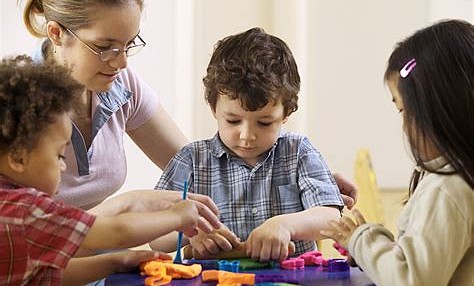
As a young teacher in the mid-1960s, chock-full of enthusiasm for and faith in the teaching/learning paradigm, I furnished my classroom with circular tables, not individual desks.  My thirty-plus students sat in groups of five or six around these tables, groups whose membership rotated periodically, based on their accomplishments and interests. 

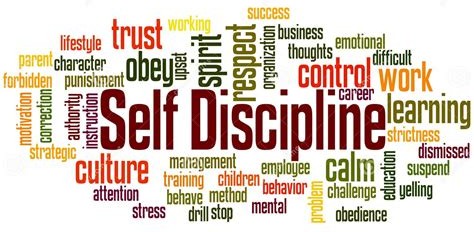
Our interactions, the teachings and learnings we shared, usually (but not always) were conducted with me sitting around a table with them.  To this day, I find it remarkable how much self-discipline, cooperation, and independent learning took place among the young people at those tables.  Only rarely did I ever have to exercise my right of veto.

Twenty years after leaving the classroom, installed as the CEO of a school board district, I still favoured round tables.  In my office, senior staff met weekly around a large, circular oak table, where everyone had a valued voice.  We didn’t always agree on how best to proceed with certain matters, but when we concluded our discussions, each of us felt we’d had the opportunity to make known our views.  And all of us acted on the consensus decisions with total commitment.  And again, I almost never had to decide arbitrarily on a course of action.

In the boardroom, where elected trustees met weekly to discuss and make policy, they sat at desks arranged in a circular shape, each of the fourteen with a direct view of the others.  The chairperson of the board managed the meetings according to established rules of order, and only occasionally overruled a colleague.  Decisions were made by voting, as required by the Education Act, but only rarely were those votes disputatious…and never acrimonious.  I believe there was something about sitting in the circle formation that elevated the level and tone of discussion, that enabled consensus decision-making.

As a young father, I sat with my wife and two daughters around a circular kitchen table, virtually every night, for dinner together.  Any of us might miss now and then, given our respective work and school commitments, but sitting down around that table was the established custom, one we all honoured until the girls headed off to university.  Our discussions centred on what all of us were doing at any given moment, and everyone contributed freely.  No topic was off-limits (although when the girls were very young, some issues were covered only cursorily, appropriate to their age).  Looking back now, I consider the learnings we all experienced with each other as indispensable to our family’s enduring ties.

And to think, it all began for me with my fascination for the Arthurian legends I first read as a boy, stories of the Knights of the Round Table that imbued me with a sense of romanticism and chivalry that I still value today.

I remain eternally grateful to all writers who have managed to create a world that I and other readers consider enjoyable and aspirational…even if imaginary.

 And I still wonder, even at this great age, if Arthur is merely sleeping at Glastonbury Tor, as the legends maintain, and if we shall ever see his like again, holding forth at his great Round Table.