Love, Through Their Eyes

The weekly prompt from my Florida writers group was to write a piece about seeing things ‘through their eyes’, and this is my offering—

Two short poems, each exquisitely written, capture exactly—exactly—how I feel about this brief moment in time I know as my life, about the relationship I have with the love of my life, and about what will happen when I am gone.

The first, When You Are Old, by William Butler Yeats, the greatest of the Irish poets, portrays a woman through the eyes of her departed husband, as he speaks of his love for her, even beyond death, and where she might find him—

When you are old and gray and full of sleep
And nodding by the fire, take down this book
And slowly read, and dream, of the soft look
Your eyes had once, and of their shadows deep.

How many loved your moments of glad grace,
And loved your beauty with love false or true,
But one man loved the pilgrim soul in you,
And loved the sorrows of your changing face.

And bending down beside the glowing bars,
Murmur, a little sadly, how love fled
And paced atop the mountains overhead,
And hid his face amid a crowd of stars
.

I find that sentiment so uplifting, so reassuring, that love, triumphant over death, is waiting ‘midst a crowd of stars.

I no longer believe, as I did as a child, in life eternal, in the idea of earth and heaven, the now and hereafter.  Rather, I believe the life-force presently empowering me—what I might call a soul—is but a fragment of the energy that fuels our expanding universe, a spark of light presently encased in my mortal being.  And when I, the shell that hosts the spark, will have finished my course, when I have expired, that life-force animating me will simply rejoin the universe.  It will be as if I am carrying on beyond death, but with no memory of my life—just as I have no memory now of what came before my birth.

The mortal I shall die, but my life-force will not, for if it did, the universe would shrink at the loss of that fragment of energy.  Science tells us, however, the universe is expanding, not shrinking, so it must be that no energy is ever lost.

But where will my immortal life-force go, and in what form, I wonder?  And what of my love whom I will have left behind?  Happily, I find an answer to these questions in the second of the poems I number among my favourites.  Written by David Jones, a Liverpool poet, from his collection titled Love and Space Dust, I find it moving and profound—

And in the end
I will seek you
Out amongst the stars.

The space dust
Of me will
Whisper ”I love you”
Into the infinity
Of the universe.

So, no life eternal, but something better—love eternal.  According to these two poets, as seen through their eyes, the pilgrim soul who shares this life with me will find my spark of energy—my soul—waiting somewhere in the stars for her, calling I love you into the void until she hears me.

And I choose to believe she will hear me.

David Jones: https://www.goodreads.com/author/quotes/5241391.David_Jones

W. B. Yeats: https://www.poetryfoundation.org/poets/william-butler-yeats

Of, By, and For

From my Canadian vantage point, the longstanding myth of American exceptionalism appears to have been exposed.  The Benighted States of America has signalled it is no exception after all, as it falls into line behind nations like Brazil, Hungary, and Russia on the slippery path to corporate, fascist oligarchy.

Those citizens who lament this turn might blame the result of the recent election on an ill-informed electorate, but the truth is the voters were not uninformed, misinformed, or disinformed.  Well in advance of voting day, the winning party composed and published its agenda, Project 2025, hanging it out there for all to see.  So, any lamentations might more aptly be directed toward apathy or hubris on the part of too many Americans.

And of course, there’s the fact that more voters are celebrating the result than bemoaning it, at least according to the popular vote count.  In that sense, the will of the people prevailed, just as it’s supposed to.

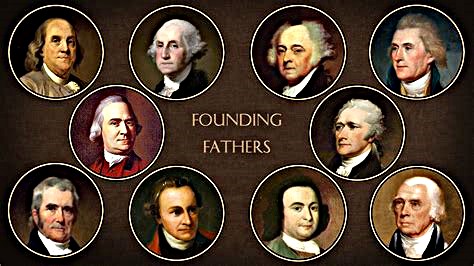
It appears so far that the election process unfolded as designed, with no accusations or evidence of widespread glitches or fraud, despite the plethora of different voting procedures across the fifty states.  That process—which, by deliberate decision on the part of the landed gentry known as the Founding Fathers—leaves the final choosing of the chief executive in the hands, not of the people, but a select group of electors from each state.  America is still exceptional in this, I suppose, given it’s the only nation in the world to rely on an Electoral College.

Simplistically stated, democracy implies that majority rules, no matter how slim that majority.  In a tri-cameral system—executive, legislative, and judicial—it is rare that one party will capture the Presidency and both branches of the legislature.  But at the time of writing, the Presidency, the House of Representatives, and the Senate have apparently fallen to one party in this recent election.  The popular vote count, although not overwhelmingly one-sided, was decisive.

It’s worth remembering that democracy is not ordained, merely proposed and tried.  Churchill called it “the worst form of government, except for all the others.”  Still, it endures for now, and should certainly not be dismissed because it yields an electoral result not satisfactory to a segment of the population.

Whether this recent result is good or bad is based upon one’s point of view.  My own opinion is that it bodes ill for the future of the nation, and perhaps the world, but my opinion matters little.  American politicians are fond of proclaiming, “This is who we are as Americans!”, or conversely, “This is not who the American people are!”  Although neither statement is accurate, both can be apt in any given instance, depending on how Americans’ behaviour matches or clashes with those politicians’ ideological leanings.  For example, public demonstrations or protests are often acclaimed and disparaged simultaneously by opposing political factions.  At the very least, any occasion represents only who some Americans are and who other Americans are not.

One thing for sure is true, however: the entire population of 346-million+ cannot rightly be dubbed ‘the American people’.  Across all spectra—political, social, economic, religious, ethnic, gender, rural/urban—Americans, like other nations’ citizens, comprise a distinct array of diversity, not a homogeneous collective.  Americans, unsurprisingly, do not all think alike or cherish the same values. 

Nevertheless, it is clear the recent election was decided by the American people who were eligible to vote—those who exercised their right and those who did not, those who swung one way and those who went the other.  Democracy in action.

Like it or not, people’s understanding as to whether something is right or wrong, good or bad, is inevitably shaped by the outcome of any election.  Perhaps there is a true right and a true wrong in the moral universe, but it’s how those concepts are filtered through an ideological lens that matters most.  Did America decide wisely on its future this time, or foolishly?  Is liberal democracy the judicious choice, or corporate fascism?  Is an imperial Presidency the better model, or a checks-and-balances structure?  And does the worm always turn?

To paraphrase a timeworn sports adage, any nation is what its voters say it is, and it remains so until its voters say it’s something else.  That, I submit, is governance by and of the people.  Whether or not America’s recent election results prove to be for the people will likely become apparent over the next couple of years.

Ultimately, we all get the government we deserve.  America is no exception.

Young Fella

Around the world, it’s variously known as Armistice Day or Remembrance Day, but stateside we call it Veterans Day.  It honours the memory of those who sacrificed their lives defending freedom, commemorating what was intended to be a lasting peace, signed at the eleventh hour of the eleventh day of the eleventh month in 1918.

I’m here today with almost a thousand of my fellow-vets for a luncheon to remember the fallen.  We’re gathered in a mess-hall similar to those we knew in long-ago days in far-away lands, but under happier circumstances now.  We range in age, I would guess, from mid-forties to late-eighties, drawn from the full military spectrum—dogface, swabbie, flyboy, grunt—jealously proud of our own branch of service, but united by our sworn allegiance to our nation.

Most of us are in uniform, some resplendent in dress whites or blues, others less splendid in khaki or camo fatigues.  But in nearly every case, the clothing strains to contain bodies once in fighting-trim, now overfed and flabby.  Insignias of rank and medals awarded adorn almost every uniform, but no one pays undue attention to either, having long ago taken them for granted.

What is never taken for granted, however, is the privilege of being here today, when so many of our former comrades cannot.  The cash-bar, which had opened an hour before lunch, had been well-used, and many a story of glory and despair had been shared over a pint or two, as has become the custom at our yearly gatherings.

The ample lunch buffet we finished before the speeches began was leagues better than the swill we’d all had to choke down in mess-halls similar to this one back in the day.  And even the speeches…well, let me just say, the speeches were a vast improvement over what we used to be subjected to from the brass in the field.  Today’s remarks from a few of our ranking members were more reflective, halting and poignant almost, as if we all knew this would be the last parade for many of our number.

We’re on our feet now for the national anthem, to be played by a band of eager, young cadets.  None of us sings it aloud, of course, as if to do so might constitute an unacceptable breach of discipline in the ranks.  But we know the words by heart. 

As we raise our arms in salute, a movement catches my eye at a table to my left.  An old soldier, a man I hadn’t noticed earlier, has struggled to his feet, is saluting with difficulty.  He’s dressed in an olive-drab tunic, too big now for his shrunken frame, a beret tucked under one of his epaulets, his blouse drooping from sagging shoulders.  I figure he has to be in his late-nineties at least.  His body sways as the anthem swells, and he trembles as if palsied.  I wonder why the men on either side of him, officers both, do not offer assistance, but they appear not to notice his distress.

I turn my attention back to the band at the front, unwilling to bear witness if the old man should fall.  When the anthem’s final notes die away, a lone bugler steps forward, a young woman immaculate in dress grays, and with divine precision, she raises the instrument to her lips to play The Last Post.

As its first plaintive, mournful notes sound forth, I turn to see if the old soldier is bearing up.  To my surprise, he is gone, and a much younger man stands in his place.  Clad similarly in olive-drabs, he is taller, stronger, more steadfast—a marked contrast to the older man who, I assume, had been assisted from his place at the table.  Unlike the rest of us, our arms still raised in salute, our chins held as high as we can bear, the younger man’s head is bowed, his right hand clasped to his heart.

When the bugler finishes, when the last horn has sounded, the room is suffused in silence for a few moments.  But then the slow hum of conversation begins again as people make ready to leave, and the air is filled with raucous laughter and shouted farewells.  As might be expected, our retreat is anything but militarily precise.  Rather, the withdrawal is hesitant, rambling, reluctant, each of us adopting a slow shuffle to delay our departure. 

On impulse, I detour on my way toward the door to walk behind the table where I’d seen those two soldiers.  All the place-name cards that had been propped on small stands on the table are gone, of course, purloined by their namesakes as souvenirs of another fine get-together—all save one, that is, the one I was hoping to find.  It sits right where the two soldiers had been standing, embossed in flowing script, black letters crisp against the white cardboard background.

Adjusting my glasses on my nose, I lean closer to find out who those men were.

HERE MAY SIT AN UNKNOWN SOLDIER
A FALLEN COMRADE KNOWN BUT TO GOD

I straighten slowly, breath seeping from my lungs as I realize the enormity of the vision I’d been privileged to see.  With all the strength and grace I can muster, I brace to full attention and salute the dead, as respectfully as I can manage in my aged state.

“Thank you, old man!” I whisper, tears stinging the backs of my eyes. 

But then, suddenly aware of my misunderstanding, I correct myself.  Not a single one of our unknown comrades had died as an old man.

“Thank you, young fella!” I say out loud this time.

And not until I am alone in the cavernous mess-hall do I lower my salute.

The Loss of What, Now?

The weekly prompt from my Florida writers’ group was to pick a famous saying or quote, and write a story about it. This is my offering—

“You can take it from me!” the old man says forcefully.  “Gettin’ old ain’t for sissies!”

“Yeah,” his middle-aged son says, scarcely looking up from his phone screen.  “Beats the hell out of the alternative, though.”

‘“Very funny,” the old man says, “an’ easy for you to say.  You’re too young to know the thing ‘bout gettin’ old is dealin’ with loss.  With nary a warnin’, we start losin’ all the things we always took for granted.”

“Like what?” his son says.  He’s sitting in the small suite the old man occupies in the retirement home, his father propped up in bed beside him.

“Everythin’!” the old man declares emphatically.  “Just lookit my skin, f’rinstance.  Used to be smooth an’ tight, now it’s all loose an’ wrinkled.  I look like a cheap suit!”

“That’s to be expected, Pop,” the son says distractedly, eyes still on the phone.  “You’re not a young buck anymore.”

“That’s what I’m sayin’!” the old man replies.  “An’ I’m also losin’ all my muscle underneath the skin.  I’m nothin’ but a bag of bones!”

“You look fine, Pop,” the son says, reaching to pat the old man’s arm reassuringly.  “Just older, that’s all.”

“Exac’ly!  An’ speakin of bones, I’m losin’ all the flex I used to have in ‘em.  All’s I got now is pain an’ stiffness.  Every time I look at myself, all’s I see is me losin’ more an’ more of what I had.”

“So then, don’t look at yourself so often,” the son says.  “Read your magazines, read the books I brought you.”

“Bah!  Easy for you to say!  I don’t see so good anymore, neither.  Vision loss is another thing I’m dealin’ with, an’ it ain’t nothin’ to celebrate, b’lieve you me!”

“Where are your glasses?” the son asks, thumbs busy on the tiny keyboard in front of him.

“Danged if I know!” the old man spits.  “Can’t ‘member where I put things the way I used to, neither!  Doc says it’s just normal mem’ry loss, caused by old age.  I used to prop ‘em up in my hair when I wasn’t wearin’ ‘em, but now that I lost all my hair, they just keep slippin’ off.”

“So, watch TV then.  There’s always something on the movie channels.”

“Yeah, I can still see the TV,” the old man concedes grumpily.  “It’s the up-close stuff I can’t see!  But nobody in them old movies talks loud enough!  I can’t hear a blessed thing ‘less I turn the volume way, way up.  But then the nurse comes in an’ switches it back down.  Gettin’ old means I got hearin’ loss, too!”

“Where are your hearing aids?” the son asks, putting his phone in his pocket.

“Where d’ya think they are?” the old man says.  “In my ears is where they are!  But they’re not workin’ right!  I gotta read lips to know what people are sayin’ half the time!”

“Have you checked the batteries?” the son asks, reaching for his father’s ear.

“Don’t touch me!” the old man says, flinching away.  “All’s I got anymore is pain everywhere.  Nurse says it’s just inflammation, it’ll go away.  But it doesn’t, dagnab it!  Pain is the only thing I don’t seem to be losin’!”

“Okay, Pop, don’t take this the wrong way, but maybe you should change your attitude a wee bit.  Try to focus on the things that make you happy, the things that are going well.”

“Like what?” the old man says, somewhat miffed by the suggestion. 

“I don’t know,” the son replies, checking his phone again.  “There have to be some things that are going right for you.  Mark Twain once said, Getting old is an issue of mind over matter.  If you don’t mind, it doesn’t matter!  Try that on for size.”

When the old man doesn’t  answer right away, his son glances up from the phone, thumbs frozen in mid-stroke.  His father’s eyes are closed, his mouth drooping open, his arms still at his side.

“Pop!  Pop!” he yells, leaping from his chair.  “Pop!  Wake up!”  As he stands over his father, phone forgotten, he realizes how aged and frail the old man looks. 

Before he can do anything, however, the old man opens one eye.  “Got ya this time, didn’t I?” he chuckles, a rheumy sound from deep in his chest. 

“Jee-zus, Pop,” the son exclaims.  “You scared the crap out of me!”

“Yeah, well it’s your own damn fault, sonny-boy!  Tellin’ me to change my attitude?  Focus on good stuff happenin’ to me?  At my age?  I may be losin’ a lotta things, but I ain’t never lost my sense of humour!”

“You got me, Pop, I have to admit,” the chagrined son says.  Switching off his phone, putting it in his pocket, he adds, “So, besides your sense of humour, what else haven’t you lost yet?  I’m all ears!”

The old man smiles.  “Ain’t lost you,” he said, “an’ that’s the biggest thing!”

Teaching and Learning

Almost sixty years ago, a brand-new teacher, hired by a brand-new principal, entered his brand-new school for the first time.  Earning what he considered a princely, annual salary of $4100 per year, he could scarcely believe he was being paid to do this job he loved from the very get-go.

Even today—a grandfather now, and long-retired—I can still feel the sense of wonderment and awe that seized me as I awaited my first group of elementary school students.  The mix of opportunity and responsibility confronting me was both frightening and exhilarating.

Over the next thirty-plus years, in three different school districts, I served as teacher, vice-principal, principal, superintendent, and director of education.  Of those postings, the first and last were my two favourites.

Along the way, I met and married a brilliant teacher, and in time, both our daughters grew up to be wonderful teachers, too.

Two of my four granddaughters are currently working towards university degrees in education, one in music, the other in maths and science.  They haven’t asked for my advice—perhaps blissfully unaware of the import of my experience, its scope and depth; or more likely, because I’m bound to be out-of-date now, hopelessly so, after such a long hiatus.

I’ve slowed down, no doubt, but the pace of change has not!

I’ve never been one to proffer advice unsolicited, anyway—although I have been known to hold forth if encouraged.  But if I were to be asked, there are a few bon mots I would probably pass along.

First, teaching—that is, the handing-down of all wisdom from the teacher—is far less significant to students’ growth than learning—namely, opportunities for them to ask pertinent questions, test a variety of possible answers, and settle upon evidence-based conclusions.  Effective learning is a highly-personal pursuit, and happens in a plethora of ways connected to each student’s personality and neural development.  It is the teacher’s job to provide sufficient and varied, open-ended learning opportunities within the prescribed curricula.  Show them, don’t just tell them; involve them, don’t merely lecture them.

Second, the teaching/learning relationship between teacher and student, if it is to yield good results, must be founded on mutual respect for one another—with the emphasis on mutual.  As a pundit posited some time ago, “I don’t care what you know until I know you care.”  The same applies to relationships among students, each of whom will more likely prosper in a caring and secure classroom environment.

Third, it’s far more important that the teacher constantly catch students doing something good, rather than something bad.  It’s not that the bad should be overlooked, but there are effective procedures to deal with it—not simply to end it, but to work proactively to prevent its repeat.  Catching students doing the good things they do is critical, though—letting them know, not just that their accomplishments are noticed, but explaining why those achievements are positive.  When students understand the underpinnings of effective performance, they’ll be more likely to roll it back and expand their repertoire.  So, tell them when their work is good…then explain why.

Over the years, whether engaged as teacher, principal, or CEO of a school district, I forever encountered encumbrances threatening to get in the way of doing the job effectively—budget-cuts; staffing-cuts; overcrowded classrooms; reductions in essential support-services for special-needs students; aging buildings and facilities; changing parental expectations; increasing political demands; the intrusion of pervasive, social-media technology; rising violence in our society; and on and on.  There seems no end to the reasons to decry the state of education.

But that is the reality of the workplace my granddaughters will face.

The most effective strategy to combat the ennui and despair that might imperil what they will try to do in their own classrooms is the fourth piece of advice I would offer them.  Win your people over!  Be they students, co-workers, employees who report to you, the same is true: more often than not, they will respond positively to the learning and growth opportunities provided for them when they feel you hold them in high regard; when they believe they are important pieces of the whole, not mere cogs in someone else’s wheel; when they know you have asked for and valued their opinion; when they believe the ends you are seeking are righteous, and the means to those ends honourable.  And for that to happen—for them to believe you are honest, trustworthy, consistent, and invitational—you must be those things.

And therein lies the final piece of advice I’d offer my granddaughters.  Be visible to your students, be available, be present.  I think of it as management, or leadership, by walking around—and it works.  The best teacher, or leader, is the one who is not just inspiring, but vulnerable, receptive, nurturing, validating—in short, transparent.

Anyway, those are the things I would tell my granddaughters now, almost sixty years since I first stepped foot in that brand-new classroom, wide-eyed and bushy-tailed!  

You know, I sometimes allow myself to imagine I’m heading back in there right now, and waiting just inside the door for me is a fresh-faced kid—Alan, Sylvia, Tony, Mary—so many others whose faces I still see.

“Hey, Mr. Burt!  I was thinkin’ ‘bout what you told us before recess, an’ I’m not sure you’re right.  You wanta know what I think?”

“Yes!” I say, a smile splitting my face.  “Tell me what you think!”

I wanted to know then, and I’d want to know now.  For that’s the essence of teaching and learning.

Happy Pilgrim

The weekly prompt from my Florida writers’ group was “AI and I”, and my offering is these two poems, five stanzas each. One was written by me, the other by AI (Copilot); can you guess which is which?

Happy Pilgrim

I am a happy pilgrim wand’ring down the road of life,
I’m loved by both my daughters and the gal who is my wife.
I first began my journey back in nineteen-forty-three,
And have spent the intervening years seeking to be me.

My travels haven’t been too hard, nor have they all been smooth,
They’re slower now, though, than they were when I was but a youth.
I make more time to look around than I ever used to do,
Far less concerned with making haste than soaking up the view.

My tomorrows---fewer now than my many yesterdays---
Still unfold themselves quite wondrously to my open gaze,
And I’m astonished there’s so much that’s new along the way,
As I continue down my path, loving each new day.

I know for ev’ry journey there will always be an end,
But it would be a long, long road that never takes a bend,
And so, I wend my pilgrim’s way, that end not yet in sight,
Trusting that my steps are sure, and my destination right.

I am a happy pilgrim wand’ring down the road of life,
And my age is not an issue, nor yet a source of strife.
In fact, it is a gift that I’ve been blessed to call my own,
And I give thanks for loved ones dear, for I am not alone.

Happy Pilgrim

I am a happy pilgrim wand'ring down the road of life,
With dreams as my companions, and hope to ease my strife.
Through sun-kissed meadows and moonlit fields I just love to roam,
Guided by the stars above, finding solace far from home.

In fields of laughter, I gather mem’ries like wildflowers,
Each petal a moment, fragrant with love's gentle powers.
The winding path unfolds, a tapestry of joy and tears,
And I dance to the rhythm of life, banishing all fears.

Beneath the silvery moon, I find solace in the night,
Whisp’ring secrets to the stars and their pure, distant light.
The road ahead may wind and twist, but I'm sure to persist,
For ev’ry step’s a story, every moment a sweet kiss.

Beneath the ancient oaks, I uncover wisdom's sweet sway,
Their roots anchored deep in earth, their leaves a verdant display.
The road may lead to distant lands, where mysteries unfold,
And I'll follow its winding path, with heart that's brave and bold.

The road may turn or waver, but my heart remains steadfast,
For ev’ry twist reveals a truth, each bend a chance to last.
So let me be this pilgrim, with wonderment in my eyes,
Embracing life's adventure, under ever-changing skies.

It Was You/It Was I/It Was We

It was you who dwelt inside me, it was I who knew you best.
It was you who warmed my spirit, it was I with whom you’d rest. 
It was you who shared my burden, it was I whose love was true.
It was you who’d lift me higher, it was I who soared with you.

It was I who lived inside you, it was you who made me whole,
It was I who’d lift your spirits, it was you who held my soul.
It was I who stood beside you, it was you who never failed, 
It was I who gave you purpose, it was you whose love prevailed.
It was we who were together, it was we who were o’erjoyed,
It was we who’d not be broken, it was we whose lives were buoyed.
It was we who faced the music, it was we who shared the blame,
It was we who clasped each other’s hands, it was we who overcame.

It was you who lived inside me. It was I who dwelt in you.
It was I who shared your burden. It was you whose love was true.
It was we who were e’er faithful. It was we who’d never bow.
It was we who stood, as still we do. It is we who’ve kept our vow.

You Never Know

[NOTE: SUBSCRIBERS WHO FOLLOW THIS BLOG RECEIVE EACH COMPLETE NEW POST IN THE BODY OF AN EMAIL. BUT IF YOU CLICK ON THE TITLE AT THE TOP OF EACH POST, YOU CAN READ THE PIECE IN ITS NATURAL ENVIRONMENT ON MY BLOG SITE. READERS NOT SUBSCRIBED AS FOLLOWERS RECEIVE A SHORT MESSAGE FROM ME WITH A LINK TO EACH NEW POST, WHICH TAKES YOU AUTOMATICALLY TO THE SITE.]

The latest weekly prompt from my Florida writers’ group was to write a story featuring the phrase, ‘You never know!’ This is my response—

The ball leaps off the bat with a loud thwack! and soars skyward in a graceful parabola above the seven of us milling below, before curving back to earth, slicing right toward my little brother who prances nervously on the grass.  He’s using the almost-new fielder’s glove I let him have for this occasion, while I use my beat-up old one.

I’m twelve years old, which makes Allan nine, and he’s a fair bit smaller.  It’s the first time he’s been allowed to play ball with my friends—a game called 500, where we earn points for fielding balls hit to the outfield by a lone batter—and I’d coached him beforehand, especially emphasizing the need to call everyone off before making a catch so we don’t all collide under the ball.

“Just yell out to warn the guys you’re makin’ the catch,”I told him.  “Everybody else will back off.”

Now, as the ball plunges toward him, I see him raise the glove over his head, his other hand poised beside it, just the way I taught him.  “Call for it!  Call for it!” I yell.

And he does…sort of.  At the very last moment, he shouts, “Yours!” and ducks away.  The rest of us watch disgustedly, disbelievingly, as the ball thuds into the grass, bounces once, and lies still.

“You don’t call Yours!” I yell at my brother, embarrassed in front of my friends.  “You’re s’posed to call Mine! Mine!  And then catch the ball!”  Allan just offers that shamefaced grin he affects when he knows he’s disappointed me. 

One of the other guys, a kid I don’t really like that much, gets right on my brother, shouting, “What a dork!  What a chicken!  What’re you even doin’ here?”  Allan quails in the face of the attack, drops my glove on the ground, and trudges off to the sidelines, head down.

“Shut up, Gary!” I say to the kid, wondering if this is when we’re going to have that fight we both know is coming sooner or later.  “Leave him alone!” 

Gary glares at me, but chooses to let it drop.  He tosses the ball into the batter, and we all trot back to the game—all but Allan, who sits on the grass to one side, holding the old glove I tossed to him when I reclaimed my newer one.

He’s not there when the game ends an hour or so later, so I head home without him.  As I’m getting a glass of cold water at the kitchen sink, my mother says, “Where’s your brother?  Supper’s in about twenty minutes.”

“I thought he came home,” I say.  “I didn’t see him at the park when I left.”

“He’s probably still there,” she says.  “Go find him, tell him it’s suppertime.”

With an exaggerated sigh, I make my way grumpily back to the park, which is only across the street from our house, but the trip seems like an unfair burden on me.  Nobody else is there now, and I can’t see Allan anywhere.  As I’m about to turn homeward, I hear a strangely-familiar noise coming from behind the maintenance shed on the far side of the ballfield.

Bump-badaba-badaba-badaba-thunk!  Bump-badaba-badaba-badaba-thunk! 

I trot across to the shed, and behind it I find Allan tossing a ball over and over onto the slanted roof of the shed.  Each time he tosses it, the ball lands, rolls erratically down the torn and curled shingles, and bounces off the gutter, where my brother waits, trying earnestly to catch it in that beat-up glove.

Bump-badaba-badaba-badaba-thunk! 

And now I remember why I recognized the sound!  I used to practice the same drill by myself a few years ago, when I’d been told I wasn’t good enough to play with the big guys.  Allan doesn’t know I’m there, so I watch for a few minutes, and I hear him quietly calling Mine! before each attempted catch.  He drops more than a few because the gutter deflects the ball’s expected trajectory at the last moment, but he keeps trying.

And then he spots me.  “What?” he says defensively.  “You used to do this.”

“Yeah, I did,” I reply, ashamed now of my reaction in front of my friends earlier.  “You wanta know a trick I learned to make it easier to catch ‘em?”

He nods, so I demonstrate how to hold back a bit as the ball rolls down the roof, then step into it at the last moment, tracking the bounce off the gutter.  “It’s easier to catch the ball when you’re movin’ towards it,” I say.  And we spend the next little while with me throwing the ball onto the roof and him catching it, more frequently now. 

Bump-badaba-badaba-badaba-thunk! 

And every time he moves in for the catch, he yells, “Mine!”

We’re interrupted all of a sudden by my father’s gruff voice right behind us.  I don’t know how long he’s been standing there watching us, but he says,  “Boys!  Your mother’s waitin’ supper.  We gotta go!”

Allan runs to him excitedly.  “Didja see me catchin’ the ball, Dad?  I’m catchin’ most of ‘em now!  Jamie says I’m doin’ good!  Didja see me?”

“Yeah, I saw you, son,” my father says, tousling my brother’s hair with one big hand.  Throwing his other arm around my shoulder, he leads us back across the park.

“I’m gettin’ better, Dad,” Allan says.  “You think the big guys will let me play with ‘em tomorrow?”

“You never know,” my father says, giving my shoulder an affectionate squeeze.  “They might, but you never know.”

“Yeah, they will,” I say, “or they’ll be playin’ without me!”  And my father squeezes my shoulder again.

Showing Up

Spring training is underway, the start of another magical baseball season.  The boys of summer are assembling once again to ply their athletic gifts, and to amaze us with their exploits on the diamond.

And every spring, their gathering reminds me of those happy days—more than just a couple of years ago—when the annual softball season opened in our Florida retirement community.  A mob of aging, erstwhile ballplayers would converge on the local park for the opening games of the season.

Most of us had spent a good part of our lives playing ball.  Others, newly retired, had taken it up only recently.  But we all shared the same enthusiasm for the game.

We enjoyed swinging the bat with wistfully-remembered power in the on-deck circle; we relished the anticipation of our turn at bat while waiting in the batter’s box; and we cherished the elusive base hits we sometimes might stroke.  There was always an exhilarating feeling of freedom in running ‘round the bases at top speed, or in chasing full-tilt after a long fly ball in the outfield—the wind rushing in our ears, visions of grace and glory flickering in our mind’s eye.  At such moments, nothing else mattered in the world but the game.

The game was the thing, and we wished it could last forever.

But it couldn’t, of course.  Even back then, we could see the end approaching—still hazy on the far horizon, perhaps, but in sight, nonetheless.

The signs were small at first, but the start of each successive season brought more of them.  The bats seemed heavier, the balls smaller, the bases farther apart.  There appeared to be more holes in the infield for opponents’ ground balls to skip through.  The throws in from the outfield lacked some of the crispness that was seen in other years.

In fact, I discovered to my chagrin that I’d become a centre-fielder with a second-baseman’s arm!

The most significant sign of all was the constant aching in our legs, our arms, our backs—lasting just a little longer than it ever used to.  We feared for the day when it would linger all the way into next week’s game.

I suppose that’s why we eventually switched to a tamer version of the game, limited to those sixty years of age or older.  Gone were the young, aggressive Turks who had overtaken us on the base paths.  Gone, too, were the strong-armed pitchers who could overpower us in the batter’s box.

And gone with them, unlamented, was the notion that winning was the only satisfactory outcome.

Our game morphed into slo-pitch.  The ball would float in from the mound to the waiting batter, crouching, bat-cocked, in gleeful eagerness.  When he hit it, more often than not it was to one of the waiting fielders—of whom there were ten (in deference to our declining ability to cover the whole field).

Many of the old softball rules were changed, or at least modified for our game. For example, a team’s turn at bat still ended when three players were tagged Out!, but no team could go through its batting lineup more than once, even if everyone batted safely.

The best part, though, was that no one seemed to worry too much about winning. At the end of every game, the players would file past each other across the middle of the infield, laughing, slapping high-fives, and complimenting each other on a game well-played.  When asked later (perhaps after a brew or two) about the outcome of the game, we often had trouble remembering the final score.

Most of us always loved playing ball, and were awfully glad there was still a game for us to play. Because playing, far more than winning or losing, was the elusive reward for our efforts.

My playing days, alas, are far behind me now, but I remember them fondly.  And I’m glad that, by the time I was through, it wasn’t who won the game that counted—it was who showed up to play!

I wish I still could.

Ciao For Now

A recent prompt from my Florida writers’ group asked us to make up a story about a person whose time is running out. This is my make-believe offering—

In all the years I knew him, I never heard my father use the word goodbye.  Not to anyone, not ever.  At every point of farewell, he’d offer up a substitute or synonym for the word—Pip-pip!  So long!  Good night! Cheerio!  ‘Til next time!  Toodle-oo!  See you later!  Take care!

Occasionally, he’d venture a foreign language—Adieu!  Auf Wiedersehen!  Adios!  Sayonara!  Towards the end of his life, he came to favour Ciao for now!  But he’d never use the word goodbye, and I used to wonder why.

He tried to explain it once to a mildly-curious, teenaged son.  “The word is too permanent, that’s all.  It implies the end, the finish, that there’ll be nothing to follow.  I prefer to think I’ll be meeting the other person again.”  But I confess, I didn’t really see the difference, callow as I was.

Although born and raised in Canada, my father was an Oxonian—a graduate of Oxford University, Balliol College, class of 1932, a member of the rowing club—and among his lecturers were C.S. Lewis and the great J.R.R. Tolkien.  Gainfully employed back in Canada with a PhD in Literature, he was one of the earliest to enlist after Canada went to war in 1939.  He served as a medical orderly until demobbed in 1943, when he returned home in time for my birth.

“Despite our best efforts to save them, we lost a lot of good fellows,” he would reflect from time to time in his later years.  “We knew their time was running out, but I never said goodbye to any of them.  I wanted them to believe there was still more to come.”

Somewhere over there, with his comrades at Oxford or in the obscene battlefields, he learned a nonsensical, British ditty about farewells, not goodbyes, and he used to sing it to me and my siblings from time to time, usually when we balked at having to go to bed.  He was an enthusiastic, if somewhat undisciplined, singer, but we came to love that song.

Eventually, of course, the fateful day arrived, as it does for all of us, that my father’s own time was running out.  Home from hospital for the last time in the deep mid-winter, he was with my mother and their five children and our spouses—the ‘dirty dozen’, as we had long styled ourselves.  We all knew the end was nigh, though none acknowledged it, and small talk prevailed until my father raised a frail hand.  We waited, breath bated, and in a faltering voice between short gasps for breath, he sang that song one final time—his way of letting us know this was not goodbye.

Most of us, I suspect, did not believe that, but no one let on.

A few months later, when the frost had left the ground, we gathered again at the family’s burial plot for my father’s interment, joined this time by his grandchildren, his sister, his nieces and nephews, and a few cousins.  In keeping with his wishes, it was a simple ceremony, and two of us spoke on behalf of the group before his ashes were lowered into the grave by his eldest grandchildren.  And then we all stood around, staring awkwardly at the ground, as if reluctant to leave.

At that point, with an exquisite sense of timing, my younger brother stepped forward and began to sing our father’s farewell nonsense-song, his voice soft but firm.  Before he could finish the first line, all of us who knew it had joined in—a sad farewell, yet a joyous acknowledgment that this was not goodbye.

Pip! Pip! Toot-toot, Godspeed,
Toodle-oo, toodle-oo, toodle-oo,
Ta-ta, old bean, Ting-ting, old thing,
Chuckeroo, Chuckeroo, Chuckeroo!
This parting brings us sorrow,
We hate to say adieu,
So, we’ll say Ting-a-ling, old tin of fruit,
Cheerio, cheerio to you!

Now, within hailing-distance myself of the age at which he died, I think of my father often, and I hear that little ditty echoing in my mind, just as he sang it so many years ago.

Cheerio, Dad,” I murmur each time.  “Ciao for now!”