Fool Me Once

[NOTE TO READERS WHO FOLLOW THIS BLOG AND RECEIVE AN EMAIL WITH EACH NEW POST INCLUDED

IN THE BODY OF THAT EMAIL: TAP THE TITLE TO READ THE POST IN ITS TRUE ONLINE SETTING.]

* * * * * * * *

Most folks, I think, are familiar with this self-admonition: Fool me once, shame on you; fool me twice, shame on me.  There is some truth to it, insofar as we should definitely be more wary of being conned or scammed by the same person a second time around.

But there is another caution to which we might well pay heed, this one written by Mark Twain: It’s easier to fool people than to convince them that they have been fooled.

I’ve been fooled a few times in my life by refusing to acknowledge something later shown to be right.  But such situations were usually the result of my own miscalculation, not a nefarious attempt by another to deceive me.  On many of those occasions, it was harder to admit my mistake, as Twain suggests, than to concede that I had misled myself.  Over the years, I’ve learned that I ofttimes find it easy to believe the things I think.

 More sinister, however, are those times I’ve been bamboozled into accepting something that ultimately proved false, the victim of a deliberate attempt by malicious actors to mislead me.  I console myself that, in the grand scheme of things, those turned out not to be life-altering mistakes, and those same people didn’t fool me twice.  But on every occasion, it took me a good long while to admit I’d been duped.

Today, we—all of us—are subjected non-stop to claims we either believe or not, assertions on abortion rights, censorship, climate change, education and schools, freedom, gun control, healthcare, pandemic disease, political corruption, widespread war, and what can seem like a zillion other matters.  And where, we might well wonder, lies the truth in all of these assertions?

Are we being fooled?  More than once?  And if so, by whom?  For what purpose?  How will we know if it is so?  And will we ever be able to admit it?

The World Health Organization has stated we are living in an info-demic world, defined as: an overabundance of information—some accurate and some not—that makes it hard for us to find trustworthy sources and reliable guidance when we need them.

We are constantly subjected to a sweep of mis-information—the spreading of false information, such as rumours, insults, and pranks—and its more dangerous subset, dis-information—the creation and distribution of intentionally-false information designed to fool us, usually for political ends, such as scams, hoaxes, and forgeries.

Sander van der Linden,  professor in social psychology at Cambridge University, has identified six degrees of manipulation commonly used by purveyors of falsehoods—impersonation, conspiracy, emotion, polarization, discrediting, and trolling—to spread misinformation and disinformation.  For instance, a false news source may quote a fake expert, use emotional language, or propose a conspiracy theory in order to manipulate its intended audience.

Norbert Schwarz, professor of psychology at the University of Southern California, has established five filters people use to decide whether information is true: compatibility with other known information, credibility of the source, whether others believe it, whether the information is internally consistent, and whether there is supporting evidence.

Thanks to the work of these men and others in the field, there are ways we can try to cut through the morass of conflicting claims, to ascertain the truth.  One effective way is to identify the sources from which information emanates, and to examine their credibility.  Do those sources provide authoritative citations or evidence to back up their claims?  Have those sources been accurate in the past with respect to other claims they’ve made?  Who owns or financially supports them?

Another way to cut through the miasma of misinformation is to help people learn to think analytically and critically about what they see and hear.  Help them learn how to question things, not belligerently or ideologically, but clearly and with a view to illuminating the issues central to the claims being made.  This could mean providing people with valid questions to ask about particular issues being debated in the public square, so as not to send them unarmed into the fray.

It is not unwise to question everything.  As Rudyard Kipling wrote long ago: I have six honest serving-men (they taught me all I knew); Their names are What and Why and When And How and Where and Who…

Yet another way to get at the truth is to apply one’s common sense to what is being presented, the personal smell-test.  If it walks like a skunk and stinks like a skunk, it’s most likely not a striped pussycat.  Common sense, alas, is not standardized across our random population, not universally reliable, so some caution is required.

A more controversial way to deal with mis- and dis-information is more fraught with the potential for abuse, and would need to be addressed carefully.  Perhaps we need to consider attacking the propagation of falsehoods at their points of origin, act pre-emptively, to prevent the sowing of mistruths.  Critics will claim, of course, that such censorship must never be tolerated, that it would contravene the very notion of free speech so enshrined in our history and culture.

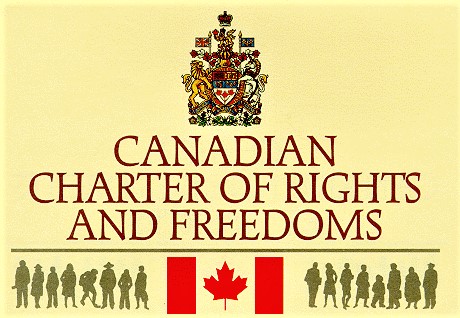
I’ve long upheld that view, too.  But recently, ‘midst the plethora of damaging information that inundates us, I’ve begun to consider the wisdom of somehow regulating the relentless spewing of falsehoods, particularly from online sources.  Our minds are being poisoned, and those of our more malleable young people.  There is nothing included in Canada’s Charter of Rights and Freedoms that protects free speech of a sort deemed anti-Semitic, anti-Christian, hate-filled, Islamophobic, life-threatening, misogynistic, racist, treasonous, or in any other manner harmful to our collective notion of peace, order, and good government.

Would intelligent regulation, impartially applied within the context of our national ethos, amount to unjustified censorship?

There are two other maxims I finish with.  The first is lightly-edited from Thomas Friedman, an American journalist: When widely followed public [sources] feel free to say anything, without any fact-checking, it becomes impossible for a democracy to think intelligently about big issues.

The second is a tenet often attributed to Edmund Burke (but now thought to be a distillation of ideas from John Stuart Mill): The only thing necessary for the triumph of evil is for good [people] to do nothing.

Fool me once…

The Great Pur-tenders

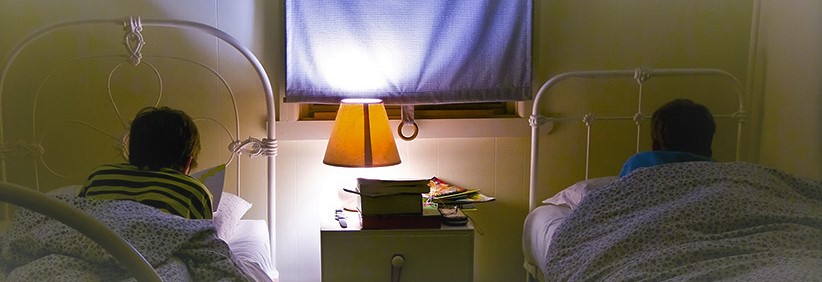
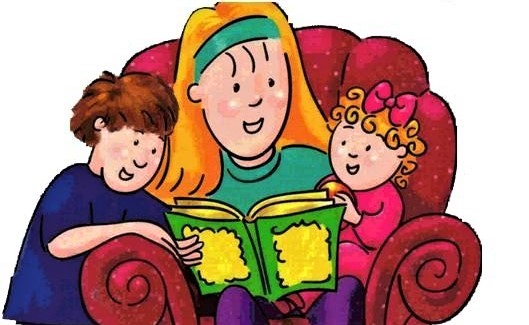
I see them reading in bed when I come in to say good night.

“Let’s play the pur-tend game, Gramps!” Jacob suggests, burrowing down under the covers, brown curls framing his sweet face, his book cast aside.

“It’s pre-tend,” I say.  “And sure, we can play one game before you guys go to sleep.  Three turns each.”

“You go first, Gramps,” Travis says, snuggling into his own bed, a smaller replica of his older brother, his book also forgotten.

“Okay,” I say, screwing my face into what I hope resembles a fearsome snarl.  “I’ll huff an’ I’ll puff ‘an’ I’ll blow your house down!”

“The big, bad wolf!” Travis shouts immediately.  At six years old, he is ever competitive and eager to beat Jacob, older by a year, to the answer.

“Right,” I smile.  “Your turn.”

“Okay…hmmm…”  After a moment, using his deepest voice, he says, “Fee, fie, foe, fum, I smell the blood…”

“The giant!” Jacob cries before he can finish.  “The giant at the top of Jack’s beanstalk.”

“You hafta let me finish, Jake,” Travis complains, indignant at being cut off.

“Don’t worry, Trav,” I say soothingly.  “If Jake can guess them early, it means you’re doing a good job, right?”

Travis smiles triumphantly, pleased by this revelation.  “Right!” he says.  “I’m a good pur-tender.”

“Pre-tender,” I say patiently.  “And now it’s Jake’s turn.”

Jacob has his riddle all ready.  “Mirror, mirror on the wall, who’s the fairest of them all?”

Travis doesn’t reply right away, furrowing his brow as he tries to come up with the answer, so I say, “Sleeping Beauty.”

“Wrong!” Jacob crows.  “I get another turn.”

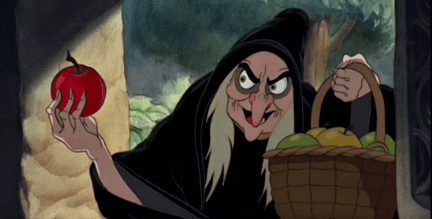
“Wait, wait, I know it now,” Travis argues.  “It’s the wicked, old queen who gave Sleeping Beauty the poison apple. She turned into an old hag!”

“Not fair!” Jacob pouts.  “Gramps gave it away!  He pur-tended to know the answer so you could get it.”

“Hey,” I protest, “that was my best guess.  And it’s pre-tended…which I didn’t do, by the way.”

“Okay, my turn,” Travis says, oblivious to my persistent corrections.  “You won’t get this one!   Wah…wah…what’s up, Doc?”

“Bugs Bunny!” Jacob says.  “That was easy!”

Crestfallen, Travis says, “Yeah, but only ‘cause I can’t stutter!”

“Bugs Bunny doesn’t stutter,” Jacob says.  “That’s Porky Pig.”

“Okay your turn, Jake,” I intercede quickly, heading off a potential squabble.  “This is your third round.  Make it a good one.”

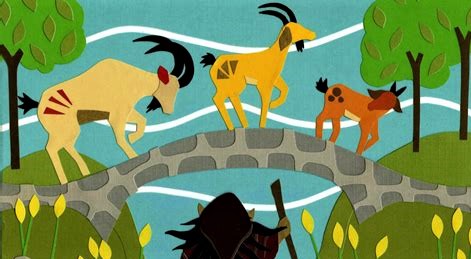
“Okay, here it is.”  In a harsh, threatening rasp, he bellows, “Who’s that clip-clopping across my bridge?”

“Billy Goats Gruff!” Travis exclaims.  “That’s the troll under the bridge!”

“Very good, Trav,” I say.  “Now it’s your third turn.  Can you stump us?”

Adopting a lilting, sing-song tone, he says, “Hi-ho, hi-ho, it’s off to work we go!”

“The seven dwarfs,” Jacob shouts, eager to beat me, even though he’s used his last turn.

“Which one?” Travis says, wanting to stump his brother.

“All of ‘em, right, Gramps?”

“I think so,” I say.  “They all went to work, unless Sleepy slept in.”  My intended joke falls on deaf ears.

“Okay, that’s three for me an’ Trav,” Jacob says.  “But you got two pur-tends left, Gramps.”

This is the standard pattern when we play, which usually allows me to end the game without complaints from them about having to go to sleep.

“I have two pre-tends left,“ I say, “so here’s my second one.”  In my best attempt at a high-pitched cackle, I croak, “Who’s that out there, eating my house?”

“The witch, the witch!” the boys yell in unison.  “Hansel an’ Gretel!”

“Right,” I smile.  “You guys are great at this game!”

“Yeah,” Travis agrees.  “We’re the great pur-tenders!”

Pre-tenders!” I say, for what feels like the umpteenth time.  “You guys are great pre-tenders.  You remind me of an old song, and I’m going to use it for my final riddle.  Then it’s bedtime.”

“Sing it, Gramps,” Jacob urges.  “Sing it for us.”

They’ll endure anything to avoid having to go to sleep, I figure, but I sing the song anyway, tailored just for them.

Oh-oh-oh, yes, you’re the great pre-te-en-ders,

All cozy and ready to sleep,

You’ve played your games and you’ve guessed the names,

And now you must lay down your heads,

Pre-tending you’ll start counting sheep!

“That’s Little Bo-Peep!” Jacob yells, excited to have an answer for the last one.  “She lost her sheep, right?”

“You got it,” I laugh, hugging him, feeling his fleeting kiss on my cheek.

When I bend to hug Travis, he whispers, “I love you, Gramps.  We don’t have to pur-tend ‘bout that.”

Softie that I am, I feel my eyes filling up.  And this time, I don’t attempt a correction.

Babysitting

As a sometimes-hapless father, one of the things I learned about parenthood is there really wasn’t a lot that was new.  Most of it was just the same stuff I experienced in childhood, happening to my own children with me in the role my father once occupied.

I took a certain delight in discovering that.  It was fun to watch as my daughters encountered many of the same situations I faced when I was at their ages.  And it was comforting when I saw them reacting to circumstances in much the way I had.  It reinforced the notion that the values and beliefs my wife and I espoused were being passed along to them.

The tough part, of course, was watching what happened on the few instances when they made an unwise decision and had to face the consequences of their mistake.  I often wondered if my parents had felt the same conflicting emotions as I did on those occasions.

The hardest thing of all was resisting the temptation to tell my daughters what to do in every situation, to provide them a shortcut to what I’d had to find out on my own, sometimes through bitter experience.  But I’d managed to convince myself that keeping quiet was often safest, that the process of figuring out the best way to proceed was more important for them than just being given the right answer.

“They learn best through discovery,” I would tell myself.  “Not by being instructed.”  And I made myself believe that.

But the difficulty with that stance was brought home to me on the occasion of my oldest daughter’s first babysitting job.  Watching her go out the door, climb into someone else’s car, and drive off without so much as a backward glance was a bit of a wrench.

I could still remember how it felt when I went out like that.  From the time I was thirteen until I finished high school, I regularly picked up extra money by babysitting little kids in the neighbourhood.

Mostly, it involved spending time with them before bed, then packing them off before the Saturday night hockey game started on TV.  After getting them settled, I’d sit on the sofa, munching peanuts, sipping a cola until the parents came home.

To me, babysitting seemed like such a simple job back then.  Nothing ever went wrong.  And even if it had, there was always the telephone with the prominently-displayed number where the parents could be reached.  And in a pinch, I knew I could always call my mother.  Babysitting was easy!

But when it came my daughter’s turn, I was no longer so sure of that.  Seeing my little girl go off to her own first job caused me some worry.  At thirteen, she seemed awfully young to me!

Mind you, she was certainly well-prepared.  She’d enrolled in a babysitting course with several of her friends in order to prepare herself for the role, and had proudly received her certificate as proof of her readiness.

During the next few months, she’d taken on a couple of pseudo-babysitting jobs, looking after young children while their parents were still in the house.  By all accounts, she was a competent, confident, and caring babysitter.

I remember watching her pack her tote bag before going out on that first job.  She put in a couple of storybooks she thought the youngsters might like, a deck of playing cards, two of her favourite stuffed toys, note paper and a pen, along with sundry other items.  The only thing she didn’t have by the time she left was any doubt about her ability!

Nevertheless, I worried.

I remember leaping for the phone (uncharacteristic of me!) when it rang a couple of hours later.  But there was no problem.  She’d called only to let us know the kids were in bed, sleeping peacefully, while she was listening to one of her portable cassette tapes, and reading.

When she arrived home around midnight, flushed with the success of her first assignment, elated at the windfall of cash she had earned, I breathed a sigh of relief.

“Babysitting’s easy, Dad,” she said, and I heard the echo of my own younger sentiments.  “There’s nothing to worry about.”

There hadn’t been for her, I guess, just as there hadn’t been for me when I was doing it.  But her experience drove home the fact that, for me as a father, those babysitting jobs weren’t so easy after all!  And when her sister joined the babysitting ranks a couple of years later, those same worries carried on apace.

But now, our lives have sallied through another cycle, and my daughters’ children are striking out—babysitting, weekend jobs, summer employment.  I don’t fret so much about my grandchildren, though—partly because I’m more removed from them as a grandpa than I was as father to my own girls, partly because they have good fathers of their own to do the worrying, and mostly because the five of them are so darned competent at everything they do.

“Babysitting’s easy, Dad,” my daughter had said.  And looking back on it now, on the whole parenting thing, I can almost convince myself she’s right.

Green Fishing

Each month, wordpress.com, the host of my blog, issues a writer’s prompt. This month’s prompt is the word GREEN, and this is my submission.

I’m often asked by old friends about my retirement to the green fields of Florida, and what I do to amuse myself all the livelong day.  Knowing me well, many of them assume I do a lot of fishing—because it’s true, there are few pleasures in life to compare to the solitary joys of fishing.  But only, of course, if it’s done properly.

It’s probably true that there are as many ways to fish as there are people who go fishing.  So the right way will be defined differently by each of us, meaning how I do it could be totally inappropriate for anyone else.

But as a younger man in the evergreen wilds of northern Ontario, my routine was perfection, itself—or almost, since there was one flaw, which I shall come to. 

As I remember, the proper fishing excursion would begin quite early in the morning, when all save the birds were still asleep.  I’d rise quietly, so quietly as to pass unnoticed by comrades on my way from the cabin to the water’s edge.  My weathered, green canoe, already laden with the necessary gear, would be launched smoothly into the mist-enshrouded lake.  My body would stretch exultantly as the paddle cut deeply through the water’s mirrored, green surface.  The pleasure had begun.

I’d be well offshore when the sun first brought the forest alight in lively greens, bouncing and dancing its way through the translucent leaves.  I’d watch as the mist lifted, a curtain rising before an entranced audience of one.

As the green water parted before my craft, bowing away in widening ripples to lap gently against the shore, the lilting lament of a loon might be all that broke the silence.  Great granite slabs, topped by lush, green bush and trees, plunged down into the lake, which tossed back their image from its glassy, green depths. 

Peace, rampant upon nature’s field.  The pleasure was full-known.

Alas, it would not last.  For to fish is to interrupt the sylvan sequence of morning life, to disturb the natural ebb and flow.  Yet, not to fish would have denied the ostensible purpose of the visit.

And therein lay the flaw in my perfect way to fish.  The act would have been almost a sacrilege in nature’s green cathedral of calm, and devoid of any joy.  All the pleasure would have been shattered by my clumsy intrusions.

Thus, I had to adapt in order to come to grips with the incongruity of being a fisherman who doesn’t like to fish.  My battered, green tackle box always contained a book or two—a novel, perhaps, or a favourite book of verse.  It held my harmonica, that ‘one-man band’ with which I could while away countless hours.  And there was always a camera, loaded and ready.

In short, I still went fishing, but I did not fish.  When I reached my special, green-encircled fishing cove, I’d cease paddling, sink back in the bottom of the canoe, and just drift ‘til it was time to go back.

Metallic-green waterbugs would skitter their erratic dash across the water, an occasional, green-and-blue-bejewelled fish would jump with a splash.  And whenever a kingfisher darted down to stand on the prow of the canoe, I would know I’d become a piece of the peaceful scene I was observing—as one with my surroundings, at once apart and a part of them.

There were the inevitable questions from the greenhorns, of course, when I’d return from each excursion.  “Where’d you fish?  What were you using?  Did you catch anything?”

“Catch and release,” I’d explain modestly. Or I’d say, “Nothing was biting, just a few nibbles.”

In that respect, I guess, I was like a true fisherman.  I would never tell anyone where I’d been when I was fishing.

That would have spoiled everything.

Until It Isn’t

They were twenty years old, two houses across the road from one another in the Florida golf community where my wife and I live for six months of the year.  Identical models—two bedrooms, two bathrooms, den, double-car garage, large screened-in lanai—the stucco walls of one were painted mist-green, the other taupe.

I was surprised one day to see the green house completely shrouded in plastic sheeting, two large hoses snaking from a truck parked in the driveway to the house.  A neighbour told me the owners had discovered termites and had promptly called in the exterminators to ‘tent’ the house for fumigation.  It was a week or more before the residents could move back in, by which time we had gone back north.

Six months later, after arriving back in the community, I drove down the same street, only to discover the taupe house was completely gone.  All that was left was a starkly-white concrete pad between the adjacent houses, the paving-stone driveway leading to where the garage had been.  Weeds were sprouting between the pavers, and the scene was sadly incongruous, like a missing tooth in an otherwise-gorgeous smile.

The same neighbour told me that during the summer, the roof over the spare bedroom had collapsed.  No one was home at the time, fortunately, but an inspection of the house led to its being deemed inhabitable.

“Termites!” the neighbour said.  “All through the place.  Little buggers had likely been gnawin’ away for years, accordin’ to the insurance adjuster.  When the studs couldn’t support the roof any longer, down she came.”

I had long known of the perils of termite infestation, and was conscientious about looking for signs in our own house.  But they are hard to find—windows or doors that jam unexpectedly, mud tubes around the outside foundation, tiny pinholes in the painted drywall indoors, small piles of sawdust.  An awareness of the prospective danger is needed, and diligence.

The neighbour shrugged when I asked him if the owners were planning to rebuild their home. “Eventually, I guess, if’n they get the insurance money to cover it.  Otherwise, somebody else will prob’ly buy ‘em out an’ put up a brand new place.”

It seemed so unfair to me that those two lovely homes, both of which had steadfastly withstood numerous external threats for years—blistering sun, torrential rain, flooding, hurricane-force winds—had been attacked by stealth from within.  And only one had been saved, perhaps providentially, while the other had been destroyed.

I’ve been reflecting on that lately, considering how the scenario might be analogous to the state of our democratic form of governance.  In both Canada and the U.S., most of us appreciate the freedoms we enjoy—although some of us might too often take them for granted. But fewer of us, it seems, recognize the responsibilities that accompany those freedoms.

A partial list of such rights might include the right to elect those who govern us, to assemble peacefully, to speak freely, to enjoy an unencumbered press, to worship according to our conscience, to receive equal treatment under the law, and to be safe in the privacy of our homes.

Alas, in both countries, our history shows that not everyone has benefited from an equal application of those rights, although as Martin Luther King, Jr. declared, “the arc of the moral universe is long, but it bends toward justice.”

Our two democracies have, so far, successfully repelled all attacks on us launched directly or indirectly by malign forces from abroad.  We are aware of, and perhaps readying to defend ourselves against, future existential threats like climate change and pandemic diseases.  Despite our individual differences, we have always rallied together to defeat external foes.

But what of the stealthy foe from inside the house, the metaphorical termite gnawing away at the foundations of our democracy?  Are we ready for that fight?

Even in hitherto strong democracies such as ours, there seems to be a growing threat of authoritarianism, a drift toward mis- and disinformation, a widening chasm between people of different political persuasions, a greater tendency to hurl insult and vitriol at one another, rather than listening to each other’s respective points of view.

Too many of us appear to be increasingly adopting and promulgating viewpoints that reflect our preconceived notions—confirmation bias—instead of keeping our minds open to alternative opinions that might modify our thinking and help us to learn and grow—and most importantly, to understand one another better.

So many are becoming increasingly tribal in our affiliations, whether based on race, religion, politics, or culture.  We are growing ever more selfish about, and protective of, what we deem our rights, too often without an acceptance of the responsibilities we bear in the exercise of those rights.  Too many of us seem willing to violate the rights of others in pursuit of our own self-centred aims.

For too many of us, the distinction between fact and falsehood, between integrity and mendacity, has become blurred to the point where we begin to declare the only truth is ‘my truth’.

The choice our countries are facing, in my opinion, is threefold:  1) we blithely allow ourselves to be attacked from within by those who would dissuade us from our most precious assumptions about democratic governance; 2) we choose to ignore, despite the signs, that the attack is occurring; or 3) we acknowledge the attack and take appropriate measures to deal with it.  

As Abraham Lincoln said in 1858, drawing from the Bible, “A house divided against itself cannot stand.”  The enemy from within is always the more dangerous, and the termites certainly proved the truth of that in the destruction of the taupe house in my community.  I cannot imagine that the owners of those two houses blithely allowed such an attack, but it is clear the owners of the green house took effective action as soon as they became aware of the problem.

With similar due diligence and swift measures by its owners, the collapse of the taupe house could have been stopped.  But it was not.

And in the same way, the insidious attack on our democratic form of governance from within is preventable. 

Until it isn’t.

April Cometh

Another April is almost upon us.  I have always looked forward to its coming, its showers sweet, its promise of spring—only to be disappointed all too often by its refusal to let go of winter.  I wonder which we will get this year, the beautiful warm month of soft showers, or the cruel bringer of winter’s final ravages.

Poetry is one means I use to express my anticipation of April, sometimes optimistic, full of hope, and other times doubtful and despairing.  And I find the Japanese haiku form especially appropriate—three lines of five, seven, and five syllables, respectively—to convey this conflicted state of mind.

Here are five haiku dealing with April, each with a picture in harmony with my outlook.  I leave it to you, the reader, to decide which of my moods is being conveyed by each—

peekaboo
sun plays peekaboo,
dancing 'cross the wint'ry lake---
heralding the spring
teasing
april is cruel---
so the poet says---teasing
us falsely with spring
spring
joining in our walk,
tentatively, yet warmly---
sweet spring has returned
april fool
april can't fool me,
that false harbinger of spring---
may is the gateway
in the rain
dancing in the rain,
neither of us wet or cold---
warmly wrapped in love

May the spring blossom anew for all of you…..in April, or whenever it arrives!

I Won’t Go Back Again

Each month, wordpress.com, the host of my blog, issues a writer’s prompt. This month’s prompt is the word BRIDGE, and this is my submission.

On the day my wife and I visited Venice, the city was flooding—a precursor, I fear, to what is to come.  Some of the streets alongside the canals were underwater, deep enough that we couldn’t venture into them without rubber boots.

In the Piazza San Marco, the main square of the city, elevated boardwalks had been erected to allow tourists to pass from one side to the other.  Outdoor cafes, their tables waiting for customers, were untended because they sat in several inches of water.  A few children romped and splashed in the accidental lake that covered much of the square, their squeals of delight piercing the general hubbub.

I wondered, sadly, how much longer tourists like us would be able to visit the legendary city.

We made a point of visiting the famed Rialto Bridge—to say we’d been there, of course, but also because our youngest daughter accepted a marriage proposal on that very spot several years ago.  We found it quite romantic, despite the crowds.

Until, suddenly, it wasn’t!

I had stopped to take a couple of pictures of the staircase leading from the bridge to the street below, when I was roughly jostled from behind.  I almost dropped my cellphone.

“Outta the way!” a voice growled.  “You’re blocking the way!”

The speaker, about my age, held the hand of a little girl, perhaps six or seven, and they started down the steps past me.

“I’m taking pictures,” I said.  “You should watch where you’re going.”

“What did you say?” he demanded, turning back, his English accented but fluent.  And angry.  “You shouldn’t even be here!” he exclaimed.  “You tourists are spoiling our city, all you people!”  He was quite excited by then.

“Why don’t you calm down?” I said, wondering where this was headed.  “Before you frighten your granddaughter.”

“I’ll calm down when you are gone,” he said, still looking up at me.

There was a momentary pause as a flurry of thoughts flashed through my mind.

Who is this guy?

What’d I do?

What if he assaults me?

And what about the little girl?  What if she gets hurt?

And what if the police come?

How do I get into these messes?

The man, apparently having second thoughts of his own, turned away abruptly, and started down the stairs, the little girl in tow.  “We can’t even walk around our own city anymore,” he complained loudly, one arm gesticulating.  “All you people, you come here, you block the streets, you ruin everything.  You should stay home, stay wherever you come from…”

His voice faded away, and within seconds he and the little girl were swallowed up in the crowded street, lost to sight.  No one else seemed to have noticed the altercation.

I was shaken, of course, although convinced I had done nothing wrong.  After a few minutes, we retreated to the bridge to collect ourselves before resuming our walking tour of the remarkable city.

Later that evening, reflecting over a glass of wine, I wondered if the man’s anger was not so much with me, as with the fact that I was but one of hordes of tourists overrunning his city, even as the marshy land it sits on sinks into the sea.  In fact, more than 30 million people visit Venice each year, a city with a population of approximately 50,000 souls.

In his anger, I heard echoes of complaints from people in nations all over the world—people opposed to the influx of immigrants and asylum-seekers to their countries, people afraid their jobs will be taken, their culture destroyed, their language lost.  Their fear is real and their resentment palpable.  Politicians cater to it.

I’m awfully glad we visited Venice when we did, and I’m happy we stood on the Rialto Bridge where our daughter’s beau proposed to her.  It is an indelible memory for us both. 

But I won’t go back again.

Didn’t Miss Nothin’

As a writer, I’ve long been fascinated by the tantalizing ‘What if…?’ question we sometimes ask, as it pertains to history.  How would the world have unfolded if certain noteworthy events had happened differently?  The question can lead us to propose all manner of delicious theories, both fact- and conspiracy-based, and as a lifelong history buff, I love it.

A recent prompt from my Florida writers’ group asked us to consider this very question.  Here is the piece I came up with, Didn’t Miss Nothin’, focused on an alternative reality for something that happened almost sixty years ago.

The prospective assassin opened the window wide, felt the noon heat wash over him.  Although he knew it was ready, he checked the rifle yet again, more by feel than actually looking at it.  The gun was as familiar in his hands as the contours of his wife’s back.  Concealed behind a pile of cardboard boxes he’d stacked in front of the window that morning, he realized he was remarkably calm.  Only a slight tremor in his fingers betrayed a sense of excitement, or maybe fear.

Nevertheless, he was resolute.

Outside the building, six storeys below his perch on the southeast corner, a sizable, noisy throng had gathered to await the motorcade.  Lined along both sides of Elm Street, the crowd comprised men, women, and children, most of them eager to see their President, whether or not they liked him or his politics.

The sightline the determined assassin had chosen would place him squarely behind the presidential limousine after it turned off Houston Street and slow-rolled away from him, angling towards the triple underpass.  He settled on the thin cushions he’d placed on the hardwood floor, watching impatiently for the motorcade’s arrival.

Meantime, out of sight of the assassin, another crowd was gathering near the confluence of Elm, Main, and Commerce Streets where they ran parallel beneath the underpass.  Roughly forty-five men in number, none of them armed, they were deeply disaffected by the President’s policies and determined to interrupt his presence in the city.  Their plan was simple—sit down on the pavement in front of the underpass and peacefully block Elm Street completely. 

They were in place, some sitting, some still standing, by 12:20 pm.  The street had been closed earlier by city police in anticipation of the motorcade, so no traffic was affected by their presence.  The first vehicles they expected to see would be the motorcycle outriders leading the presidential procession.

“Five minutes out!” one of the organizers yelled, holding a CB radio to his ear.  “Get ready, boys!  She’s happenin’!”

Another radio was crackling in the ear of another man at the same time, one of the Secret Service agents riding in the lead escort vehicle behind the motorcycles.  After a moment, he tapped the shoulder of the driver.  “Change of route,” he snapped.  “Buncha yokels got Elm blocked off at the underpass, so we’re stayin’ on Houston.  We can pick up the Stemmons Freeway a coupla blocks further on.” 

As the driver nodded understanding, the agent radioed the change to the cars following behind.  When he finished, the driver said, “This’ll get us to the Trade Mart a few minutes earlier.  Might wanta let them know, too.”

In the presidential limousine, the Governor turned in his jump-seat to tell the President about the protesters and the change in plan.  The President acknowledged the information, then turned to his wife. 

“Too bad.  The crowds have been much bettah than we thought they’d be.  But at least we’ll get to the Trade Maht soonah, out of this heat.”

The First Lady offered a fetching smile, still clutching the bouquet of blood-red roses she’d been given at the airport.

The assassin saw the flashing lights of the motorcade as it turned right off Main Street onto Houston a block away.  He checked the rifle one last time, then hoisted it to his shoulder, careful not to stick the barrel through the window until the procession had turned left onto Elm.  He waited….waited…

A loud shout of disappointment swelled from the crowd on the street below.  The startled assassin quickly realized the procession had continued rolling north on Houston Street, past the building, irretrievably gone from sight.  Pounding his knee with his fist a number of times, he mouthed several silent curses.  Above the cries from the disappointed crowd ringing Dealey Plaza, he heard ragged cheers from somewhere near the underpass.

Knowing he had to hide the rifle before his co-workers re-entered the building, the frustrated assassin jogged to his locker, where he stowed it safely away.  Then he took the stairs down to the second-floor lunchroom.  He had a bottle of soda in his hand when the first employees drifted back in.

“What happened?” the foiled assassin asked one of the men.  A simple shrug was the only answer.

A second man shouted, “Hey, Lee, the yella belly never showed, jus’ like I figgered.  Jus’ tucked tail an’ ran!  You didn’t miss nothin’!”

Lock ‘Em Up? Or Open ‘Em Up?

Some readers of this blog, knowing I was a Director of Education in two Ontario school districts prior to retirement, have asked if I would offer an opinion on whether schools should be locked down during this Covid pandemic, or opened up.  Is the mental health of children being jeopardized by their continued absence from school?  Or is that danger outweighed by the chance they will contract a Covid variant and spread it to others in their families and neighbourhoods?

They ask what I would do if I were still Director of Education.

It’s complicated, I tell them.  On the one hand, there is no doubt that the benefits of in-person learning far outweigh those of online instruction carried out remotely, although online learning does have a place.  And that speaks to opening up schools.

But the risks inherent in bringing children into congregant settings that number more than the limits imposed by the government for other venues—for example, a maximum of five or ten for indoor gatherings—are serious enough to give us pause.

As the once-upon-a-time CEO of those two school districts (unnamed here because I no longer speak for them), reporting to an elected board of Trustees, my overarching duty was to ensure the health and welfare of all students, staff, and members of the public who entered our buildings.  There were countless other responsibilities, of course, prescribed by the Education Act and its concomitant Regulations, and by those local school boards, but none so important as the safety of children.

So what would I do if I were still Director?  I would advocate strongly for the opening of schools and the return of children to in-person learning, but only—and this is the key point—when those schools are safe for their return.

What would make them safe?  To answer that, I would rely upon the advice and recommendations of experts in the field of epidemiology, virology, child psychology, and public health.  But because such people are not always in perfect agreement, I would have to exercise my own professional judgment to synthesize their thoughts and formulate a course of action.

Here’s what I know—or at least what I would rely upon.  In order to be safe for learning, I would ensure classrooms had adequate ventilation, perhaps HEPA filters in each one if necessary.  Alas, most of the schools in the two districts where I worked did not measure up, so that would present a major problem right away.

I would insist that anyone present in our buildings be fully vaccinated, in accordance with the guidelines respecting age and intervals between doses.  No vax, no entry (subject to bona fide medical exemption).  And everyone would wear an approved mask, and keep a recommended distance from each other—made possible by a restructuring of the physical classroom spaces.  Learning cohorts would be half the number they are now.

Testing and screening at prescribed intervals would be required, along with contact-tracing whenever someone came down with Covid.  Exclusion from school would be mandatory for anyone who became ill, subject to the public health guidelines around isolation and quarantine.  That is no different than procedures in place presently for children who come down with mumps or measles, for example—diseases whose frequency is greatly reduced now, of course, by mandatory vaccinations.  In fact, any child who has not received the vaccinations required by provincial law is already excluded from attending school.  My plan would add the Covid vaccination to that list.

Naturally, there would be costs associated with implementing these measures, both societal and financial.  How would local boards enforce such attendance restrictions against people who defy them, who declare (perhaps with some justification) that, as taxpayers, they have the right to have their children in school regardless of vaccination status?  How would those boards pay for the structural improvements needed in classrooms and schools?  How would they pay for the increased number of teachers and education workers required?

During the early years of my employ as Director, local school boards had taxing authority.  Each year, the property tax bills issued to ratepayers by local municipalities included an education component, through which boards could supplement the grant money they received from the provincial Ministry of Education in order to look after local initiatives.  So ideally, my plan would be financed by a local levy aimed at bringing about the necessary improvements to ensure the welfare of all who enter our buildings.

For better or worse, twenty-five years ago, the Harris Conservative government took away that taxing authority, leaving local boards reliant on annual per-pupil grants from the Ministry, the amounts of which were (and are) largely determined by formulas and algorithms overseen by Ministry staff in Toronto. The education priorities and needs that had heretofore been determined by the residents of local communities across the province were thus greatly diminished, not in importance, but in realization.

Because they no longer pay the piper, as it were, local boards can no longer call the tune.

My plan to open schools up, therefore, would be severely constricted today by a lack of money to bring about the required improvements in safety necessary for a secure return to school.  Nevertheless, it is what I would be advocating to any who would listen.  The billions of dollars being allocated to the building of a new 400-series highway (which, I assume, is based on somebody’s economic advice) would surely go some distance to making our schools safe for the return of students if re-allocated for that purpose. 

So I ask myself, what is the priority?  More highways or safe schools?  To a school district Director, the answer is evident.

As you might expect, the authority of a Director of Education is limited—both back when I occupied the position and certainly now—so if I were still on the job, I would be constrained from implementing my plan despite its common-sense foundation, prevented from pushing ahead on my own, even with the blessing of the local board employing me.

Nevertheless, this is what I would do if so empowered—not what I could do under present conditions.

Of course there are many negative implications for children, parents, employers, and the broader community to keeping schools closed—interrupted learning, social isolation, gaps in child-care, diminished cadre of workers, need for and costs of paid sick-leave, unintended strains on the public health system—which many of us are aware of.  And that’s why the whole question is complicated.

But I also know this.  It is impossible to alleviate the mental health problems of children and adults if they have died.  And it’s going to prove immensely stressful and costly to deal with the effects of long-Covid, the extent of which is only just beginning to be understood—fatigue, shortness of breath, brain fog, chronic sleep disorders, fevers, anxiety and depression, earlier-onset dementia, to name some.  We need to err on the side of caution with respect to the health of our populace.

When faced with difficult decisions as Director of Education (such as whether or not to permanently close a school, or to dismiss an unsatisfactory employee), I always tried to err, where possible, on the side of the children in our care.  What was the solution that would have the optimal impact on their long-term welfare?

And that’s how I would decide the schools issue now, insofar as I would have the authority to do so.  Would I lock ‘em up, or open ‘em up?

I strongly advocate for the opening of schools and the return of children to in-person learning, but only—and this is the key point—when those schools are safe for their return.

Another One

Another year recently opened up before us, the two-thousand-and-twenty-second in the Common Era (CE).  It may be annotated in two ways—2022 CE or, as has been more common, AD 2022 (from the Latin Anno Domini, ‘in the year of the Lord’).  Strangely enough, the AD nomenclature was introduced retroactively in year 525 of the Common Era, more than half a millennium after it began at the end of the BC (Before Christ) period.  That period is also referred to now as BCE (Before Common Era).

The CE and BCE designations are more inclusive additions to accommodate the religious diversity in our society, although it is still the Christian calendar that is almost universally used globally.  The current version of that is the Gregorian calendar, introduced in 1582 CE by Pope Gregory XIII, modifying the Julian calendar which had come into effect around 45 BCE.

There are approximately forty other calendars in use around the world today, mostly used to designate holidays associated with the culture or religion from which they emanated.  A few of the more notable ones include the Buddhist, the Chinese, the Hebrew, and the Islamic.  

In this Gregorian calendar year of AD 2022, those calendars show their dates in accordance with the time of their origin:  Buddhist, 2564; Chinese, 4720; Hebrew, 5784; and Islamic, 1444.

The dawn of AD 2022 is the seventy-eighth such occasion I’ve been around for, and marked the umpty-umptieth year in a row that I did not make any new year’s resolutions.  Ironically, that’s because at some previous and now fortunately-forgotten new year’s celebration, I made a resolution never again to make new year’s resolutions.

More ironically, that’s the only resolution I have never ended up breaking.  Not yet, anyway.

Still and all, I do ponder what this new year might have in store, not just for me, but for all of us.  Most urgently, I suppose, I wonder if the Covid pandemic with its seemingly-endless variants will finally ease its relentless onslaught.  And will the good fortune we in the wealthier nations of the world enjoy in our fight against it be shared effectively with the less-fortunate nations, so this pandemic disease won’t continue to find a viral breeding-ground among their inhabitants.

Will the political unrest in many of the so-called democracies of the world lead any of them into anarchy, and from there into authoritarian rule?  Is democracy on the chopping-block?  Is the burgeoning civil divide among the citizens of individual nations reconcilable, or will those people find themselves doomed to living with ever-increasing strife and turmoil?

Is the rapid growth of the stark economic inequalities we see among the citizenry of even more prosperous nations bound to continue?  Will the rich continue to get richer, while the poorer among us languish?  Will we prove able to move from proclaiming, I’m alright, Jack!  I got mine! to Let’s share the bounty.  There’s lots to go round.?  Will we help each other in a true, collective fashion, or will we turn away from each other, crying and decrying Socialism!

I wonder if, in AD 2022, empathy and inclusivity will begin to spread among the peoples of the world with respect to the acceptance of others of different race, gender, religious beliefs, and sexual orientation.  Or will narrow, ideological dogma continue to triumph over egalitarianism?

Will ongoing and increasing major climate changes impel even greater numbers of people living in threatened environs into forced migration to avoid environmental disaster?  And where will they go?  And will they be welcomed or turned away?  To what extent will nationalistic, political borders trump human compassion?

Not being a crystal-ball-gazer, I have no answers to these questions, nor sure-fire solutions to the problems.  I suspect no one else does, either, although many will profess to.  The answers will manifest themselves over time, as we apprehensively watch the unfolding of 2022 CE.

I do have opinions and hoped-for outcomes, however, and I expect to continue to write about these in this blog for as long as I’m able.  That’s not to be considered a new year’s resolution, though—I don’t make those anymore, remember?

But it’s a promise.