The Lonely, Silvery Rain

The thirteenth novel in my Maggie Keiller/Derek Sloan crime series will be published later this year, titled The Lonely, Silvery Rain. Here is an excerpted chapter from that book, slightly modified for this blog-post. If you have read previous books in the series, you will recognize the two characters here.

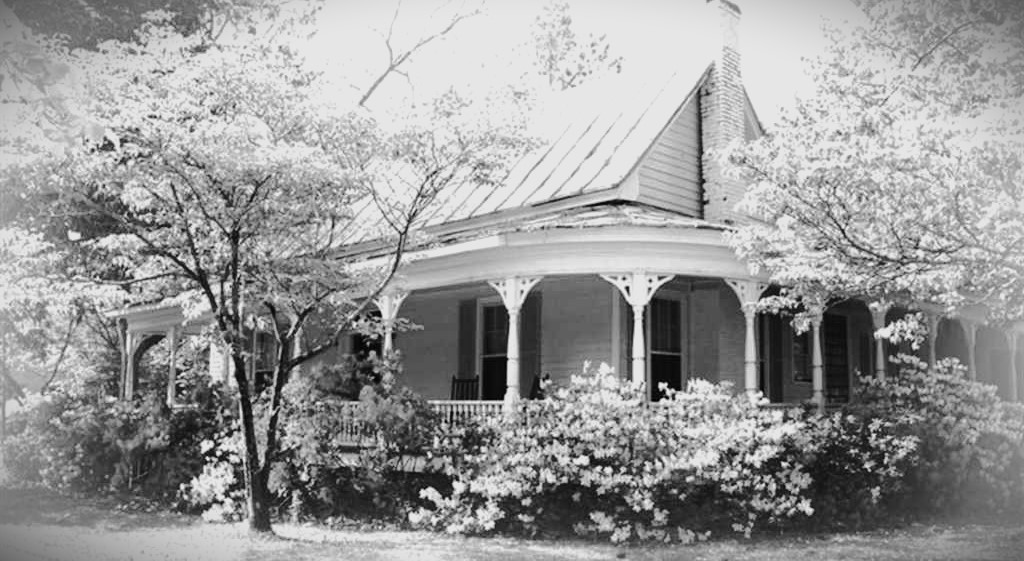
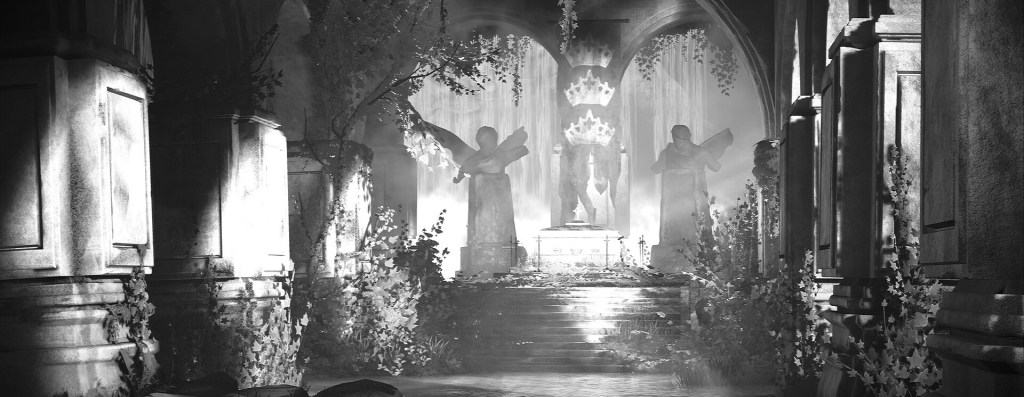
When Old Scratch, as Senator Nicholl disdainfully referred to death, came calling for the final time on a warm, drizzly, late-morning in October, he found Nicholl dozing in his favourite rocking chair on the wide, open-air verandah of his century home.  The rain was thrumming on the shingled roof, dripping off the overhanging eaves, spilling like a shimmering, crystalline waterfall to the gardens below.

Before his spectral visitor crept in, Nicholl had been engrossed in a pleasant dream, delivering a stem-winder of a stump speech on another political campaign trail, surrounded by a throng of friends and constituents in someone’s farmyard.  Balancing on a rickety, upside-down milking-bucket, he stood above everyone, so even those at the far reaches of the crowd could see him.  He felt he’d never been in finer voice until, gearing up for the customary, full-throated culmination to his peroration, he discovered he’d forgotten what he was about to say.  The shock was profound.

Groping vainly in his dream to remember the remarks eluding him, his mouth continued moving, though no sound emerged.  Then, without warning, the bottom abruptly dropped away beneath him, as if someone had kicked the bucket out from under his feet.  The world whirled and spun dizzyingly as he toppled, flinging his arms out in a futile attempt to catch himself.  Despite the confusion and fear engulfing him, however, he still tried to finish, a campaigner to the end.

Wait!  My speech!  I’m purt’ near done…

But the dream turned nightmarish, and a misty, reddish haze descended across his eyes, and then…and then…

Senator Milford Nicholl, the simple, hometown boy-made-good, eased back in his rocking chair, sighed a fare-thee-well, and went to his eternal rest.

The many well-wishers who stopped in later that afternoon found Gloria, his wife of sixty years, shaken but composed, unbelieving but accepting, sad but relieved that her husband’s travails were over.

“He knew he was on borrowed time,” she told them softly, “and I could tell he knew his days were winding down.  A wife always knows these things…”  Her throat filled up, and she stopped to wipe away tears. 

“Just a few days ago,” she whispered after a moment or two, summoning a small smile, “we talked about the possibility of one of us dying.  And you know Milly’s sense of humour.  He said something to the effect that he wasn’t afraid to die, he just didn’t want to be there when it happens.”  

The mourners laughed at that, and a few shared more of the homespun witticisms they remembered flowing from Nicholl’s febrile mind.  Eventually, Gloria told them she really would like time alone.  “I’ll pray a little,” she said, “cry a little, laugh a little.  There’ll be time enough later to reminisce some more.  And I’ll call you if I need to, I promise.”

As everyone took their leave, Gloria waved from the verandah, then sat and rocked slowly in her husband’s favourite chair, his abandoned walker standing forsaken beside it.  The rain was gentler now, but its sibilant pit-a-patting on the roof was still audible, its runoff still dripping off the eaves into the lush gardens below, covered by sodden, autumn-hued leaves.  The unseasonably warm breeze caressed her, enveloping her in a blanket of solace.

She already understood she’d be missing Milly constantly from now on—his irrepressibility, his cornball turns-of-phrase, his devotion to the community—and most of all, his love for her, his very presence.  She counted herself lucky to have been his partner and to have known such happiness.

Her grief over losing him would linger long, of course.  She knew mourning is not something that can be quantified or measured by time.  But at this particular moment, she was at peace with his passing, attuned to the happy memories she would cherish forever, resigned to the loneliness she knew would envelop her from time to time.  They were all part of everyone’s journey through life.

But for right now, she was snuggled in Milly’s chair, at one with the inevitable rhythms of life and death, at one with herself, her soul in harmony with the comforting cadence of the rain.

The lonely, silvery rain.

Love, Through Their Eyes

The weekly prompt from my Florida writers group was to write a piece about seeing things ‘through their eyes’, and this is my offering—

Two short poems, each exquisitely written, capture exactly—exactly—how I feel about this brief moment in time I know as my life, about the relationship I have with the love of my life, and about what will happen when I am gone.

The first, When You Are Old, by William Butler Yeats, the greatest of the Irish poets, portrays a woman through the eyes of her departed husband, as he speaks of his love for her, even beyond death, and where she might find him—

When you are old and gray and full of sleep
And nodding by the fire, take down this book
And slowly read, and dream, of the soft look
Your eyes had once, and of their shadows deep.

How many loved your moments of glad grace,
And loved your beauty with love false or true,
But one man loved the pilgrim soul in you,
And loved the sorrows of your changing face.

And bending down beside the glowing bars,
Murmur, a little sadly, how love fled
And paced atop the mountains overhead,
And hid his face amid a crowd of stars
.

I find that sentiment so uplifting, so reassuring, that love, triumphant over death, is waiting ‘midst a crowd of stars.

I no longer believe, as I did as a child, in life eternal, in the idea of earth and heaven, the now and hereafter.  Rather, I believe the life-force presently empowering me—what I might call a soul—is but a fragment of the energy that fuels our expanding universe, a spark of light presently encased in my mortal being.  And when I, the shell that hosts the spark, will have finished my course, when I have expired, that life-force animating me will simply rejoin the universe.  It will be as if I am carrying on beyond death, but with no memory of my life—just as I have no memory now of what came before my birth.

The mortal I shall die, but my life-force will not, for if it did, the universe would shrink at the loss of that fragment of energy.  Science tells us, however, the universe is expanding, not shrinking, so it must be that no energy is ever lost.

But where will my immortal life-force go, and in what form, I wonder?  And what of my love whom I will have left behind?  Happily, I find an answer to these questions in the second of the poems I number among my favourites.  Written by David Jones, a Liverpool poet, from his collection titled Love and Space Dust, I find it moving and profound—

And in the end
I will seek you
Out amongst the stars.

The space dust
Of me will
Whisper ”I love you”
Into the infinity
Of the universe.

So, no life eternal, but something better—love eternal.  According to these two poets, as seen through their eyes, the pilgrim soul who shares this life with me will find my spark of energy—my soul—waiting somewhere in the stars for her, calling I love you into the void until she hears me.

And I choose to believe she will hear me.

David Jones: https://www.goodreads.com/author/quotes/5241391.David_Jones

W. B. Yeats: https://www.poetryfoundation.org/poets/william-butler-yeats

Round Tables

It is no mean feat for writers to create an imaginary world that readers will come to see as true and historically accurate.  Fashioning something from one’s imagination that resonates with readers, a tale that merges with their perception of reality, is not easily done.

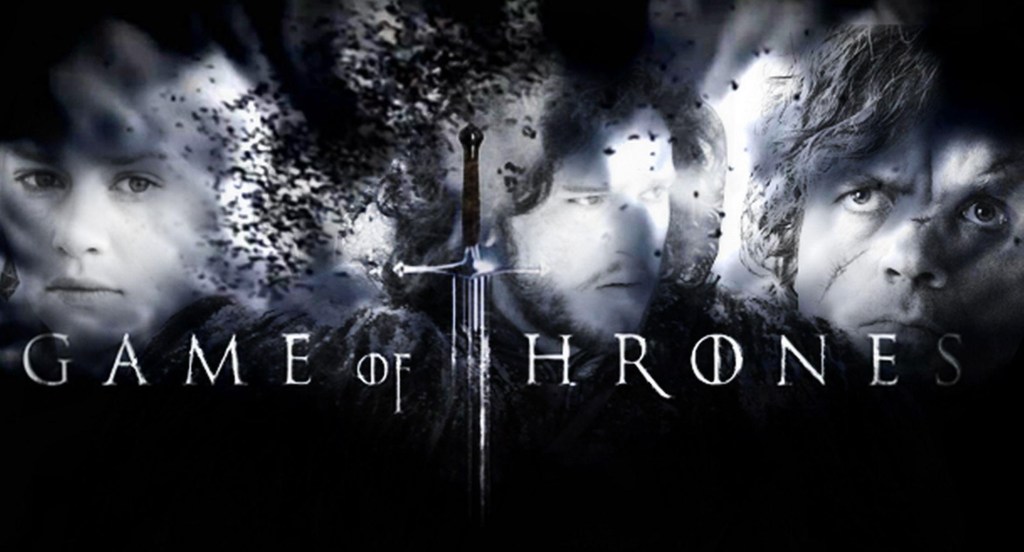
Two relatively recent examples of such efforts are Tolkien’s Lord of the Rings and Martin’s Game of Thrones, both of which have convinced many an avid reader of their legitimacy.

As a young boy at the dawn of the 1950s, it was the magical tales of King Arthur and the Knights of the Round Table that captured my fancy.  I first read them in The Boy’s King Arthur, a version of Malory’s Le Morte d’Arthur, which abridged and bowdlerized items from the original text, sexual and otherwise, that were deemed unsuitable for children.

I was completely captivated by the legends of the Lady of the Lake, Arthur’s conception at Tintagel, his seizing of the sword Excalibur, his alliance with the magician Merlin, his ultimate battle with Mordred, and his laying to rest in Avalon.  Most intriguing of all was the notion that he had not died, that he was merely sleeping, that he would rise again, the ‘once and future king’.

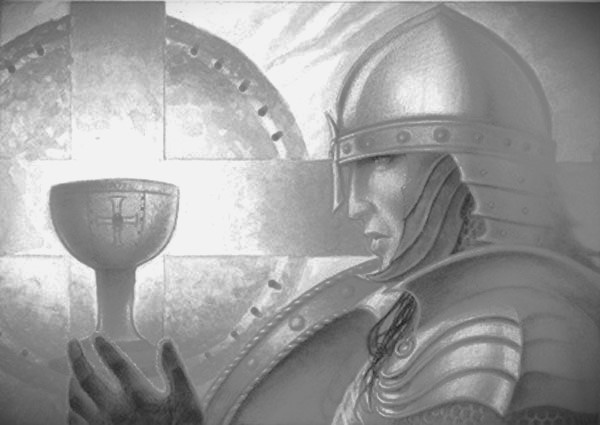
I eventually graduated to the reading of unexpurgated versions, but in the beginning I fancied myself as many of those brave warriors:  Lancelot, until I learned of his treachery with Arthur’s queen, Guinevere; Gawain, who bravely faced the Green Knight in a chivalric romance told in Middle-English alliterative verse; Perceval and Tristram, whose feats of derring-do enthralled me; and of course, Galahad, whose sacred quest for the Holy Grail seemed the most inspired.

I subsequently read about that storied quest in other works, and learned from more than one that two phrases in French—san graal and sang royale, pronounced almost identically—translate to two different things: Holy Grail and royal blood.  This assertion expostulated the theory that following Christ’s death, his wife and children fled to France, where his bloodline continued anonymously, eventually merging with the Merovingian dynasty, then the Carolingian dynasty, all the way to William the Conqueror—who, in a tidy completing of the loop, came to rule over Arthur’s ancient kingdom.

True or not, the story affirmed for me that the greatest Arthurian quest came to fruition in the merging of these two fanciful tales, one religious, the other mythical.  And for a long time in my youth, I believed.

The lasting impression I took from this childhood reading, however, was the concept of the Round Table.  In its simplest form, I thought it presented an ideal way of governing or managing a kingdom, an empire…or any enterprise.  Everyone sat around the circular table, each facing everyone else, and all had an equal say in the decisions that were made—all but one, of course.  The King, by virtue of his position, reserved the right of veto.

In such a setting, the objective of any group’s deliberations is always to achieve consensus on matters discussed, the theory being that everyone will have a greater commitment to decisions made when they feel they’ve contributed to them.  The process involves give and take, it usually means no one gets all of what they want, but it allows everyone to get some of what they hoped for.  Some might call that win/win.

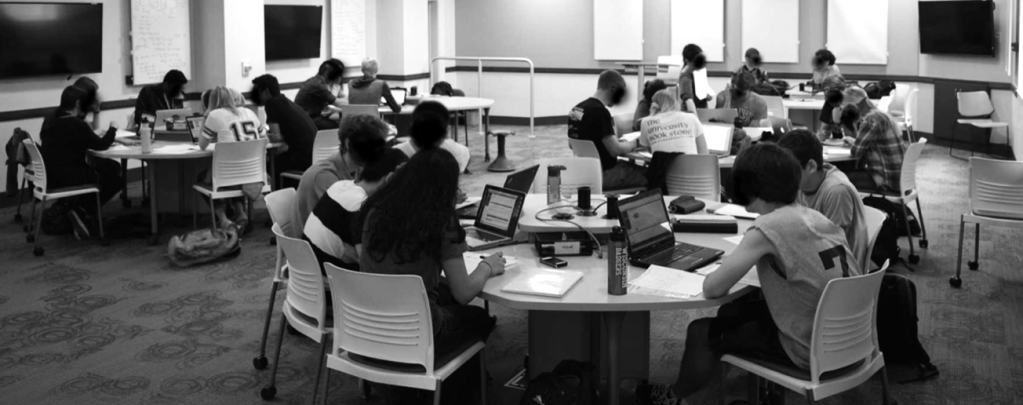
As a young teacher in the mid-1960s, chock-full of enthusiasm for and faith in the teaching/learning paradigm, I furnished my classroom with circular tables, not individual desks.  My thirty-plus students sat in groups of five or six around these tables, groups whose membership rotated periodically, based on their accomplishments and interests. 

Our interactions, the teachings and learnings we shared, usually (but not always) were conducted with me sitting around a table with them.  To this day, I find it remarkable how much self-discipline, cooperation, and independent learning took place among the young people at those tables.  Only rarely did I ever have to exercise my right of veto.

Twenty years after leaving the classroom, installed as the CEO of a school board district, I still favoured round tables.  In my office, senior staff met weekly around a large, circular oak table, where everyone had a valued voice.  We didn’t always agree on how best to proceed with certain matters, but when we concluded our discussions, each of us felt we’d had the opportunity to make known our views.  And all of us acted on the consensus decisions with total commitment.  And again, I almost never had to decide arbitrarily on a course of action.

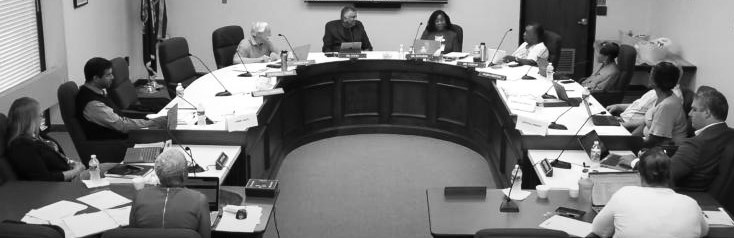
In the boardroom, where elected trustees met weekly to discuss and make policy, they sat at desks arranged in a circular shape, each of the fourteen with a direct view of the others.  The chairperson of the board managed the meetings according to established rules of order, and only occasionally overruled a colleague.  Decisions were made by voting, as required by the Education Act, but only rarely were those votes disputatious…and never acrimonious.  I believe there was something about sitting in the circle formation that elevated the level and tone of discussion, that enabled consensus decision-making.

As a young father, I sat with my wife and two daughters around a circular kitchen table, virtually every night, for dinner together.  Any of us might miss now and then, given our respective work and school commitments, but sitting down around that table was the established custom, one we all honoured until the girls headed off to university.  Our discussions centred on what all of us were doing at any given moment, and everyone contributed freely.  No topic was off-limits (although when the girls were very young, some issues were covered only cursorily, appropriate to their age).  Looking back now, I consider the learnings we all experienced with each other as indispensable to our family’s enduring ties.

And to think, it all began for me with my fascination for the Arthurian legends I first read as a boy, stories of the Knights of the Round Table that imbued me with a sense of romanticism and chivalry that I still value today.

I remain eternally grateful to all writers who have managed to create a world that I and other readers consider enjoyable and aspirational…even if imaginary.

 And I still wonder, even at this great age, if Arthur is merely sleeping at Glastonbury Tor, as the legends maintain, and if we shall ever see his like again, holding forth at his great Round Table.

Almost As One

you and I for years

becoming almost as one,

but with two faces

*  *  *  *  *  *  *  *

our togetherness,

heretofore by choice, rudely

thrust upon us now

couple1

as we, quarantined

by rampant pandemic, must

find ourselves anew

*  *  *  *  *  *  *  *

delving more deeply

into our relationship,

finding new connects

couple2

learning more about

what makes us who we are now,

as both you and me

*  *  *  *  *  *  *  *

trusting all that’s passed,

moving forward in good faith,

hands clasped as always

couple3

You’ll Never Know

The melody was as familiar as my mother’s cheek on mine, the words had long ago been committed to heart.  The singer was Aunt Marie, my mother’s older sister, her voice reedier now than in her youth, her pitch a trifle off.  But the emotion she felt shone through in every chord.

You’ll never know just how much I love you,

You’ll never know just how much I care…

You'll Never Know

The occasion was the fiftieth anniversary of her marriage to Uncle Bob, and six of us were celebrating on the deck of my home overlooking the lake—my wife and I, my mother and father, and Marie and Bob.  She was standing by the railing, singing to him as he sat in the old, wicker rocking-chair.

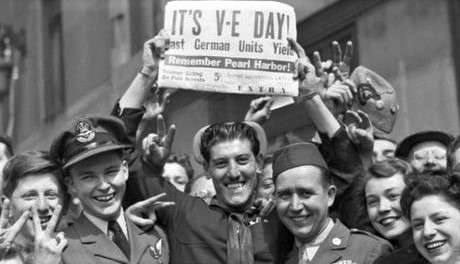
They’d married in the summer of 1942, enjoying a three-day honeymoon in Halifax, Nova Scotia, before saying a tearful goodbye when he was shipped overseas to join his regiment.  It was three years before they saw each other again, when he returned home, battered but unbroken, a couple of weeks after V-E Day.

ve day

As my aunt sang on, her shoulder-length hair, salt and pepper now, fluffed and fell in the gentle breeze off the water.

…And if I tried, I still couldn’t hide my love for you,

Surely you know, for haven’t I told you so

A million or more times…

Within a month of returning home from Europe, Bob had gone off again, this time to the gold mines of Kirkland Lake in northern Ontario, where his degree in mining engineering had landed him a job.  Marie joined him three months later, leaving her job and family in Toronto, and they stayed in that booming gold-town for the next twenty-five years.

I spent almost every summer of my childhood with them, for they never had children of their own.  I thought of them as my second parents, certainly my favourite aunt and uncle, and to this day, the times I had with them rank among the most enjoyable of my life.

mile of gold

I used to hear them sing together after I’d been tucked into bed, she in a dusky alto, he in a clear tenor befitting his Irish heritage, and it was from them I developed my lifelong love of singing.

The last ten years of Bob’s career had brought them back to the city, working in the provincial Ministry of Mines.  Although they were closer, I saw them less often, having married and begun a family of my own.  But they remained as dear to me as ever.

Leaning against the railing by now, my aunt’s voice had begun to quaver, the sentiment of the song assailing her.

You went away and my heart went with you,

I speak your name in my every prayer…

Within a few years of their retirement, my uncle had gone away again—this time to fight a war he could not win against the pernicious onset of dementia.  But on that momentous day on the deck by the lake, he’d been with us for awhile—alert, engaged, and as happy as ever.  Inevitably, though, he’d drifted off, as was happening much more often by then, his eyebrows knitted quizzically above a thousand-yard-stare we could never penetrate.  He was a part of us still, yet apart from us irrevocably.

Alzheimer Dementia Brain Disease

My aunt had continued her song, voice choked with emotion.

If there is some other way to prove that I love you,

I swear I don’t know how…

And she stopped right there, unable to finish, tears welling, rolling slowly down her weathered cheeks.  None of us knew quite what to do, so we just sat there, watching her watch her husband, not a sound to be heard.

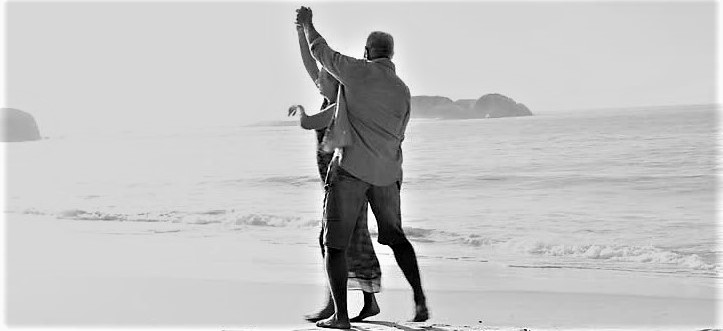
And then, the most touching thing happened.  Bob had slowly turned toward his wife, perhaps wondering why the song had been cut off.  Then, rising from the rocker, he’d shuffled over to stand in front of her.  As their eyes joined, he lifted her hands to his shoulders and placed his own on either side of her waist.

And softly, he sang the closing lines to her.

You’ll never know

If you don’t…know…now.

Bob died before the year was out, mercifully for him, sadly for us.  But I’ve never forgotten that song they shared on the day of their golden anniversary.

couple

And I believe they both knew in that moment how very much they were loved.

Music in Muskoka

It never crossed my mind on that rainy, August Saturday in 1967—our wedding day, as we stood on the threshold of our future together—that our golden anniversary would eventually arrive.  And now, fifty years on, it has.

Symbolic occasions have never resonated loudly with me, for whatever reason.  My wife and I have always celebrated family birthdays, of course, especially those of our children and grandchildren.  Wedding anniversaries, however, have come and gone with very little fanfare—although not without a sense of gratitude for our good fortune.

But it occurred to us a while back that, when two strong, independent people are able to spend fifty years with each other, weathering the storms and cherishing the good times, it is no small feat.  It is, in our case, a triumph of symbiosis over autonomy.  And so, we resolved to celebrate this one.

Our wedding coincided with Canada’s 100th year as a nation; indeed, we joked that getting married was our centennial project.  Now, as the country celebrates its sesquicentennial, we marvel that we have been married for fully a third of its existence.

For some time, we cast about for ideas as to how we might mark the momentous occasion.  We consulted with friends who have already achieved the milestone, we spoke with our children, and we talked with each other, long into the night many times, searching for the perfect way to celebrate.

You’ll never guess what has come to be.

On the very anniversary date of our nuptials, my wife will be a member of the audience in a darkened theatre, while I, a lifelong singer of songs (but never publicly), will be sharing the stage with my comrades in a barbershop harmony chorus, sixty-five-men strong, for a night of music in Muskoka.

Had you asked me those fifty long years ago if I thought such a situation could ever come to be, I’d have regarded you as mad.  Yet, there I shall be, one voice among many in the mighty Harbourtown Sound, singing my heart out.

International_2015_wide_shot

This being Canada’s 150th birthday year, the programme will contain several songs of Canadiana, two of which you may hear now, should you choose.  The first is Fare Thee Well, written by John Rankin of Nova Scotia—


The second, Hallelujah, is from Leonard Cohen, and one of our favourites to perform.  It may be found at the end of this post.

Both songs will be sung in harmony with our hosts for the concert, the Muskoka Music Men, a local barbershop chorus.  Our chorus will be singing several other songs, as well, including selections from Broadway, Motown, and the more traditional barbershop canon.

My wife and I did take an extended trip earlier in the spring, as part of our golden year, and we shall be together with our children and grandchildren for a special celebration later in the summer.  So the concert is not a one-off commemoration of our special year, just one part of it.

Given my love for the music, I can’t think of a more enjoyable way to end the journey to fifty years, and begin the voyage to sixty years, our diamond anniversary.  And for that prospect, I offer up, Hallelujah

Threescore and Ten

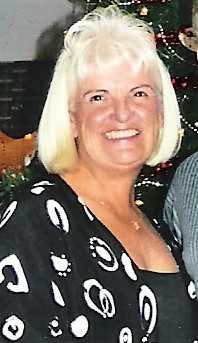
When we were very young, the biblical threescore-and-ten seemed a lifetime away—as, indeed, it has been.  But in a few short days, my partner, my lover, my wife, will complete her seventieth year, thus beginning her eighth decade.  C’est incroyable!

We met when she was sixteen, courted for five years, then married, a loving relationship that carries on to this day—fifty-four years from high school to septuagenarian sweethearts.

 donna-1970-2


A few years ago, when we lived in a forest home on a lake, I wrote this poem for her, and I include it here to mark my best friend’s seventieth birthday—

Sunlight,

Slowly streaming, peering, through tree branches

Seeming reaching up and out to touch it

And be touched.

Dark shade-spots, never-lasting, shift on forest-run

And up the stretching trunks,

To dance ‘cross leaves turned up to see the sun.

Water,

Reflecting morning back to bluing sky

Above, from fiery diamond-dance of light

Atop the waves.

The lake awakes as light turns trees of green to gold

And traps their images

In mirrored mere, quicksilver, green and cold.

Mist,

Wet, wraithlike trails of dew that do not seek

The morn, but rather gather, clutched, and drift,

And look to hide

Until, discovered by the sun’s relentless rays,

Surrender to the light

That thrusts elusive phantoms from its gaze.

Breezes,

Approaching shyly, coming on to shore,

From jigging o’er the watertops and waves

That lap the land.

With sighs they softly rise to stir the trees awake,

Then us, through mesh that screens

The out from in, and stubborn sleep from wake.

I stir,

And lying on the bed in my repose,

With eyes still closed, I draw a morning breath

Into my soul.

And then, eyes opening to the world dawning anew,

I also turn to see the morning sun…

And it is you.

donna-dec-03

It is you, indeed!

Love in the Morning

Sunlight,

Slowly streaming, peering, through tree branches

Seeming reaching up and out to touch it

And be touched.

Dark shadespots, never-lasting, shift on forest-run

And up the stretching trunks,

To dance ‘cross leaves turned up to see the sun.

Water,

Reflecting morning back to bluing sky

Above, from fiery diamond-dance of light

Atop the waves.

The lake awakes as light turns trees of green to gold

And traps their images

In mirrored mere, quicksilver, green and cold.

Mist,

Wet, wraithlike trails of dew that do not seek

The morn, but rather gather, clutched, and drift,

And look to hide

Until, discovered by the sun’s relentless rays,

Surrender to the light

That thrusts elusive phantoms from its gaze.

Breezes,

Approaching shyly, coming on to shore,

From jigging o’er the watertops and waves

That lap the land.

With sighs they softly rise to stir the trees awake,

Then us, through mesh that screens

The out from in, and stubborn sleep from wake.

I stir,

And lying on the bed in my repose,

With eyes still closed, I draw a morning breath

Into my soul.

And then, eyes opening to the world dawning anew,

I also turn to see the morning sun…

And it is you.