On Thinking

The French philosopher, Rene Descartes, is remembered among other things for his thesis: I think, therefore I am.  The notion is most commonly expressed, not in French or English, but in Latin: Cogito, ergo sum.

His premise was not, as is widely believed, that he exists because he can think; rather, it is that he is aware he exists because he is able to think.  That assumption presupposes that so-called lower forms of animal life, being non-sentient as far as we know, exist without knowing they exist.

Descartes appears not to have considered the possibility that some humans may also exist without full awareness, largely because of their demonstrated inability or willingness to think rationally.  But I digress.

In conversation with other folks, I occasionally hear them offer their opinion by beginning with the phrase, So, I think to myself…  I find that phrase redundant, because I can contemplate no other way of thinking; by definition, all thinking is to oneself, is it not?  Unless, as some would have it, a person is thinking out loud, which strikes me as verbalizing, not thinking.  Better, I suggest, to think first, speak second.

But as a counterpoint to that, people might deem praiseworthy the ability some folks have to think on their feet—to offer an opinion, receive feedback, and modify that opinion, all in the course of one conversation.  That facility is admirable, I suppose, but it can happen, of course, only if they’re standing; if they were seated, they would surely be thinking…well, on their tush, right?  And somehow, blowing it out their…you know…doesn’t seem as impressive.

I’ve long thought of thinking as a fluid process, a constant progression, a multi-directional flow, rather than as a static, linear plod from point A to point B.  And if that is so, then a graphic tracing of my thinking pattern would appear, not as a straight line, but as a higgledy-piggledy, zig-zagging line—frequently interrupted and intercepted, but always arcing upward toward higher illumination, I would hope.

As a writer, it’s my thinking that takes me far from my physical surroundings, even to the point of forgetting all about time and place.  As I wrote in haiku verse some time ago—

my thoughts, unbridled,
take me to worlds I ne’er will see,
nor have ever seen

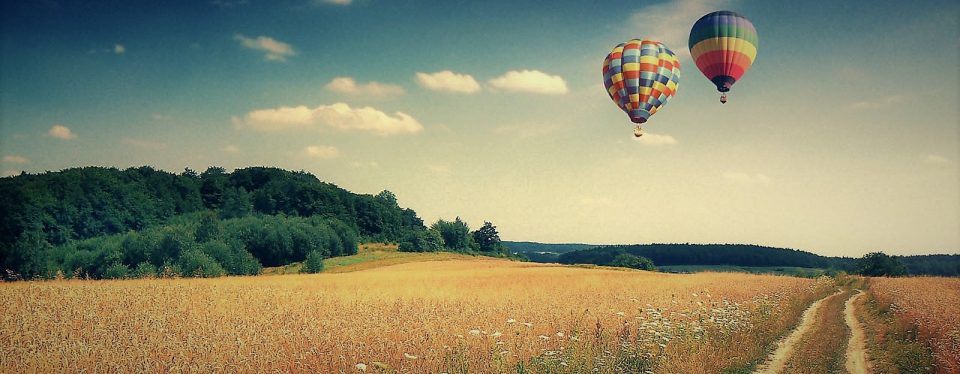
my boundless thoughts are
like hot air balloons, slipping
bonds that tie me down

I wander freely
throughout the universe, yet
never leave my chair

There are two adages on thinking that I try to hold to, at least presently, and they both grace the résumés and bios that appear on my online, social-media sites.  The first is, Certainty is the enemy of an open mind…I think.  And the second is, Don’t believe everything you think.  Regular readers of this blog will know whether or not I’m successful in living up to those.

Certainty plagues many people after they’ve thought a subject through—or even when they have not—and then adopt a position they think is accurate or true, and stubbornly cling to that opinion, come hell or high water.  But I think every opinion we hold should be subject to periodic, critical study, the more frequently the better, in order to test its validity in the face of facts and evidence that can change from time to time.  Being overly-certain about one’s opinion can stifle that sort of examination.

The irony with this adage, however, is that I can’t be certain it’s correct, for to be so would violate its basic premise.  Like every other opinion I hold, it requires my constant scrutiny…at least, I think it does.

The notion of believing everything we think, just because we think it, likewise can lead to cognitive stagnation.  In everyday interactions, our behaviours are governed by what we think we should say or do at any given time, and there’s nothing wrong with that.  Guidelines are preferable to social anarchy.  But if, for example, I believe it’s safe to jaywalk across a busy thoroughfare just because I think it’s safe, and if I persist in that belief, the consequences to me could be catastrophic.  Better, I think, to examine my thinking in the light of facts before committing it to belief-status.

The irony with this second adage is it presents a danger that one will never commit to believing in anything.  I think that, too, could present a problem.

For those who’ve read this far, let me finish with an anecdote about two people engaged in a mild argument over some inconsequential subject.  “So, is that what you really think?” the woman asks, a touch of incredulity tinging her tone.

“I don’t think!  I know!” the man replies smugly. 

With barely a pause, the woman smiles condescendingly and says, “You know what?  I don’t think you know, either.”

And that could well be the case for all of us.  Even when we think we know, even when we are absolutely certain of it, we still might be mistaken.  The wise carpenter’s advice—measure twice, cut once—could easily be adapted and applied to our thinking process: think, rethink, then act.

I’ve done just that in this post…I think.

What say you?

Nature Will Prevail

Many years ago, my wife and I followed after the outgoing tide in the Bay of Fundy, along with our two young daughters, marvelling at the wonders we spied on the surface of the seabed.  We laughed as our footprints gradually disappeared behind us in the spongy, soaked sand, and we strayed unmindfully farther and farther from shore. 

When the tide reversed its course and began to flow back in, we dallied until the water was sloshing around our ankles before turning for shore.  To our surprise, the rising surge outpaced our progress, the four of us able to move no faster than two pairs of tiny legs could muster.  When the water got to our mid-calf level, we picked the girls up in our arms and picked up our pace, more than a touch anxious that we had underestimated our own capabilities.

We finally made it safely to higher, drier ground, but not before the water had soaked our buttocks, and to this day, I remember the knot of fear that had settled in my stomach, the certain knowledge that I was powerless against the relentless force of nature pursuing us shoreward.

Nature is like that—unrelenting, uncaring, inexorable.  In our arrogance, we humans like to call it Mother Nature—in the same way we have anthropomorphized so many presumed deities and abiding mysteries.  But nature is the furthest thing from a maternalistic, loving parent.

Since our planet first began its orbit around the sun, a natural environment has existed, an environment that eventually spawned life in its most primitive form.  We humans are but a relatively-recent expression of that life-force, and we fancy ourselves its most highly-developed manifestation.  From our very beginnings, we have sought to discover, understand, and control our surroundings—and to be fair, we have certainly done that to some extent.

Nevertheless, we find ourselves still subordinate to the forces of nature—feasts and famines, pestilence and disease, floods and droughts, tides and winds, wildfires and glacial melting, rising sea-levels, earthquakes and volcanic eruptions, to name a few.  We have managed to mitigate the damage of such events to some degree, but we have not been able to eliminate them.  In fact, the cataclysmic effects of nature’s actions have, over time, led to the extinction of many forms of life; taxonomists estimate that more than ninety-nine percent of all species that have ever existed are extinct.  And so, the question naturally arises, could that same fate await our species?

The International Union for Conservation of Nature (IUCN) publishes a Red List of Threatened Species, an inventory of the global conservation status and extinction risk of biological species.  It includes 2.16 million current animal species, almost surely an underestimate, the most numerous of which is insects, almost half the total.  In descending numerical order, the other groups are: molluscs, arachnids, crustaceans, fishes, reptiles, birds, amphibians, mammals, and corals.

We humans are just one species among the mammals, the second-smallest of the ten groups, a mere 0.003 percent of the total.  Our group numbers more than 6500 recognized species, and of those, we are the most numerous (with rats being second).

In addition to the 2.16 million animal species on the planet, there are more than sixty thousand other species of life, including protozoa, plants, chromists, fungi, bacteria, and archaea.  Among these, bacteria—the smallest, simplest, and most ancient cells—exert a tremendous influence on human life. 

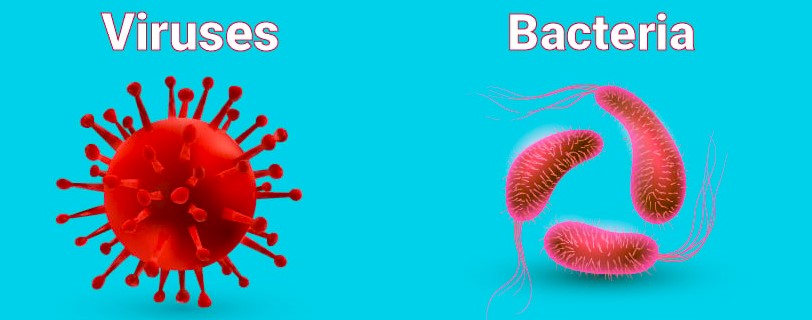
In our bodies, bacteria inhabit our digestive system, live on our skin, and contribute to our general wellbeing.  But there is a downside, too; infectious diseases caused by bacteria have killed more than half of all humans who have ever lived, through pandemics such as the bubonic plague.  Other examples of disease caused by bacteria include tuberculosis, whooping cough, sexually-transmitted infections, and e-coli.  Because bacteria can reproduce themselves in less than an hour, mutations can emerge and accumulate rapidly, causing significant change, such as resistance to antibiotics.

Viruses, by contrast, are not living organisms.  Rather, they are an assembly of different types of molecules that assume different shapes and sizes, but they can be as dangerous to human life as bacteria.  Unlike bacteria, they cannot reproduce on their own, but need to enter a living cell to replicate and evolve.  Once inside, they take over the cellular machinery of their host and force it to make new viruses.  They can infect humans, other animals, plants, and even bacteria, and are able to evolve and jump from other animal forms to humans.  They cause diseases like the flu, the formidable common cold, and SARS-CoV-2.

In the face of many perceived threats to our survival, a group of prominent researchers in Australia, the Commission for the Human Future, identified a list of risks to life on the planet: climate change, environmental decline leading to species extinction, nuclear weapons proliferation, resource scarcity (especially water), food insecurity, dangerous new technologies (such as AI), overpopulation, chemical pollution, pandemic disease, and denial and misinformation.  Six of the ten are clearly within nature’s purview; the other four would be the result of human miscalculation.

What our species does about these ten existential threats in the next few years will determine whether present and future generations face a safe, sustainable, and prosperous future or the prospect of collapse and even extinction, the report said.

It also stated, Understanding science, evidence, and analysis will be key to adequately addressing the threats and finding solutions. An evidence-based approach has been needed for many years.  Under-appreciating science and evidence leads to unmitigated risks…

Shaping [the human future] requires a collaborative, inclusive, and diverse discussion.  We should heed advice from political and social scientists on how to engage all people in this conversation…

Imagination, creativity, and new narratives will be needed for challenges that test our civil society and humanity.

I confess to some doubt as to whether our species, tribalistic and combative as we are, will be able to manage that collaborative approach.

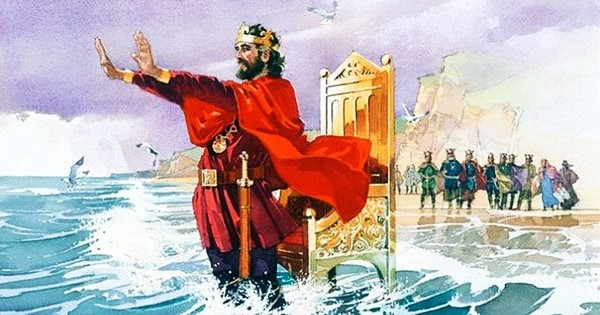
And I think back to the apocryphal story of King Canute, trying to hold back the tide—knowing full well he could not—in an attempt to teach his flattering courtiers that an earthly monarch could exert no control over the natural elements.  True or not, the story illustrates the conceit of humankind in thinking we can ever be in control of nature.

As my wee family found out so long ago on the shores of the Bay of Fundy, we are most definitely not.

Nature will prevail, I fear.  And the planet will continue its evolutionary journey around the sun, perhaps without us, until that star, too, is extinguished.

Who Counts?

[ ED. NOTE: If you are an official FOLLOWER of this blog, you are receiving my posts fully displayed in the body of the email notifying you of each new post. To read the post in my actual blog-site format, click on the title at the top of the story in your email, and you will find it a much more enjoyable experience.]

Like many of you, I suspect, I was raised by a mother generous in the love she gave, and wise in her ways.  My four siblings and I benefited greatly from her counsel, and agree to this day that she was right about almost everything.

Whenever I was angry with my brother or one of my sisters, for example, she would caution me, If you have nothing good to say, don’t say anything at all.

Many of our relatives in my mother’s large, extended family were gregarious, well-informed on most subjects, opinionated, and frequently argumentative, so holiday gatherings occasionally became loud and disputatious.  At such moments, my mother would advise me, Sometimes it’s better to say nothing, even if they might think you don’t understand, than to open your mouth and prove it.

Occasionally, I would arrive home from school with some juicy bit of gossip, and she would say, If your friends are talking about other people behind their backs, you can be sure they talk about you when you aren’t there.  And when I would nod as if I understood, she would add, It’s always best to stick up for people who aren’t there.

Decades later, I encountered that last advice again in a landmark book by Stephen Covey, who exhorted his readers: Defend those who are absent—one of my mantras to this day.

A good number of my mother’s admonitions were homespun, she having been raised by descendants of  Scots/Irish farming-stock who had emigrated to eastern Ontario in the mid-nineteenth century.  It’s a long road that has no turning, she would tell me when I’d recount a tale of woe, feeling sorry for myself.  If I’d had a quarrel with a schoolmate, she would say, The road to a friend’s house is never long.  Or if I was sad and blue when things weren’t going well, she’d tell me, When things are dark, try to be the light that someone else can turn on.

I think of my mother often these days, and I miss her wisdom.  I wonder what she’d have to say about this world we live in now, with all its strife and turmoil. 

No one in our family was ever subjugated by an invading people, exploited and dispossessed of our native land.  None of us has ever been despised and disenfranchised because of our nationality, our ethnicity, our skin-colour, our religious beliefs, our gender orientation, our political preferences, our wealth or lack of it, our age, or any perceived disability.  Throughout our lives, in fact, we have been among the privileged of the earth.

Such is not the case for the human species as a whole, however.  Worldwide, a huge number of people are victimized by war, famine, drought, disease, and genocide, some to the point of death.  And for many of those who survive, barely, there is scant relief offered by others of our species.

The product of a random, evolutionary progression over millennia, we human beings at our most primal level are forever a tribally-oriented species.  We seek to be with our own, and are suspicious of any who are different.  We are intelligent, yes, but also egocentric, selfish, aggressive, predatory, manipulative, superstitious, and too often unforgiving.  And because these character traits often override the intelligence factor, is it any wonder we currently find ourselves in such a mess?

Many of the several wars consuming the planet right now, for instance, are the result of clashes among opposing superstitious beliefs—what we sanctimoniously call religion—where each protagonist claims there is no god but our own.  And as if that doesn’t constitute folly enough, consider that many historic wars were waged by our predecessors who claimed allegiance to the same god, even as they prayed to that deity by different names. 

Such foolishness, when earthly power was truly the false god they all desired!

We humans have allowed ourselves—perhaps through a callous disregard for our collective well-being, or maybe due gross ignorance of the consequences we soon shall face—to approach a point of no return.  We seem not to realize that the civilization we profess to admire is but the thinnest of veneers, perched precariously atop the baser instincts of our species.

My mother used to say, The circle is not complete until everybody is inside.  We should always try to make the circle wider, so that everyone can come in.

Decades later, I chanced upon remarkably similar advice, this time in one of Michael Connelly’s crime-novels, spoken by one of his fictional characters, Harry Bosch:  Everybody counts, or nobody counts.

Would our current state of world-affairs be better, I wonder, if we humans could ever adopt that premise?  If we could set aside our preoccupation with the many issues differentiating and separating us, and instead take up the humanistic character-traits we share that might bring us together?

I mean, who counts?

No Longer There

The weekly prompt from my Florida writers’ group was: tell a story from the point of view of an inanimate object.  This is my offering—

I first espied your home millennia ago, long before your primitive, bi-pedal predecessors first walked upon your insignificant rock and thought to look up at me.  And you, the survivors of eons of mingling and melding with each other, can see me still, as I wend my way to you across billions of years from a source no longer there.

That source, my home—originally anonymous, a mere speck in the vast cosmic dust of the universe—would have been invisible to you, had it not finally flamed out and vanished into a massive black hole of anti-matter, succumbing to the irresistible, terrible pull of gravity.

But I, the sole survivor of that massive, thermonuclear firestorm, endured to bear witness to its existence.  A blast of energy and light radiating out from its core, I traverse the interstellar darkness at the speed of light, my destination unknown ad infinitum.

At some distant point in time-past, one of your forebears was the first to spot my leading edge.  From that creature’s vantage-point, I was but one of uncounted pinpoints of light in the night-time panoply overhead, each of which, like me, had begun its journey after a cataclysmic conflagration—very much like the one your own star will eventually experience.

Along the way, I was assigned a name by one of your ancestors—although I remain undistinguished in the infinite reaches of the cosmos, which is indifferent to the affairs and conceits of your species.  I am but one of billions upon billions of similar bursts of energy, light-sources too numerous even to catalogue, let alone adorn with a patronym.

I have seen you for some time with my leading edge, and if you look into the darkened sky, you will spot me there—a seemingly-static but ultimately-endless burst of light.  You and your entire species will be lost to the annals of time, of course, long before my trailing edge arrives in your vicinity—at which point I, too, will vanish from the view of living things, if any, that might be left on your rock to notice.

But, unlike your species, I will not perish.  My light, from leading to trailing edge, will speed on forever, relentlessly pursuing the far reaches of the ever-expanding universe, which knows no bounds.

Much like the person who named me to honour one of the fanciful gods your species has pretended to worship in order to satisfy the unanswerable questions you persist in asking, you fancy yourself at the centre of existence, the very master of all you perceive.  But you were nothing before my infinite journey even began, and you will be nothing again in the blink of a cosmic eye.

If my leading edge could speak to my trailing edge when it eventually reaches what is left of your earthly abode, it might ask, “What do you see?  Is anyone there?”

“Nothing!  I see nothing,” my trailing edge will answer.

To which my leading edge might reply, “I saw them when I first passed by—a self-absorbed species busily erecting their ant-hills and lauding their advances, even as they warred upon one another and suffocated their planet.”

“Well, there is no one now,” the trailing edge will observe uncaringly.  “If once life existed on this barren rock, it is no longer there.”

Pity, that.

I Believed ‘Em All!

Step on a crack, break your mother’s back!  Tell a big lie, your father will die!

I remember chanting this doggerel over and over as I pranced along the sidewalk as a young boy.  I have no idea where I first heard it, but I wasn’t the only one whose sing-song voice could be heard uttering the same incantation.

To this day, I try to avoid those sidewalk cracks, and most of the fibs I’ve told over the years have been small.  I swear!

That little ditty was just one of many such learnings we picked up as children from playmates, kindly old aunts and uncles, even parents.  And for periods of time, I believed all of them!

Eat your carrots, sonny!  They’ll put hair on your chest.  I’ve always loved carrots, especially raw, and I do have hair on my chest—gray now, of course, but still curly—so that advice bore out, I guess.

Drink your milk!  It will make your bones strong.  I readily believed that, but when I was that age, we were drinking powdered milk my mother mixed up from a box.  Even when ice-cold, it tasted vile, and I always wished we had a cat I could feed it to—but not a black one.

Superstitions played a big part in much of the advice I was given, even though my parents told me superstitions were premature explanations that had overstayed their time.  Unfortunately, I didn’t know what that meant.

It’s bad luck if you ever let a black cat cross in front of you!  To this day, if a black cat crosses my path, I detour.  It makes no sense, yet I do it, anyway.

Don’t walk under a ladder!  It will bring bad luck, too.  That seemed logical to me, but I would sometimes tempt fate by doing that very thing.  Today, though, a grown man, I always walk around ladders.  I mean, a piano could fall on me, right?

Bad luck will follow if you open an umbrella in the house!  I can attest to the truth of this one because I did open an umbrella indoors one day, just to test the proposition.  As it popped open, it struck a vase on the ledge beside the front door, sending it crashing to the ground.  That led to one of those rare occasions where I told one of those small fibs I mentioned earlier.

Look for four-leaf clovers if you want good luck!  My friends and I spent many an hour doing just that, and found lots of them, as I recall.  And because no great tragedy ever befell us, I suppose the statement was accurate.  One friend insisted on calling them shamrocks, and said we might find a leprechaun.  I never did.

Don’t pull on the wishbone ‘til after you’ve made your wish!  I tried earnestly to comply with that advice, but my brother—more interested in winning the contest than having his wish fulfilled—always pulled first and usually won.  And as a result, my wish that he would magically disappear never came true.

Keep your eyes closed and the boogey-man won’t get you!  I had a lot of faith in this one, especially in the dark of the bedroom I shared with my brother.  I would sometimes hear terrifying moans coming from the vicinity of his bed, so I’d cower under my blankets, eyes screwed shut, praying the advice was well-founded.  I never wished for my brother to be taken, but I did prefer it be he rather than I.   

Don’t cross your eyes for fear they’ll stay that way!  I remember my friends and I daring each other to try it, all of us fearful it might be true, none of us willing to be the one who found out.  I know now there’s nothing to it, and I attribute the fact that I have to wear corrective eyeglasses to some other factor.  But I did look cross-eyed at one of my teachers once, and was surprised when she did the same back at me.  She was one of my favourites ever after!

As I entered adolescence, the nature of advice I was given by well-intentioned relatives changed, although most of it was equally preposterous.

Don’t pick your zits!  You’ll end up with boils all over your body.  The spectre of boils was terrifying, but so, too, was the mortification of acne.  For a while, I tried to convince myself I was developing freckles, but I knew better.  A variety of creams and lotions entered the fray, but I did resort to picking at my zits out of desperation.  Sixty years on, I’m still waiting for the boils.

Beware the devil’s hands, boy.  If you succumb to his entreaties, you’ll go blind!  Well, all I can say to that is, although I do wear glasses now, I never once lost my sight.

Yes, you can borrow the car again.  But see that you bring it back!  This command from my father on every occasion I asked for his keys, was aggravating at the time, but has since become a standard family joke among my siblings.  And it’s a source of wonder to me now that one of my granddaughters owns and drives a car I used to own.  She brings it back every time she visits.

There are other gems of wisdom from my childhood, most of which I no longer follow, some of which I do.  They pop into my mind at the oddest moments, sometimes evoking a laugh, occasionally a tear.  They are milestones along the road I journeyed as I grew up, and they helped bring me safely to the cusp of my ninth decade.

And once upon a time, I believed ‘em all.

Ready For The Fall

The prompt from my Florida writers’ group this week was to write a piece about fall. Here is what I came up with, and I hope it will conjure memories for you, too—

A middle-aged woman I didn’t know smiled as she entered the elevator with me one day last week.  “Are you ready for the fall?”

I cringed, steeling myself for an unwanted mini-sermon from a dogged do-gooder, a holy-roller.  “I…I guess so,” I stammered.  “I mean, I pray, I try to do good…”

A look of bewilderment creased the woman’s face, followed quickly by one of amused pity.  “No, no,” she corrected me patronizingly, “you misunderstand me.  I meant the autumn, not the apocalypse!”

“Ah…of course,” I sighed, embarrassed by my mistake.  “Sorry…”

As the elevator doors opened on the eighteenth floor, the woman stepped out, still amused by my obtuseness.  “No need to apologize,” she said.  “At your age, I imagine it’s best to be ready for both!” The doors slid closed behind her before I could think of a suitably nasty retort.

Back in my apartment on the twentieth floor, I reflected on our conversation as I unpacked the groceries I’d been carrying.  It seemed to me an honest mistake to make, an understandable one, and the woman’s parting shot was likely good advice.  But why did she have to be so rude?

Later, relaxing with my wife over a cup of tea, I talked about what had happened, and about getting ready for the fall.  “Remember when we were kids, it seemed summers would never end?” I said.  “From the day school let out until the first fall-fair arrived, our days were blissful, carefree, limitless.  Eat breakfast and head outside to play; dash inside for lunch, then back outside; trudge home for supper, then out again ‘til the streetlights came on.”

“I remember,” my wife said.  “But things sure changed when we grew up, in spite of our best intentions.  We got married, started working, became parents.  Those summers suddenly became  a lot more finite.”

I nodded agreement.  The calendar tells us summer ends with the autumnal equinox in late September, but the end always came much sooner for us.  It was marked, not by an arbitrary calendar, but by the requirement to go back to school.  Both of us were teachers in those long-ago days, and felt we had to get back ahead of our students if we had any hope of being ready for their return after Labour Day.

For many folks, I guess—like the woman on the elevator—the coming of fall is a time of new beginnings, of anticipation.  They think in terms of flaming fall-colours, brisk autumn days, evenings spent curled up with a book in front of a cozy hearth.  They look forward to the change of seasons.

Not I, though!  I’ve always thought of it as a gloomy time—the conclusion of summer, and the close of so many pleasurable things that vanish with the coming of September.

For example, with the end of warm, sunny weather, there came an end to my carefree habits of dress.  No more swimsuits or running shorts; no more open sandals or ancient running shoes; no more tank-tops or faded team sweaters.  Instead, it meant a return to the straitjacketing drill of collars and ties, pressed slacks, knee-high socks, and polished dress shoes.

The end of summer put a stop to the treasured luxury of shaving every two or three days, depending upon what activities were planned.  And it called a halt to the wearing of old ball caps as an alternative to brushing my hair.

The inevitable onset of fall wrote fini to three or four leisurely cups of coffee with the morning paper, and an end to mid-morning breakfasts on the back porch.  It heralded, in their stead, the beginning of hurried showers and breakfasts-on-the-run.  It marked the re-entry into the exciting world of daily traffic reports, as I attempted to find the shortest, quickest route into and out of the city.

In short, summer’s end brought to a close the lazy, drifting vagaries of summer living I tried so vainly to hang on to.  Coming back to the real world always provided a jolt to my entire system.  It was like going from childhood to adulthood all over again!  Once was enough!

“You know, I never wanted to be the type of person who wishes his life away,” I commented to my wife, “always wishing for something to be different than it is.  But, in a sense, I guess I used to do just that.”

“Me, too,” my wife said wistfully.  “For me, the year was divided into two seasons, summer and not-summer. And not-summer was not good!”

“Remember we’d take the girls on one last camping trip up north?” I said.  “My cutoffs and hat would be in my bag, my shaving-kit left behind.  It was always one final fling in the glorious realm of summer.”

“I loved it,” my wife said, staring into the past.  “Hiking, swimming, paddling, exploring, picking berries, roasting marshmallows, singing our hearts out by the campfire, sleeping the sleep of the innocent in those old sleeping-bags—it was like being children all over again.”

“Even now,” I said, “when every day is like a Saturday, I still pretend summer will never end, that I’ll never have to grow up and give it up.  It still seems there’s always so much left to do.”

“At least we have Florida now,” my wife smiled.  “Year-round summer! Before the fall ever arrives, I’m already planning what I’ll pack.”

During the course of our happy reminiscing, I managed to forget my annoyance with the supercilious woman in the elevator.  But by chance, we happened to ride the elevator again yesterday, going down this time.  As she stepped aboard, I could tell she recognized me as the confused old fart from a week ago—but this time, it was I who spoke first.

“Before you ask, I’m ready for Ar’geddon!” I smiled.

“Our what?” she said, head cocked.

“Ar’geddon!” I repeated.  “I’m ready to go!”

The same pitying look as last time spread across her face, the same condescending smile.  “Sir, you mean Arma-geddon.  You’re mispronouncing the word.” She shook her head disdainfully, appalled by my lack of acuity. 

Waiting a beat to spring the trap I’d plotted, I said very quietly, “Whatever!  It’s not the end of the world!”

We rode the rest of the way in icy stillness, a long, silent fall from the eighteenth floor to the parking garage.

No!

The weekly prompt from my Florida writers’ group was to write a piece where one of the characters in the story is ‘forced to say No’. This is my offering, and I hope it will bring back fond memories for those of you were parents—

“No!” he declares vehemently.  “I will not say No to them!”

“No, you won’t say No?” she replies incredulously.  “That doesn’t make sense!  It’s a double-negative.  Surely you mean Yes, you won’t say No.”

“No, I don’t mean Yes!” he says, exasperated.  “And yes, I mean No!  Are you trying to tell me what I think?  And did you just call me Shirley?”

“No, I didn’t call you Shirley,” she says wearily.  “The word was surely!  And no, I’m not telling you what to think!  But are you honestly telling me you won’t say No to them?  Are you afraid of them?  Are you worried they’ll laugh at you?”

“Yes, no, and no,” he says.

“Well, if you’re not worried about what they’ll think or do when you tell them, just say No and get it over with.  They’re our children, not your boss!”

“Yes they are, and no I won’t!” he snaps.  “Are you trying to force me to say No?”

She raises her arms skyward, rolls her eyes dramatically.  “No, I’m not trying to force you to say No!  But yes, I’m trying to convince you to say No!  Is that so hard to understand?”

“No,” he says.  “But, since I’m determined to say Yes, stop trying to talk me into saying No!”

They’ve been sitting at the kitchen table for an hour, the supper dishes still in front of them, the remains of dinner crusted and cold.  The children are watching TV.

“So you think you know what’s best?” she says, jabbing a finger in his direction.  “You think I’m stupid?  You think you’re smarter than me?”

“Yes, no, and no once again,” he says.  “And by the way, that should be ‘smarter than I’, not ‘smarter than me’!”

His correction is met with a venomous glare.  “No, I don’t believe this!” she says icily.  “Here I am, trying to help you make a difficult decision, and you think you can do that…better than I?”

“Okay,” he says, trying a different tack, “You think I should tell them No instead of Yes, right?  Can you not see that Yes is a better answer than No?”

“Yes, I do think you should tell them No,” she says, still miffed.  “And no, I guess I can’t understand why Yes is a better answer than No.  Can you explain it to me like I’m a three-year-old?”

“Yes, I can,” he says, resisting the urge to toss out the obvious wisecrack.  “But you should have said ‘as if I’m…’, not like I’m…’!”

“Are you correcting me again?” she sputters indignantly, sitting back in her chair.  “You think I don’t know how to speak the Queen’s English?”

“Yes and yes,” he replies smugly.  “And it’s the King’s English now, remember?  The Queen is dead.”

It is all she can do not to hurl one of the supper plates at him.  “Yes, I remember she died,” she says acidly.  “And yes, I know it was over a year ago.  But no, I still do not understand why you can’t simply tell the children No.  You still haven’t explained it to me…you know, as if I’m a three-year-old.”

He remains silent, seemingly at a loss for words.

“You do know I’m a functioning adult, right?” she says.  “A mother of two children?  Or do you think I actually am a three-year-old?”

“Yes, yes, and no,” he says.

“So, explain it to me then!” she demands, pounding one fist on the table, rattling the cutlery.  “Why won’t you say No to them?”

“Okay,” he says, “I want to say Yes, not No, because I don’t want to hurt their feelings.  I don’t want them to think Daddy is the bad guy.”

“That’s cray-cray!” she says, spreading both arms wide.  “Sometimes Daddy has to be the bad guy, as you put it.  It’s important that they learn that we’re in control, not them!  You get that, don’t you?”

“Yes, but I still want to say Yes, not No!  And I won’t be forced into saying No!”

As she throws up her hands in frustration yet again, the children come tumbling into the kitchen, the burning question bursting from their lips.  “Daddy!  Daddy, can we stay up late to watch the vampire movie?  You said you’d tell us after supper.”

He looks at his wife, who smiles sweetly, eyes narrowed.  “What’s it going to be?” she whispers so only he can hear.  “Is it Yes or No?”

He stands up, knowing the moment is at hand.  Without warning, he spins and heads for the kitchen door.  Just as he disappears from sight, he calls back, “Ask your mother.”

A Crowd of Stars

The youngest of my brothers-in-law died recently, following a long period of worsening, physical incapacity and illness.  He was the second of my generation to go, my younger brother having passed three years ago, and I suspect his death brought the spectre of the end-times somewhat closer to us all.

In addition to my sister, he left behind four children, three of whom are married, giving him three grandsons and two wee granddaughters.  At his private interment, his daughter and three sons spoke of him as a loving and beloved father, and there is no greater tribute I can imagine.  Eighteen of us exchanged reflections and prayers that day, spoken to each other and to him, designed to bring a sense of closure and peace to us all.  We were saddened, of course, by his passing, but relieved that his suffering was ended.

He was married to my sister for forty-five years, a loving union that brought credit upon them both.  I still remember dancing at their wedding, when none of us—so young and brash and full of piss-and-vinegar—could have imagined this day coming.  But it has now for him, as it must someday for all of us.

Deliberate and intentional in word and deed, especially as he grew older, my brother-in-law was rarely intemperate or harsh in his dealings with others.  A man of deep faith, he was loving and giving, and forgiving of others’ shortcomings.  Throughout his tribulations, he was confident that, as he approached the final crossing, he would meet his saviour on the other side.  I hope he has.

In her remarks, my sister said something I thought perfectly summed up his life and faith—from Matthew 25:23, “Well done, good and faithful servant; thou hast been faithful over a few things…enter thou into the joy of thy Lord.”

My wife shared many of those same understandings about what is to come with him, and I remember them engaged in deep conversation over the years, communicating their ideas and beliefs, their hopes for the hereafter.  By contrast, given my differing views, the exchanges I had with him tended to be temporal more than spiritual, though always sincere and affectionate.  He had a way of thinking before he spoke, and I constantly found myself leaning in to be sure not to miss what he might have to say.

The day after he passed, I wrote the following note to my sister—

When we get old, as some of us have, we think differently about death than when we were younger.  I won’t say we ever look forward to it, but we perhaps stop fearing it.

We think of death as a companion on our journey through life—way back in the throng at the beginning, but gaining on us as we begin slowing down.

We think of death, not as a spectre that will end things, but as an usher who will open the next door and allow us in.

Just as life ushered us in at the beginning of our journey through the here and now, death ushers us into the beginning of our next journey.  None of us knows what that journey will look like, but faith sustains us.

When I think of him now, and where he is, I think of these lines, adapted from the poem High Flight, by John Gillespie Magee, Jr.—

Oh!  he has slipped the surly bonds of earth
And dances the skies on laughter-silvered wings…
He has topped the wind-swept heights with easy grace…
Put out his hand and touched the face of God.

With that note, I also included one of my favourite poems, When You Are Old, by William Butler Yeats, the greatest of the Irish poets.  I imagine it as the song my brother-in-law might be singing now to my sister from wherever in this vast universe he finds himself, and I hope it comforts them both—

When you are old and grey and full of sleep,
And nodding by the fire, take down this book,
And slowly read, and dream of the soft look
Your eyes had once, and of their shadows deep;
How many loved your moments of glad grace,
And loved your beauty with love false or true,
But one man loved the pilgrim soul in you,
And loved the sorrows of your changing face;
And bending down beside the glowing bars,
Murmur, a little sadly, how Love fled
And paced upon the mountains overhead
And hid his face amid a crowd of stars.

The Gun

The August prompt from my Florida writers’ group is to use a “hook” within the first few lines to draw readers/listeners in to the story.  This is my offering—

I discovered the gun in the drawer of my husband’s bedside table this morning.  I’d been looking for the bottle of Xanax he’d borrowed from me last night, and I found it lying beside the gun.

To say I was shocked would be an understatement.  I sat down numbly on the bed, staring vacantly at the gun, wondering why on earth my husband would have such a thing.

It looked huge—an ugly, metallic-sheened obscenity lying there like a wide, upper-case L, one arm shorter than the other, a curled stem sticking from between its two arms like an erect, male appendage.  The shorter arm was pebbled with three shallow curves on its inside edge, obviously the arm someone would use to hold the gun and point it.  The longer arm was straight, with a round, black hole at its end.

Loath to touch it at first, I eventually gave in and picked it up between thumb and forefinger.  It was heavy, and oily to the touch, almost reptilian.  After a moment, I clasped it in my other hand and pointed it at my reflection in the mirror on the back of the bedroom door opposite.

The sight frightened me to the point I cried out and dropped the gun on the carpet.  It landed with a soft thud, then lay at my feet, pointing back at me.  Gingerly, I stirred it with my toe to point it away.

Why does Frank have this…this thing in his drawer?  What’s he afraid of?  And why didn’t he tell me he has it?

The gun was still on the carpet when I came back upstairs after lunch.  I knew I couldn’t just leave it there, but I had no idea what to do with it.  Without knowing why Frank even had the thing, I couldn’t put it back where I’d found it.

What if he’s planning to use it on me?

Sitting on the bed again, I swallowed a Xanax from the bottle still lying in Frank’s drawer, then tossed the bottle to my side of the bed.  As I did, a light went on in my anxious brain.  I picked up the gun carefully, walked around to my bedside table, and put it in my own drawer.  The pill bottle followed it, and I closed the drawer firmly.

There!  Problem solved!

Downstairs again, I couldn’t stop asking myself why Frank had the gun in the first place.  We’ve had our share of arguments over the years like any married couple, maybe more in the past few months.  But there’s never been anything leading either one of us to contemplate violence.

What am I missing?  Is there something different lately?  Is he tired of me?  Is there someone else?

Dinner was unusually silent, mostly because I replied to Frank’s conversation in monosyllables.  By dessert, he’d stopped trying, and he scurried off to his den afterwards to watch a game.  I busied myself reading in the living room.  Or tried to.

Why is he so quiet?  What’s he planning?

The old grandfather clock in the vestibule was chiming eleven as I climbed the stairs, dreading entering the bedroom, not knowing what might be waiting for me.  Frank had headed up half an hour ago, so if he had something planned, he’d had time to get ready.  I wondered if he’d found the gun in my drawer.

He was lying in bed reading when I came in.  “I took another Xanax from your bottle,” he said sleepily.  “Had a rough day.”

I slowly got undressed before visiting the bathroom, not understanding how he hadn’t found the gun when he got the pill from my drawer. 

Maybe he did!  Maybe he’s got it under the covers…

When I came back from the bathroom, his light was off.  I carefully crawled in beside him, lay quietly for several minutes until I could no longer hold it in.  “Frank?  Are you still awake?”

“I am now,” he mumbled.

“Frank, why do you have a gun in your drawer?”

“A what?”

“A gun!  Why is there a gun in your drawer?”

“What are you on about?” he said, his voice sharper now.  “I don’t have a gun!”

“I found it this morning,” I said, my own voice rising.  “Don’t tell me you don’t have a gun!  It’s right here in my drawer now.”

Rolling over, Frank opened one eye.  “Have you been taking your meds?  You’re talking crazy!”

“Crazy?  Crazy?  Okay, then what’s this?”

I slid out of bed, yanked open my drawer, pulled out the gun.  Pointing its ugly snout at him, I said, “This is a gun, Frank!  And I found it in your drawer this morning.”

He stared at me in disbelief for a moment, then rolled his back to me again.  “You’re delusional, Emma.  Take your pill and let me get some sleep.”

Infuriated by his nonchalance and denial, I took a deep breath, closed one eye, and pulled the trigger.  The gun jerked violently in my hand, hurting me, and the loud Bang! deafened me.  And then…and then…

I wakened in a cold sweat.  Frantic, I turned to my husband, but he was snoring peacefully beside me.  And despite my frenzied search in the darkened room, there was no gun to be found. 

When I awaken again, it’s almost ten o’clock.  The sun is streaming its narrow beams around the edges of the shades, still pulled down, and I see dust motes floating lazily in its warmth.  Frank has dressed and gone to work.  I lie there for a few minutes, reliving the dream.

Thank God that’s all it was!  Imagine if it had been real!

As I’m washing my hands in the bathroom, I wince at a tinge of pain in my right palm, and I see that it’s lightly bruised.  After dressing, I remember to take my pill before heading downstairs.  On the way out of the bedroom, I hesitate a few moments at the door.

Don’t be stupid!  There’s nothing there!  Forget it!

 Nevertheless, I decide to check, and to my horror, I discover the gun in the drawer of Frank’s bedside table.

By Their Works

It is said, by their works shall we know them.  And increasingly, we do.

They rise among us, predominantly—but by no means exclusively—white, male, overweight, bewhiskered, rural, racist, ostensibly-straight, conservative, angry, and occasionally violent.  They are frequently accompanied by others who don’t fit this profile exactly, but who express the same rage, the same fear, the same desire to take Canada back.

It’s unclear where they want to take us back to, but I suspect it might be back to the ‘50s—a decade most of them are too young to have lived through—a time when, in their fevered imaginations, men were men, women knew their place, children spoke only when spoken to, and nobody—including elected governments—told anybody else what to do.

Redneck heaven, to borrow a phrase.

According to the messages these folks spew unrelentingly on social media, marriage back then was between one man and one woman—born male and female, respectively.  Every child lived in a nuclear family.  Racialized and Indigenous people were not part of the established fabric, nor for the longest time were women, the poor, Jews, immigrants, or differently-abled people.

And it goes without saying, the LGBTQIA+ community was non-existent.

Previous decades have seen lots of protests in support of many causes—the ‘60s and ‘70s come to mind for this old-timer, but every era has known them.  Most of those were peaceful, yet often effective; some involved civil disobedience; still others degenerated into violence, with consequences visited upon those who violated the law.  The majority were mounted in the name of advancing more liberal, progressive movements—universal suffrage, socialized medicine, civil rights, end-the-war, the women’s-lib movement, and Indigenous reconciliation, to name but a few.

And that marks a major difference with today’s oft-inchoate protests, striving noisily to take us back to ‘the good old days’.  Today’s aggrieved zealots behave as if our country always belonged exclusively to them—more accurately, their predecessors—and not to everyone who inhabited it then, and does so to this day.

Populists, bigots, and white-supremacists have ever been part of Canada’s demographic, of course, and many of us, I suspect, knew some of them back in the day.  As a child born in the ‘40s, growing up in the ‘50s, I well remember the use of such loathsome slurs as kike, wop, dyke, fag, nigger, Paki, d-p, and others even more vile.  As I was part of the white middle-class, they were never used against me, but more than a few of my white schoolmates hurled them—perhaps unwittingly, parroting their elders, but hurtfully, nonetheless—at those on the receiving end.

Another difference between those long-ago times and today is the opportunity the bigots now have to spread their hateful rhetoric.  Social media, for all the benefit it has brought to much of society, has enabled the haters and ragers to amplify their message across the internet.  In their posts, we find no trace of the civility that once characterized public discourse, even among those whose political ideologies and points of view conflicted.

When did it start to be okay, I wonder, to ignore the fundamental tenets of good manners?  Of respect for other people?  Of common sense?  Perhaps it’s cantankerous of me to bewail their passing, or maybe I’m being overly pernickety in complaining about it.  After all, as I’ve previously written, some folks consider me an unrepentant curmudgeon.  Perchance, I am.  Still, was respectful consideration for others not always a hallmark of civilized behaviour? 

Today’s unruly mob weeps and wails loudly, profanely, about their loss of freedom, even as they enjoy the freedom to assemble and protest it.  To me, it’s as though they believe this coveted freedom means unfettered license to do whatever they wish, unencumbered by the rule of law.  Thus arises anarchy.

In Canada, citizens elect a federal Parliament every four years or so; then, with the ritual approval of the Governor-General, that Parliament chooses a government based on votes of confidence among elected members.  The Prime Minister is the elected leader of the party chosen by Parliament to govern.  Occasionally, one party wins a majority of seats in a given election, and thereby becomes the governing party by default.

For citizens either enamored of, or disappointed by, the actions of the PM and governing party, there is a means of re-electing or turfing the incumbents—the next election.  Responsible civil engagement and voting are the tools.  Increasingly, however, today’s fervid protesters crowding the nation’s public venues revert to intimidation, bullying, and threats of violence to overturn the will of the majority, to impose their values and beliefs on everyone.

If they win, democracy—imperfect though it may be—loses.

By their works, we shall know them.