Making Friends

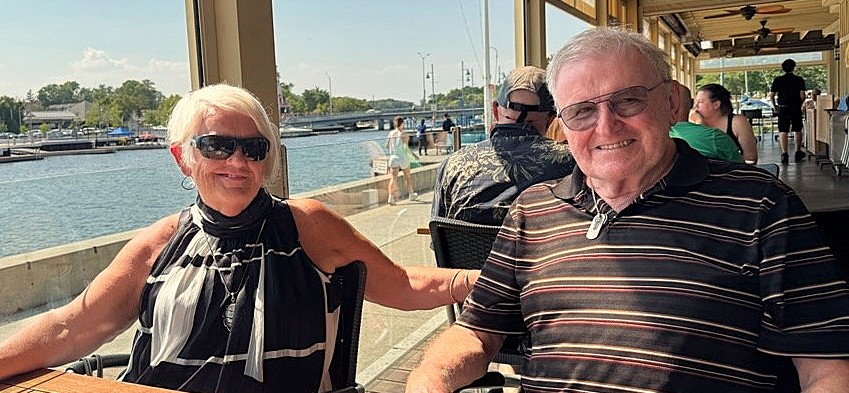
Almost a half-century ago, an older colleague advised me to surround myself with friends who were, not only my age, but younger and older, as well. “With friends your age and younger, you’ll be sharing memories you’ve made together while still able to create new ones. And when you make friends with older people, you’ll learn a lot from their sharing with you the experiences they’ve had.” He didn’t tell me one is silver, the other gold, but I got the drift.

His advice made a lot of sense to me, and to this day, my wife and I can claim friends who are in their nineties and others in their twenties. “You never want to see older friends die,” my colleague said, “but they will. And when that happens, you’ll find solace in the company of the younger ones.”

 That same colleague also told me, tongue-in-cheek, “I don’t need to make more friends. I have trouble keeping up with the friends I already have!”

I didn’t get it at the time, but nearly fifty years on, I better understand what he was saying. We have many friends we barely get to see anymore, given the obligations we all have, the distance we live away from each other, and the vicissitudes of getting older. If it weren’t for social media, I doubt we’d even be in touch with some of them. It’s not that we don’t consider them friends anymore; rather, it’s an inability to keep up.

I first met the friend I’ve known longest when we were fifteen, and sixty-seven years later, that friendship endures. But we see each other in person only two or three times a year now, and even those few meetings seem to require a good deal of advance planning. Moreover, there’s always the chance that one or other of us will have to cancel because of unexpected illness.

I remember my mother in her later years, living longer than my father and most of her friends. Near the end, there was but one longtime friend left, and their children would drive them to an afternoon get-together. Eventually, though, even that proved impossible, and they were reduced to talking by phone—a poor substitute. I dread that day’s arrival for me and my friend.

On a brighter note, my wife and I have acquired five new adult friends over the past half-dozen years. Our five grandchildren have all attained the age of majority now, and are attending university or, having graduated, are working full-time. They all live away from home—two from our eldest daughter and her husband, three from our youngest and hers—but close enough to us that we see them frequently on holidays and family occasions.
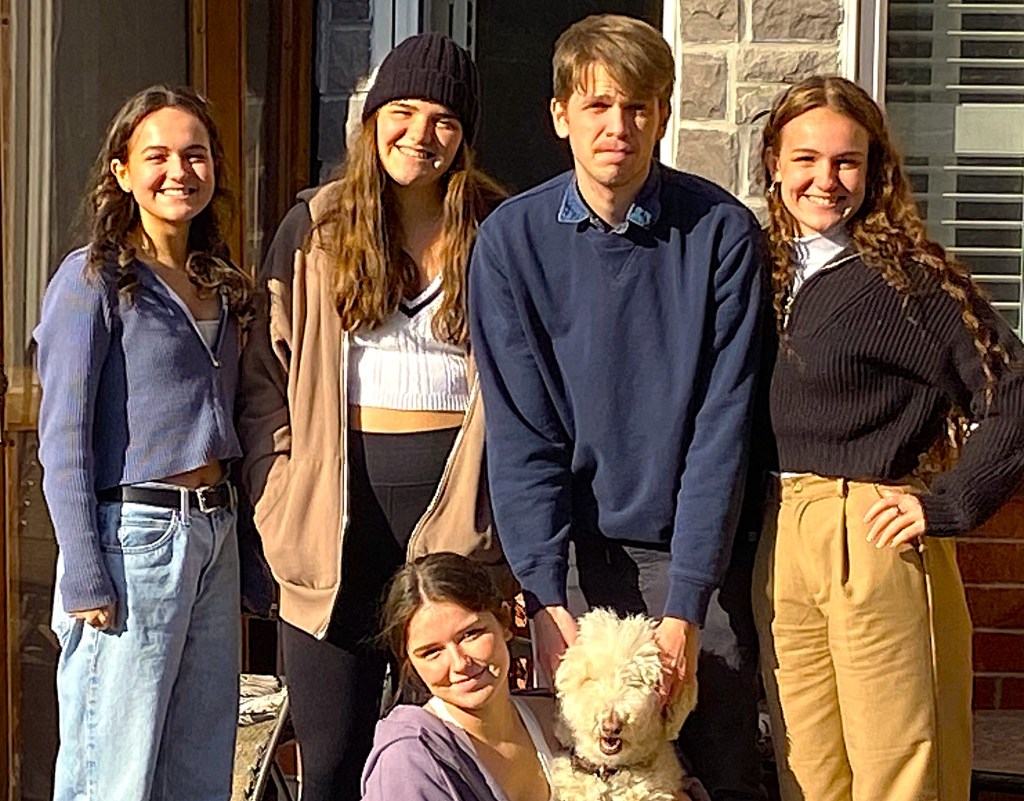
When they were children, we interacted with them lovingly, but with the slightly patronizing manner typical of conversations between elders who’ve seen and done it all and youngsters who are still finding their way. We never spoke to them in ‘baby-talk’, always recognized their unique intellect and agency, and considered them, not friends, but beloved grandchildren. And they regarded us, I think, as loving grandparents.

It’s different now, though. They’re still beloved by us, of course, and we by them; nothing could change that. But as they’ve grown into adulthood, they’ve become friends, not just grandkids. They’ve developed their own sets of values—thankfully, not identical to ours, nor to each other’s, but not in contradiction, either. They have their own viewpoints on issues facing them, and feel free to discuss those with us. They no longer accept everything we say as gospel, but they’re polite in their disagreements. And they back up their points of view with rational thought.

No longer are they participants in our world; instead, we have become participants in theirs.

As a young teacher, I remember cautioning parents of my students that, by helping children learn to think critically, we must accept the likelihood that they’ll think differently than we do about many things. It’s a delight now to find that is the case with our grandchildren. And a greater delight that it’s given us so much to talk about.

Three of them have come to visit us in Florida during the past year or so, all with boyfriends. So, we’ve been included in their conversations with each other, heard what they think about goings-on in the world, which has opened up new avenues of perspective for us. We’ve listened to their music, and they to ours. We’ve gone with them to the beach, to the mall, to restaurants, to the pool—all things we used to do with our older friends in years gone by.

When my colleague first told me the wisdom of cultivating friends of all ages, I confess I never anticipated some of those would be our grandchildren. But so it has turned out, and we are blessed.

As the familiar ditty advises, Make new friends, but keep the old…
More and More Every Day

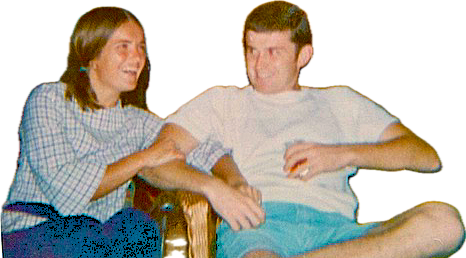
Earlier this week, I celebrated my wedding anniversary—fifty-eight years, all married to the same woman, the lissome lass I first dated when she was but sixteen.  We married four years later, embarked upon fulfilling careers, raised two lovely daughters, and retired to the life we now enjoy together…sixty-three years gone in the blink of an eye, it now seems. Egad!

Friends probably view the longevity and success of our union from my wife’s point of view as a triumph of iron will over probability. From my viewpoint, however, it’s unquestionably a victory of blessed good fortune over whatever random fate I would otherwise have encountered.

Recently, at the behest of our daughters, we each decided to write a short memoir of our lives, intended only for family and close friends.  Mine, titled Being Me, is finished and in the hands of those I care most about; hers, titled My Story, is nearing completion. The trick, as we discovered in the writing, lay in knowing, not what to include, but what to leave out.

As we wrote, we shared memories sparked by old photos, slides, and home-movies produced through the years.  We were amazed by how much we had forgotten over time, and by how different our fuzzy memories sometimes were as we discussed the same events.

“That’s not how it happened!” I found myself declaring more than once, only to have my wife show me a faded snapshot that proved otherwise.  Admittedly, I’ve always had trouble remembering dates, so casting back to those bygone years wasn’t child’s play for me.

By the way, that trouble with dates persists even now, alas.  I recently showed up for a colonoscopy procedure after enduring the requisite purging prior to the visit, only to find I had the right day, the right time, but the wrong year! I was a whole year early! I’m still living that one down.

Through most of our marriage, my wife and I were enthusiastic participants in sports—baseball, curling, golf, hockey, tennis, skiing, swimming, to name but a few—both competitively and recreationally.  As we eased our way through middle age, entering inevitably into our senior years, many of those began to fall away. We found we could no longer glide across the arena or playing field with the same visions of grace and glory we’d previously enjoyed.  Father Time vanquishes everyone, we discovered, no matter how skilled or practised we might be.

An example for me was falling down in my follow-through a few times on the tee-boxes while smoking drives I’d always hit routinely…well, maybe not always, but occasionally.  My playing partners advised me to start wearing a bicycle helmet if I wanted to continue playing.

My exercise today consists of activities where I can’t fall down or off something. I favour the rowing machine, the treadmill (if I hang on), the stationary bike, or exercises conducted while lying on the floor.  Although not a Latin scholar, I find myself chanting under my breath as I work out: sic transit gloria mundi!

As with many things in a long marriage, my wife and I found we had to adjust and change to meet these new demands.  She spends the bulk of her time now, when she’s not reading or doing jigsaw puzzles, making gifts for family and friends out of clay, dichroic glass, and wood, an accomplished artisan.  I call her my boon companion in the arts.

Much of my time, of course, is spent writing—novels, anthologies of tales and poems, and posts on my blog—and listening to classical music.  I’m a prolific reader, as well, and give thanks constantly for online libraries.

Perhaps the biggest change for us is that we no longer find our children and grandchildren to be part of our lives, sharing our experiences; rather, we have become part of their lives, eagerly sharing their accomplishments and happenings. It is we who are the supporting actors now, and they the stars in the unfolding movies of their lives.  We’ve also discovered that this change is very comforting, to be loved and cared for by these essential people in our lives, even as ours wind down.

We still look ahead, however, to each new adventure that might come our way. One of my haiku poems illustrates that philosophy quite clearly—

more yesterdays now
than tomorrows, but it’s the
tomorrows that count


the sails of our youth,
once hoist, are mostly furled now---
though the winds still blow

Back in 1964, when we were still dating prior to marrying, a popular singer, Al Martino, released one of his biggest hits, I Love You More and More Every Day. We adopted that as ‘our song’, and we used to sing snatches of it to each other.  Over the years, it faded for some reason from our minds, although we never abandoned its premise.  But I thought of that song on my recent anniversary day, and began to sing it to myself.  I had to look up the lyrics, of course, after all this time, but the melody was etched in my memory.

On a whim, I decided to record myself singing it on a karaoke track to present to my wife. Although I used to sing bass in a men’s a cappella barbershop chorus, my octogenarian voice is a tad quavery and shrill now, and my range is somewhat limited.  Nevertheless, the sincerity of my singing has not abated, and she at least recognized the song. Sort of.

As I think back to when she and I first met, as I try to remember all that has happened since, as I marvel at the lasting of our union, I find myself overwhelmingly grateful that we celebrated this latest anniversary together, and I offer this haiku to her to reflect those sentiments—

impossible dream!
many might have thought so, but
you made it come true

trusting all that’s passed,
moving forward in good faith,
hands clasped as always