A Musical Gift of Love

And here she is, the singing rage, Miss Patti Page, with her latest hit, Tennessee Waltz…

The year was 1951, and my brother and I were home in bed with chickenpox, the longest week we’d ever spent in our young lives.  To help our mother avoid losing her mind as she coped with our whimpering and complaining, Dad had moved the large, Motorola console radio from the living room to our bedroom.  It was heavy, and I still remember his red face, and the huffing and puffing, that accompanied the move down the long hallway to our room.  It took a while to adjust the antenna, too, to ensure we got proper reception.
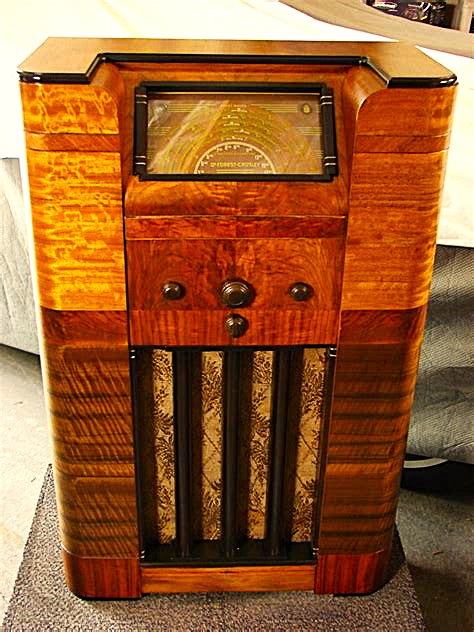
With the entertainment that radio provided during those seemingly-endless days in bed—together with toys, comics, children’s books, and board games—my brother and I managed to allow Mom some brief periods of respite.

All that week, we fell asleep at night to broadcasts of The Lone Ranger, Mark Trail, Amos ‘n’ Andy, and The Shadow.  Having that radio in our bedroom was almost enough to make us wish the chickenpox would hang around a while longer.  Almost!

The bedroom was small, with one dormer window, and our twin beds were separated by a table whose top was taken up by a small lamp and two coasters, upon which sat our water glasses.  On the two shelves underneath, one for each of us, our respective playthings were stored…my brother’s haphazardly, mine orderly.

The first time we heard Tennessee Waltz on the radio, my brother immediately piped up, “That’s my favourite song!”, thus preventing me from claiming it.  Not to be undone, however, I quickly claimed Patti Page’s other big hit, Mockin’ Bird Hill, as my property.  Every time either song came on the air, our bedroom would become eerily quiet as we listened avidly, singing along silently in our tousled heads.

When we eventually dared to accompany the singer aloud, neither of us was allowed to sing the other’s song.  Singing along in our heads was permitted, but by mutual consent, our live performances were strictly proscribed.

As if to ensure our claim to our song would not be usurped by a treacherous brother, each of us would reiterate our ownership every time our favourite came on.  “Tennessee Waltz is my song!” my brother would insist, and for good measure one day, he added, “An’ Patti Page is my favourite singer!”

He was in love with this woman we had never seen, and truth be told, so was I.

By some unspoken rule, however, we both understood that the singer herself could not be claimed as one’s own, and so the next time Mockin’ Bird Hill came on, I chirped, “That’s my favourite song, an’ Patti Page is my favourite singer!”  And, while our mother was in the room one day, I added, “She’s prob’ly as pretty as Mom!”

Mom smiled at that.

But my brother immediately protested, “No, she’s not!  Mom is prettier!”

Our mother smiled at that, too.

The chickenpox finally ran their course, of course, and life went back to normal.  But to this day, I can still sing the entire Tennessee Waltz, and all three verses and the chorus of Mockin’ Bird Hill.  I’m probably off-key in a few spots here and there, but it’s seventy-five years ago that I learned them, so that’s not too shabby.

My brother is gone now, as is Patti Page, but whenever I sing those two songs, usually just to myself, out of filial loyalty and respect for those childhood rituals, I always kick off Tennessee Waltz with the preface, “my brother’s favourite song”.  And if he were still here to hear me, he’d probably say, “Damn right!”

And I know he’d settle back and listen politely as I announce, “An’ here’s my favourite song, Mockin’ Bird Hill!” before launching into it. I won’t do that here, of course, but here’s the lady herself to sing it.

We were lucky, my brother and I, to have shared that musical gift of love.

You Never Know

[NOTE: SUBSCRIBERS WHO FOLLOW THIS BLOG RECEIVE EACH COMPLETE NEW POST IN THE BODY OF AN EMAIL. BUT IF YOU CLICK ON THE TITLE AT THE TOP OF EACH POST, YOU CAN READ THE PIECE IN ITS NATURAL ENVIRONMENT ON MY BLOG SITE. READERS NOT SUBSCRIBED AS FOLLOWERS RECEIVE A SHORT MESSAGE FROM ME WITH A LINK TO EACH NEW POST, WHICH TAKES YOU AUTOMATICALLY TO THE SITE.]

The latest weekly prompt from my Florida writers’ group was to write a story featuring the phrase, ‘You never know!’ This is my response—

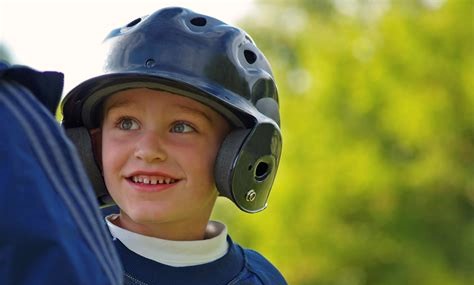
The ball leaps off the bat with a loud thwack! and soars skyward in a graceful parabola above the seven of us milling below, before curving back to earth, slicing right toward my little brother who prances nervously on the grass.  He’s using the almost-new fielder’s glove I let him have for this occasion, while I use my beat-up old one.

I’m twelve years old, which makes Allan nine, and he’s a fair bit smaller.  It’s the first time he’s been allowed to play ball with my friends—a game called 500, where we earn points for fielding balls hit to the outfield by a lone batter—and I’d coached him beforehand, especially emphasizing the need to call everyone off before making a catch so we don’t all collide under the ball.

“Just yell out to warn the guys you’re makin’ the catch,”I told him.  “Everybody else will back off.”

Now, as the ball plunges toward him, I see him raise the glove over his head, his other hand poised beside it, just the way I taught him.  “Call for it!  Call for it!” I yell.

And he does…sort of.  At the very last moment, he shouts, “Yours!” and ducks away.  The rest of us watch disgustedly, disbelievingly, as the ball thuds into the grass, bounces once, and lies still.

“You don’t call Yours!” I yell at my brother, embarrassed in front of my friends.  “You’re s’posed to call Mine! Mine!  And then catch the ball!”  Allan just offers that shamefaced grin he affects when he knows he’s disappointed me. 

One of the other guys, a kid I don’t really like that much, gets right on my brother, shouting, “What a dork!  What a chicken!  What’re you even doin’ here?”  Allan quails in the face of the attack, drops my glove on the ground, and trudges off to the sidelines, head down.

“Shut up, Gary!” I say to the kid, wondering if this is when we’re going to have that fight we both know is coming sooner or later.  “Leave him alone!” 

Gary glares at me, but chooses to let it drop.  He tosses the ball into the batter, and we all trot back to the game—all but Allan, who sits on the grass to one side, holding the old glove I tossed to him when I reclaimed my newer one.

He’s not there when the game ends an hour or so later, so I head home without him.  As I’m getting a glass of cold water at the kitchen sink, my mother says, “Where’s your brother?  Supper’s in about twenty minutes.”

“I thought he came home,” I say.  “I didn’t see him at the park when I left.”

“He’s probably still there,” she says.  “Go find him, tell him it’s suppertime.”

With an exaggerated sigh, I make my way grumpily back to the park, which is only across the street from our house, but the trip seems like an unfair burden on me.  Nobody else is there now, and I can’t see Allan anywhere.  As I’m about to turn homeward, I hear a strangely-familiar noise coming from behind the maintenance shed on the far side of the ballfield.

Bump-badaba-badaba-badaba-thunk!  Bump-badaba-badaba-badaba-thunk! 

I trot across to the shed, and behind it I find Allan tossing a ball over and over onto the slanted roof of the shed.  Each time he tosses it, the ball lands, rolls erratically down the torn and curled shingles, and bounces off the gutter, where my brother waits, trying earnestly to catch it in that beat-up glove.

Bump-badaba-badaba-badaba-thunk! 

And now I remember why I recognized the sound!  I used to practice the same drill by myself a few years ago, when I’d been told I wasn’t good enough to play with the big guys.  Allan doesn’t know I’m there, so I watch for a few minutes, and I hear him quietly calling Mine! before each attempted catch.  He drops more than a few because the gutter deflects the ball’s expected trajectory at the last moment, but he keeps trying.

And then he spots me.  “What?” he says defensively.  “You used to do this.”

“Yeah, I did,” I reply, ashamed now of my reaction in front of my friends earlier.  “You wanta know a trick I learned to make it easier to catch ‘em?”

He nods, so I demonstrate how to hold back a bit as the ball rolls down the roof, then step into it at the last moment, tracking the bounce off the gutter.  “It’s easier to catch the ball when you’re movin’ towards it,” I say.  And we spend the next little while with me throwing the ball onto the roof and him catching it, more frequently now. 

Bump-badaba-badaba-badaba-thunk! 

And every time he moves in for the catch, he yells, “Mine!”

We’re interrupted all of a sudden by my father’s gruff voice right behind us.  I don’t know how long he’s been standing there watching us, but he says,  “Boys!  Your mother’s waitin’ supper.  We gotta go!”

Allan runs to him excitedly.  “Didja see me catchin’ the ball, Dad?  I’m catchin’ most of ‘em now!  Jamie says I’m doin’ good!  Didja see me?”

“Yeah, I saw you, son,” my father says, tousling my brother’s hair with one big hand.  Throwing his other arm around my shoulder, he leads us back across the park.

“I’m gettin’ better, Dad,” Allan says.  “You think the big guys will let me play with ‘em tomorrow?”

“You never know,” my father says, giving my shoulder an affectionate squeeze.  “They might, but you never know.”

“Yeah, they will,” I say, “or they’ll be playin’ without me!”  And my father squeezes my shoulder again.

He Was My Brother

My brother died today, the first of our generation to go.

We weren’t close, he and I—brothers by birth, but distant in life.  He was a complex man, troubled by emotional problems and addiction issues, and hard to help.

Since learning of his passing, I’ve been reflecting on his life and how it intertwined with mine.  As is often the way with me, it helps to write it down and share it.

The best parts of our relationship were during our childhood, so long ago now that I have to think hard to remember them.  We didn’t see each other much over the past five decades, nor did we speak very often by phone—telephone phobia being one of the fears he struggled with.  The last time I met with him, he looked older than I who am his elder by three years—hair gone white, walking only with assistance, racked by a persistent, phlegmy cough.

When we did meet over the years, it was almost always when he needed help.  I checked him into rehab clinics on three different occasions, lent him money, gave him a temporary bed, and after our parents’ deaths, managed his financial affairs—always feeling, I’m sorry to say, somewhat put-upon.  I could never understand why he seemed unable to respond to the many, well-intentioned interventions mounted by his sisters and me.

I have pictures of him as a young boy, nestled in the cocoon of parents and siblings, but almost no pictures of his adult years.  He always had a dreamy expression on his face in those pictures, as if he couldn’t quite grasp the notion that the onrushing realities of life would have to be faced.

He was highly intelligent, but seriously unable to apply his intellect to everyday problems and situations.  He wanted to be liked, but his social skills were lacking, to the point that he would frequently offend people without intending to.  And when he became frightened or frustrated, as he often did, he had a temper.

But he could display a quirky, astute sense of humour, too, and would smile quietly as the rest of us laughed at some of the things he said.  When at his best, he was unfailingly polite, almost Victorian in manner, and spoke deliberately in the most precise English.  Even when I, impatient with the pace of the conversation, would finish his sentences for him, he would continue on to finish in his own way, as if I hadn’t interrupted.  He could be a charmer.

He was a keen devotee of chess, a game at which he beat me regularly in our childhood, much to my chagrin.  He loved classical music, a trait we both learned from our father.  I remember listening to each other’s LP records and arguing about which was best—Tchaikovsky’s 1812 Overture or Rimsky-Korsakov’s Capriccio Espagnol; Bach’s Brandenburg Concertos or Mussorgsky’s Pictures at an Exhibition; Mozart’s Eine Kleine Nacht-Musik or Beethoven’s Piano Concerto No. 5, ‘Emperor’.  I find now that I love them all, and am glad we listened together.

clef

Reading was another of his passions, as it was for me, although our tastes were not the same.  Nevertheless, it was my brother who introduced me to Edgar Allen Poe and William Butler Yeats, two favourites to this day, and it was he who gave me my first copy of J.R.R. Tolkien’s trilogy, Lord of the Rings, perhaps my all-time favourite story.

It would have been nice if all that had continued into adulthood.  But it didn’t, and no amount of wishing will make it so.

Given his afflictions and general health near the end, I feel little sorrow at his passing—rather, I am grateful that his problems are over and he is at peace.  I picture him now, embarking upon the next phase of his eternal journey through the universe, unencumbered by his mortal restraints, free and open wide to whatever may come.

If I choose to remember him only through the good things from our time together on this earth, so be it.  If I choose to believe we loved each other despite the many obstacles, then it is so.  He was more than his illnesses and sufferings, after all.

He was my brother.