Making the Bed

~ CLICK ON THE TITLE IN THE BODY OF THIS EMAIL NOTICE TO READ MY BLOG POST IN ITS NATURAL SETTING ~

Do you make your bed right after you get up in the morning?  Or after you’ve washed and dressed?  Or at all?

I do, and have for almost eighty years.  It’s the first thing I do after stumbling out of bed—or maybe the second if the bathroom beckons urgently.  The only exception to the rule is if my wife is still abed when I awake, but that is not a frequent occurrence.

It was my mother who got me started, around the time I was five years old if memory serves.  She was a stickler for cleanliness and neatness, and I, being the eldest of five siblings, was her first opportunity to test her mothering skills.
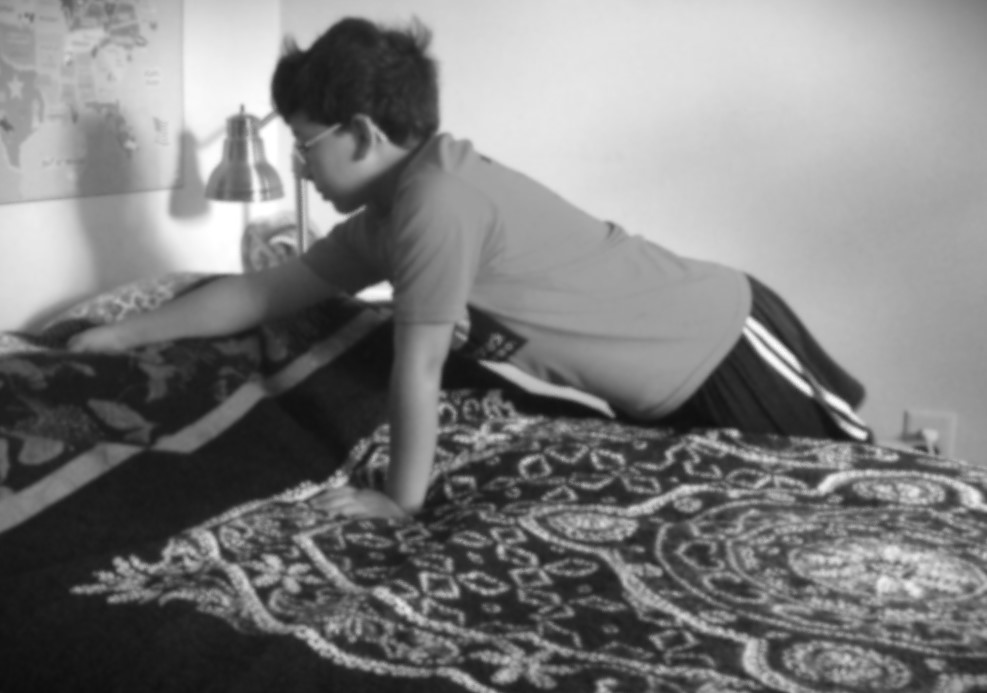
Her instructions were quite specific, and I still follow them to this day.  Begin by brushing wrinkles out of the bottom sheet with my hand, then tuck in its corners—no contoured sheets in those bygone days.  Next, pull the top sheet up to neck-level, then do the same with the blankets on top of it (usually two in number), smoothing them as I go.  Plump up my pillow and straighten the pillowcase, then centre it below the headboard.  And finally, drape the bedspread atop everything, ensuring it hangs evenly off the floor on both sides of the bed, and at the bottom, then tuck the top neatly under the front edge of the pillow.

Complicating matters was the fact that my bedcover had three wide, brown stripes running top to bottom on its beige base colour, and woe betide me if those stripes didn’t run parallel to the edges of the bed when I was finished.  I can remember mornings when I was sent back upstairs from the kitchen two or three times to remake the bed before I was allowed to start eating.  I hated cold oatmeal, so it didn’t take me long to learn the valuable lesson that a job worth doing is worth doing right…the first time!

My brother, three years younger than I, eventually faced the same challenges.  I can still see that little boy studying me intently, trying to mimic my every move on the twin bed that sat opposite mine.  He didn’t like cold oatmeal either!

My mother’s bed, shared with my father, was always made up immaculately, of course, except on washing day, when she’d strip the bed down to the mattress, turn it or flip it if she thought it necessary, then remake the bed with a clean set of sheets.

The day came when my brother and I had to do the same with our beds, another learning exercise we didn’t enjoy.  Eventually, so too did my sisters, but I always thought they were given more leeway than my brother and I received.

I’m sure I asked my mother more than once why we had to go through this exercise every day.  “We’re gonna hafta un-make it tonight!” I probably whined.

As best I recall, her reasoning ran like this: making my bed when I got up meant that, no matter what else I might do that day, I’d have accomplished something!

In the beginning, I probably had to ask what that big word meant, but I must have got the gist pretty quickly.  My mother was all about accomplishment, achievement, the attaining of goals, and she imbued her five children with that attitude.

Nevertheless, now that I’ve attained a ripe, old age, the question could be asked why I persist to this day in making my bed.  The answer might be habit, I suppose, and an aversion to change, for I do value predictability and stability.  Or perhaps I’m secretly trying to please her still, long after she has left the stage.  Maybe I possess the same inner drive for order and perfection that defined her, that impelled her.  Whatever the reason, it seems a little late in the game for me to learn to love a messy, unmade bed.

The bed I make up now is quite different from the one I started with, of course.  A king-size model, it requires me to climb atop it to straighten the sheets and blankets in the middle, where I can’t reach them while standing on the floor.  Manhandling the bedcover into place—now called a sham, a coverlet, a counterpane—is a man-sized chore, even as my man size is diminishing steadily.
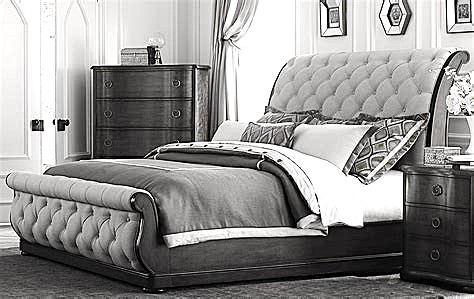
Rather than one pillow, or even two, to plump and place, there are ten in all—two my wife and I rest our heads on overnight, two larger ones in fancy slipcases to be placed in front of those, and six smaller ones to place on the bed, not haphazardly, but precisely, symmetrically, and balanced.

There are days when I feel I need a nap after pulling it all together, but alas, I lack the will to pull the covers down when I’ve just made them up.

So, I soldier on, making my bed every morning, always glad when I enter the bedroom later in the day to see the display of my fidelity to the lessons I was taught.  And best of all, it allows me to think of my mother every day, to thank her for the lessons she insisted I learn.

I must confess, though—I have never learned to fancy cold oatmeal!  
A Musical Gift of Love

And here she is, the singing rage, Miss Patti Page, with her latest hit, Tennessee Waltz…

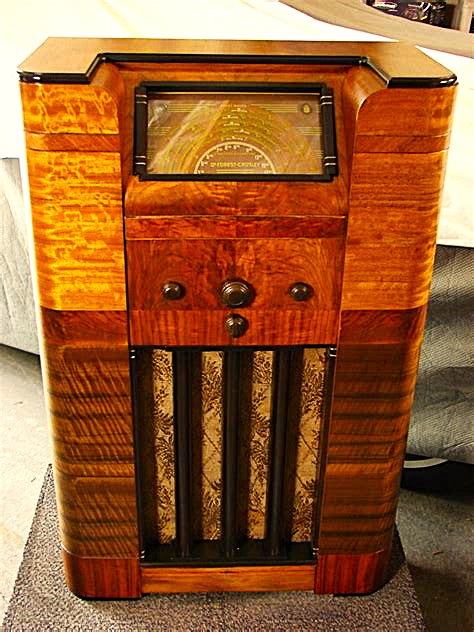
The year was 1951, and my brother and I were home in bed with chickenpox, the longest week we’d ever spent in our young lives.  To help our mother avoid losing her mind as she coped with our whimpering and complaining, Dad had moved the large, Motorola console radio from the living room to our bedroom.  It was heavy, and I still remember his red face, and the huffing and puffing, that accompanied the move down the long hallway to our room.  It took a while to adjust the antenna, too, to ensure we got proper reception.

With the entertainment that radio provided during those seemingly-endless days in bed—together with toys, comics, children’s books, and board games—my brother and I managed to allow Mom some brief periods of respite.

All that week, we fell asleep at night to broadcasts of The Lone Ranger, Mark Trail, Amos ‘n’ Andy, and The Shadow.  Having that radio in our bedroom was almost enough to make us wish the chickenpox would hang around a while longer.  Almost!

The bedroom was small, with one dormer window, and our twin beds were separated by a table whose top was taken up by a small lamp and two coasters, upon which sat our water glasses.  On the two shelves underneath, one for each of us, our respective playthings were stored…my brother’s haphazardly, mine orderly.

The first time we heard Tennessee Waltz on the radio, my brother immediately piped up, “That’s my favourite song!”, thus preventing me from claiming it.  Not to be undone, however, I quickly claimed Patti Page’s other big hit, Mockin’ Bird Hill, as my property.  Every time either song came on the air, our bedroom would become eerily quiet as we listened avidly, singing along silently in our tousled heads.

When we eventually dared to accompany the singer aloud, neither of us was allowed to sing the other’s song.  Singing along in our heads was permitted, but by mutual consent, our live performances were strictly proscribed.

As if to ensure our claim to our song would not be usurped by a treacherous brother, each of us would reiterate our ownership every time our favourite came on.  “Tennessee Waltz is my song!” my brother would insist, and for good measure one day, he added, “An’ Patti Page is my favourite singer!”

He was in love with this woman we had never seen, and truth be told, so was I.

By some unspoken rule, however, we both understood that the singer herself could not be claimed as one’s own, and so the next time Mockin’ Bird Hill came on, I chirped, “That’s my favourite song, an’ Patti Page is my favourite singer!”  And, while our mother was in the room one day, I added, “She’s prob’ly as pretty as Mom!”

Mom smiled at that.

But my brother immediately protested, “No, she’s not!  Mom is prettier!”

Our mother smiled at that, too.

The chickenpox finally ran their course, of course, and life went back to normal.  But to this day, I can still sing the entire Tennessee Waltz, and all three verses and the chorus of Mockin’ Bird Hill.  I’m probably off-key in a few spots here and there, but it’s seventy-five years ago that I learned them, so that’s not too shabby.

My brother is gone now, as is Patti Page, but whenever I sing those two songs, usually just to myself, out of filial loyalty and respect for those childhood rituals, I always kick off Tennessee Waltz with the preface, “my brother’s favourite song”.  And if he were still here to hear me, he’d probably say, “Damn right!”

And I know he’d settle back and listen politely as I announce, “An’ here’s my favourite song, Mockin’ Bird Hill!” before launching into it. I won’t do that here, of course, but here’s the lady herself to sing it.

We were lucky, my brother and I, to have shared that musical gift of love.

I Believed ‘Em All!

Step on a crack, break your mother’s back!  Tell a big lie, your father will die!

I remember chanting this doggerel over and over as I pranced along the sidewalk as a young boy.  I have no idea where I first heard it, but I wasn’t the only one whose sing-song voice could be heard uttering the same incantation.

To this day, I try to avoid those sidewalk cracks, and most of the fibs I’ve told over the years have been small.  I swear!

That little ditty was just one of many such learnings we picked up as children from playmates, kindly old aunts and uncles, even parents.  And for periods of time, I believed all of them!

Eat your carrots, sonny!  They’ll put hair on your chest.  I’ve always loved carrots, especially raw, and I do have hair on my chest—gray now, of course, but still curly—so that advice bore out, I guess.

Drink your milk!  It will make your bones strong.  I readily believed that, but when I was that age, we were drinking powdered milk my mother mixed up from a box.  Even when ice-cold, it tasted vile, and I always wished we had a cat I could feed it to—but not a black one.

Superstitions played a big part in much of the advice I was given, even though my parents told me superstitions were premature explanations that had overstayed their time.  Unfortunately, I didn’t know what that meant.

It’s bad luck if you ever let a black cat cross in front of you!  To this day, if a black cat crosses my path, I detour.  It makes no sense, yet I do it, anyway.

Don’t walk under a ladder!  It will bring bad luck, too.  That seemed logical to me, but I would sometimes tempt fate by doing that very thing.  Today, though, a grown man, I always walk around ladders.  I mean, a piano could fall on me, right?

Bad luck will follow if you open an umbrella in the house!  I can attest to the truth of this one because I did open an umbrella indoors one day, just to test the proposition.  As it popped open, it struck a vase on the ledge beside the front door, sending it crashing to the ground.  That led to one of those rare occasions where I told one of those small fibs I mentioned earlier.

Look for four-leaf clovers if you want good luck!  My friends and I spent many an hour doing just that, and found lots of them, as I recall.  And because no great tragedy ever befell us, I suppose the statement was accurate.  One friend insisted on calling them shamrocks, and said we might find a leprechaun.  I never did.

Don’t pull on the wishbone ‘til after you’ve made your wish!  I tried earnestly to comply with that advice, but my brother—more interested in winning the contest than having his wish fulfilled—always pulled first and usually won.  And as a result, my wish that he would magically disappear never came true.

Keep your eyes closed and the boogey-man won’t get you!  I had a lot of faith in this one, especially in the dark of the bedroom I shared with my brother.  I would sometimes hear terrifying moans coming from the vicinity of his bed, so I’d cower under my blankets, eyes screwed shut, praying the advice was well-founded.  I never wished for my brother to be taken, but I did prefer it be he rather than I.   

Don’t cross your eyes for fear they’ll stay that way!  I remember my friends and I daring each other to try it, all of us fearful it might be true, none of us willing to be the one who found out.  I know now there’s nothing to it, and I attribute the fact that I have to wear corrective eyeglasses to some other factor.  But I did look cross-eyed at one of my teachers once, and was surprised when she did the same back at me.  She was one of my favourites ever after!

As I entered adolescence, the nature of advice I was given by well-intentioned relatives changed, although most of it was equally preposterous.

Don’t pick your zits!  You’ll end up with boils all over your body.  The spectre of boils was terrifying, but so, too, was the mortification of acne.  For a while, I tried to convince myself I was developing freckles, but I knew better.  A variety of creams and lotions entered the fray, but I did resort to picking at my zits out of desperation.  Sixty years on, I’m still waiting for the boils.

Beware the devil’s hands, boy.  If you succumb to his entreaties, you’ll go blind!  Well, all I can say to that is, although I do wear glasses now, I never once lost my sight.

Yes, you can borrow the car again.  But see that you bring it back!  This command from my father on every occasion I asked for his keys, was aggravating at the time, but has since become a standard family joke among my siblings.  And it’s a source of wonder to me now that one of my granddaughters owns and drives a car I used to own.  She brings it back every time she visits.

There are other gems of wisdom from my childhood, most of which I no longer follow, some of which I do.  They pop into my mind at the oddest moments, sometimes evoking a laugh, occasionally a tear.  They are milestones along the road I journeyed as I grew up, and they helped bring me safely to the cusp of my ninth decade.

And once upon a time, I believed ‘em all.

Ready For The Fall

The prompt from my Florida writers’ group this week was to write a piece about fall. Here is what I came up with, and I hope it will conjure memories for you, too—

A middle-aged woman I didn’t know smiled as she entered the elevator with me one day last week.  “Are you ready for the fall?”

I cringed, steeling myself for an unwanted mini-sermon from a dogged do-gooder, a holy-roller.  “I…I guess so,” I stammered.  “I mean, I pray, I try to do good…”

A look of bewilderment creased the woman’s face, followed quickly by one of amused pity.  “No, no,” she corrected me patronizingly, “you misunderstand me.  I meant the autumn, not the apocalypse!”

“Ah…of course,” I sighed, embarrassed by my mistake.  “Sorry…”

As the elevator doors opened on the eighteenth floor, the woman stepped out, still amused by my obtuseness.  “No need to apologize,” she said.  “At your age, I imagine it’s best to be ready for both!” The doors slid closed behind her before I could think of a suitably nasty retort.

Back in my apartment on the twentieth floor, I reflected on our conversation as I unpacked the groceries I’d been carrying.  It seemed to me an honest mistake to make, an understandable one, and the woman’s parting shot was likely good advice.  But why did she have to be so rude?

Later, relaxing with my wife over a cup of tea, I talked about what had happened, and about getting ready for the fall.  “Remember when we were kids, it seemed summers would never end?” I said.  “From the day school let out until the first fall-fair arrived, our days were blissful, carefree, limitless.  Eat breakfast and head outside to play; dash inside for lunch, then back outside; trudge home for supper, then out again ‘til the streetlights came on.”

“I remember,” my wife said.  “But things sure changed when we grew up, in spite of our best intentions.  We got married, started working, became parents.  Those summers suddenly became  a lot more finite.”

I nodded agreement.  The calendar tells us summer ends with the autumnal equinox in late September, but the end always came much sooner for us.  It was marked, not by an arbitrary calendar, but by the requirement to go back to school.  Both of us were teachers in those long-ago days, and felt we had to get back ahead of our students if we had any hope of being ready for their return after Labour Day.

For many folks, I guess—like the woman on the elevator—the coming of fall is a time of new beginnings, of anticipation.  They think in terms of flaming fall-colours, brisk autumn days, evenings spent curled up with a book in front of a cozy hearth.  They look forward to the change of seasons.

Not I, though!  I’ve always thought of it as a gloomy time—the conclusion of summer, and the close of so many pleasurable things that vanish with the coming of September.

For example, with the end of warm, sunny weather, there came an end to my carefree habits of dress.  No more swimsuits or running shorts; no more open sandals or ancient running shoes; no more tank-tops or faded team sweaters.  Instead, it meant a return to the straitjacketing drill of collars and ties, pressed slacks, knee-high socks, and polished dress shoes.

The end of summer put a stop to the treasured luxury of shaving every two or three days, depending upon what activities were planned.  And it called a halt to the wearing of old ball caps as an alternative to brushing my hair.

The inevitable onset of fall wrote fini to three or four leisurely cups of coffee with the morning paper, and an end to mid-morning breakfasts on the back porch.  It heralded, in their stead, the beginning of hurried showers and breakfasts-on-the-run.  It marked the re-entry into the exciting world of daily traffic reports, as I attempted to find the shortest, quickest route into and out of the city.

In short, summer’s end brought to a close the lazy, drifting vagaries of summer living I tried so vainly to hang on to.  Coming back to the real world always provided a jolt to my entire system.  It was like going from childhood to adulthood all over again!  Once was enough!

“You know, I never wanted to be the type of person who wishes his life away,” I commented to my wife, “always wishing for something to be different than it is.  But, in a sense, I guess I used to do just that.”

“Me, too,” my wife said wistfully.  “For me, the year was divided into two seasons, summer and not-summer. And not-summer was not good!”

“Remember we’d take the girls on one last camping trip up north?” I said.  “My cutoffs and hat would be in my bag, my shaving-kit left behind.  It was always one final fling in the glorious realm of summer.”

“I loved it,” my wife said, staring into the past.  “Hiking, swimming, paddling, exploring, picking berries, roasting marshmallows, singing our hearts out by the campfire, sleeping the sleep of the innocent in those old sleeping-bags—it was like being children all over again.”

“Even now,” I said, “when every day is like a Saturday, I still pretend summer will never end, that I’ll never have to grow up and give it up.  It still seems there’s always so much left to do.”

“At least we have Florida now,” my wife smiled.  “Year-round summer! Before the fall ever arrives, I’m already planning what I’ll pack.”

During the course of our happy reminiscing, I managed to forget my annoyance with the supercilious woman in the elevator.  But by chance, we happened to ride the elevator again yesterday, going down this time.  As she stepped aboard, I could tell she recognized me as the confused old fart from a week ago—but this time, it was I who spoke first.

“Before you ask, I’m ready for Ar’geddon!” I smiled.

“Our what?” she said, head cocked.

“Ar’geddon!” I repeated.  “I’m ready to go!”

The same pitying look as last time spread across her face, the same condescending smile.  “Sir, you mean Arma-geddon.  You’re mispronouncing the word.” She shook her head disdainfully, appalled by my lack of acuity. 

Waiting a beat to spring the trap I’d plotted, I said very quietly, “Whatever!  It’s not the end of the world!”

We rode the rest of the way in icy stillness, a long, silent fall from the eighteenth floor to the parking garage.

Fathers, Fathers Everywhere

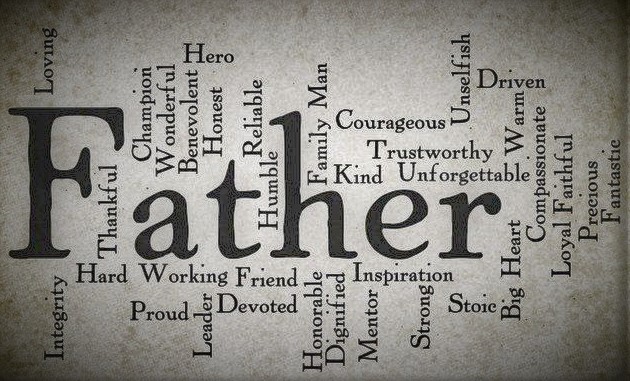
There’s going to be a gathering of three clans at the home of my eldest daughter and son-in-law this coming Father’s Day—Burt, Cherry, and Whittington.  With a combined age of 233 years, the three patriarchs (of whom I am one) boast of seven children (four of whom are themselves fathers) and nine grandchildren in total (some of whom are shared).

Those grandchildren, in addition to their patriarchal lineages, share ancestry from six families on the distaff side—Arnold, Eaton, Romig, Rowsell, Sakeris, and Wrigglesworth.  We are a discrete gathering, to be sure, but one big family, and it will be a happy coming-together.

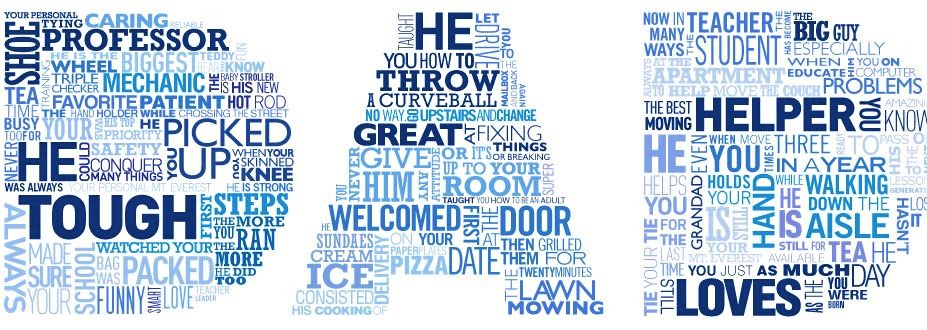
Father’s Day has changed for me since I was a child, the eldest of five siblings.  In the beginning, I suspect I didn’t truly know what we were celebrating, given that all of us loved our father every day.  It was simply a party-day for some reason, and we all joyfully joined in to present Dad with our homemade gifts and cards.  He appreciated those more, I think, than the presents we purchased for him as we grew older—although he always had a softness for candy.

It wasn’t until I became a father myself that I began to appreciate what it meant to be somebody’s Daddy.  The enormous responsibility that entails was never lost on me, but it paled in comparison to the happiness and sense of fulfilment it brought.  And so, as my own daughters grew into young women, so too grew my appreciation of my own father and his role in shaping my life.

He lived into his 92nd year, mentally sharp to the end, and never lost his sense of humour.  Near the end, my mother asked him in a gentle whisper if he’d like her to sing to him.  “Not particularly!” he whispered back, the ghost of a smile gracing his face.

She sang him out, anyway, as he must have known she would.

Until I became one, fathers were always older men than I.  With remarkably few exceptions, I remember the fathers of my childhood friends being much like my own father—distant at times, there when it mattered, working-men dedicated to providing for their families.  They embarrassed us on some occasions, swelled our hearts with pride on others, and we never doubted their love for us—except maybe occasionally when they wouldn’t let us borrow the car.

I felt the same about the man who became my father-in-law—whom we lost way too soon—and I consciously tried to model my own behaviour as a father on those two men who were most prominent in my life.

It seems to me, even now, that it took a whole lot longer for me to grow up and move out from under my father’s purview than it did for my daughters to do the same.  My childhood lasted forever, or so I remember it.  But my girls were there—those precious, sweet babies—for such a short time, and then, in the blink of an eye, they were gone to men of their own.  To this day, I have a picture of the two of them, aged four and two, on my dresser.

“You’re not children anymore,” I tell them now.  “But I’ll never stop being your father.”  And I cling to that certainty.

I suspect the same sentiment is true for the other two patriarchs who’ll be joining me this coming Sunday.  One of them has three sons, the other a son and daughter.  All of those sons are themselves fathers now, which has led us to the startling realization (at least to me) that fathers are no longer the older men in our lives.  With the passing of our own fathers, it is younger men who now fill the role.

And in that reality, we old men are blessed.  The four sons, as fathers, are all loving husbands, dedicated to their families.  Hard as it is to believe, two of them are already retired from their life’s work, and branching out into other pursuits.  And without exception, they have loved and honoured their fathers and fathers-in-law from the beginning.

Over the next few years—years I trust I will be around to enjoy—I suspect there will be even younger fathers joining our combined families.  Grandsons and the young men who will marry our granddaughters may, with their partners, bring more children into our midst, great-grandchildren who will grace our lives.  At this point, I find it a happy circumstance that the number of fathers in our families is likely to increase.

By a matter of mere weeks in one case, and by a few years in the other, I am the eldest of the three patriarchs—the seniorem patrem familia, I suppose—but there is no doubt that such a distinction matters little.  All three of us are held in equal esteem by our respective children and grandchildren.

This coming Sunday, if everyone were able to attend, including sons- and daughters-in-law (and perhaps boyfriends), we would number twenty-five in all—seven of whom would be fathers, three of those, grandfathers.  Alas, some are too far distant, some grandchildren will be working, some in-laws may be with their own fathers at similar gatherings.  But whether with us or not, all will be there in spirit, and we shall raise a glass to the fathers among us.

There may come a few moments on Sunday when we three old men will find ourselves sitting off to the side, watching and listening to the antics of the younger ones, no longer as integral a part of the hubbub as once we were—a few moments when we may look at one another, smile knowingly, and silently acknowledge our shared status, a status none of us, perhaps, ever imagined we would occupy.

In so many ways now, I believe I have become my father.  And that accomplishment makes me happy.  I think Dad would be happy, too.

Happy Father’s Day to all of us who are blessed to be fathers and sons.

The Child We Were

We cannot know where we are headed, only whence we have come.  It behooves us, then, to help those coming along behind us.

*  *  *  *  *

we’re never so tall

as when we bend down to help

a child who needs us

comfort3

*  *  *  *  *

the child is father

of the man, as wordsworth wrote—

so nurture the child

images

*  *  *  *  *

to free your children,

hug them close, then let them go—

they’ll e’er be with you

hugs

*  *  *  *  *

those wee girls we raised—

grown now, married, mothers both—

never left our hearts

sisters

*  *  *  *  *

grandchildren, our hope

for the future—as we were

once upon a time

grandchildren

*  *  *  *  *