The Dandelions

If this entire post appears in the body of your email, click the title to read it in its natural blog setting.

During the grand opening ceremonies of a worldwide sporting event the other day, six military jets in tight formation roared over the stadium, low in the sky, trailing coloured vapour plumes to match the host country’s flag. Their presence lasted but an instant; they weren’t there, then they were, then they weren’t.
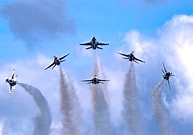
It occurred to me that, prior to their arrival, no one in the crowd was likely thinking about them. In the brief moment they were overhead, everyone was. But mere seconds after they were gone, most had likely forgotten all about them again, attention shifted to what was happening next.

I considered the scene analogous to the ever-shrinking attention span of our human species. We tend to focus on what is right in front of us, but only while it’s in front of us. Once it isn’t, we switch attention to whatever is next in front of us. Like scrolling.

Thinking, rather than being a critical, contemplative brain activity, is being reduced to bits and bites lasting only seconds. Reacting, in fact, not true thinking at all. Stimulus/response in place of thoughtful consideration and planning.

We would be doomed, I think, if we were required to focus our whole being on something for an extended period of time, as our distant ancestors had to while stalking game for food on distant savannahs. Had they allowed themselves to be distracted as easily as we do, they’d have starved to death, and none of us would be here today.

Life is much like the appearance of those jets in a way. As individuals, first we weren’t here, now we are, and eventually we won’t be. Collectively, going back perhaps 300,000 years, modern humans, homo sapiens, weren’t here; now we are; eventually, if the fate of other species is any indicator, we may not be.

Science tells us that more than ninety-nine percent of all species of life that have ever inhabited Earth are now extinct. When one considers the enormous number of life-forms still extant and sharing the planet with us today, the overall number of living creatures that once were here and now are not is staggering.

Individually, we are similar to dandelions, if you think of it. We might look out the window one day and spy a dandelion despoiling the pristine, green expanse of our lawn. If we leave it to its own devices, the dastardly weed will grow apace (doubtless in company with scores of comrades); then it will spread its seeds, miniature, white parachutists blown on the wind; and then finally, it will wither and die.
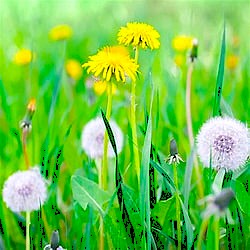
Or, we could choose to interrupt its life-cycle by stomping it under our heel, exposing it to toxic chemicals, uprooting it, or even turning it into wine. Either way—whether we leave it or interfere with it—it wasn’t there, then it was, then it wasn’t.

We are the same. Many of us live out our proverbial threescore-and-ten—some less, some more—spreading our seed as we go, and then die a natural death. Others of us, beaten down ‘neath the harsh heel of neglect and apathy, die prematurely. Still others, afflicted with a wasting disease, perhaps exposed to toxic chemicals intended to stem its progress, slowly wither and die. And still more are violently uprooted from their homes by violence or starvation or natural disaster, and are left to die alone.

Mortality is a subject I think about more often now than when I was younger. I contemplate my own, of course, though I do not fear it. Fearing death is like fearing the sunrise; it’s going to happen whether it’s feared or not, so why waste time dwelling on it? As I wrote in one of my poetic offerings—

I haven’t the time to dwell on life’s finish,
‘Though I know it lurks, that’s certain.
When all has been said, I still look ahead
To life’s next opening curtain.

I confess, however, that the demise of our human species is something I do think about. Not because it will affect me directly; I’ll be long-embarked on whatever journey is next for me by then.

But increasingly, it seems to me, humankind is separating itself into two broad factions: the many drones who think rarely for themselves and react self-servingly to whatever stimuli they encounter, content with the base pleasures they eke out; and the despoilers, fewer in number, who think deeply and conspire self-servingly to enrich themselves at the expense of the rest.

I’m pretty sure there is a third group, much smaller, who think first of others, not themselves, and who fight the good fight against the drones and despoilers. But alas, they are running out of time to win that fight. All harbingers are pointing to cataclysmic changes in the earth’s traditional, heretofore dependable cycles, patterns we have known and depended on for our entire lives.
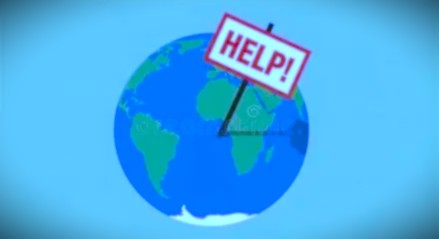
But the effects of those changes aren’t here yet, not in sufficient abundance to alarm the majority of us. It seems that, as a species, we won’t admit they exist—just as that crowd in the stadium didn’t know about the jets in advance.

We’ll know when the effects begin to announce themselves fully, though—earthquakes, floods, wildfires, drought, increasing temperatures, rising sea-levels, climate-forced migration, and, of course, mass death. We’ll pay attention then.

My fear is that, unlike the other examples I’ve mentioned, where things aren’t here, then are, and then aren’t again, the massive changes rushing pell-mell at us will not disappear. They will linger to become the new normal for millennia to come.

And thus, it is we of whom some far-in-the-future, interstellar observer might say, “Human beings? Yeah, they weren’t there, then for hundreds of thousands of years they were, and then they weren’t.”

I console myself that perhaps the dandelions will survive.

Paradise. Lost.

The mind is its own place, and in itself can make

a heaven of hell, a hell of heaven.

– John Milton, Paradise Lost

The great writers and minstrels have always known these things about humankind.  Although there are individual exceptions, as a species, we are inherently selfish, alarmingly short-sighted, determinedly destructive, and staggeringly—perhaps wilfully—oblivious to the effects we have on our environs.

Hearken to tales of yore if you want proof—from the painful struggles of Sisyphus, to the incessant wars of Imperial Rome and her successor empires, to the colonial pursuit of material wealth and power, to the latter-day struggles for freedom and autonomy—all undertaken in the belief that we can overcome every obstacle because we are superior beings.  We rule.

But for what?  As Schopenhauer declared, “…the most perfect manifestation of the will to live represented by the human organism, with its incomparably ingenious and complicated machinery, must crumble to dust and its whole essence and all its striving be palpably given over at last to annihilation—this is nature’s unambiguous declaration that all the striving of this will is essentially vain.”

Although not yet eighty years of age, I have been alive in nine decades, the 1940s to the 2020s.  Incredibly privileged to have been born in North America to white middle-class parents, one of five children, I have witnessed wars, epidemics, economic booms, financial crises, social inequities, scientific breakthroughs, racism and misogyny, space exploration, and (for better or worse) rock ‘n’ roll.

Throughout history, the prevailing norm among the successful has been that through it all, we are making progress, that things are getting better.  And I suppose they are, for some.

But at what cost?  There are approximately 7.8 billion people inhabiting our planet Earth today, about ten percent of whom live in extreme poverty.  More alarmingly, almost eighty-five percent of the world’s population lives in regions currently affected detrimentally by climate change, the most serious threat to our future.

Science tells us that the planet has existed in its orbit around the sun for close to 4.54 billion years, and that the first forms of primitive life likely appeared around 4.1 billion years ago.  The earliest examples of hominins (human-like creatures), our homo habilis, homo rudolfensis, and homo erectus ancestors, have been around for an astonishingly small period of only two million years.  The species to which we belong, homo sapiens, arose perhaps 300,000 years ago, descended from those earlier creatures, but took a huge intellectual leap forward approximately 65,000 years ago with the creation of projectile weapons, fishhooks, ceramic vessels, sewing implements, cave-paintings, even musical instruments.

So, in fewer than 70,000 years, a tiny fraction of the 4+ billion years of Earth’s existence, humankind with all its strivings has brought this ancient planet to the point where our own continued existence on it may well be in doubt.

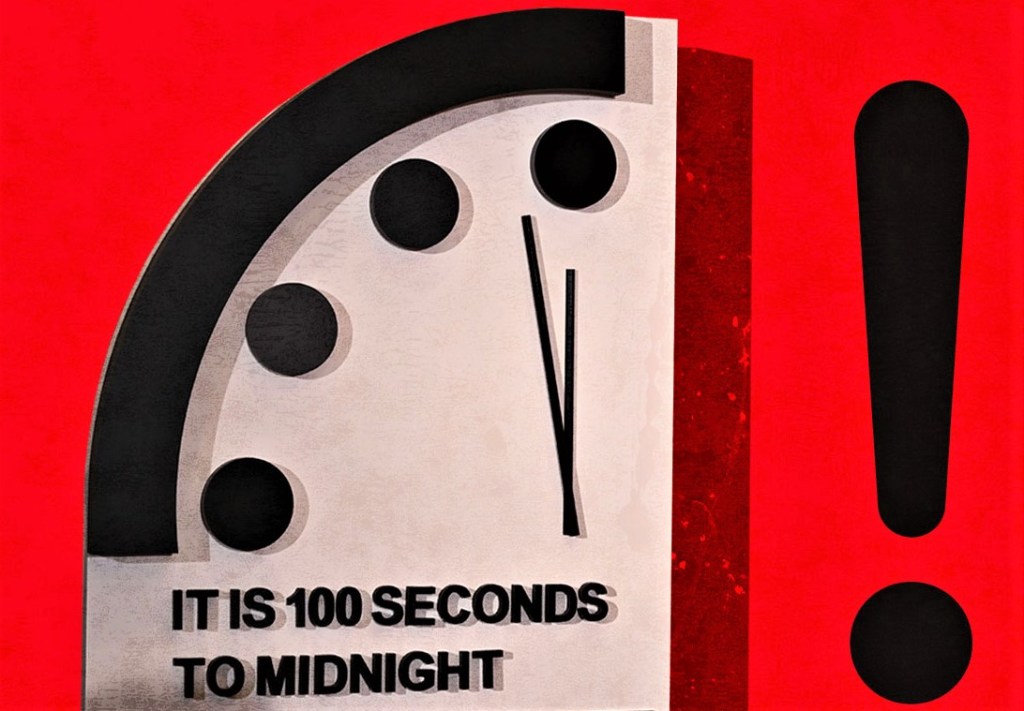
Since 1947, the Bulletin of the Atomic Scientists has maintained a Doomsday Clock, whereby they metaphorically measure threats to humanity from unchecked scientific and technical advances.  In the ensuing years, the clock has wavered between seventeen minutes to midnight and its present setting of 100 seconds to midnight.  If it were ever to reach actual midnight, it would mean there has been an extraterrestrial collision, a nuclear exchange, or a catastrophic climate change that has wiped out humanity.

Which would you choose, the extraterrestrial or nuclear option, or the climate alternative?  And which do you think is most likely?

Of the three, I worry most about climate change.  At my age, I’ll not likely see the worst effects, those that will change life irrevocably for Earth’s inhabitants, but I liken their inevitable depredations to the fate of a rabbit warren, whose denizens over time despoil it.  The result is zoonotic disease and plague, which will kill many of the rabbits, severely afflict others, and force survivors to find a new home.

We are already seeing examples of death and forced migration of people from their homelands because of the effects of environmental damage.  We are befouling our oceans, deforesting our woodlands, polluting our freshwater lakes, strip-mining our highlands, and poisoning our rivers with our mountains of garbage and toxic pollutants.

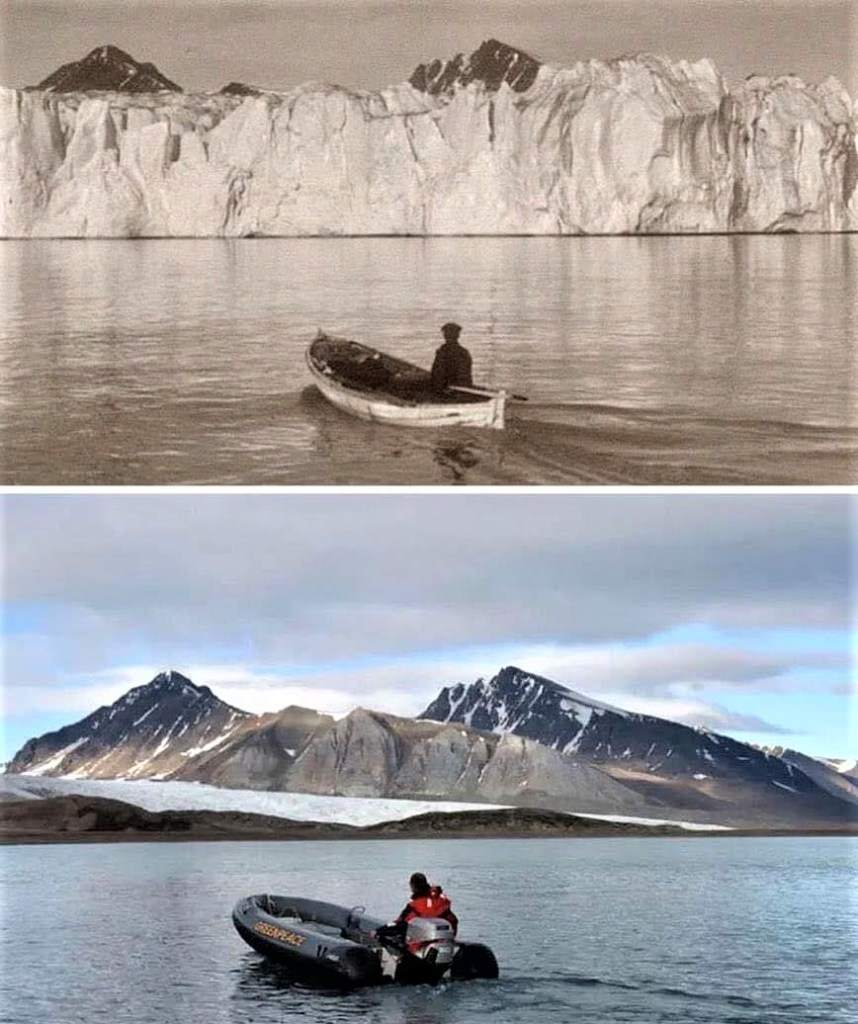
We are pumping untold amounts of carbon-rich contaminants into the atmosphere, resulting in a dramatic warming of Earth’s temperatures, to the point where polar ice-caps are melting and sea-levels are rising.  

The strangest thing of all is that we are perpetrating these transgressions, even while knowing of their deleterious effects.  We know about the Doomsday Clock.  We know about the Paris Agreement on climate change, we know we must restrict global temperature rise to less than 2C by 2050, and that we are perilously close already to missing that target.  We know regional and seasonal temperature extremes are reducing snow cover, melting sea ice, intensifying heavy rainfall, producing once-in-a-lifetime droughts, and changing habitat ranges for animal and plant life. 

But we are a self-engrossed species, intent on our own pursuits with scant regard for the long-term consequences.  A superior species?  I wonder.

Of course, the planet Earth soldiers on, evolving as she has since time immemorial, herself oblivious to the life-forms who call her home—the most advanced of whom think perhaps they, not she, will determine the future.

But we seem unable to stop the clock.

They paved paradise and put up a parking lot

-Joni Mitchell, Big Yellow Taxi

Whose Truth Will Survive?

It has been stated countless times, including here in this blog, that history is written by the victors.  Whatever any of us knows of the past has been determined by what we’ve been taught by our parents, teachers, and elders.  And they have simply passed down to us their own understandings, their own truths, based on what they, too, were taught.

In short, what we think we know to be true about our society has been filtered through many lenses—cultural, racial, gender, socio-economic, and political.

There have been attempts at presenting alternative-history scenarios, fictional representations of what might have been, ‘if only…’.  Harry Turtledove, for instance, has written books about what happened after the South won the U.S. Civil War, and after Germany won WW II.  H. G. Wells wrote about an alien invasion of the planet, The War of the Worlds, which, when adapted by Orson Welles for radio in 1938, caused near-panic among the populace.  In The Plot Against America, Philip Roth described events after Franklin D. Roosevelt was defeated in the 1940 U. S. presidential election by Nazi sympathizer Charles Lindbergh.  And Margaret Atwood devastatingly described the misogynistic society of Gilead in The Handmaid’s Tale, about subjugated women in a patriarchal society.

These alternative histories are fiction, of course, although all too real in their telling.  But across the millennia, there actually have been innumerable alternate realities experienced by people of the time—realities which, although true, were never recorded and passed down the generations because they were on the losing side. 

For example, I was taught, as perhaps you were, that Columbus discovered the Americas in 1492; in truth, what he did was discover it for the white, colonial, commercial powers of Europe.  The Americas had actually been discovered eons earlier, maybe 33,000 years ago, by Asian nomads who crossed what was then a land bridge where the Bering Straits exist today.  I was never taught about those people and their descendants, nor about that version of history, true though it is.

I grew up with an implicit understanding that the great figures of the past were men, not women—white-complexioned, European men who stood fast against the barbarian hordes, mostly people of different colour and religion, who were intent on assailing the established order.  It remained for the adult me to learn about such people as Gandhi, Mandela, MLK, Margaret Sanger, Eleanor Roosevelt, Tommy Douglas, Gloria Steinem, Cesar Chavez, Germaine Greer, Nadia Murad, Malala Yousafzai, Greta Thunberg, and others too numerous to list who have fought for equity for all.

Growing up in the 1950s, I was taught that communism was the great evil of our time—the relentless enemy of capitalism, the system I was taught to believe would raise us all to a marvellous standard of living.  Today, for many of us, that has proven to be true; but what of those for whom it has not?  What will be written of their history, if anything is written at all? 

I would never proclaim myself a communist—the whole ideology has become irredeemably politicized and villainized.  But I confess an affinity for a socialist-democracy, where every citizen is considered worthy of support and respect, over what has become a capitalist-democracy, where the very few prosper, a larger number just get by, and the majority contend with poverty.  For those whose motto might be I’m alright, Jack, such a status quo might be fine.  But any society, like a chain, is only as strong as its weakest link.

I wonder, too, about the history my great-grandchildren (and their children) will learn, beginning perhaps thirty years from now, about the times we are presently living in.  Will it be a history of the life I am living?  Will it be a history of the lives led by the homeless in our cities?  Will it be a history of ethnic minorities who are being subjected right now to genocidal actions by oppressors?  Will it be a history of the demise of democracy in favour of authoritarianism?  Whose truth will survive?

More existentially, I wonder about the future of the planet itself, and whether our depredations will allow it to sustain human life as we have known it over the past hundred years.  I saw two pictures recently, taken from the same location one hundred years apart, that drove home the point very viscerally. 

Just as our human species has evolved (for better or worse) over the span of our history—and continues to evolve—so too does the planet continue to change.  And not necessarily for the better.  Are such evolutionary changes inevitable, beyond our ability to control, dooming our descendants to a dismal future?  Or is it within our capabilities and purview to act now to preserve a habitable planet for them?

Most of us govern ourselves by the values and truths we have come to accept, based on our accumulated experiences, which for the most part is conducive to social order.  But danger arises when we close our minds to the values and truths espoused by others, without trying at least to understand them.  At such times, we need to de-centre from our own perceptions of things, and try to see the world as those others see it, based on their experiences.

We need not necessarily accept those alternative views, but by understanding their genesis, we can contribute to a more harmonious existence.

And then, with any luck, we can acknowledge our differences, while at the same time recognizing the perils we face collectively.  That is how we shall survive.

And that is how there will be a history to pass along to those who will come after us.  Whatever the truth will be.