I recently won a writing award from the Gulf Coast Writers Association for this short piece about playing baseball with my brother. In the past four years, I’ve received a first, second, and third place award from the GCWA for both prose and poetry.
I hope you enjoy this little story..
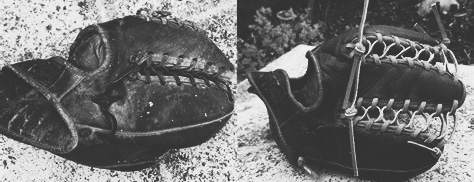
The ball leaps off the scarred, wooden bat with a loud thwack! Above the seven of us scrambling on the dusty sandlot in the park, it soars in a graceful parabola before curving back to earth, slicing right toward my little brother who prances nervously on the grass. He’s wearing the oversized, almost-new fielder’s glove I let him use for this occasion, while I wear my beat-up old one.
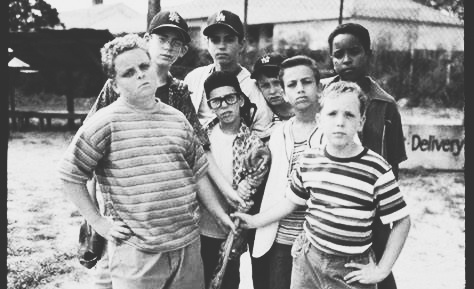
I’m twelve years old, which makes Allan nine, and he’s a fair bit smaller than the rest of us. It’s the first time he’s been allowed to play ball with my friends, a game called Five Hundred, where we earn points for fielding balls hit to the outfield by a lone batter—one hundred for a flyball, seventy-five for a one-bouncer, and fifty for a grounder. The first kid to five hundred gets to be batter. If we fumble any of the balls we’re chasing, we lose the same number of points. When I first started playing the game, I’d quickly learned about the existence of negative numbers!
I’d tried to coach Allan in the game’s intricacies before today’s outing, especially emphasizing the need to call everyone off before fielding the ball so we don’t all collide underneath it.
“Just yell real loud to warn the guys you’re gonna make the catch,”I told him. “When they hear you callin’ for it, everybody else will back off.”
Now, as the ball plummets toward him for the first time, I see him raise the glove a tad over his head, his other hand poised beside it, just the way I taught him. The glove seems almost too big on his skinny arm.
Waving my friends off, not wanting to spoil his triumph, I yell, “Call for it! Call for it!”
And he does…sort of. At the very last moment, he shouts, “Yours!” and ducks away. The rest of us watch disbelievingly as the ball thuds into a sparse patch of grass, bounces once, and lies still. My friends turn as one to measure my reaction.
“You don’t call Yours!” I yell at my brother disgustedly, embarrassed in front of my friends. “You’re s’posed to call Mine! Mine! And then catch the ball!”
Allan just offers that shamefaced grin he affects when he knows he’s disappointed me. And my embarrassment keeps me from reassuring him he’ll do better next time.
One of the other guys, a tall kid I don’t really like that much, gets right in my brother’s face. “What a dork! What a chicken! What’re you even doin’ here?” Allan quails in the face of the attack, tosses my glove on the ground, and trudges off to the sidelines, head down, shoulders slumped.
“Shut up, Gary!” I say to the kid, wondering if this is when we’re going to have that fight we both know is coming sooner or later. Neither of us likes the other. “Leave my brother alone!” My fists are clenched in anticipation of his response.
Gary glares at me, but chooses to let it drop. He tosses the ball into the batter, and we all trot back to the game—all but Allan, who sits forlornly on the grass to one side. He’s holding my old glove now, after I reclaim my newer one.
He’s not there when the game ends an hour or so later, nor is his bicycle, so I climb on mine and head home without him. As I’m getting a glass of cold water at the kitchen sink, my mother says, “Where’s your brother? Supper’s in half an hour.”
“I thought he came home,” I say. “I didn’t see him or his bike at the park when I left.”
“He’s probably still there,” she says. “Go find him, tell him it’s suppertime.”
With an exaggerated sigh, I make my way grumpily back to the park, which is only a block from our house, but the trip seems like an unfair burden on me. None of the other kids is there now, and I can’t see Allan anywhere. As I’m about to turn homeward, I hear a strangely-familiar noise coming from behind the maintenance shed on the far side of the sandlot.
Bump-badaba-badaba-thunk! Bump-badaba-badaba-thunk!
I ride my bike across to the shed, and see my brother’s bike propped against the wall. Behind it I find Allan tossing a ball over and over onto its slanted roof. Each time the ball lands, it rolls erratically down the torn and curled shingles, and bounces off the gutter, where my brother waits, trying earnestly to catch it in that beat-up glove.
Bump-badaba-badaba-thunk!
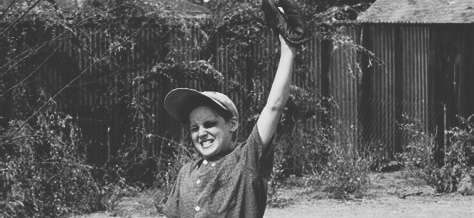
And I immediately remember why I recognized the sound! I used to practice the same drill by myself a few years back, after I’d been told I wasn’t good enough to play with the big guys. Allan doesn’t know I’m there, so I watch for a few minutes, and I hear him quietly calling Mine! before each attempted catch. Because the gutter deflects the ball’s expected trajectory at the last moment, he misses more than a few. But he keeps trying.
And then, as he bends to retrieve a dropped catch, he spots me. “What?” he says defensively. “You used to do this.”
“Yeah, I did,” I reply, ashamed now of my earlier reaction in front of my friends. “You wanta know a trick I learned that makes it easier to catch ‘em?”
He nods, so I take my old glove from him and demonstrate how to hold back a bit as the ball rolls down the roof, then step into it at the last moment. “It’s easier to catch the ball when you’re movin’ towards it,” I say. And we spend the next little while with me throwing the ball onto the roof and him catching it, more frequently now.
Bump-badaba-badaba-thunk!
And every time he moves in for the catch, he yells, “Mine!”
We lose track of time, but we’re interrupted all of a sudden by my father’s gruff voice right behind us. Neither Allan nor I knows how long he’s been standing there watching, but he says, “Boys! Your mother’s waitin’ supper. We gotta go!”
Allan runs to him excitedly. “Didja see me catchin’ the ball, Dad? I’m catchin’ most of ‘em now! Jamie says I’m doin’ good! Didja see me, Dad?”
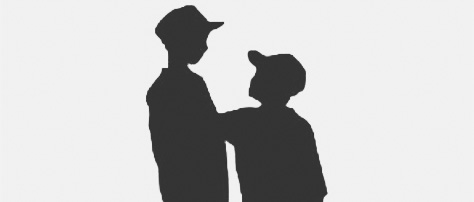
“Yeah, I saw you, son,” my father says, tousling my brother’s hair with one big hand. “Maybe we oughta buy you a glove of your own.” Throwing his other arm around my shoulder, he leads us back across the park, each of us walking our bikes.
“I’m gettin’ better, Dad,” Allan says. “You think the big guys will let me play with ‘em again?”
“You never know,” my father tells him, giving my shoulder an affectionate squeeze. “They might, but you never know.”
“Yeah, they will,” I say, “or they’ll be playin’ without me!” And my father squeezes my shoulder again.