Making Friends

Almost a half-century ago, an older colleague advised me to surround myself with friends who were, not only my age, but younger and older, as well. “With friends your age and younger, you’ll be sharing memories you’ve made together while still able to create new ones. And when you make friends with older people, you’ll learn a lot from their sharing with you the experiences they’ve had.” He didn’t tell me one is silver, the other gold, but I got the drift.

His advice made a lot of sense to me, and to this day, my wife and I can claim friends who are in their nineties and others in their twenties. “You never want to see older friends die,” my colleague said, “but they will. And when that happens, you’ll find solace in the company of the younger ones.”

 That same colleague also told me, tongue-in-cheek, “I don’t need to make more friends. I have trouble keeping up with the friends I already have!”

I didn’t get it at the time, but nearly fifty years on, I better understand what he was saying. We have many friends we barely get to see anymore, given the obligations we all have, the distance we live away from each other, and the vicissitudes of getting older. If it weren’t for social media, I doubt we’d even be in touch with some of them. It’s not that we don’t consider them friends anymore; rather, it’s an inability to keep up.

I first met the friend I’ve known longest when we were fifteen, and sixty-seven years later, that friendship endures. But we see each other in person only two or three times a year now, and even those few meetings seem to require a good deal of advance planning. Moreover, there’s always the chance that one or other of us will have to cancel because of unexpected illness.

I remember my mother in her later years, living longer than my father and most of her friends. Near the end, there was but one longtime friend left, and their children would drive them to an afternoon get-together. Eventually, though, even that proved impossible, and they were reduced to talking by phone—a poor substitute. I dread that day’s arrival for me and my friend.

On a brighter note, my wife and I have acquired five new adult friends over the past half-dozen years. Our five grandchildren have all attained the age of majority now, and are attending university or, having graduated, are working full-time. They all live away from home—two from our eldest daughter and her husband, three from our youngest and hers—but close enough to us that we see them frequently on holidays and family occasions.
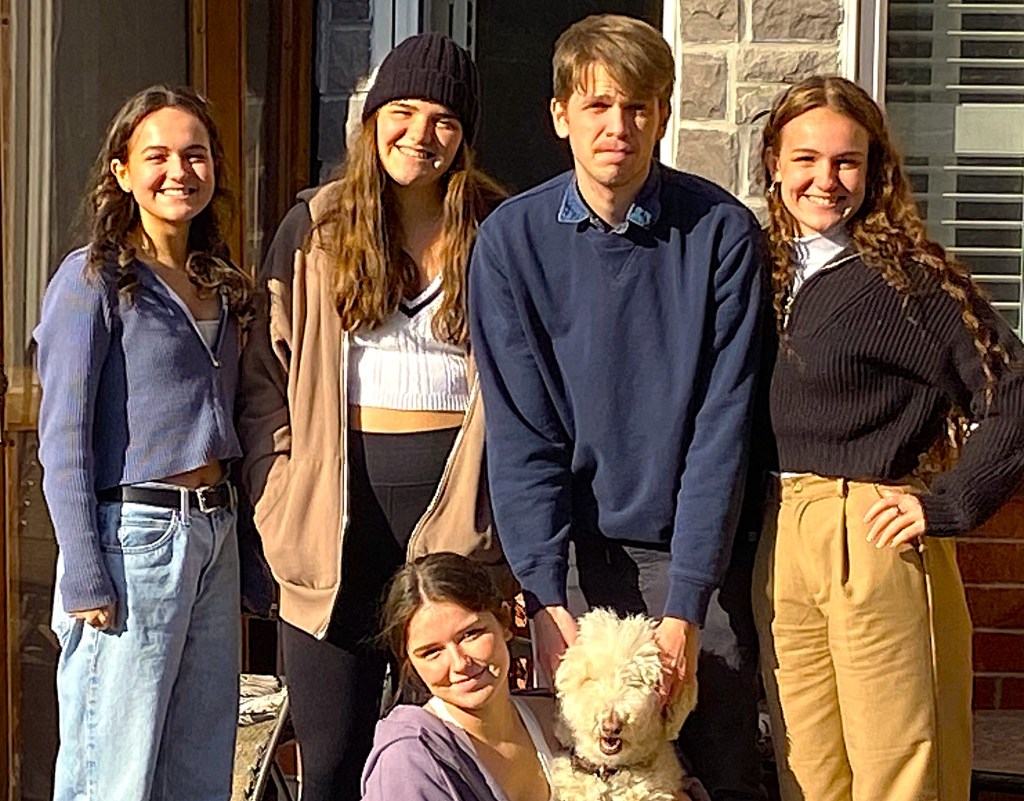
When they were children, we interacted with them lovingly, but with the slightly patronizing manner typical of conversations between elders who’ve seen and done it all and youngsters who are still finding their way. We never spoke to them in ‘baby-talk’, always recognized their unique intellect and agency, and considered them, not friends, but beloved grandchildren. And they regarded us, I think, as loving grandparents.

It’s different now, though. They’re still beloved by us, of course, and we by them; nothing could change that. But as they’ve grown into adulthood, they’ve become friends, not just grandkids. They’ve developed their own sets of values—thankfully, not identical to ours, nor to each other’s, but not in contradiction, either. They have their own viewpoints on issues facing them, and feel free to discuss those with us. They no longer accept everything we say as gospel, but they’re polite in their disagreements. And they back up their points of view with rational thought.

No longer are they participants in our world; instead, we have become participants in theirs.

As a young teacher, I remember cautioning parents of my students that, by helping children learn to think critically, we must accept the likelihood that they’ll think differently than we do about many things. It’s a delight now to find that is the case with our grandchildren. And a greater delight that it’s given us so much to talk about.

Three of them have come to visit us in Florida during the past year or so, all with boyfriends. So, we’ve been included in their conversations with each other, heard what they think about goings-on in the world, which has opened up new avenues of perspective for us. We’ve listened to their music, and they to ours. We’ve gone with them to the beach, to the mall, to restaurants, to the pool—all things we used to do with our older friends in years gone by.

When my colleague first told me the wisdom of cultivating friends of all ages, I confess I never anticipated some of those would be our grandchildren. But so it has turned out, and we are blessed.

As the familiar ditty advises, Make new friends, but keep the old…
Scratching My Back

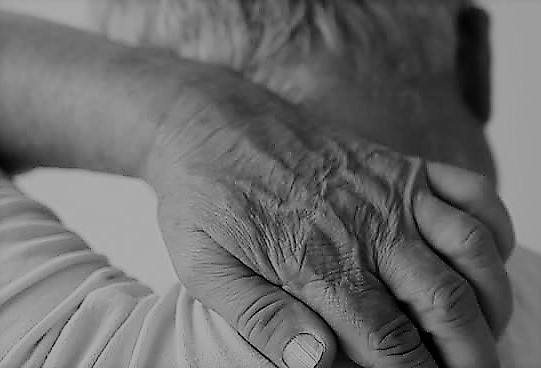
As I creep up on my seventy-fifth birthday, somewhat apprehensively, I have discovered I can’t scratch my own back anymore.  It used to be that I could get at any itch, anywhere, with a few grunts and gyrations.  But now, my arms are no longer able to reach those remote regions where I itch the most.

backscratch

Over my shoulder, with either hand, I manage to get no more than one hand-span below my neck.  Pushing down on my overhead elbow with the other hand doesn’t help much; in fact, it usually brings on a muscle cramp.

Reaching behind to stretch a hand up from my waist isn’t any better.  The itch I’m itching to scratch is always just above my outstretched fingers, lying irritatingly in that band of skin that connects between my shoulder blades.

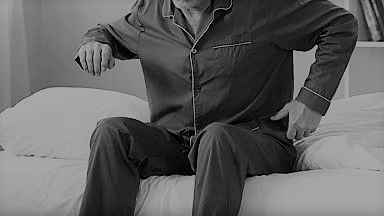
I’ve noticed other things, too, that I used to be able to do, none of which comes as easily anymore.  Getting out of bed in the morning, for instance, can sometimes be quite a chore.  My back might be aching, for example, though for what reason I’m unable to say.  Our mattress is comfortably firm, and relatively new.

On other days, my knees might be stiff, or my neck could be kinked.  This, despite the fact I sleep with a small pillow between my knees for proper alignment, and have tried the so-called natural-shape pillows.  Perhaps it’s my natural shape that’s misaligned.

elderly-man-sitting-on-bed

It seems on mornings like these—most mornings, in fact—I have to stand slowly, uncurling myself, moving ever so carefully, just to give everything a chance to jiggle and drop back into its accustomed place.  There isn’t any pain, really—although it hurts to hear the clicking and popping sounds my body makes.

Even on those days when there isn’t any discomfort, I find I’m exercising more than I used to—exercising more caution, that is.  I don’t run downstairs two-steps-at-a-time anymore.  In fact, I don’t even run up the stairs with the same reckless abandon I once displayed.  I’ve learned from experience that doing so now is just…well, reckless.  My toes seem to nick the edge of one of the steps at the most inopportune moment.

It strikes me as too ridiculous that I’m falling up the stairs!

There are other minor tasks, acts requiring only the simplest degree of motor coordination, that I can’t handle anymore, either.  Pulling on a sweater, for example, has become a major endeavour.  It seems a short time ago that it was a relatively smooth operation—both arms into the sleeves, up and over the head, then down around the waist.  Increasingly now, I seem to become trapped inside the sweater enfolding me like a cocoon, a helpless larva struggling to get free.  On more than one occasion, I’ve even had to call for help.

It’s the same with tying my shoelaces.  For more than seventy years, I’ve been tying bows with flair.  Lately, I fume and fumble with fingers that don’t seem to flex and follow my poor brain’s instructions.  I haven’t yet resorted to wearing shoes with velcro tabs, but I fear the day is nigh at hand.

And don’t get me started on buttonholes!

Once upon a not-so-long-ago time, I could read the smallest print while sitting in semi-darkness, and never feel the strain.  Now, even with the three-way lamp turned to its highest setting, I find the words are invariably out of focus—with my reading glasses on!  I’m forever leaning in closer to the page, or to the laptop screen, trying for a better angle.  It’s even become a problem in the bright, outdoor light!

KONICA MINOLTA DIGITAL CAMERA

Other changes abound, as well, both subtle and insidious.  I’d mention them here, but—most alarmingly, perhaps—I can’t always remember what they are; I forget things much more often than I used to.

At least, I think I do—when I remember to think about it at all.

Of course, I’ve tried out various measures to compensate for all these lapses.  For example, whenever something important is decided by my wife and me, I write little notes to myself so I won’t forget.  The trouble is, I often forget where I stored the notes.

I do try not to let myself become too upset by all these changes.  After all, one’s golden years are supposed to bring freedom from stress and anxiety.  Getting older is a natural process, and I remind myself of that repeatedly—repeatedly, because I usually don’t remember that I’ve already reminded myself.  Alas, there’s nothing to be done about that.

But fortunately, if I really try, I can look at it all as rather amusing.  It’s kind of fun, occasionally, to step outside my skin (figuratively speaking) and look at myself as an objective bystander might.

And what do I see?  I see a reluctantly-elderly gentleman, a grandfather, often bespectacled, striving to stay erect and trim, who, in his heart, wants to believe he still feels and acts like a young man, able to do all the things he used to do.

Problem is, he can’t remember how!

Anyway, if you’re out for a stroll in the park one day and chance to run into an old man sitting on a park bench, and if you notice he’s shimmying manically side to side, as if demented, please don’t be dismayed.  It’s probably just me, trying to scratch that infernal itch in the middle of my back!

Man sitting on a bench under a tree