Love, Through Their Eyes

The weekly prompt from my Florida writers group was to write a piece about seeing things ‘through their eyes’, and this is my offering—

Two short poems, each exquisitely written, capture exactly—exactly—how I feel about this brief moment in time I know as my life, about the relationship I have with the love of my life, and about what will happen when I am gone.

The first, When You Are Old, by William Butler Yeats, the greatest of the Irish poets, portrays a woman through the eyes of her departed husband, as he speaks of his love for her, even beyond death, and where she might find him—

When you are old and gray and full of sleep
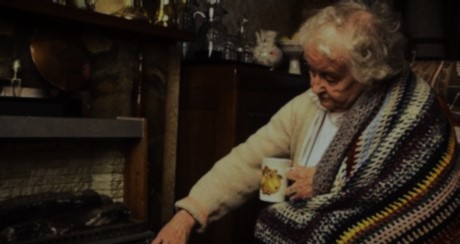
And nodding by the fire, take down this book
And slowly read, and dream, of the soft look
Your eyes had once, and of their shadows deep.

How many loved your moments of glad grace,
And loved your beauty with love false or true,
But one man loved the pilgrim soul in you,
And loved the sorrows of your changing face.

And bending down beside the glowing bars,
Murmur, a little sadly, how love fled
And paced atop the mountains overhead,
And hid his face amid a crowd of stars
.

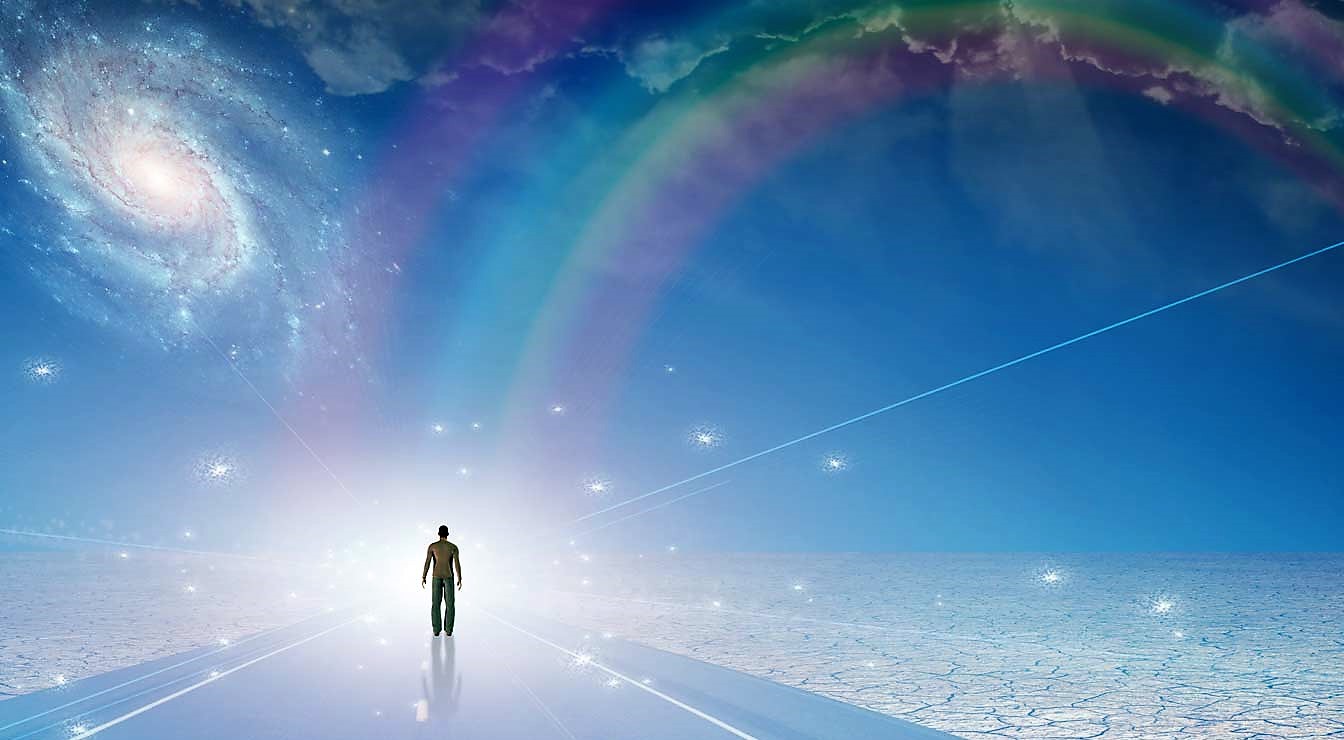
I find that sentiment so uplifting, so reassuring, that love, triumphant over death, is waiting ‘midst a crowd of stars.

I no longer believe, as I did as a child, in life eternal, in the idea of earth and heaven, the now and hereafter.  Rather, I believe the life-force presently empowering me—what I might call a soul—is but a fragment of the energy that fuels our expanding universe, a spark of light presently encased in my mortal being.  And when I, the shell that hosts the spark, will have finished my course, when I have expired, that life-force animating me will simply rejoin the universe.  It will be as if I am carrying on beyond death, but with no memory of my life—just as I have no memory now of what came before my birth.

The mortal I shall die, but my life-force will not, for if it did, the universe would shrink at the loss of that fragment of energy.  Science tells us, however, the universe is expanding, not shrinking, so it must be that no energy is ever lost.
But where will my immortal life-force go, and in what form, I wonder?  And what of my love whom I will have left behind?  Happily, I find an answer to these questions in the second of the poems I number among my favourites.  Written by David Jones, a Liverpool poet, from his collection titled Love and Space Dust, I find it moving and profound—

And in the end
I will seek you
Out amongst the stars.

The space dust
Of me will
Whisper ”I love you”
Into the infinity
Of the universe.

So, no life eternal, but something better—love eternal.  According to these two poets, as seen through their eyes, the pilgrim soul who shares this life with me will find my spark of energy—my soul—waiting somewhere in the stars for her, calling I love you into the void until she hears me.

And I choose to believe she will hear me.

David Jones: https://www.goodreads.com/author/quotes/5241391.David_Jones

W. B. Yeats: https://www.poetryfoundation.org/poets/william-butler-yeats

From This Moment On

Some folks worry about getting old.  And they bemoan the passage of time.

But once upon a very long time ago, nobody kept track of the years.  People in their nomadic, tribal clusters got up when the day dawned and went to sleep when it got dark.  They did it every day, over and over again, until, inevitably, they didn’t awaken from their final sleep.  Nobody ever worried about getting old; they just lived until they died, and the tribe moved on without them.

Even today in this wide world of ours, there are still countless numbers of people who don’t worry about aging.  They live in unforgiving climes where their every effort is bent toward eking out a subsistence-level existence.  Or they’re driven from their homes by ravaging armies—persecuted for their beliefs, their skin colour, their ethnic origins, and often enslaved by their captors.  They, too, live only until death frees them, far too burdened to worry about the realities associated with getting old.

Yet here are we, inured from such extreme conditions—secure, some of us, in our developed, civilized world, inundated by the availability of all the essentials and luxuries we might desire—and what do we do?  We worry about getting old.

Not all of us, of course.  Many young people appear to have the same nonchalant, carefree attitude I probably had at their age—back when immortality was a given.  The halcyon days of youth seemed destined to last forever.  Only old people were old. 

Others of us, the more elderly, have learned a sterner truth.  Youth lasts only until it’s over, only until our bodies begin to betray us.  The rosy morning of youth gives way, grudgingly, to a more austere noontime of life, and then, inexorably, to a deepening dusk we all are destined to enter. 

Some folks accept that truth more gracefully than others, some more stoically, some more fatalistically.

But some, of course, do not accept it at all.  In the words of the poet, they rage, rage against the dying of the light.  Nips and tucks; silicone, botox, collagen, and dye; enhancements and reductions; diets and purging; even exercise—all undertaken by men and women in a fruitless pursuit of everlasting youth.

Why is this so, I wonder, here in our world of plenitude?  Well, perhaps it’s because we have become obsessed with measuring time.  After all, time’s passing itself is neither our friend nor our enemy.  It’s just there, it’s always been there, and it will forever be there.  So, I’ve come to believe it’s the keeping track of time that plagues us, wreaking havoc on our youth, eventually forcing us to an acceptance of the stark reality that we are going to get old.  And we are going to die.

But remember, we are the first cohort of people since the dawn of time who has ever had the luxury of worrying about that.

From this moment on, perhaps we shouldn’t.

Nothing Else Matters

I read an interesting post recently by an author, John Gorman*, who professed that life is essentially meaningless, that there’s no preordained destination for our journey.  Rather than searching fruitlessly for meaning in life, he wrote, we should be looking for the intrinsic value in the things we do along the way.

On the same day, I read another post by a different writer, Rachel McAlpine**, who mused poetically on the eventuality of her own death—

…I’ll be dead and I won’t know I’m dead because
the brain that could create, contain and comprehend that fact
has fled.

The two posts got me thinking about, guess what?  Death, and the value of life.  And here, in haiku form, are some conclusions I came to—

my thoughts, unbridled,

take me to worlds I ne’er will see,

nor have ever seen

The-Spirituality-and-Immortality-of-the-Soul

don’t fret the future,

focus fiercely on the now

where we live our lives

the now

the journey from womb

to tomb—no matter how long—

is but a fragment

immortal 2

I would have to live

forever to realize

I already died

live-a-life-of-purpose

nothing else matters

in the great, grand tapestry

if you are with me

together

See?  No worries.

*[John Gorman –  IG: @heygorman]  **[Rachel McAlpine – writeintolife.com/blog]