The Dandelions

If this entire post appears in the body of your email, click the title to read it in its natural blog setting.

During the grand opening ceremonies of a worldwide sporting event the other day, six military jets in tight formation roared over the stadium, low in the sky, trailing coloured vapour plumes to match the host country’s flag. Their presence lasted but an instant; they weren’t there, then they were, then they weren’t.
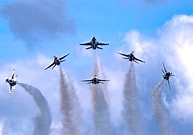
It occurred to me that, prior to their arrival, no one in the crowd was likely thinking about them. In the brief moment they were overhead, everyone was. But mere seconds after they were gone, most had likely forgotten all about them again, attention shifted to what was happening next.

I considered the scene analogous to the ever-shrinking attention span of our human species. We tend to focus on what is right in front of us, but only while it’s in front of us. Once it isn’t, we switch attention to whatever is next in front of us. Like scrolling.

Thinking, rather than being a critical, contemplative brain activity, is being reduced to bits and bites lasting only seconds. Reacting, in fact, not true thinking at all. Stimulus/response in place of thoughtful consideration and planning.

We would be doomed, I think, if we were required to focus our whole being on something for an extended period of time, as our distant ancestors had to while stalking game for food on distant savannahs. Had they allowed themselves to be distracted as easily as we do, they’d have starved to death, and none of us would be here today.

Life is much like the appearance of those jets in a way. As individuals, first we weren’t here, now we are, and eventually we won’t be. Collectively, going back perhaps 300,000 years, modern humans, homo sapiens, weren’t here; now we are; eventually, if the fate of other species is any indicator, we may not be.

Science tells us that more than ninety-nine percent of all species of life that have ever inhabited Earth are now extinct. When one considers the enormous number of life-forms still extant and sharing the planet with us today, the overall number of living creatures that once were here and now are not is staggering.

Individually, we are similar to dandelions, if you think of it. We might look out the window one day and spy a dandelion despoiling the pristine, green expanse of our lawn. If we leave it to its own devices, the dastardly weed will grow apace (doubtless in company with scores of comrades); then it will spread its seeds, miniature, white parachutists blown on the wind; and then finally, it will wither and die.
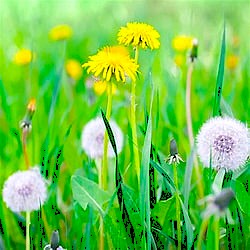
Or, we could choose to interrupt its life-cycle by stomping it under our heel, exposing it to toxic chemicals, uprooting it, or even turning it into wine. Either way—whether we leave it or interfere with it—it wasn’t there, then it was, then it wasn’t.

We are the same. Many of us live out our proverbial threescore-and-ten—some less, some more—spreading our seed as we go, and then die a natural death. Others of us, beaten down ‘neath the harsh heel of neglect and apathy, die prematurely. Still others, afflicted with a wasting disease, perhaps exposed to toxic chemicals intended to stem its progress, slowly wither and die. And still more are violently uprooted from their homes by violence or starvation or natural disaster, and are left to die alone.

Mortality is a subject I think about more often now than when I was younger. I contemplate my own, of course, though I do not fear it. Fearing death is like fearing the sunrise; it’s going to happen whether it’s feared or not, so why waste time dwelling on it? As I wrote in one of my poetic offerings—

I haven’t the time to dwell on life’s finish,
‘Though I know it lurks, that’s certain.
When all has been said, I still look ahead
To life’s next opening curtain.

I confess, however, that the demise of our human species is something I do think about. Not because it will affect me directly; I’ll be long-embarked on whatever journey is next for me by then.

But increasingly, it seems to me, humankind is separating itself into two broad factions: the many drones who think rarely for themselves and react self-servingly to whatever stimuli they encounter, content with the base pleasures they eke out; and the despoilers, fewer in number, who think deeply and conspire self-servingly to enrich themselves at the expense of the rest.

I’m pretty sure there is a third group, much smaller, who think first of others, not themselves, and who fight the good fight against the drones and despoilers. But alas, they are running out of time to win that fight. All harbingers are pointing to cataclysmic changes in the earth’s traditional, heretofore dependable cycles, patterns we have known and depended on for our entire lives.
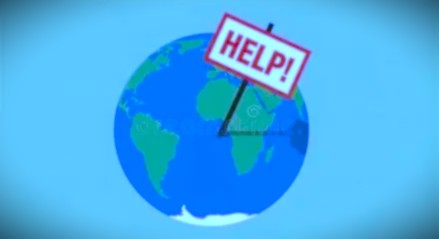
But the effects of those changes aren’t here yet, not in sufficient abundance to alarm the majority of us. It seems that, as a species, we won’t admit they exist—just as that crowd in the stadium didn’t know about the jets in advance.

We’ll know when the effects begin to announce themselves fully, though—earthquakes, floods, wildfires, drought, increasing temperatures, rising sea-levels, climate-forced migration, and, of course, mass death. We’ll pay attention then.

My fear is that, unlike the other examples I’ve mentioned, where things aren’t here, then are, and then aren’t again, the massive changes rushing pell-mell at us will not disappear. They will linger to become the new normal for millennia to come.

And thus, it is we of whom some far-in-the-future, interstellar observer might say, “Human beings? Yeah, they weren’t there, then for hundreds of thousands of years they were, and then they weren’t.”

I console myself that perhaps the dandelions will survive.
I Dreamed…

A recent prompt from my Florida writers’ group was to use the phrase, “I dreamed last night…”. This was my submission—

A reminder to those who receive my complete posts in your email, rather than just a link—if you click on the title, you’ll be able to read the post in its proper format on my actual website, rather than in the body of your email.

I dreamed last night of a universe vast,
Extending the future from some unknown past,
Throbbing, emitting, exploding in heat,
Its energy vibrant, its fate incomplete
As onward it rushed, this dream in my head
Rendering me rapturous, there in my bed.

I dreamed last night.  And I wondered if I
Might perhaps be a part of that darkened sky,
From genesis unto eternity,
Unceasing, undying, the infinite me---
My spirit indwelled with life, and a mind
Pushing e’er forward from a past left behind,
Seeking out answers as questions unfold,
Traversing the nothingness, fearless and bold.
I dreamed last night I was mounted astride
A life-force impelling its own suicide.
For how could I, a mere mortal, defend
A beginning without eventual end?
How could we persons, predestined to die
Believe in a universe beyond the sky?

I dreamed last night.  When I wakened again
To face the day’s dawning, the truth appeared plain.
There’s no need for proof of life after death,
For we do not die after our final breath.
We’re integral to that miasmic cloud,
That cosmos of energy, bursting and loud.
We’ll live evermore, just not in this state--- 
We need but to trust, let our faith not abate.

Yes, I dreamed last night of a universe vast,
Informing our future through present and past,
Accepting us gladly, just as we are,
Propelling us forward from near and afar.
Mortality ends, but life still goes on,
And we shall be part of it, unto anon.

Nothing Else Matters

I read an interesting post recently by an author, John Gorman*, who professed that life is essentially meaningless, that there’s no preordained destination for our journey.  Rather than searching fruitlessly for meaning in life, he wrote, we should be looking for the intrinsic value in the things we do along the way.

On the same day, I read another post by a different writer, Rachel McAlpine**, who mused poetically on the eventuality of her own death—

…I’ll be dead and I won’t know I’m dead because
the brain that could create, contain and comprehend that fact
has fled.

The two posts got me thinking about, guess what?  Death, and the value of life.  And here, in haiku form, are some conclusions I came to—

my thoughts, unbridled,

take me to worlds I ne’er will see,

nor have ever seen

The-Spirituality-and-Immortality-of-the-Soul

don’t fret the future,

focus fiercely on the now

where we live our lives

the now

the journey from womb

to tomb—no matter how long—

is but a fragment

immortal 2

I would have to live

forever to realize

I already died

live-a-life-of-purpose

nothing else matters

in the great, grand tapestry

if you are with me

together

See?  No worries.

*[John Gorman –  IG: @heygorman]  **[Rachel McAlpine – writeintolife.com/blog]


From Sapiens to Omnipotentus

Science is pretty clear that Homo sapiens has been populating the planet for more than 200,000 years—a considerably longer time than the Christian story would have us believe.  The Garden of Eden was purportedly created some six thousand years ago, and most archaeologists believe it was located near the convergence of the Tigris and Euphrates rivers, at a spot now submerged in the Persian Gulf.

The_Temptation_in_the_Garden_of_Eden_by_Jan_Brueghel_the_elder

But in fact, forms of earlier human life have been documented as far back as two-and-a-half-million years.  Our human predecessors—part of the animalia family, the vertebrata subphylum, the mammalia class, the primates order, the homininae subfamily, and the Homo genus—include, among others, such species as Homo habilis, Homo erectus, Homo heidelbergensis, and Homo neanderthalensis.  All are now extinct.

As a child raised in a Christian home, I was taught, and came to believe, that man was created in God’s own image.  (As an aside, I was also taught that woman was created from a rib of that man—which, if not an original sin, was at the very least an original prioritizing of importance.  As a further aside, I later came to understand that the Christian stories depicting this creation were written by men, which explained that version of events.)

Somewhere along the way, I was also exposed to the tantalizing question: did God create us, or did we create God?

Humans alive today—let me group women and men together as humankind for purposes of this essay—are members of the Homo sapiens sapiens subspecies, which we are told has been in existence for perhaps 70,000 years.  Were we, through some magical time-warp, able to confront some of our earliest sapiens predecessors, we would scarcely recognize them as human.  I cannot imagine what they would think of us.

Self-Domesticated-Apes

Nevertheless, biologically, genetically, we are virtually identical.

Pictures of earlier Homo peoples, reconstructed from archaeological findings, show they looked quite different than we do.  They behaved differently, too, living in an environment quite distinct from ours.  It seems obvious that, over the millennia, humankind has evolved to accommodate the changing conditions.  But beneath the skin, beyond the discrepancies in physical appearance, we are related as a part of the same family in the same fashion that any of us are related to our grandparents.  The earliest humans so far identified through fossil evidence—perhaps Homo ardipithecus or Homo australopithecus—were part of humankind.

When I was first taught that humankind was created in God’s image, I made the completely valid assumption that God, therefore, looked like us.  His many depictions in the magnificent paintings of the masters only proved it—a stern, majestic, bearded being, (male, of course), clothed in white raiment, surrounded by angelic hosts, allowing the tip of one finger to be touched by a mere mortal reaching in supplication.

1200px-Creación_de_Adán_(Miguel_Ángel)

But I have long since wondered, can that be so?  If humankind was, indeed, created in his image, perhaps he actually looks like our earliest ancestors, hairy and ape-like—unless, he, too, has evolved across the centuries (which I concede is a real possibility).  This would not contradict the creation story, merely situate it in a much earlier timeframe.

Such speculation, however, leads me to an even more intriguing question.  It seems indisputable that Homo sapiens sapiens is continuing to evolve.  Our marvellous brains have led us to the cusp of some wonderful, perhaps terrifying, advances in medical science—advances which have allowed us to live our full span of years, and more, relatively free of the scourges of premature death, when compared to those who came before us.

Cloning sheep, so astonishing a feat a mere handful of years ago, was just the beginning.  Purposeful studies today in such fields as stem-cell research, human genome-mapping, in vitro fertilization, nanotechnology, and artificial intelligence, to name a few, are moving us beyond the boundaries of what we have always understood to be true of our mortal selves.

Will humankind, in the not-so-distant future, be able to create human life?  And maybe code it to follow a certain, predetermined path of development?  Will our brains, perhaps conjoined with, or replaced by, digital, adaptive intelligence be able to take us to another evolutionary stage?  From Homo sapiens sapiens to, let us say, Homo sapiens omnipotentus?

binary-1536617_960_720

Will humankind in that case become, not cast in God’s image, but God?  Is that the evolutionary future of the being that created us in the first place?  To become us?

It has been written that we are one with God.  Perhaps, some day in the future, we shall be so.