Them and Us, They and We

It’s always them, it’s never us
We like to blame for all the fuss
We must contend with on our way---
It’s never We, it’s always They.

It’s always They, it’s never We
Who take us out on stormy sea,
Into weather, harsh and grim---
It’s never us, it’s always them.

It’s always them, it’s never us
Who make us swear, who make us cuss
The sea on which we sail each day---
It’s never We, it’s always They.

It’s always They, it’s never We
Who cause our pain and tragedy,
Shake our wee boat, gudgeon to stem---
It’s never us, it’s always them.

It’s always them and never us?
That’s what we claim. Why is it thus?
Is there a chance the truth would say
It’s mostly We, not always They?

It’s not just They, it’s mostly We!
When will we learn, when will we see
Who rigs our sails, adjusts our trim?
The captain’s us, it’s never them.

Round Tables

It is no mean feat for writers to create an imaginary world that readers will come to see as true and historically accurate.  Fashioning something from one’s imagination that resonates with readers, a tale that merges with their perception of reality, is not easily done.

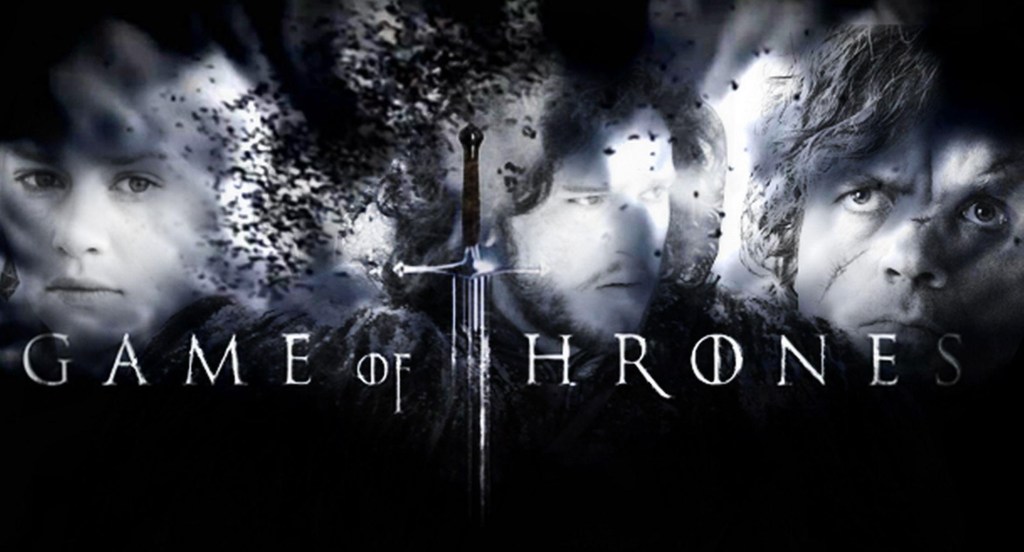
Two relatively recent examples of such efforts are Tolkien’s Lord of the Rings and Martin’s Game of Thrones, both of which have convinced many an avid reader of their legitimacy.

As a young boy at the dawn of the 1950s, it was the magical tales of King Arthur and the Knights of the Round Table that captured my fancy.  I first read them in The Boy’s King Arthur, a version of Malory’s Le Morte d’Arthur, which abridged and bowdlerized items from the original text, sexual and otherwise, that were deemed unsuitable for children.

I was completely captivated by the legends of the Lady of the Lake, Arthur’s conception at Tintagel, his seizing of the sword Excalibur, his alliance with the magician Merlin, his ultimate battle with Mordred, and his laying to rest in Avalon.  Most intriguing of all was the notion that he had not died, that he was merely sleeping, that he would rise again, the ‘once and future king’.

I eventually graduated to the reading of unexpurgated versions, but in the beginning I fancied myself as many of those brave warriors:  Lancelot, until I learned of his treachery with Arthur’s queen, Guinevere; Gawain, who bravely faced the Green Knight in a chivalric romance told in Middle-English alliterative verse; Perceval and Tristram, whose feats of derring-do enthralled me; and of course, Galahad, whose sacred quest for the Holy Grail seemed the most inspired.

I subsequently read about that storied quest in other works, and learned from more than one that two phrases in French—san graal and sang royale, pronounced almost identically—translate to two different things: Holy Grail and royal blood.  This assertion expostulated the theory that following Christ’s death, his wife and children fled to France, where his bloodline continued anonymously, eventually merging with the Merovingian dynasty, then the Carolingian dynasty, all the way to William the Conqueror—who, in a tidy completing of the loop, came to rule over Arthur’s ancient kingdom.

True or not, the story affirmed for me that the greatest Arthurian quest came to fruition in the merging of these two fanciful tales, one religious, the other mythical.  And for a long time in my youth, I believed.

The lasting impression I took from this childhood reading, however, was the concept of the Round Table.  In its simplest form, I thought it presented an ideal way of governing or managing a kingdom, an empire…or any enterprise.  Everyone sat around the circular table, each facing everyone else, and all had an equal say in the decisions that were made—all but one, of course.  The King, by virtue of his position, reserved the right of veto.

In such a setting, the objective of any group’s deliberations is always to achieve consensus on matters discussed, the theory being that everyone will have a greater commitment to decisions made when they feel they’ve contributed to them.  The process involves give and take, it usually means no one gets all of what they want, but it allows everyone to get some of what they hoped for.  Some might call that win/win.

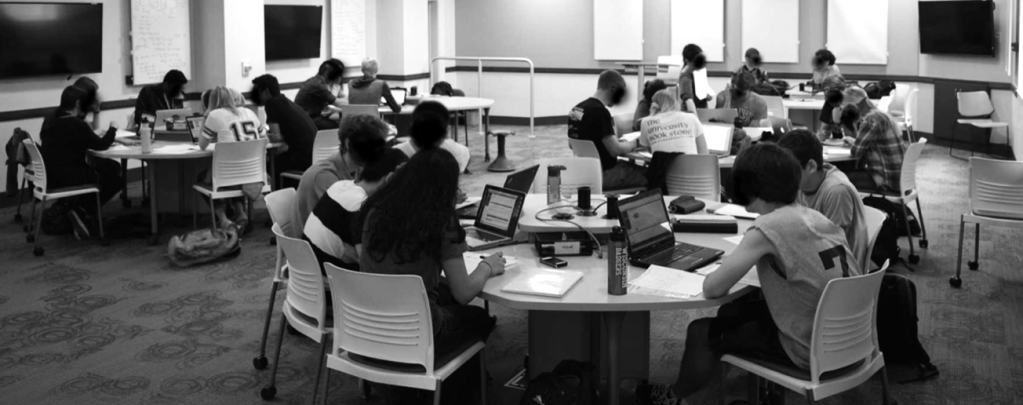
As a young teacher in the mid-1960s, chock-full of enthusiasm for and faith in the teaching/learning paradigm, I furnished my classroom with circular tables, not individual desks.  My thirty-plus students sat in groups of five or six around these tables, groups whose membership rotated periodically, based on their accomplishments and interests. 

Our interactions, the teachings and learnings we shared, usually (but not always) were conducted with me sitting around a table with them.  To this day, I find it remarkable how much self-discipline, cooperation, and independent learning took place among the young people at those tables.  Only rarely did I ever have to exercise my right of veto.

Twenty years after leaving the classroom, installed as the CEO of a school board district, I still favoured round tables.  In my office, senior staff met weekly around a large, circular oak table, where everyone had a valued voice.  We didn’t always agree on how best to proceed with certain matters, but when we concluded our discussions, each of us felt we’d had the opportunity to make known our views.  And all of us acted on the consensus decisions with total commitment.  And again, I almost never had to decide arbitrarily on a course of action.

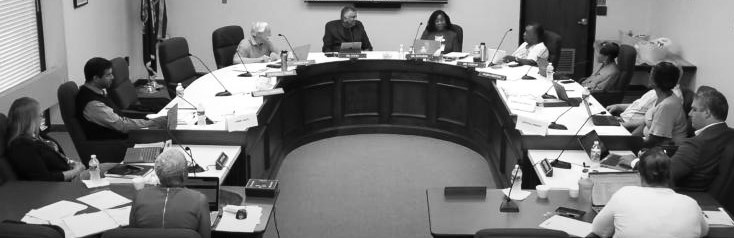
In the boardroom, where elected trustees met weekly to discuss and make policy, they sat at desks arranged in a circular shape, each of the fourteen with a direct view of the others.  The chairperson of the board managed the meetings according to established rules of order, and only occasionally overruled a colleague.  Decisions were made by voting, as required by the Education Act, but only rarely were those votes disputatious…and never acrimonious.  I believe there was something about sitting in the circle formation that elevated the level and tone of discussion, that enabled consensus decision-making.

As a young father, I sat with my wife and two daughters around a circular kitchen table, virtually every night, for dinner together.  Any of us might miss now and then, given our respective work and school commitments, but sitting down around that table was the established custom, one we all honoured until the girls headed off to university.  Our discussions centred on what all of us were doing at any given moment, and everyone contributed freely.  No topic was off-limits (although when the girls were very young, some issues were covered only cursorily, appropriate to their age).  Looking back now, I consider the learnings we all experienced with each other as indispensable to our family’s enduring ties.

And to think, it all began for me with my fascination for the Arthurian legends I first read as a boy, stories of the Knights of the Round Table that imbued me with a sense of romanticism and chivalry that I still value today.

I remain eternally grateful to all writers who have managed to create a world that I and other readers consider enjoyable and aspirational…even if imaginary.

 And I still wonder, even at this great age, if Arthur is merely sleeping at Glastonbury Tor, as the legends maintain, and if we shall ever see his like again, holding forth at his great Round Table.

Teaching and Learning

Almost sixty years ago, a brand-new teacher, hired by a brand-new principal, entered his brand-new school for the first time.  Earning what he considered a princely, annual salary of $4100 per year, he could scarcely believe he was being paid to do this job he loved from the very get-go.

Even today—a grandfather now, and long-retired—I can still feel the sense of wonderment and awe that seized me as I awaited my first group of elementary school students.  The mix of opportunity and responsibility confronting me was both frightening and exhilarating.

Over the next thirty-plus years, in three different school districts, I served as teacher, vice-principal, principal, superintendent, and director of education.  Of those postings, the first and last were my two favourites.

Along the way, I met and married a brilliant teacher, and in time, both our daughters grew up to be wonderful teachers, too.

Two of my four granddaughters are currently working towards university degrees in education, one in music, the other in maths and science.  They haven’t asked for my advice—perhaps blissfully unaware of the import of my experience, its scope and depth; or more likely, because I’m bound to be out-of-date now, hopelessly so, after such a long hiatus.

I’ve slowed down, no doubt, but the pace of change has not!

I’ve never been one to proffer advice unsolicited, anyway—although I have been known to hold forth if encouraged.  But if I were to be asked, there are a few bon mots I would probably pass along.

First, teaching—that is, the handing-down of all wisdom from the teacher—is far less significant to students’ growth than learning—namely, opportunities for them to ask pertinent questions, test a variety of possible answers, and settle upon evidence-based conclusions.  Effective learning is a highly-personal pursuit, and happens in a plethora of ways connected to each student’s personality and neural development.  It is the teacher’s job to provide sufficient and varied, open-ended learning opportunities within the prescribed curricula.  Show them, don’t just tell them; involve them, don’t merely lecture them.

Second, the teaching/learning relationship between teacher and student, if it is to yield good results, must be founded on mutual respect for one another—with the emphasis on mutual.  As a pundit posited some time ago, “I don’t care what you know until I know you care.”  The same applies to relationships among students, each of whom will more likely prosper in a caring and secure classroom environment.

Third, it’s far more important that the teacher constantly catch students doing something good, rather than something bad.  It’s not that the bad should be overlooked, but there are effective procedures to deal with it—not simply to end it, but to work proactively to prevent its repeat.  Catching students doing the good things they do is critical, though—letting them know, not just that their accomplishments are noticed, but explaining why those achievements are positive.  When students understand the underpinnings of effective performance, they’ll be more likely to roll it back and expand their repertoire.  So, tell them when their work is good…then explain why.

Over the years, whether engaged as teacher, principal, or CEO of a school district, I forever encountered encumbrances threatening to get in the way of doing the job effectively—budget-cuts; staffing-cuts; overcrowded classrooms; reductions in essential support-services for special-needs students; aging buildings and facilities; changing parental expectations; increasing political demands; the intrusion of pervasive, social-media technology; rising violence in our society; and on and on.  There seems no end to the reasons to decry the state of education.

But that is the reality of the workplace my granddaughters will face.

The most effective strategy to combat the ennui and despair that might imperil what they will try to do in their own classrooms is the fourth piece of advice I would offer them.  Win your people over!  Be they students, co-workers, employees who report to you, the same is true: more often than not, they will respond positively to the learning and growth opportunities provided for them when they feel you hold them in high regard; when they believe they are important pieces of the whole, not mere cogs in someone else’s wheel; when they know you have asked for and valued their opinion; when they believe the ends you are seeking are righteous, and the means to those ends honourable.  And for that to happen—for them to believe you are honest, trustworthy, consistent, and invitational—you must be those things.

And therein lies the final piece of advice I’d offer my granddaughters.  Be visible to your students, be available, be present.  I think of it as management, or leadership, by walking around—and it works.  The best teacher, or leader, is the one who is not just inspiring, but vulnerable, receptive, nurturing, validating—in short, transparent.

Anyway, those are the things I would tell my granddaughters now, almost sixty years since I first stepped foot in that brand-new classroom, wide-eyed and bushy-tailed!  

You know, I sometimes allow myself to imagine I’m heading back in there right now, and waiting just inside the door for me is a fresh-faced kid—Alan, Sylvia, Tony, Mary—so many others whose faces I still see.

“Hey, Mr. Burt!  I was thinkin’ ‘bout what you told us before recess, an’ I’m not sure you’re right.  You wanta know what I think?”

“Yes!” I say, a smile splitting my face.  “Tell me what you think!”

I wanted to know then, and I’d want to know now.  For that’s the essence of teaching and learning.

Babysitting

As a sometimes-hapless father, one of the things I learned about parenthood is there really wasn’t a lot that was new.  Most of it was just the same stuff I experienced in childhood, happening to my own children with me in the role my father once occupied.

I took a certain delight in discovering that.  It was fun to watch as my daughters encountered many of the same situations I faced when I was at their ages.  And it was comforting when I saw them reacting to circumstances in much the way I had.  It reinforced the notion that the values and beliefs my wife and I espoused were being passed along to them.

The tough part, of course, was watching what happened on the few instances when they made an unwise decision and had to face the consequences of their mistake.  I often wondered if my parents had felt the same conflicting emotions as I did on those occasions.

The hardest thing of all was resisting the temptation to tell my daughters what to do in every situation, to provide them a shortcut to what I’d had to find out on my own, sometimes through bitter experience.  But I’d managed to convince myself that keeping quiet was often safest, that the process of figuring out the best way to proceed was more important for them than just being given the right answer.

“They learn best through discovery,” I would tell myself.  “Not by being instructed.”  And I made myself believe that.

But the difficulty with that stance was brought home to me on the occasion of my oldest daughter’s first babysitting job.  Watching her go out the door, climb into someone else’s car, and drive off without so much as a backward glance was a bit of a wrench.

I could still remember how it felt when I went out like that.  From the time I was thirteen until I finished high school, I regularly picked up extra money by babysitting little kids in the neighbourhood.

Mostly, it involved spending time with them before bed, then packing them off before the Saturday night hockey game started on TV.  After getting them settled, I’d sit on the sofa, munching peanuts, sipping a cola until the parents came home.

To me, babysitting seemed like such a simple job back then.  Nothing ever went wrong.  And even if it had, there was always the telephone with the prominently-displayed number where the parents could be reached.  And in a pinch, I knew I could always call my mother.  Babysitting was easy!

But when it came my daughter’s turn, I was no longer so sure of that.  Seeing my little girl go off to her own first job caused me some worry.  At thirteen, she seemed awfully young to me!

Mind you, she was certainly well-prepared.  She’d enrolled in a babysitting course with several of her friends in order to prepare herself for the role, and had proudly received her certificate as proof of her readiness.

During the next few months, she’d taken on a couple of pseudo-babysitting jobs, looking after young children while their parents were still in the house.  By all accounts, she was a competent, confident, and caring babysitter.

I remember watching her pack her tote bag before going out on that first job.  She put in a couple of storybooks she thought the youngsters might like, a deck of playing cards, two of her favourite stuffed toys, note paper and a pen, along with sundry other items.  The only thing she didn’t have by the time she left was any doubt about her ability!

Nevertheless, I worried.

I remember leaping for the phone (uncharacteristic of me!) when it rang a couple of hours later.  But there was no problem.  She’d called only to let us know the kids were in bed, sleeping peacefully, while she was listening to one of her portable cassette tapes, and reading.

When she arrived home around midnight, flushed with the success of her first assignment, elated at the windfall of cash she had earned, I breathed a sigh of relief.

“Babysitting’s easy, Dad,” she said, and I heard the echo of my own younger sentiments.  “There’s nothing to worry about.”

There hadn’t been for her, I guess, just as there hadn’t been for me when I was doing it.  But her experience drove home the fact that, for me as a father, those babysitting jobs weren’t so easy after all!  And when her sister joined the babysitting ranks a couple of years later, those same worries carried on apace.

But now, our lives have sallied through another cycle, and my daughters’ children are striking out—babysitting, weekend jobs, summer employment.  I don’t fret so much about my grandchildren, though—partly because I’m more removed from them as a grandpa than I was as father to my own girls, partly because they have good fathers of their own to do the worrying, and mostly because the five of them are so darned competent at everything they do.

“Babysitting’s easy, Dad,” my daughter had said.  And looking back on it now, on the whole parenting thing, I can almost convince myself she’s right.

Logical Consequences

Throughout my professional life, beginning as a classroom teacher, finishing as a school district CEO, I always believed in the wisdom of allowing people the freedom to make their own decisions, their own choices.  It was difficult at times to put that belief into practise, and it did not always lead to happy outcomes, but I never lost faith.

The corollary to this belief was that those making the choices had to accept the consequences of their actions.  Students who chose not to study generally received lower grades than those who did; employees who chose not to pursue professional development opportunities generally languished in comparison to their peers.

With both students and employees, I had to make hard decisions as to how I would grade their effort or evaluate their performance, and I, too, had to accept the consequences of my choices.  Reluctant students received a failing mark—although always with the opportunity to try again, to learn from their poor choices.  Teachers disinclined to improve of their own volition were instructed, provided assistance, and given time to do so; in cases where they proved unable or unwilling, their employment was terminated.

As a parent, I endeavoured to allow my own children to make choices along the way, but always stressing their responsibility to accept the consequences, and holding them to whatever those might be.

I was influenced in my thinking by the writings of Alfred Adler and John Stuart Mills, and Rudolf Dreikurs.  This brief essay cannot give even a rudimentary outline of these men’s theories, but the effect of their thinking on my own actions was significant.  Let me give an example from Dreikurs—

Dreikurs espoused that children behave inappropriately and make poor choices for four main reasons: a desire for attention; a need to obtain and hold power; a desire for revenge; to compensate for perceived inadequacy, the feeling that they are unworthy of anyone’s affection.  All four are legitimate human emotions, but the behaviours by which they are manifested through the choices children make are often problematic.

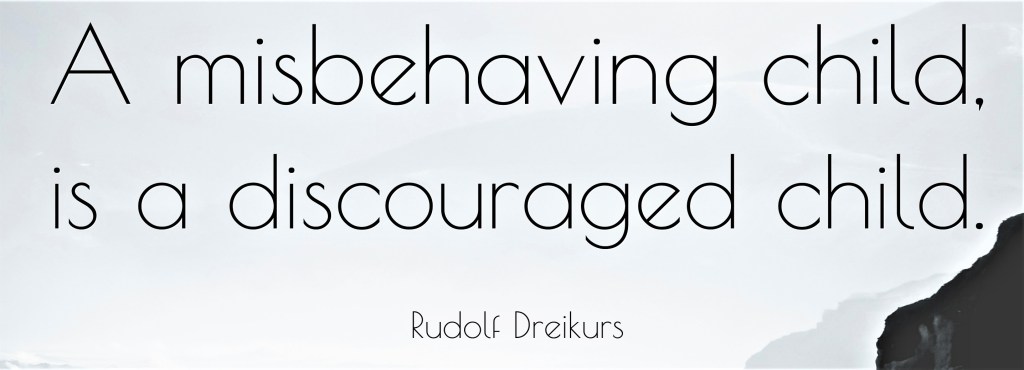
Misbehaving children are discouraged children.

It was my job as a teacher to provide opportunities for every child to pursue socially-appropriate activities that would gain them positive attention and praise, that would allow them to feel some semblance of control of their environment, that would re-direct them from activities designed to ‘get even’ for real or imagined wrongs, and to ensure they would come to believe they were loving and capable individuals in their own right.  And those opportunities had to encompass the academic, physical, social, and emotional needs of the children.

Today, many years into retirement, I have witnessed adults behaving in ways I consider socially-inappropriate during these long months of pandemic restrictions.  It seems to me that many of them are seeking attention for themselves and their views—perhaps in the only way they know how—by pushing themselves loudly and forcefully to the front at every opportunity.  We know our rights!

Others, I think, are looking to seize power from those they believe are currently wielding it, a power they view as compelling them to certain actions they believe it is their right to refuse.  Power to the people!

Others, probably fewer in number, might be seeking payback from authorities they feel have done them wrong—big government, unfair employers, the radical lefties, the lunatic right-wing, the fake media, or any other perceived enemy.  We’re not gonna take it anymore! 

And some, I’m sure, are there simply because they have nowhere else to go but to a crowd that, if not understanding of them, is at least tolerant of their presence.  Look!  I’m one of you!

Mill wrote: The only purpose for which power can be rightfully exercised over any member of a civilized community, against his will, is to prevent harm to others.  There are three key points here, I think.  First, he was referring to a ‘civilized community’, which might be defined as one which has a well-developed system of government, culture, and way of life, and which treats all people living in it fairly, with due regard for the laws and customs of the community.

Second, Mill’s stance is that power resides by default with the individual in a community, but may be overridden when that individual behaves in a manner deemed harmful to others.

And third, there is an implicit understanding that the decision to act against an individual’s will is to be made by the community itself—i.e. the majority.

As I witness the current unrest in our land regarding various pandemic restrictions, it seems to me there is a need to exert the primacy of the common good over the various claims of disaffected members of the community, not as a primitive display of the power of the state, but to ensure the continued well-being of the community itself.

For example, perhaps the government should not mandate vaccines for all, even in the current climate.  Not doing so would allow people to exercise their right, as they see it, to avail themselves of a vaccine or not.  Free choice for every individual.

But the government should ensure there are consequences for the choices people make—logical consequences.  I don’t believe a person who has the right to refuse to be vaccinated (a right which I support) should also have the right to attend in-person, congregant venues and events, or to partake of non-essential services, where their choice might place others in danger.  That impinges on everyone else’s right to a safe, healthy living environment. 

It is entirely logical, I submit, that such venues and services should require proof of vaccination from those wishing to take part.  For everyone, then—those folks who choose not to be vaccinated, and those who do—the consequences will be clear in advance.  Choice A leads to Consequence B; Choice C leads to Consequence D.  Informed decisions are almost always better decisions.

[I note, as an aside, that in jurisdictions where such proof of vaccination rules have already been put in place, the number of people who choose to be vaccinated has risen—surely a benefit to the entire global community.]

In any case, absent a mandate for everyone to be vaccinated, people desiring attention will still get it by proclaiming their decision to their family and friends, and on social media.  Those in search of power will still find it by exercising their inalienable right to make their own decision about vaccinations with no coercion either way.  Those who would seek revenge of some sort if forced to be vaccinated can still remain unvaccinated.  And those who feel inadequate, incapable of making such a momentous decision, can prevail upon family and friends to help them decide.

The concept of free choice has never meant freedom to do as one wants without consequences.  As surely as night follows day, every decision a person makes has an impact on someone—somehow, somewhere.  And that consequence, if it’s logical, can be a force for good.

The nascent teacher in me still believes it is possible to help people learn this quaint notion.

What Will Matter?

A friend from my barbershop chorus was talking with me the other day, and I was intrigued by his relentlessly-cheerful tone.  Not that I’m a negative sort, glumly sitting at my keyboard day after day, or on my smartphone, doom-scrolling through the social media universe.  Far from it, in fact.

doomscrolling

But even I couldn’t match my friend’s upbeat manner.  When I commented on that, he told me about some of the good things he was able to enjoy during this time of Covid-quarantine, as the days stretch into weeks, the weeks into months—things like family, reading, golfing, and (of course) singing, even virtually.

In the conversation, he referred to a passage he took inspiration from, penned by one Michael Josephson, a member of the Rotary club in Los Angeles, CA, which offers an upbeat message for any of us.  I liked it so much, I’m including it here in its entirety.

What Will Matter

Ready or not, some day it will all come to an end.
There will be no more sunrises, no minutes, hours or days.
All the things you collected, whether treasured or forgotten. will pass to someone else.
Your wealth, fame, and temporal power will shrivel to irrelevance.
It will not matter what you owned or what you were owed.
Your grudges, resentments, frustrations, and jealousies will finally disappear.
So too, your hopes, ambitions, plans, and to-do lists will expire.
The wins and losses that once seemed so important will fade away.
It won’t matter where you came from or what side of the tracks you lived on at the end.
It won’t matter whether you were beautiful or brilliant.
Even your gender and skin colour will be irrelevant.
So what will matter? How will the value of your days be measured?
What will matter is not what you bought but what you built, not what you got but what you gave.
What will matter is not your success but your significance.
What will matter is not what you learned but what you taught.
What will matter is every act of integrity, compassion, courage, or sacrifice that enriched, empowered, or encouraged others to emulate your example.
What will matter is not your competence but your character.
What will matter is not how many people you knew, but how many will feel a lasting loss when you’re gone.
What will matter is not your memories but the memories that live in those who loved you.
What will matter is how long you will be remembered,  by whom and for what.
Living a life that matters doesn’t happen by accident.
It’s not a matter of circumstance but of choice.
Choose to live a life that matters.
Michael Josephson

choices

The passage makes a lot of sense to me, and the final line is perfect.  Not simple to do, not by any means, but a worthy objective to pursue.

And in the end, that is what will matter.

It’s Complicated!

As a former educator, I am frequently asked my opinion on the great send-the-children-back-to-school-in-the-fall debate.  Will it be safe?  Is it wise?  And the inevitable question: What would you do if they were your kids?

My short answer?  It’s complicated!

I lived the first twenty-two years of my life preparing, as it happened, for a career in education, and I’ve spent the most recent twenty-two years in happy retirement.  The intervening thirty-two years had me working as a teacher, vice-principal, principal, HR superintendent, and finally school district superintendent (director of education) in two jurisdictions.  Those jobs were sometimes more challenging than I might have wished, often more difficult than I could have imagined, yet, thankfully, always rewarding.

During my working years, the security and health of everyone I was responsible for—pupils, teachers, and business operations staff—were of paramount concern to me.  Everyone was entitled to a safe learning environment: one free of harassment in whatever guise; one free of assault or intimidation in any form; one clean and in good repair; one equipped with up-to-date learning materials and curricula; an environment welcoming and open to all.

I don’t say those objectives were always fully met, but any shortcomings were never due to lack of effort and good intent.

Today’s students and education workers learn and teach in an environment similar in many ways to that which I inhabited, the many advances in technology notwithstanding.  But there is one major difference they face just now, a threat the likes of which we have never encountered before to this degree.  The COVID-19 virus is a stealthy, merciless, oft-fatal disease that stalks us all, old or young, especially if we congregate in significant numbers in indoor spaces.

A prime example of such spaces:  schools!

school1

And so, the great question:  Should we be sending kids back to school this fall?  And I do have a longer answer.

During the final years of my career, the provincial government removed from locally-elected school trustees the power to levy taxes for educational purposes.  This left school districts totally reliant on government grants to pay for the costs associated with the provision of an education appropriate to their local communities—communities often poorly understood by the government decision-makers.  As a result, those grants frequently proved insufficient to the needs, and continue to be inadequate to this day.

Whether the school district was located in a large urban environment, or in a remote, northern rural area, the special needs associated with their discrete makeup were only partially accommodated when funds were allocated.  In the years since I left the profession, although the actual dollar amount of those grants has increased, it has not matched the concomitant cost-of-living growth.

Hence, I believe it is not safe to send kids back to school this fall—nor all those who will accompany them back—without a significant expenditure of money to ensure their health and safety.  And it is the government’s responsibility to do this.

Many school districts across the province already have a staggering backlog of capital repairs that are needed to aging buildings, undertakings they cannot afford with current funding.  Believe it or not, there are still schools burdened with asbestos and lead plumbing, not because people don’t understand the need to replace them, but because they haven’t the funds.  There are schools with leaking roofs, aging wiring, saggy floors, inadequate heating and cooling, and windows that won’t open.

Absent COVID-19, everyone would have been going back into those buildings this fall to cope as best they could with such conditions.  It’s inconceivable to me that they would be allowed back without massive measures to safeguard them against the relentless virus preying on the land.

Scientists and medical professionals know better than I how money might best be spent.  Here is a partial list only, gleaned from my reading of many of their posts—

  • developing ongoing channels of communication with provincial and local health departments to stay updated on COVID-19 transmission and response, including contact tracing in the event of a positive case,
  • making decisions that take into account the level of local community transmission,
  • deep-cleaning and disinfecting school buildings daily, especially water and sanitation facilities,
  • increasing airflow and ventilation in schools,
  • promoting best hand-washing and hygiene practices for everyone, and providing hygiene supplies,
  • providing children with information about how to protect themselves, in ways that are developmentally appropriate,
  • implementing multiple SARS-CoV-2 mitigation strategies, such as social distancing, cloth face-coverings, and hand hygiene,
  • holding school in shifts to ensure smaller class sizes,
  • staggering mealtimes and breaks at school,
  • re-purposing unused or underutilized school (or community) spaces for classroom use,
  • moving classes to temporary spaces or outdoors,
  • integrating SARS-CoV-2 mitigation strategies into co-curricular and extra-curricular activities,
  • limiting or cancelling participation in activities where social distancing is not feasible,
  • developing a proactive plan for when a student or staff member tests positive for COVID-19,
  • supporting the mental health of students and staff, and combating any stigma against people who have been sick, and
  • educating parents and caregivers on the importance of monitoring for and responding to the symptoms of COVID-19 at home.

Most important of all, perhaps, is the need to engage and encourage everyone in the school and community to practice preventive behaviours.  That is the most crucial action to support schools’ safe reopening, and to help them stay open.  Until transmission rates in local communities are reduced to an acceptable level, it will be unsafe to send anyone back.

Most of the experts I’ve read believe children should be going back to school, not just for the sake of our economy, but for their own emotional welfare.  But only if it is safe for them to do so.

school2

So, how much will all these measures cost?  I confess I have no idea; I am too long departed from the scene.  I have read different estimates from government sources, unions, teacher associations, and parent advocacy groups.  Perhaps a consensus is possible.

But whatever the amount, it is not too much if it ensures the safety and well-being of all who head back to school in September, because there is one thing that has not changed since I last was there—the education of our children is not an expense; it is an investment in the future of our country.

And that fact is not complicated at all!

Another Father’s Day

Two years ago, I published this post to mark the onset of another Father’s Day.  The sentiments expressed are even more true today, so I re-post it, slightly adapted, in hope that all of us who are fathers will enjoy it.

I came across an arresting picture on the internet recently, one that caused me to give some serious thought to what it takes to be a father.

IMG_4137

At first, I didn’t fully understand the symbolism inherent in the picture.  In fact, my first thought was that the son was systematically dismantling his father in order to complete himself.  Selfish, no?

But after a bit, I came to think the artist’s intent was more likely to show how much fathers give of themselves for their sons, even to the point of depleting their very being.  Selfless, right?

Still, I had difficulty coming to terms with either of those representations of fatherhood.  In the first place, I don’t have a son.  For the past forty-eight years I’ve been father to two wonderful daughters, so the picture didn’t truly portray me.

More importantly, though, I discovered I had a problem with the notion that fathers must become diminished in order that their children might thrive.  It’s true, of course, that any nurturing father will freely give of himself to help his children—so, in that sense, the picture of the fractured father did make some sense.

But it’s been my experience with my daughters that, the more I gave, the more I got in return.  And it wasn’t even an equal exchange!  What came back to me from the girls was infinitely more than I could possibly have given.

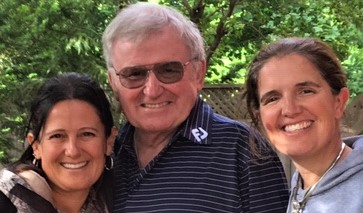
Dad, Tara, Megan 2

As they progressed from infancy to girlhood, I used to tell them all the time how much I loved them, and I tried to mirror my words through my behaviours.  But with them, it was the reverse.  The loving attention they lavished on me—their hugs and kisses, their squeals of delight when I’d arrive home—made it unnecessary that they say anything.  They filled my heart every time I held them.

It was after each of them was born that I learned I didn’t have to carve out a chunk from my love for my wife in order to find love for them.  Love builds upon itself, I discovered; it multiplies and is unending.  So, each time I passed along one of those chunks of love, I was not depleted like the father in the picture; rather I was made even more complete.

Through their teenage years and into young womanhood, I came to realize the importance of letting them go bit by bit, even as I continued to hug them close.  And when they would come to me for advice, or even just for a sympathetic ear, our conversations were honest, sincere, and loving.  Even when I pretended to be the sage passing along my accumulated wisdom, I found I learned more from them—about their world, about the challenges and opportunities confronting them, and about the persons they were becoming.  Any chunks of insight I gave were repaid tenfold, and I was not at all diminished.

Tara and Megan 3

As mothers now, their first priority is to their husbands and children.  I don’t see them as often as once I did, but our get-togethers are all the more enjoyable for that.  I’ve tried to let both girls know that, although they long ago stopped being children, I’ve never stopped being a father.  They understand that and still go out of their way to make me feel valued and loved—supplemented even now, not depleted; relevant, not sidelined.

There’s an old saying that we have to give a little to get a little.  Well, when all is said and done, I gave what I could as a father, and I got so much more in return.  With another Father’s Day fast upon us, I give thanks anew for the great privilege I’ve had with such children.

If I had a picture similar to the one of that father and his son, there would be two daughters, complete and whole, and a father—double their size, swollen with the love and honour they’ve lavished on me.

Bursting, in fact.

father and daughters

Remembering a Friend

A good friend of mine died earlier this year, and I was asked to speak at a gathering of family and friends to celebrate his life.

This is what I had to say.

Every memory I have of my friend brings a smile to my face.  Every one.  It was fifty years ago that we first met, as young teachers.  We clicked right away, and spent many hours playing tennis, going on ski-holidays with our wives, and spending many New Year’s Eves together.  During all those occasions, we enjoyed a lot of delicious food washed down with cheap wine.

And although it might be hard to believe these many years later, legend has it that he and I were a lethal pass-and-catch combination on the flag-football field.  Or so we told our wives.

team formulating a plan

Early on in our teaching careers, my friend and I contemplated applying for promotion to vice-principal.  As the deadline grew near, however, he seemed somewhat hesitant about taking the step—having second thoughts because he really enjoyed working in the classroom.  Many of his colleagues—and I for sure—encouraged him to go for it.  We all thought he was more than ready, and I was sure we’d both be successful.

After much consideration, despite his reservations, he did apply.  And guess what?  My friend, the reluctant one, got that coveted promotion!

While I, the gung-ho guy, did not!  Go figure!

But two good things immediately came out of that experience.  The first was when my friend took me aside—I assumed to console me over my disappointment.  Not so.  He had an urgent, almost breathless tone to his voice when he was excited, and here’s what he said.

“Brad!  Brad!  Listen!  Just because I’m a VP now, you don’t have to call me Sir!”

Of course, he said it with that mischievous, little smile I was so familiar with when he was having me on.  I miss his sly, Irish sense of humour.

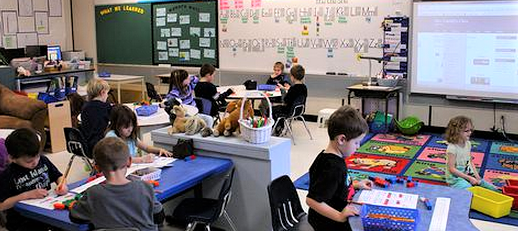
The second good thing from his promotion was that his first VP assignment was with the same principal who had hired me out of teachers’ college a few years earlier.  That man showed my friend and me more about child-centred education than anyone else we ever worked for.  He believed children came to school, not to be taught, but to learn; it was our job, therefore, not to teach them, but to guide them in their learning.
classroom1

My friend took that philosophy to heart, as did I.

Our mutual mentor could be somewhat unpredictable, though.  On the very first day of school that September, just before my friend’s very first staff meeting at the very first school where he was VP, where he knew almost no one on the staff, his new principal told him he would have to chair the meeting because something unexpected had come up that couldn’t wait.

Now, my friend was never, by nature, a cannonball-into-the-deep-end-of-the-pool sort of guy.  He much preferred to examine every situation six ways from Sunday before committing himself to any course of action.  He might eventually jump into that very pool, but not until he’d scoped it out thoroughly.

In this situation, however, the principal dropped the news on him at the very last moment, so you can imagine his reaction.  He must have told me the story at least a dozen times over the years.

“Brad!  Can you imagine?  Just before the meeting was supposed to start!  I was petrified!  I had no idea what I was doing!”

But, as with everything he did, my friend carried it off with aplomb.

Over the years, he and I enjoyed professional-development opportunities together as our careers advanced, almost in parallel.  Many of these were at annual conferences we attended, where we always roomed together.  There were three reasons for that:  one, we trusted each other not to drink too much and stumble back to our room in the wee, small hours; two, back in those days, neither one of us snored; and three, most important, we really liked each other’s company.

The two of us spent a lot of time at those retreats, walking the trails, talking about the challenges we faced as principals, about strategies for coping with those challenges, and about how we could make our schools into true centres for learning—for students and staff.  We both benefited greatly from our professional affiliation, as well as from our friendship.

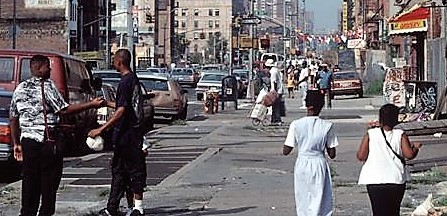
Our most influential professional development excursion was a real eye-opener for both of us.  We had applied to visit four inner-city schools in a large American city, knowing we would probably be assigned at some point to similar special-needs schools in our own jurisdiction.  I still remember stopping at a gas-station to ask directions to the first school—in those days, there was no GPS, but there were still service-station attendants.

The attendant said, “You two are going to that school?”

When we nodded eagerly, he pointed the way and said, “Keep your doors locked and your windows rolled-up!”

My friend and I looked at each other, wide-eyed, wondering what we might be getting into.
inner city2

Within minutes, we found ourselves—two naïve waifs, far from home—driving through a neighbourhood in our bright-yellow rental car, hard to miss, where the only faces we saw around us belonged to people of colour.  Nobody looked like us!  Nobody!  But a lot of them seemed to be looking at us.

We were never in any danger, but it was the first time in our lives, I think, that we both understood, at a gut-level, how it felt to be outside the mainstream—to be a person of colour in our predominantly white society—to be different, to be the other.  It was a visceral awakening.  Neither of us had ever experienced what it was like to be a visible-minority person until that day, when we realized we were.

The people in the schools were very gracious to these two trusting wayfarers who tried to absorb everything we were hearing and seeing.  It was an experience that forever-after shaped our approach to children in our own schools who came from different backgrounds, different cultures, who had different skin-colour and strange names—all of whom wanted nothing more than to live and learn together in their adopted homeland.

I’m so glad I shared that experience and learned those lessons with my friend.

Part of his DNA, I think, was a natural empathy for the underdog in any situation; he always rooted for the little guy.  Our experience in those inner-city schools certainly underscored and reinforced that quality.

Because of this empathy, it was no surprise that, later in his career, he became supervising principal for special education in our school board.  In that role, he saw it as his mission to find the best learning environment for every child with special needs, sometimes with individualized instruction, where she or he could most closely realize their potential.

i on 1 2

Finding placements for them was never just a numbers game.  Like every principal worth their salt, my friend took these decisions personally.  He took them to heart.

He was a good teacher, a good principal, and a good man.

It has been said that no one has ever truly died until the last person who remembers them has passed on.  If that is so, then my friend will live a long time in the minds and hearts of his family and friends.

In fact, there are countless other people out there, people I shall never meet, people who remember my friend as their principal, or as their teacher.  And I think many of them, when they sent their own children off to their first day of school, might have had this thought in mind.

“I hope they get a teacher like I had.  I hope they get a teacher like him.”

And that is perhaps the greatest tribute.

I mentioned at the beginning that memories of my friend make me smile.  And I’m smiling still because I knew him for fifty years, and was honoured that he counted me his friend.

walking9

Godspeed!

So Late, So Soon

There is a song from a popular musical production that I’ve always liked.  Its opening lines run something like this:

Where is the little girl I carried?

Where is the little boy at play?

I don’t remember growing older,

When did they?

When I first heard the song as a young father, before ever seeing the play, it struck me as something to be sung by people much older than I, parents whose children had grown into adulthood.  Knowing now how quickly time can pass, however, I’m not so sure of that.

42709193-little-girl-being-carried-on-the-beach-by-her-father-she-has-her-head-on-his-shoulder-

This past year, one of my sisters welcomed her first great-grandchild into the family.  During that same period, a friend of my daughter’s sent her eldest child off to university for the first time.  Almost twenty years separates these two children from each other.

It seems to me, looking on from a vantage point somewhere between these two milestones, that the difference from one to the other is not so great at all.  Only yesterday, my own five grandchildren were infants; tomorrow, they’ll be heading out into the great, wide world.  And when that happens, the intervening years will have passed in the blink of an eye.

I find it fascinating to talk with my sister and my friend about their respective hopes and ambitions for these two children.  Although they’re speaking from different perspectives, their feelings are remarkably the same.

Whether still at home as a babe in arms, or off to school in a faraway town (as a babe in the woods?), each of these children is the object of a good deal of love and concern.  Each is seen by their families as being at the beginning of a long, exciting journey.  Everyone hopes the kids will be healthy and safe, happy and secure, and successful as they grow through the next few years.

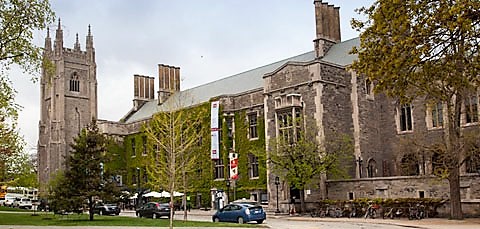
Hart House 2012 (phot by James Marsh).

Both families pray the children will make the best use of what their parents are able to give them.  They hope the children will be guided by a strong set of values.  And they definitely want to keep open the lines of communication with their young.

Their most similar characteristic, though, is their tendency to care about and fuss over the children.  It matters not whether the kids are with them still, or out in the brave, new world—they worry.

In a way, I find that reassuring.

Of course, there are differences, too, in how these folks look upon their situations.  With my daughter’s friend, the mother of the university child, I detect a hint of resignation in her outlook, which is not apparent in my sister’s perspective.  It stems, I suppose, from the knowledge that she no longer exercises as much control over what her child is doing, or what might be done to him.  More and more, she can only look on as her son finds his own way.

mother and son

She appears to be at peace with this, however; she evinces a belief that most of what she will ever be able to do for her son has already been done.  Or not.  She doesn’t see her job as a parent as finished—perhaps it never is—but she doesn’t view it as the major focus it once was in her life.

She summed it up quite nicely on a recent visit.  Speaking almost wonderingly, she said, “There was so much more we wanted to teach him before he went off and left us.  But it got so late, so soon!”

In her comment, I hear an echo of that song I like.  My daughter’s friend doesn’t remember growing older, so when did her son?  It’s a song many of my friends are singing now, as their grandchildren continue to grow and strike out on their own.  It’s a song I, too, will soon be singing.

As Jack Kornfield, an American writer and Buddhist practitioner, has written—The trouble is, you think you have time.

time

So, I don’t complain that I’m too tired when my grandchildren still want to come visit me.  And I don’t say I’m too busy when one or the other wants to tell me all about their latest exploits.

For I know, as my daughter’s friend says, that too soon, it will be too late.