The World You Shall See

As I write this, autumn has entered its closing phase and winter beckons. For as long as I can remember, I have found this transitional time of year rather melancholy because autumn, with its glorious hues and shortening days, has forever been my favourite season. I’m always sad to see it end.

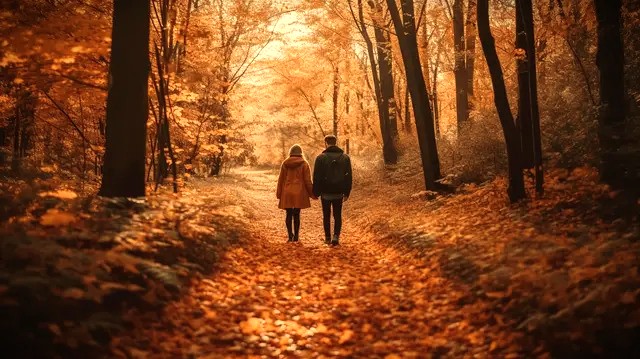
When we lived on a northern lake, my wife and I would take long, autumn walks down deserted backroads and footpaths, surrounded by riotous colours, smelling pungent smoke from woodstoves, kicking crunchy, curled-up leaves beneath our feet, appreciating the awesome silence of the boreal forest.
We enjoyed summer, too, of course, swimming and boating on the water. And winter brought its delightful adventures, skiing and snowshoeing across undisturbed vistas of sun-sparkled snow. Spring, our least favourite season, at least summoned everything back to green life for another cycle to begin. But it was always autumn that warmed our hearts.

With the season’s end this year, I’m reminded again of a song I first learned in grade 1, almost eighty years ago. The four lines, set to a sweet tune I still can sing, ran like this—

“Come away!” sang the river to the leaves on a tree,
“Let me take you on a journey, and the world you shall see.”
So, the leaves gently falling from the tree on the shore
Float away on the river, to come home nevermore.

The song, taken from a long-forgotten, school music book, was learned by rote, and I enjoyed singing it with my classmates. But the last phrase evoked an ineffable sadness in me back then, as if I feared I, a six-year-old boy, might not be able to go home someday. The very thought was terrifying. And more so now, given my advancing years, that last word conjures a sense of finality I don’t like to dwell upon.

Nevermore!

George Cooper, an American poet and lyricist, wrote something very similar to that little song, a ditty I came across much later—

“Come, little leaves,” said the Wind one day, 
“Come to the meadows with me and play.
Put on your dresses of red and gold;
For Summer is past, and the days grow cold.”

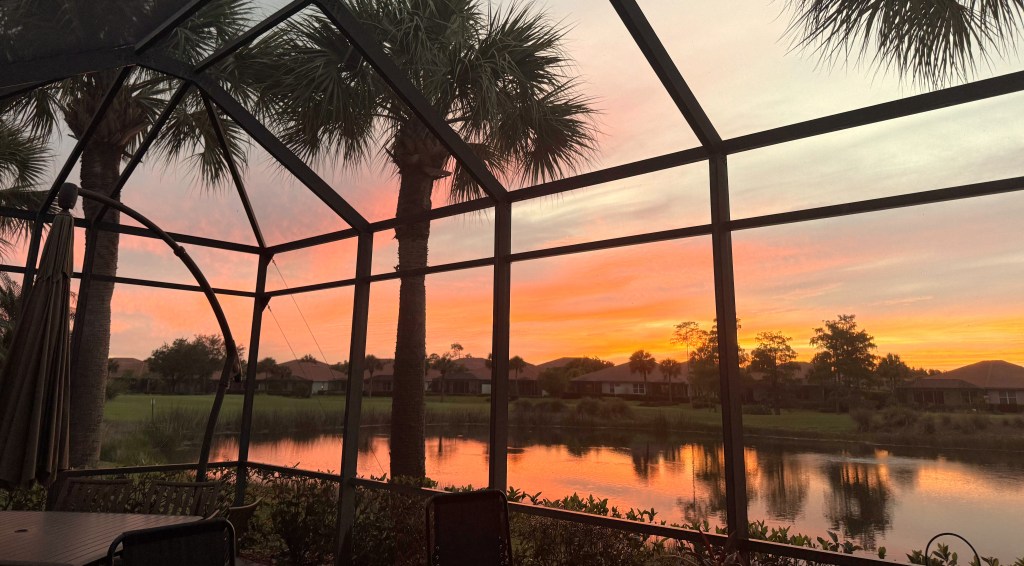
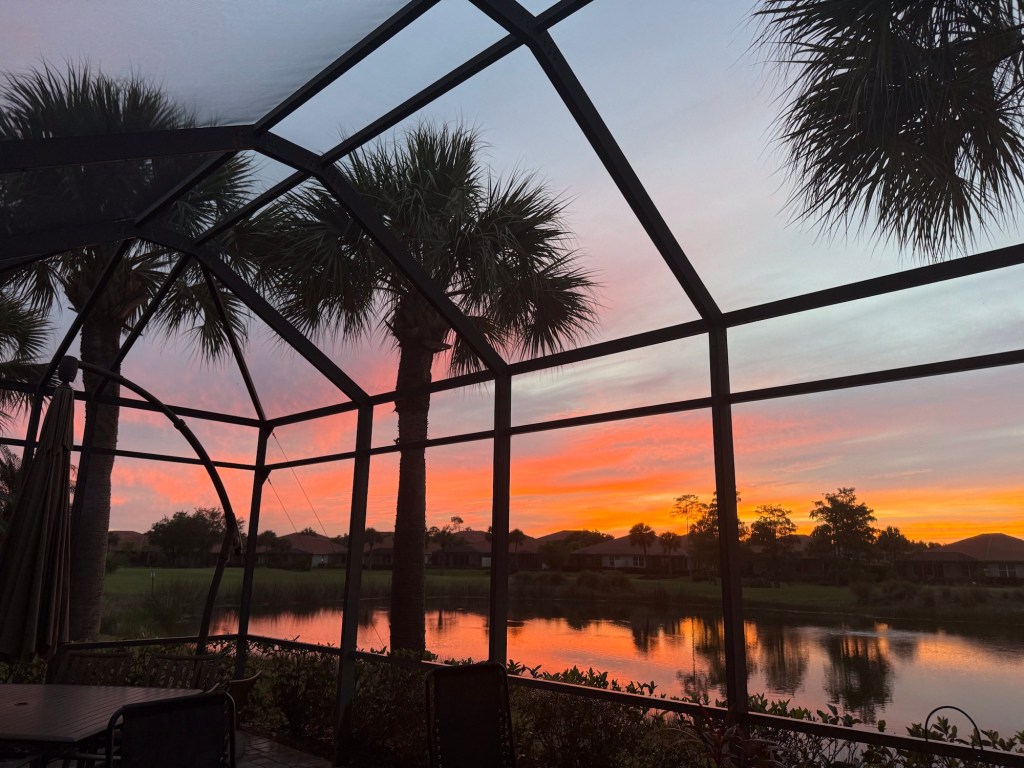
In our senior years, my wife and I are fortunate that the days don’t literally grow cold for us, ensconced in our Florida digs. Like those ripened, brittle leaves, we flee the onset of the northern winter as autumn closes down, to return only when spring has made its anticipated appearance.
We enjoy getting away, as did those leaves on the river or in the wind, because we know the perpetual cycle of seasons will continue only so long for us. We find ourselves more reflective now, more accepting of what is to come, than we were when we seemed immortal.

It is as if evermore is inching closer to nevermore.

Gustave Flaubert, the French novelist and poet, wrote a passage I enjoy about autumn—

…that melancholy season that suits memories so well. When the trees have lost their leaves, when the sky at sunset still preserves the russet hue that fills with gold the withered grass, it is sweet to watch the final fading of the fires that until recently burnt within you.

For my wife and me, those fires still burn, if not so fiercely anymore, and we look ahead to the next autumn we shall enjoy. But hopefully now, rather than expectantly. I tried to encapsulate our feelings in this haiku verse—

the sails of our youth,
once hoist, are often furled now,
‘though the winds still blow.
Eventually, I suppose, those winds will claim us some fine autumn day, as they do the leaves, and then, finally, the world we shall see.
Home Again

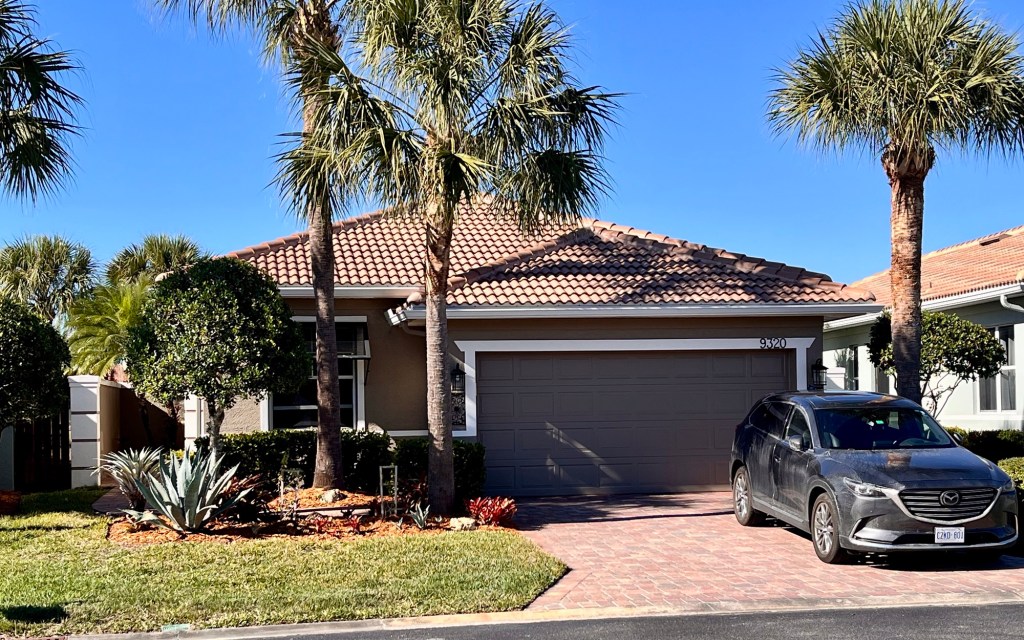
In less than a week, we’ll be heading south to our Florida home, where we’ll spend the next six months. We’ve been doing this since 2002, except during the coronavirus pandemic, and we currently live in our third home. To say we’ve been blessed is an understatement.


We used to take it for granted that we’d be going every year, but that assumption has been modified somewhat—first by the pandemic, then by the American political situation, but mostly by our advancing age. We still plan on going each year, but don’t count on it; the vagaries of health are a reality.


Well-meaning friends (and others) have asked us why we continue to go. Are we not worried about the hostile political rhetoric? Are we not angry about the economic warfare imposed on our country by a formerly-friendly ally? Are we not patriotic enough to support a boycott of all things American?


We are aware of such concerns, of course. And we’re all too cognizant of the hurtful exchange rate on our dollar. But honestly, we don’t believe our going or not going matters one iota to the big picture. It’s reported that thousands of Canadians have stopped going south—which has caused a significant loss to
American businesses, tourism especially—but our individual decision wouldn’t make a dent in that. And many of those who have stopped had other reasons for doing so, as well; the political squabble merely lent impetus to their decision.


So, why do we continue to go? Well, first of all, it’s like going home. We live in an active, caring community, surrounded by people like us, most of them transplanted Americans and Canadian snowbirds. Some of our good friends here in Canada now are people we didn’t even know until we met them in Florida.


No one in our community worries about where we’re from, or what we used to do, or how we worship, or how we vote. When they find out we’re Canadian, they’re almost apologetic about the tension on the international scene. We accept each other for who we are.


Our current next-door neighbour, a Michigander, was in her garden when we arrived last year. She came to offer a hug and a cheery, “Welcome home!”


And that’s how it always feels.


We go, too, to escape the perils of a Canadian winter. Time was, we enjoyed winter’s offerings, especially during the years we lived on a northern lake. Hardly a day would pass when we weren’t outdoors—skiing, snowshoeing, skating—or indoors at a curling rink or hockey arena. Long walks across the frozen lake under a starry canopy, bundled up in parkas and mukluks, were joyful experiences. And cozying up in front of the fireplace on a blizzardy day was wonderful.


Alas, age has snatched many of those joys away. Were we to go outside now for a wint’ry walk, it would be with halting steps, mindful of the precarious ice, vigilant against a fall. I have this ludicrous image of myself after tumbling into a snowbank, unhurt but flailing madly, unable to stand up.


At home in the south, by contrast, we are outdoors every day—walking, gardening, exercising, swimming, mostly clad in shorts and tees. Why, from mid-November to mid-May, I don’t even wear socks!


Our children and adult grandchildren come to visit us when they can, and always at Christmas. And it’s such fun to see them experiencing the same things we did when we used to visit my parents in their Florida home. At our age now, we get tired just watching the young uns’ non-stop pursuits.


I try to refrain from telling them, “I used to do that back when…”


This will be the twenty-fifth season for us since buying in Florida, and at the time we bought, neither of us ever thought about when it might end. We were going to be there…well, forever! We’re more than aware now, however, of its inevitable end—though, like King Canute’s effort to hold back the tide, we keep pushing it off, year after year.


Our son-in-law and his brother left last weekend to drive our car to Florida, and are now enjoying a week of golf. When we fly in, they’ll meet us at the airport and fly home. The house will be open and organized when we get there…though with an empty fridge, I’m sure.


And we’ll be home again