No!

The weekly prompt from my Florida writers’ group was to write a piece where one of the characters in the story is ‘forced to say No’. This is my offering, and I hope it will bring back fond memories for those of you were parents—

“No!” he declares vehemently.  “I will not say No to them!”

“No, you won’t say No?” she replies incredulously.  “That doesn’t make sense!  It’s a double-negative.  Surely you mean Yes, you won’t say No.”

“No, I don’t mean Yes!” he says, exasperated.  “And yes, I mean No!  Are you trying to tell me what I think?  And did you just call me Shirley?”

“No, I didn’t call you Shirley,” she says wearily.  “The word was surely!  And no, I’m not telling you what to think!  But are you honestly telling me you won’t say No to them?  Are you afraid of them?  Are you worried they’ll laugh at you?”

“Yes, no, and no,” he says.

“Well, if you’re not worried about what they’ll think or do when you tell them, just say No and get it over with.  They’re our children, not your boss!”

“Yes they are, and no I won’t!” he snaps.  “Are you trying to force me to say No?”

She raises her arms skyward, rolls her eyes dramatically.  “No, I’m not trying to force you to say No!  But yes, I’m trying to convince you to say No!  Is that so hard to understand?”

“No,” he says.  “But, since I’m determined to say Yes, stop trying to talk me into saying No!”

They’ve been sitting at the kitchen table for an hour, the supper dishes still in front of them, the remains of dinner crusted and cold.  The children are watching TV.

“So you think you know what’s best?” she says, jabbing a finger in his direction.  “You think I’m stupid?  You think you’re smarter than me?”

“Yes, no, and no once again,” he says.  “And by the way, that should be ‘smarter than I’, not ‘smarter than me’!”

His correction is met with a venomous glare.  “No, I don’t believe this!” she says icily.  “Here I am, trying to help you make a difficult decision, and you think you can do that…better than I?”

“Okay,” he says, trying a different tack, “You think I should tell them No instead of Yes, right?  Can you not see that Yes is a better answer than No?”

“Yes, I do think you should tell them No,” she says, still miffed.  “And no, I guess I can’t understand why Yes is a better answer than No.  Can you explain it to me like I’m a three-year-old?”

“Yes, I can,” he says, resisting the urge to toss out the obvious wisecrack.  “But you should have said ‘as if I’m…’, not like I’m…’!”

“Are you correcting me again?” she sputters indignantly, sitting back in her chair.  “You think I don’t know how to speak the Queen’s English?”

“Yes and yes,” he replies smugly.  “And it’s the King’s English now, remember?  The Queen is dead.”

It is all she can do not to hurl one of the supper plates at him.  “Yes, I remember she died,” she says acidly.  “And yes, I know it was over a year ago.  But no, I still do not understand why you can’t simply tell the children No.  You still haven’t explained it to me…you know, as if I’m a three-year-old.”

He remains silent, seemingly at a loss for words.

“You do know I’m a functioning adult, right?” she says.  “A mother of two children?  Or do you think I actually am a three-year-old?”

“Yes, yes, and no,” he says.

“So, explain it to me then!” she demands, pounding one fist on the table, rattling the cutlery.  “Why won’t you say No to them?”

“Okay,” he says, “I want to say Yes, not No, because I don’t want to hurt their feelings.  I don’t want them to think Daddy is the bad guy.”

“That’s cray-cray!” she says, spreading both arms wide.  “Sometimes Daddy has to be the bad guy, as you put it.  It’s important that they learn that we’re in control, not them!  You get that, don’t you?”

“Yes, but I still want to say Yes, not No!  And I won’t be forced into saying No!”

As she throws up her hands in frustration yet again, the children come tumbling into the kitchen, the burning question bursting from their lips.  “Daddy!  Daddy, can we stay up late to watch the vampire movie?  You said you’d tell us after supper.”

He looks at his wife, who smiles sweetly, eyes narrowed.  “What’s it going to be?” she whispers so only he can hear.  “Is it Yes or No?”

He stands up, knowing the moment is at hand.  Without warning, he spins and heads for the kitchen door.  Just as he disappears from sight, he calls back, “Ask your mother.”

Platitudes and Attitudes

Platitudes are trite, banal, or hackneyed statements, timeworn clichés people use because they allow us to sound like we know what we’re talking about, sometimes providing us a polite way to avoid difficult conversations.

Most of them are overused phrases or expressions that have lost their originality and power.  But because they’re expressed in a formulaic manner, their meaning is usually recognizable instantly.

While all of us probably resort to using clichés at one time or another, there are those among us for whom platitudes are the standard form of conversation.  We would be likely to hear phrases such as the following when we encounter these folks: it is what it is; it’s a no-brainer; it ain’t rocket science; time will tell; that’s life; or everything happens for a reason.

Such glib folks might themselves be described in cliché-form: all hat, no cattle; the blind leading the blind; or ignorance is bliss.

Beyond the simplistic ones, I find some platitudes to be downright cringy: all you need is love; love makes the world go round; if it’s meant to happen, it will; patience is a virtue; no pain, no gain; or good things come to those who wait.

I do enjoy many platitudes, though, if for no other reason than they give me the opportunity to counter them with snappy, little rejoinders of my own, reflecting attitudes perhaps better left undisturbed.  For example—

God helps those who help themselves; okay, but I hope God also helps those who get caught helping themselves!

Practice makes perfect; yeah, but only if it’s perfect practice!

Don’t criticize a man ‘til you’ve walked a mile in his shoes; right, because by then you’ll be a mile away and have his shoes!

What doesn’t kill you makes you stronger; except if it doesn’t!

You’ll find love when you’re not looking for it; maybe, but good luck with that if love isn’t also looking for you!

Absence makes the heart grow fond; perhaps, but fond of whom?

Stop and smell the roses; great idea, unless bees are gathering rose-pollen where you stick your nose in!

Better late than never; unless, that is, you weren’t invited in the first place!

One person’s trash is another person’s treasure; sure it is, if it’s not already a rotting pile of garbage!

He’s at his wit’s end; or on the other hand, he may just be halfway there!

It’s not what you know that matters, it’s who you know; perhaps, unless you don’t know anyone important!

Curiosity killed the cat; true, but satisfaction brought…well, you know!

There’s always light at the end of the tunnel; there is, but it might be an oncoming freight-train!

Beauty is only skin-deep; that’s alright, I’m thick-skinned!

Two heads are better than one; fine, as long as they aren’t attached to the same torso!

There’s someone for everyone; and you would know this…how?

It is better to be by yourself than engaged in bad company; in that case, please excuse me!

Ah, those last two are a tad unkind, I must admit, but they tickle my funny-bone, anyway.  It has been said by someone far wiser than I that an idle mind is the devil’s workshop.  So, to foil that maleficent demon, I often occupy my idle mind with such trivial pursuits as this, and then write them down. 

I hope you have enjoyed some of the results.   

FUBAR

A recent prompt from my Florida writers’ group was to write a story about a screw-up—either a situation gone haywire, or a person who just didn’t seem able to manage. This was my submission—

“Son, you’re ‘bout two steps short of the finish-line, an’ three bricks shy of a load.”

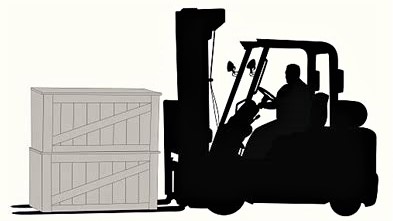
So said the foreman, minutes before handing me my walking papers.  I tried arguing with him, saying it wasn’t my fault the wooden cartons of glassware fell off the fork-lift, smashing all the contents.  The stupid machine lurched forward as I started the motor. 

“C’mon, gimme a break,” I whined.  “Whoever drove it last left it in gear.”

You drove it last, dummy!”

On the bright side, that wasn’t the first job I ever got fired from, and I managed to survive.  On the dark side, it wasn’t the last, either.

For example, take that job driving a taxi.  I got canned after my first shift, when I inadvertently drove my cab out of the service station with the gas nozzle still in the fuel door.  Pulled the pump right off its moorings, flooded the whole area with gas, shut down the whole block for hours.

“You musta already donated your brain to medical science!” the dispatcher growled.  “You’re livin’ proof of the theory of de-volution!”

He wasn’t happy that I asked for a free cab-ride home.  Turns out, I had to walk.

Keeping jobs isn’t the only thing I’ve messed up, though.  I’ve also had issues with landlords from time to time, all of whom seemed quite unreasonable.  On one occasion, I answered my phone in the kitchen, forgetting I’d left the taps running to fill the bathtub.  I realized the problem immediately when I saw water pooling around my feet, and quickly rushed to shut off the taps.  The landlord began pounding on my door as I was cleaning up the mess, summoned by the tenants on the floor below whose ceiling had caved in on them.

“Your elevator don’t go all the way to the top floor, y’know that!” he yelled.  “Your antenna’s not pickin’ up all the channels!”

In retrospect, that probably wasn’t the best time to remind him the building was a five-floor walk-up—no elevators, no TV service.  I got an eviction notice the next day.

Thank goodness it didn’t take long to find temporary digs, but I was only there a couple of days when my new landlord—my surly sister-in-law, never my biggest fan—told me to get out.  Screamed it, actually. She’d reluctantly agreed to let my brother set me up in their spare room in the basement, but apparently she wasn’t a fan of Black Sabbath or Iron Maiden cranked to a hundred decibels ‘til well past midnight.

“But Tish, they only sound good if you listen with the volume way up,” I griped.

She looked at me pityingly.  “Well then, you’re deaf as a stump.  An’ about that smart!”

“What?” I said, trying to be funny.  She didn’t laugh. Didn’t change her mind, either.

In addition to mistakes with jobs and landlords, I’ve also had issues now and again with the demon-rum.  I vaguely recall the time, after knocking back a few pints, I knelt down in front of the first woman I wanted to marry—Mary-Ann something, or maybe Mary-Lou.  Astonished, she asked me what I was doing on my knees in the middle of the pub, and sadly, right at that moment, I couldn’t remember.  And then, according to what I heard later from the police, I toppled over on the floor.  The love of my life was long-gone when I awoke in the drunk-tank.

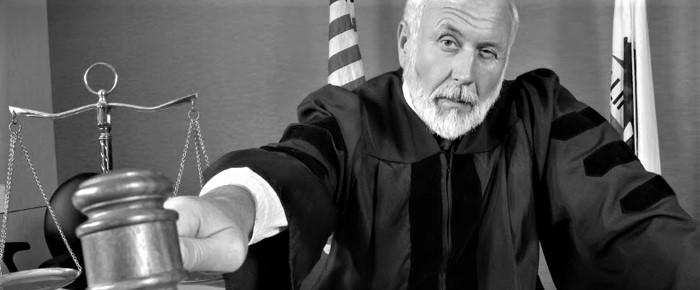
In court the next morning, I told the judge I’d be representing myself.  “Not a good idea, son,” he intoned.  “In your condition, you’d lose a debate with a doorknob!  I’m surprised you managed to hit the floor when you fell on it!”

Even the therapist the judge sent me to was unimpressed a month or so into our sessions.  “When you were assigned to me,” he said, “I didn’t realize you had a drinking problem.  Not ’til you showed up sober once.”

“Not to worry, Doc,” I told him amiably.  “I’ve always been a coupla beers short of a six-pack!”  Not surprisingly, I don’t see that therapist anymore.  Never saw Mary-Sue (Mary-Jean?) again, either.  Never had our second date.

I suppose I’ve always walked a bit of a crooked line, even when not under the influence.  My mother, God bless her, once said, “It’s like you’re half a bubble off plumb!  Like you’re one saucer short of a tea-set.”

That might have been what got me started on the hard-stuff, come to think of it, because I never did drink tea again after she said that.

Probably the biggest mistake I ever made in my life—although I still have years left to change that—was when I decided to join the Marines.  I was unemployed, nowhere to live, without a girlfriend, banned from my favourite pubs, and hungry.  In desperation, I signed up for a pre-boot-camp, where a former Drill-Sergeant set out to weed out the wannabes from the wunderkinds.  You can probably guess which I was.

“You hafta be the poster-child for birth-control, gomer!” he screamed at me on the first day.  “You give inbreeding a bad rap!” 

“I was adopted!” I said, as if that would make any difference.

“Yeah?  Well either way, you musta fell outta the family tree an’ hit every branch on the way down.  Too much chorine in your gene pool!”

He never let up on me, and by the fifth day, I’m sure I’d heard every description of screw-up ever invented.  They just kept coming.

Day 1: “You’re not pullin’ a full wagon, boy!  You’re a few mules short of a team!”

Day 2: “You’re ‘bout as sharp as a marble, son!  You don’t know whether to scratch your watch or wind your butt!”

Day 3: “The gates are down, the lights are flashin’, but the train ain’t comin’, bucko!  You’re deprivin’ some village somewhere of its idjit!”

Day 4: “Your driveway don’t reach all the way to the road, boyo!  The wheel is spinnin’, but the hamster is dead!”

I flunked out on the fifth day, and for the first time the sarge seemed to take pity on me.  “Sorry, son, but bein’ a Marine means you gotta be burnin’ on all thrusters, roger that?”

I didn’t know what thrusters were, nor did I know anyone named Roger, so I just nodded meekly, no smart wisecrack this time.

“You got a good heart, kid, but it’s like your boat don’t have all the oars in the water.  Like you don’t got all your soldiers marchin’ in line.  So, here’s what you oughta do.  Go join the navy.  Or join the army.  They need guys like you!”  He ended that last sentence with a mocking laugh.

So, shortly thereafter, I found myself on my way to the nearest army recruiter, filled with hope after such a rousing send-off.  I chose the army over the navy because someone once told me they’d invented the acronym FUBAR!

Which, as I’d come to understand by then, is what I was!

The Magic Soap

The weekly prompt from my Florida writers’ group was to imagine we have some sort of magic soap, and write a story about what it might wash away. This is my response to that prompt—

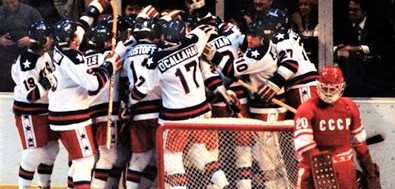
“Mike Eruzione?  No way!  Grandpa wasn’t that good a hockey-player.  No way he played with Eruzione!”

“He says he assisted on Eruzione’s game-winning goal against the Russians.”

“That game was played in 1980!  Grandpa was born in 1935, so he’d have been…let’s see…he’d have been forty-five by then.  If he had played in that game, that would have been the miracle on ice!”

“Well, he says that’s what happened.”

[The five grandchildren, three young women and their brothers, are sitting by the fireplace in the parlor of their grandfather’s home while the old man is napping upstairs.]

“Grandpa says a lot of things these days, most of which never happened.  He told me a week or so ago that he helped Paul McCartney write Hey Jude while he was on vacation in England in 1968.”

“Grandpa’s never even been to England!  Do any of you believe that story?”

[A chorus of disbelief flows from the other four.]

“Nah.”

“Nah.”

“Nah.”

“Nah.  No way!  I know it’s his favourite song, but no way he helped write it!”

“It’s getting to be a problem, this story-telling.  I think he really believes what he’s saying.  You think it’s…y’know, dementia?  Or Alzheimer’s?”

“Maybe it’s just bragging.  Trying to make himself sound more important to us than he really was.”

“Yeah, maybe.  Like Baron Munchausen.”

[The other four glance quizzically at each other.]

“Who?”

“Baron Munchausen.  A German storyteller from the 18th century.”

“Nah, Grandpa’s never been to Germany, either.”

“That’s not the point.  He could be telling tall tales like…ah, never mind.”

“He told me a while back that he was on the bus in Birmingham when Rosa Parks refused to get off.  Said he got up and gave her his seat.”

“See, that’s another crazy story!  That happened sometime in the mid-fifties.  Grandpa would’ve still been in his teens.  And she wasn’t told to get off the bus, she was told to sit in the back.  And it was Montgomery, not Birmingham.  Grandpa’s never been to either of those places.”

“He gets things all mixed up now, which is how you know he’s…well, either lying or just mis-remembering.”

“Yeah, he sounds like Forrest Gump, right?  Thinks he met with famous people all through his life.”

“Yeah, but at least Forrest Gump was real!”

[Four of the grandchildren stare in bewilderment at their brother before one of them carries on.]

“He tells me these sorts of stories, too, but I never know what to say.  I don’t wanta hurt his feelings, but I don’t wanta act as if I believe him, y’know?  What do you guys do?”

“I laugh if he’s laughing, I’m serious if he’s serious.  I just go with the flow.  What harm does it do?”

[The five of them sit silently for several moments.]

“It’s too bad there isn’t some sort of cleanser for the brain, something that would wash away all his faulty memories and leave the good ones.”

“Not just good ones, but correct ones.  All memories don’t have to be good ones.”

“Right, yeah, that’s what I meant.  We need some sort of soap for his brain so we could just wash away all the mixed-up memories.

“You wanta brainwash Grandpa?”

[Everyone looks at the speaker, aghast.]

“No, not brainwash him!  That’s not what I mean.  I just meant some sort of magic soap—maybe he eats it, or we mix it with his cocoa at bedtime, and all the cobwebby stuff in there gets cleared up.”

“Just don’t suggest Ivermectin!”

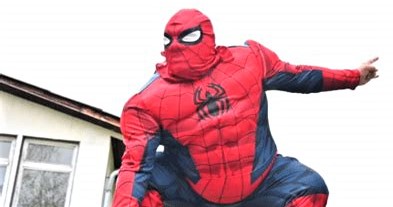
“Speaking of cobwebs, he asked me this morning where his Spiderman suit is.  Said his spidey-sense is tingling.”

“Omigod, now he thinks he’s a super-hero?”

“So, what sort of magic soap do super-heroes use?”

“There isn’t one, not for Grandpa’s problem!  His problem can’t be fixed.”

[The five grandchildren stare into the fire, at a loss.]

“He is sort of funny with all his stories, though.  Right?”

“Yeah, he does make me laugh.”

“Me, too, so why are we talking about cleaning out his brain with some sort of magic soap?”

“Right, I agree.  As long as he’s no danger to himself or anyone else, who cares?”

[A loud, clattering sound is heard outside, and one of the grandchildren goes to the window to investigate.]

“Omigod!  It’s Grandpa!”

“What?”

“It’s Grandpa, dressed in his Spiderman suit!  He’s on the porch-roof, trying to climb down the trellis outside!”

[The five grandchildren scramble for the door.]

So Far, So Good!

I have a friend who claims his goal in life is to live forever.

“How’s it going so far?” I ask him.

“So far, so good!” he replies with a grin.

As I approach my eightieth year—having been alive for all or parts of nine different decades, the first being the 1940s—I don’t share that lofty goal, to be an eternal Methuselah.  I confess, though, my friend does have me wondering about my chances.  So far, I have lived out more years than three grandparents, three uncles, two of five aunts, and all four of my younger siblings (one of whom has already passed).

I’m currently the eldest of my surviving birth-clan, which includes three sisters, two daughters, and five grandchildren.  My wife, almost four years my junior (strictly speaking, not a birth-relative), is also with us.

If I am destined to live longer than anyone in my family so far, I’ll have to make it through another fifteen years, which will leave me just five shy of my centenary.  One grandmother made it to ninety, three aunts lived into their early-nineties, mostly intact, as did both my parents, so my genetic coding bodes well.

One goal I do have, perhaps more realistic than my friend’s, is to spend more years in retirement than I spent during my professional career.  I worked for thirty-two years and retired at fifty-five, leaving me eight years to go before attaining that goal when I reach eighty-eight.  So far, so good!

Back when I was a young thirty-ish man involved in several athletic pursuits, I used to joke that, if I had to die anytime soon, the best exit would come while sliding into third base, the game-winning run scoring ahead of me, with the last words I hear being the umpire bawling, “He’s safe!”

Older now, and less-inclined to make light of matters mortal, I’m pleased to say that goal was never realized.  I’m still alive, no longer playing ball, and so far, so good!

As an aside, one of my more ribald teammates claimed his goal—never one of mine—was to die in bed, shot to death by an irate husband.  To my knowledge, absent a willing bed-mate, he also never attained his dream.  But I digress.

Baseball is not the only pursuit I have forsaken as the years have mounted up.  Badminton, curling, cycling, golf, ice-hockey, in-line skating, and tennis are also sports I have abandoned in recent years.  The main reason, given that I wish I could still partake in all of them, is that I came to fear major physical damage if I should come a-cropper.  The risks began to outweigh the rewards, and I became determined not to end my life as an invalid. 

These sacrifices notwithstanding, I certainly had no wish to finish my time on earth as a couch-potato, either.  So, I still visit the gym to engage in low-impact activities such as rowing, weightlifting (low weights/high reps), and stretching exercises.  I walk the corridors and stairs of my high-rise condo, and I still swim, although not as many laps as once I could manage.  My goal is to stay active and limber, and so far, so good!

Paying attention to my personal health is a much greater priority now, too.  I still remember an occasion (again, in my feckless thirties), when I called my doctor’s office to make an appointment for a physical exam.  The receptionist couldn’t find my records for the longest time, and when she came back on the line, she said, “Okay, we’re good.  I found them in the dead file.”

“The dead file!” I exclaimed.  “What made you think I’d died?”

With a chuckle, she explained the dead file was the repository for records of patients who had not made an appointment during the previous five years.  Five years!  I was shocked to be informed it had been that long.

These days, of course, having lived into my ninth decade, I see my doctor much more regularly.  My goal is to stay ahead of ailments that might slow me down, or put a crimp in the comfortable lifestyle I now enjoy. 

That current, comfortable existence includes singing in a men’s a cappella chorus, a most enjoyable experience, still part of a team.  It includes spending hours each day writing essays and poems for a regular blog, tales for a number of published anthologies, and stories for a series of published crime-fiction novels.  I’m having the time of my life right now, as a matter of fact, and hope I can go on doing these things for a long time to come.  So far, so good!

My wife and I are fortunate to be able to split our time between a home in Ontario and another in Florida.  Each autumn, and again each spring, as our time in one draws closer to its end, we begin to look forward to our return to the other.  Aside from the normal concerns associated with home-ownership, we find it’s an idyllic way to live, and we eagerly anticipate each change of the season. 

In the unlikely event it turns out my friend is able to realize his own goal to live forever, I know he’ll bid me a fond farewell when my time comes, as it surely will.

But you know what?  So far, so good! 

Get the Message?

“So, lemme get this straight,” my companion says.  “If your phone rings, doesn’t matter where you are, you don’t answer it?  Not even if you know who it is?”

“Right,” I reply, “most of the time, anyway.  Unless it’s my wife or kids, or grandkids.  For them, I always answer.”

We’re walking along the lakefront on a sunny late-afternoon, enjoying the scenery, the other strollers, the kids flashing by on bikes and scooters, the sailboats out on the water.  A light breeze keeps us comfortable enough in the heat.

“So, what if it’s an emergency?” my friend asks.

“I figure whoever it is will call right back,” I say, “or leave a voicemail message.  Robocalls don’t do that, but people calling in an emergency will.  If nobody answers a bot’s call, it just moves on to the next random number.”

“You always check your voicemail?”

“I do,” I say.  “Maybe not immediately after the call, but frequently enough.”

“What if it’s a relative or close friend?”

“Same drill,” I tell him.  “I mean, I may choose to answer, but it depends on what I’m doing at the time.  I figure the phone is my servant, not the other way around.  It’s a tool that does its thing when I say so, but I don’t jump to its bidding.”

“Yeah, but it’s not the phone demanding your attention,” my companion protests.  “It could be a friend!”

“That’s right,” I nod.  “But if another friend called me right now, I wouldn’t ignore you to answer the call.  Why should you play second-fiddle when you’re right here with me?”

“Yeah, I can see that,” he concedes, before adding, “So, I imagine you never answer unknown callers, either.”

“Right.  Same logic.  But if they leave a message, I’ll soon know if I need to return the call or just forget about it.”

“Seems like an imperious attitude to me,” my companion says.  “What if everybody did that to you when you’re calling them?  How’d you like it?”

“Actually,” I say, “I wouldn’t mind.  Far as I’m concerned, it works the same both ways.  If my reason for calling is urgent, I’ll leave a voicemail message.  If it’s an emergency, I’ll still do that, but I’ll also keep calling—twice, three times, four, one right after the other.  I figure in that case, the person I’m calling will realize she or he should answer, that the calls aren’t random.”

“And if they don’t?”

I shrug.  “Well, some things are beyond my control,” I say.  “The important thing in cases like that is I try to get through and leave a message.”

“Seems like it’d be easier if everybody just answered every call,” my companion says.  “That way there’d be no wasted time.”

I shrug again.  “Depends, I guess.  Some people—like me, for instance—would think answering every call is a waste of time.  Every call?  C’mon!”

We walk in silence for awhile, pausing to let a flock of geese cross our path on their way from the water to the park lawn.

“So, if I call you, I won’t get an answer, right?” my companion says, still thinking about our conversation.  “And then, I hafta leave a message and wait for you to get back to me.  But what if I’m the one who’s busy when you do that?  Then what?”

“Then I can leave a message for you,” I argue, “which I’d do if my call was important.  But if I were just calling to touch base, I might not leave a voicemail at all.  No problem.  Either way, the ball’s in your court at that point.”

“And this works for you?”

“So far,” I grin, gently edging my friend to one side to let a couple of bicycles flash past, bells ringing loudly.

“Maybe I should give it a try,” he says uncertainly.  “I get a lotta calls, and sometimes I really wanta let ‘em go, y’know?  You think it could work for me?”

“You won’t know if you don’t try,” I reply.  “I had to work at it when I first…”

I’m interrupted by the insistent jangling of my companion’s phone.  With a stricken look on his face, he pulls it from his pocket, checks the screen, then puts it to his ear, turning his back as he does so.

I walk on, unperturbed, leaving him in privacy to deal with the call.  A hundred metres or so further along, I hear him call my name.  Turning, I see him, phone still fixed to his ear, motioning for me to wait.

In response, I put my hand to my own ear, pinkie and thumb cocked in the universal signal for Call me!, then carry on my merry way. 

I know I’ll get his message.

A Boomer No More!

Shortly after the end of my seventh decade, I made a dramatic discovery.  One of my basic beliefs, one of my most treasured tenets, turned out to be untrue.  Indisputably incorrect.  Not founded upon fact.

Contrary to my lifelong assumption, I learned I was not a baby-boomer!

Perhaps this seems less than a momentous finding, given the plethora of problems and disappointments we face every day in our troubled world.  Nevertheless, it left me somewhat in limbo, wondering where I fit in, if not where I had always assumed.

Conventional wisdom in the western world, I learned, defines boomers as those born between 1946 and 1964.  Sadly, I came along, the firstborn of my generation, in early 1943, a full three years before my next oldest sibling.  Upon my birth, I became the seventh living person in my three-generation family, and the youngest. 

Today, I am the eldest of my own three-generation family, one of eleven people.  This diminutive dynasty of mine has increased in number by a meagre four souls across a span of more than seventy years.  We are not exactly a fecund family! 

My brother and three sisters, born between 1946 and 1954, are legitimate baby-boomers.  We’ve never talked about that, though, most likely because they take it for granted.  Just as I always did prior to learning the truth.  As I aged—reluctantly, grudgingly, but inevitably—it was comforting to know that I would never become irrelevant, inconsequential, or ineffectual.  By virtue of my inclusion in such a huge, influential, demographic cohort, I was hopeful of being ever important, pertinent, and significant.

“I am a boomer!” I would proudly declare to one and all.  Alas, that hope has been forever dashed. 

It was only in the last century, apparently, that people began to think in terms of generations, and to label them.  Prior to 1900, presumably no one had the time or inclination to pursue such frivolous thoughts.  After World War I, however, when almost sixteen million soldiers and civilians were killed, and after the Spanish flu outbreak in 1918, when perhaps fifty million people perished, the term lost generation sprang into use, denoting those born before the turn of the century.  It is generally credited to the writer and critic, Gertrude Stein, and it came to define the cohort of that era.

The people born between 1900 and 1924—who came of age during the great depression of the 1930’s, many of whom served or fought in World War II—are often referred to as the greatest generation, a phrase first coined by another writer, Tom Brokaw.  After the baby-boomers’ years, along came generations X, Y, and Z, roughly spanning the years between 1965 and the present.  My two daughters are gen X-ers.

Generation Y, or millennials—born roughly between 1980 and the late 1990s, the children of boomers—are sometimes referred to as echo-boomers.  One of my grandchildren falls into this cohort.  The other four are of the gen Z group, which means my family spans five generational cohorts.

Anyway, my place in this grand scheme appears, sadly and irrefutably, to be wedged ignominiously between the greatest generation and the boomers, born between 1925 and 1945, a span that encompassed a period of rapidly-declining birth-rates in the western world.  In the United States, for example, population fell by almost 1.8 million in the five years before 1945, whereas it grew by 19.4 million in the five years following.  My generational cohort, the waning product of that decline, was dubbed the silent generation in a 1951 Time magazine article.

Can you imagine how I feel?  I’m part of the silent generation?  I went from being a boomer, a member of that iconic group responsible for much of the economic, cultural, and technological growth in the western world, to being a nobody—the product of a flagging era, dwindling and diminishing in comparison to the years surrounding it.  It was disheartening, it was frustrating, and it was humbling to learn I was a member of a marginal, mute minority.

But, you may ask, why do I care?  Why is this of such import?

Well, in times past—from feudal fiefdoms to Victorian villas—younger sons were often banished from their noble fathers’ mansions, sent off to the army or the church where they would succeed or fail on their own.  The eldest son, however, was to the manor born, and was never treated in the manner of his younger siblings.  Not for him the shame of exile or exclusion from the elegant elites.  Male primogeniture reigned.

Therefore, when I eventually became old enough to understand my status as the eldest grandson in my somewhat-Victorian grandfather’s family, I more or less assumed I would benefit in a fashion similar to those earlier first-born scions of society’s finest families.  Not only that, but in addition to my favourable birth-rank, I stood poised (I thought) at the leading edge of the greatest population boom in modern times, the boomers.  The world would be there for our taking; none could stand against us.

[An aside: it occurs to me as I write this that perhaps, as a child, I was too steeped in Victorian delusions of grandeur.  Ah, well…]

In any case, here I sit today, silenced, stifled, and insignificant, gloomily appraising my paltry position on the generational flowchart—not riding the crest of a great wave as I had assumed, a triumphant shout upon my lips—but rather receding slowly and soundlessly into a forgotten fragment of twentieth-century demographic distribution, the silent generation.

There is a painting, The Scream, completed in 1893 by Edvard Munch, himself the eldest son in his family.  Famously considered to represent the universal angst of modern man, it portrays the artist at a particularly anxious time in his life.  Since my banishment from the boomer ranks, I have looked at it closely and repeatedly, wondering what it sounded like, that scream.  In similar torment, I have tried to copy it, tried to unveil my own scream of protest at the unfairness of it all.

“Let me in!” I open my mouth to cry, but no sound emerges.  Oblivious to my silent suffering, the boomers tramp on, adhering to their own imperatives, a wholly-engrossed horde of humanity resolutely heading who knows where.  Without me.

And so, ‘tis true.  I am a boomer no more.

The Great Pur-tenders

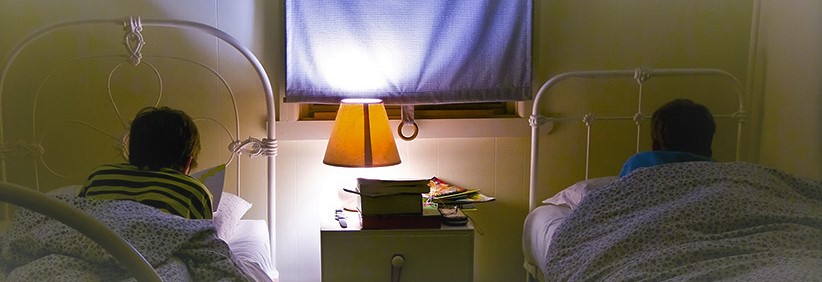
I see them reading in bed when I come in to say good night.

“Let’s play the pur-tend game, Gramps!” Jacob suggests, burrowing down under the covers, brown curls framing his sweet face, his book cast aside.

“It’s pre-tend,” I say.  “And sure, we can play one game before you guys go to sleep.  Three turns each.”

“You go first, Gramps,” Travis says, snuggling into his own bed, a smaller replica of his older brother, his book also forgotten.

“Okay,” I say, screwing my face into what I hope resembles a fearsome snarl.  “I’ll huff an’ I’ll puff ‘an’ I’ll blow your house down!”

“The big, bad wolf!” Travis shouts immediately.  At six years old, he is ever competitive and eager to beat Jacob, older by a year, to the answer.

“Right,” I smile.  “Your turn.”

“Okay…hmmm…”  After a moment, using his deepest voice, he says, “Fee, fie, foe, fum, I smell the blood…”

“The giant!” Jacob cries before he can finish.  “The giant at the top of Jack’s beanstalk.”

“You hafta let me finish, Jake,” Travis complains, indignant at being cut off.

“Don’t worry, Trav,” I say soothingly.  “If Jake can guess them early, it means you’re doing a good job, right?”

Travis smiles triumphantly, pleased by this revelation.  “Right!” he says.  “I’m a good pur-tender.”

“Pre-tender,” I say patiently.  “And now it’s Jake’s turn.”

Jacob has his riddle all ready.  “Mirror, mirror on the wall, who’s the fairest of them all?”

Travis doesn’t reply right away, furrowing his brow as he tries to come up with the answer, so I say, “Sleeping Beauty.”

“Wrong!” Jacob crows.  “I get another turn.”

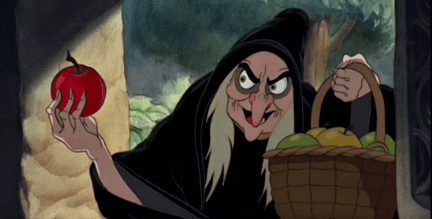
“Wait, wait, I know it now,” Travis argues.  “It’s the wicked, old queen who gave Sleeping Beauty the poison apple. She turned into an old hag!”

“Not fair!” Jacob pouts.  “Gramps gave it away!  He pur-tended to know the answer so you could get it.”

“Hey,” I protest, “that was my best guess.  And it’s pre-tended…which I didn’t do, by the way.”

“Okay, my turn,” Travis says, oblivious to my persistent corrections.  “You won’t get this one!   Wah…wah…what’s up, Doc?”

“Bugs Bunny!” Jacob says.  “That was easy!”

Crestfallen, Travis says, “Yeah, but only ‘cause I can’t stutter!”

“Bugs Bunny doesn’t stutter,” Jacob says.  “That’s Porky Pig.”

“Okay your turn, Jake,” I intercede quickly, heading off a potential squabble.  “This is your third round.  Make it a good one.”

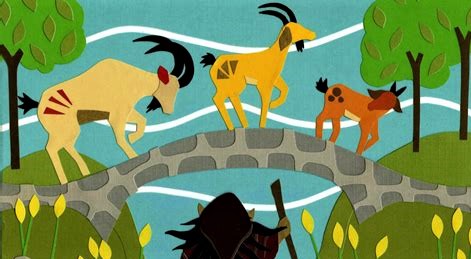
“Okay, here it is.”  In a harsh, threatening rasp, he bellows, “Who’s that clip-clopping across my bridge?”

“Billy Goats Gruff!” Travis exclaims.  “That’s the troll under the bridge!”

“Very good, Trav,” I say.  “Now it’s your third turn.  Can you stump us?”

Adopting a lilting, sing-song tone, he says, “Hi-ho, hi-ho, it’s off to work we go!”

“The seven dwarfs,” Jacob shouts, eager to beat me, even though he’s used his last turn.

“Which one?” Travis says, wanting to stump his brother.

“All of ‘em, right, Gramps?”

“I think so,” I say.  “They all went to work, unless Sleepy slept in.”  My intended joke falls on deaf ears.

“Okay, that’s three for me an’ Trav,” Jacob says.  “But you got two pur-tends left, Gramps.”

This is the standard pattern when we play, which usually allows me to end the game without complaints from them about having to go to sleep.

“I have two pre-tends left,“ I say, “so here’s my second one.”  In my best attempt at a high-pitched cackle, I croak, “Who’s that out there, eating my house?”

“The witch, the witch!” the boys yell in unison.  “Hansel an’ Gretel!”

“Right,” I smile.  “You guys are great at this game!”

“Yeah,” Travis agrees.  “We’re the great pur-tenders!”

Pre-tenders!” I say, for what feels like the umpteenth time.  “You guys are great pre-tenders.  You remind me of an old song, and I’m going to use it for my final riddle.  Then it’s bedtime.”

“Sing it, Gramps,” Jacob urges.  “Sing it for us.”

They’ll endure anything to avoid having to go to sleep, I figure, but I sing the song anyway, tailored just for them.

Oh-oh-oh, yes, you’re the great pre-te-en-ders,

All cozy and ready to sleep,

You’ve played your games and you’ve guessed the names,

And now you must lay down your heads,

Pre-tending you’ll start counting sheep!

“That’s Little Bo-Peep!” Jacob yells, excited to have an answer for the last one.  “She lost her sheep, right?”

“You got it,” I laugh, hugging him, feeling his fleeting kiss on my cheek.

When I bend to hug Travis, he whispers, “I love you, Gramps.  We don’t have to pur-tend ‘bout that.”

Softie that I am, I feel my eyes filling up.  And this time, I don’t attempt a correction.

Sci Fi?

The subject of the weekly prompt from my Florida writers’ group was sci fi, a topic about which I have very little knowledge and scant interest in. Here for your amusement is the piece I submitted.

* * * * * * *

I had no idea of the meaning of sci fi, the weekly prompt from my Florida writers’ group, so I asked a few of my learned friends.

“I’m not surprised you don’t know,” my doctor friend sniffed with a whiff of condescension.  “It’s a medical term for sciatic filiarae, a spinal disease caused by a small, threadlike roundworm.  Sci fi is nasty stuff.”

“Sounds like it,” I shuddered.  But I didn’t think that was the meaning intended by the writer’ group, so I asked some other folks.

“Sci fi is a short term for scintillating fidelity,” my aging-hippie friend smiled dreamily, exhaling a fragrant plume of smoke through his nostrils.  “Just listen to the sound from these speakers!”  The large black boxes were pumping out the strains of Turn! Turn! Turn! by The Byrds, never one of my favourite bands, so I turned and left my friend to his relaxed ruminations.

My brother-in-law, a pretentious, retired university professor, told me the meaning in no uncertain terms.  “It’s short form for sciolistic fieldwork, something we tenured academics do to advance the frontiers of knowledge.  It comes from a root-word meaning to dabble, like a dilettante.  Any thing else you’d like to know?”

Sorry I’d asked, I shook my head wearily and gladly moved on, still not convinced I had found the meaning for the prompt.

“Ah, I’m glad you came to me,” my ornithologist friend smiled when I approached her.  “Sci fi is how we birders refer to the extremely rare scissortail firebird, an eastern subspecies of the northern Oriolewith a distinctive split tail.  You must tell me where you saw it.”

“I haven’t actually seen one,” I demurred, “but thanks for the info.”

My business consultant friend had yet another answer.  “It’s a rather pejorative abbreviation for scion firms, companies that are being run into the ground by the wastrel children of wealthy industrialists.  No self-respecting financial advisor would ever recommend investing in a sci fi, believe me.  You haven’t, have you?”

“No, no,” I assured him.  “My money’s safe.”

Rather desperate now, I approached a botanist friend with the question.  Even she had to look it up, but she was quite confident in her answer.  “The term refers to the scirocco filaree, an invasive weed most often found in the southwest part of the country.  Ranchers hate it, because it’s like a noxious drug that poisons their herds when they ingest it, like locoweed.”

“I can sympathize,” I said, thinking of my hippie-friend. 

My next query was to the daughter of an old friend, a young woman who had recently graduated from a PhD programme in nuclear energy.  “Glad you asked,” she said, pleased to be consulted.  “My dissertation went on at length about sci fi, which is scintilla fission, the quantum-splitting of unicellular organisms, dividing the cell into two more-or-less equal parts.  If you have an hour or so, I can give you the executive summary of the process.”

Pleading time constraints, I thanked her graciously and took my leave, still quite frustrated at having no confidence in any of the definitions I’d been given.

At the next meeting of my writers’ group, I apologized for not having produced a response to the prompt.  “I could never pin down the meaning of the term,” I kvetched, hoping they would understand my dilemma.  “I went to a lot of authoritative sources, but everybody had a different definition.”

“Tell us what they thought it meant,” one of my writing colleagues said.  “There must be something that would fit the bill.”

I ran through the entire list of explanations I’d received from my friends, smiling ruefully all the while.  “That’s it,” I said when I finished.  “That’s all I got.”

“Wow!” another colleague exclaimed.  “I can see why you’re so confused.  Those are pretty far-fetched descriptions.  They could be straight out of some sci fi novel, for goodness sake!”

“Exactly!” I agreed, feeling somewhat vindicated.

And then, too late, the light went on.

Invisible

The weekly prompt from my Florida writers' group was to write a book review featuring the word invisible.  Here for your amusement is the piece I submitted.

NEW YORK TIMES #1 BESTSELLER HOPEFUL

FROM HERE TO OBSCURITY
by
Hy Perbulley

Book Review by Times Critic
Cara Fulreader

     New York, NY - April 19, 2022 - High School Valedictorian.  Deans List.  Phi Beta Kappa.  Rhodes Scholar.  Nobel Laureate.  These highly-esteemed honours, although coveted by young Algernon Entatty, the subject of this forgettable biography, were never attained.
     According to author Hy Perbulley, Entatty’s story begins in 1949 when he was born to an unmarried mother living in a squalid third-floor walk-up in a dilapidated tenement building in a run-down neighborhood in New York City.  The baby was his unfortunate mother’s first and only child.
     Nothing is known of his first five years, but his ten years in grade school ended with a mercy-rule promotion to high school when he was fifteen.  Six years later, he left school after grade eleven to join the army.
     In his seven years of service, during which period he achieved the rank of Private, 2nd Class, he saw reluctant combat duty in Vietnam.  According to the author, Entatty surrendered five times to the enemy, but was promptly returned each time.  At the time of his discharge, he was the only American soldier ever to have been deemed unfit for duty by both sides, a distinction he holds to this day.
     Following his military service, shortly after the death of his mother who had never married, he began to openly profess a belief that he must have been the offspring of a virgin birth.  Over the next five years, he tried to align himself closely with the Billy Graham Crusades, following the famous evangelist from city to city, proclaiming himself the Chosen One.
     The author writes that, in 1980, Entatty began to openly solicit funds from Christian believers under the Graham letterhead---all donations to be sent to the address of a squalid third-floor walk-up in a dilapidated tenement building in a  run-down neighborhood in New York City.  These fundraising efforts continued until the Graham organization obtained a restraining order.
     Almost nothing is known of the next two decades of Entatty’s life, but at the age of fifty he burst into nationwide prominence on the cover of a national tabloid magazine, Police Court Gazette.  Possessing a strong resemblance to an infamous Mexican drug-cartel boss, El Crapo, Entatty was mistakenly arrested, charged, and convicted in New York, where he was sentenced to thirty-five years in federal prison.
     The author tells us that Entatty's picture continued to appear frequently in tabloids and television newscasts for the next half-dozen years, however, because his imprisonment did not result in the reduction in the volume of drug trafficking expected by the authorities.  They claimed he must have been managing the vast criminal enterprise from behind bars, a premise no one who knew him believed even remotely possible.
     Entatty was eventually exonerated when the real El Crapo---embarrassed that people were believing the remarkably incompetent Entatty could actually be him---surrendered to police in order to clear up the humiliating confusion and redeem his sullied reputation.
     The Bureau of Prisons quickly attempted to free Entatty, but after several fruitless searches through their records, they could not find him in the vast network of federal prisons.  A Bureau spokesperson told the author, “It’s like he’s…y’know, a non-entity.  He just disappeared.  We can’t find him.”
     Hy Perbulley, who claims he first befriended Algernon Entatty as a prison pen-pal, told this reviewer by phone he has never met the man in person.  He did spend time searching out close friends as part of his research, but finding none, resorted to interviewing anyone with even a passing acquaintance.  Hardly anyone remembered him, and no one was able to tell him anything of the remotest interest about the man.
     Perbulley claims he is negotiating with a major film studio that is considering whether or not to option his book for a blockbuster movie, tentatively titled The Invisible Man.  No independent confirmation of that claim has been obtained.  Perbulley has since dropped from sight and remains unavailable for further comment.
     This paltry book, From Here to Obscurity, numbers forty pages in length, and may be read in one sitting, should anyone care to waste time doing so.  It is not available in regular bookstores, but Perbulley said it may be ordered online for US$34.99 from the website---
www.ex-concon.com.
     The IP address for that site is located in a squalid third-floor walk-up in a dilapidated tenement building in a run-down neighborhood in New York City.  
BOOK RATING		1/4* (out of 10*)