A Boomer No More!

Shortly after the end of my seventh decade, I made a dramatic discovery.  One of my basic beliefs, one of my most treasured tenets, turned out to be untrue.  Indisputably incorrect.  Not founded upon fact.

Contrary to my lifelong assumption, I learned I was not a baby-boomer!

Perhaps this seems less than a momentous finding, given the plethora of problems and disappointments we face every day in our troubled world.  Nevertheless, it left me somewhat in limbo, wondering where I fit in, if not where I had always assumed.

Conventional wisdom in the western world, I learned, defines boomers as those born between 1946 and 1964.  Sadly, I came along, the firstborn of my generation, in early 1943, a full three years before my next oldest sibling.  Upon my birth, I became the seventh living person in my three-generation family, and the youngest. 

Today, I am the eldest of my own three-generation family, one of eleven people.  This diminutive dynasty of mine has increased in number by a meagre four souls across a span of more than seventy years.  We are not exactly a fecund family! 

My brother and three sisters, born between 1946 and 1954, are legitimate baby-boomers.  We’ve never talked about that, though, most likely because they take it for granted.  Just as I always did prior to learning the truth.  As I aged—reluctantly, grudgingly, but inevitably—it was comforting to know that I would never become irrelevant, inconsequential, or ineffectual.  By virtue of my inclusion in such a huge, influential, demographic cohort, I was hopeful of being ever important, pertinent, and significant.

“I am a boomer!” I would proudly declare to one and all.  Alas, that hope has been forever dashed. 

It was only in the last century, apparently, that people began to think in terms of generations, and to label them.  Prior to 1900, presumably no one had the time or inclination to pursue such frivolous thoughts.  After World War I, however, when almost sixteen million soldiers and civilians were killed, and after the Spanish flu outbreak in 1918, when perhaps fifty million people perished, the term lost generation sprang into use, denoting those born before the turn of the century.  It is generally credited to the writer and critic, Gertrude Stein, and it came to define the cohort of that era.

The people born between 1900 and 1924—who came of age during the great depression of the 1930’s, many of whom served or fought in World War II—are often referred to as the greatest generation, a phrase first coined by another writer, Tom Brokaw.  After the baby-boomers’ years, along came generations X, Y, and Z, roughly spanning the years between 1965 and the present.  My two daughters are gen X-ers.

Generation Y, or millennials—born roughly between 1980 and the late 1990s, the children of boomers—are sometimes referred to as echo-boomers.  One of my grandchildren falls into this cohort.  The other four are of the gen Z group, which means my family spans five generational cohorts.

Anyway, my place in this grand scheme appears, sadly and irrefutably, to be wedged ignominiously between the greatest generation and the boomers, born between 1925 and 1945, a span that encompassed a period of rapidly-declining birth-rates in the western world.  In the United States, for example, population fell by almost 1.8 million in the five years before 1945, whereas it grew by 19.4 million in the five years following.  My generational cohort, the waning product of that decline, was dubbed the silent generation in a 1951 Time magazine article.

Can you imagine how I feel?  I’m part of the silent generation?  I went from being a boomer, a member of that iconic group responsible for much of the economic, cultural, and technological growth in the western world, to being a nobody—the product of a flagging era, dwindling and diminishing in comparison to the years surrounding it.  It was disheartening, it was frustrating, and it was humbling to learn I was a member of a marginal, mute minority.

But, you may ask, why do I care?  Why is this of such import?

Well, in times past—from feudal fiefdoms to Victorian villas—younger sons were often banished from their noble fathers’ mansions, sent off to the army or the church where they would succeed or fail on their own.  The eldest son, however, was to the manor born, and was never treated in the manner of his younger siblings.  Not for him the shame of exile or exclusion from the elegant elites.  Male primogeniture reigned.

Therefore, when I eventually became old enough to understand my status as the eldest grandson in my somewhat-Victorian grandfather’s family, I more or less assumed I would benefit in a fashion similar to those earlier first-born scions of society’s finest families.  Not only that, but in addition to my favourable birth-rank, I stood poised (I thought) at the leading edge of the greatest population boom in modern times, the boomers.  The world would be there for our taking; none could stand against us.

[An aside: it occurs to me as I write this that perhaps, as a child, I was too steeped in Victorian delusions of grandeur.  Ah, well…]

In any case, here I sit today, silenced, stifled, and insignificant, gloomily appraising my paltry position on the generational flowchart—not riding the crest of a great wave as I had assumed, a triumphant shout upon my lips—but rather receding slowly and soundlessly into a forgotten fragment of twentieth-century demographic distribution, the silent generation.

There is a painting, The Scream, completed in 1893 by Edvard Munch, himself the eldest son in his family.  Famously considered to represent the universal angst of modern man, it portrays the artist at a particularly anxious time in his life.  Since my banishment from the boomer ranks, I have looked at it closely and repeatedly, wondering what it sounded like, that scream.  In similar torment, I have tried to copy it, tried to unveil my own scream of protest at the unfairness of it all.

“Let me in!” I open my mouth to cry, but no sound emerges.  Oblivious to my silent suffering, the boomers tramp on, adhering to their own imperatives, a wholly-engrossed horde of humanity resolutely heading who knows where.  Without me.

And so, ‘tis true.  I am a boomer no more.

There Oughta Be A Law

The prowling panthers pose an existential threat to the almost two hundred ostriches inhabiting the colony.  The panthers, in their single-minded quest for food, are indifferent to the fate of the ostriches they are stalking.  The hapless birds represent only one thing to the powerful predators—survival.

The bigger, more powerful ostriches will flee in face of the threat, and most will make good their escape.  And once removed from danger, the threat will be dismissed from mind.  Others will attempt to fight back, but only a very few will emerge without lingering wounds, damage that may eventually prove fatal.

Still others among the colony, refusing to acknowledge the threat at all, are reputed to bury their heads in the proverbial sand.  By making the problem invisible, by denying its existence, they must think (if they think at all), they will render it harmless.  The panthers feast on those misguided birds, of course, and the ostrich colony is diminished in the ensuing slaughter.

Among the inhabitants of the ostrich world, there are none so blind as those who will not see.

If you were there to witness the panthers’ predatory onslaught, you might well turn away in horror, exclaiming, “This is terrible!  There oughta be a law!”

To which I would reply, “There is a law.  It’s the natural law of survival of the fittest, immutable and eternal.”

On a global, human scale, political corruption, pestilential pandemics, and pernicious climate change are but three of the menaces currently posing an existential threat to the almost two hundred nation-states inhabiting our planet.  These plagues, in their single-minded quest for domination, are indifferent to the fate of the human species they are stalking.  We hapless human beings represent only one thing to these malignant marauders—survival.

The richer, more influential among us will avoid such threats, at least for a while, by cloaking themselves with their wealth and power.  Others, less fortunate, will fight back, but despite their defiance, many of the resisters will nevertheless fall prey to the pervasive perils.  Those who overcome, if any, will inevitably be victimized by such lingering maladies as political oppression, ongoing illness, or severe-weather calamities. 

Still others among us, refusing in the face of all evidence to acknowledge these threats at all, will bury their heads in the proverbial sand.  It seems they believe that, by ignoring the clear and present danger such threats present, by denying their existence, they will render them harmless.  The mindless scourges feast on those misguided souls, of course, and the human species is diminished.

There are those among us who, witnessing the onslaught of rampant corruption, emerging pandemics, increasing climate danger—not to mention scores of other existential threats—react with horror, exclaiming, “This is terrible!  There oughta be a law!”

To which I reply, “There is a law.  It’s the natural law of survival of the fittest, and it’s immutable and eternal—unless, that is, we as a species take immediate, concerted action to change it.” 

“We’ve been trying that,” some protest.  “Doesn’t work.”

“Nevertheless,” I counter, “we are one colony on this planet, despite the fact we live in almost two hundred distinct nation-states, and our very survival depends upon our willingness and ability to work together.”

“We’ve tried that,” some say again.  “Didn’t work.”

It seems such a shame that, despite the magnificent evolutionary journey our homo sapiens species has carved out during our two million years on the planet,  we appear doomed to bring it to a premature end ourselves, through our wilful ignoring of the empirical dangers we face right now—burying our heads in the sand.

It seems such a shame that there are none so blind as those who will not see.

The Sorrows

The weekly prompt from my Florida writers’ group was to take a snatch of lyric from a song, or a phrase from a poem, and write a story around it. This piece of fiction is inspired by When You Are Old, by W. B. Yeats—and is in memory of my mother, whose birthday this is, and who first introduced me to the poet’s work.

The old man died sometime during the night, alone, peacefully.  His careworn face, wrinkled and wizened under the weight of so many years, seemed suddenly younger somehow, and his lips were curled in what might have been taken as a smile.

On the table by the near-side of the bed—the side long occupied by his recently-departed wife—lay a note lovingly penned by his frail hand, an aged quill beside it, the ink caked dry on its tip.  It was unmistakably a love-letter to her, intended not for anyone else, fated now to be his last word to all who had loved the two of them.

This is what he wrote—

And now you are gone, off to another adventure, but this time without me.  How I wish I had been ready in time to accompany you, as on every occasion in the past.

There have been so many wonderful journeys upon which we did embark, each more glorious than those before it.  How I remember the sparkle in your eyes, the flush of your cheeks, the lilt of your joyous laughter, as off we went each time, hand in hand, bound for who knows where, never knowing that which we would encounter, but secure in our belief that, together, we would meet and conquer all.

And so we did.  Eloping when there seemed no other way in the face of families opposed, living abroad, scratching an existence from the fruits of our creative gifts, buoyed by our love and our belief in one another.  We could not have known, both so young, that your brush and my pen would eventually find favour with the audiences who discovered us.  And yet, undaunted, off we had whisked on that first great adventure into the wide world, happy, confident, ready for whatever fate had in store for us, surpassingly serene in each other’s bosom.

Every new work on your easel, every new draft in my notebook, carried us on to more adventures as we painted and published our way to heights heretofore unimagined.  What happiness we found in talking over our creative endeavours as they unfolded, in offering critiques and suggestions—shyly at first, and then more confidently as we grew in each other’s esteem.  Heralded as artists by the world beyond, we found our muses within ourselves and shared them.  Together.

Later came the children—Patrick, who died too soon; Liam, an accomplished actor now with dreams of his own; and Maeve, a musician who reminds me so strongly of her mother with such grace and sweetness masking that steely courage I ever found in you. What an adventure they provided us as our troupe grew to five, and then, sadly, diminished again to four.  What heights of joy we experienced, what depths of despair!  And yet, throughout, we sallied forth, ever determined to pass through each gateway, to follow each new path, to crest each succeeding hill.  Always together.

Inevitably, we became two again as the children, not unexpectedly, began to pursue their own adventures.  The years continued ever on and on, of course, but we, never ones to be mindful of constraints that seemed to bind so many others, paid them scant heed.  Yet even we—we, with all our bravissimo and essenza—even we could not slow the relentless ravages of time, the toll it took upon our bodies.  Even as our spirits remained as strong and audacious as ever, our bodies, increasingly and annoyingly, slowed us.  But at least we were together.

Before I knew, I had become an old man, bent and slowed.  And I watched as the weight of years pressed down upon you, too—never enough to douse the fire that burned within your soul, but tamping its fierce flames to glowing embers.  Never enough to quell the desire within us to begin our next great adventure, but sufficient to forestall our getting underway. 

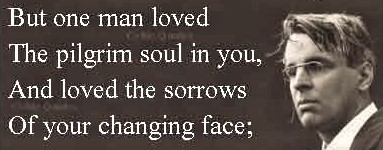
Nevertheless, even in our dotage, we found ourselves, blessedly, still together.  And I was ever the man who loved the pilgrim soul in you, and loved the sorrows of your changing face.

But now, beloved Pilgrim, for the first time, you have started a new adventure without me, alas.  And I am bereft, forsaken and left here in this too-much-travelled, mortal confine.  Would you have waited for me if you could, I wonder?  I think so.  Perchance, are you waiting still, there on that other side somewhere, knowing assuredly I shall be along when I can?

I write this now in hope it is so, that we shall reunite in glory to resume our way across the universe, amid a crowd of stars.….

Fathers, Fathers Everywhere

There’s going to be a gathering of three clans at the home of my eldest daughter and son-in-law this coming Father’s Day—Burt, Cherry, and Whittington.  With a combined age of 233 years, the three patriarchs (of whom I am one) boast of seven children (four of whom are themselves fathers) and nine grandchildren in total (some of whom are shared).

Those grandchildren, in addition to their patriarchal lineages, share ancestry from six families on the distaff side—Arnold, Eaton, Romig, Rowsell, Sakeris, and Wrigglesworth.  We are a discrete gathering, to be sure, but one big family, and it will be a happy coming-together.

Father’s Day has changed for me since I was a child, the eldest of five siblings.  In the beginning, I suspect I didn’t truly know what we were celebrating, given that all of us loved our father every day.  It was simply a party-day for some reason, and we all joyfully joined in to present Dad with our homemade gifts and cards.  He appreciated those more, I think, than the presents we purchased for him as we grew older—although he always had a softness for candy.

It wasn’t until I became a father myself that I began to appreciate what it meant to be somebody’s Daddy.  The enormous responsibility that entails was never lost on me, but it paled in comparison to the happiness and sense of fulfilment it brought.  And so, as my own daughters grew into young women, so too grew my appreciation of my own father and his role in shaping my life.

He lived into his 92nd year, mentally sharp to the end, and never lost his sense of humour.  Near the end, my mother asked him in a gentle whisper if he’d like her to sing to him.  “Not particularly!” he whispered back, the ghost of a smile gracing his face.

She sang him out, anyway, as he must have known she would.

Until I became one, fathers were always older men than I.  With remarkably few exceptions, I remember the fathers of my childhood friends being much like my own father—distant at times, there when it mattered, working-men dedicated to providing for their families.  They embarrassed us on some occasions, swelled our hearts with pride on others, and we never doubted their love for us—except maybe occasionally when they wouldn’t let us borrow the car.

I felt the same about the man who became my father-in-law—whom we lost way too soon—and I consciously tried to model my own behaviour as a father on those two men who were most prominent in my life.

It seems to me, even now, that it took a whole lot longer for me to grow up and move out from under my father’s purview than it did for my daughters to do the same.  My childhood lasted forever, or so I remember it.  But my girls were there—those precious, sweet babies—for such a short time, and then, in the blink of an eye, they were gone to men of their own.  To this day, I have a picture of the two of them, aged four and two, on my dresser.

“You’re not children anymore,” I tell them now.  “But I’ll never stop being your father.”  And I cling to that certainty.

I suspect the same sentiment is true for the other two patriarchs who’ll be joining me this coming Sunday.  One of them has three sons, the other a son and daughter.  All of those sons are themselves fathers now, which has led us to the startling realization (at least to me) that fathers are no longer the older men in our lives.  With the passing of our own fathers, it is younger men who now fill the role.

And in that reality, we old men are blessed.  The four sons, as fathers, are all loving husbands, dedicated to their families.  Hard as it is to believe, two of them are already retired from their life’s work, and branching out into other pursuits.  And without exception, they have loved and honoured their fathers and fathers-in-law from the beginning.

Over the next few years—years I trust I will be around to enjoy—I suspect there will be even younger fathers joining our combined families.  Grandsons and the young men who will marry our granddaughters may, with their partners, bring more children into our midst, great-grandchildren who will grace our lives.  At this point, I find it a happy circumstance that the number of fathers in our families is likely to increase.

By a matter of mere weeks in one case, and by a few years in the other, I am the eldest of the three patriarchs—the seniorem patrem familia, I suppose—but there is no doubt that such a distinction matters little.  All three of us are held in equal esteem by our respective children and grandchildren.

This coming Sunday, if everyone were able to attend, including sons- and daughters-in-law (and perhaps boyfriends), we would number twenty-five in all—seven of whom would be fathers, three of those, grandfathers.  Alas, some are too far distant, some grandchildren will be working, some in-laws may be with their own fathers at similar gatherings.  But whether with us or not, all will be there in spirit, and we shall raise a glass to the fathers among us.

There may come a few moments on Sunday when we three old men will find ourselves sitting off to the side, watching and listening to the antics of the younger ones, no longer as integral a part of the hubbub as once we were—a few moments when we may look at one another, smile knowingly, and silently acknowledge our shared status, a status none of us, perhaps, ever imagined we would occupy.

In so many ways now, I believe I have become my father.  And that accomplishment makes me happy.  I think Dad would be happy, too.

Happy Father’s Day to all of us who are blessed to be fathers and sons.

The Great Pur-tenders

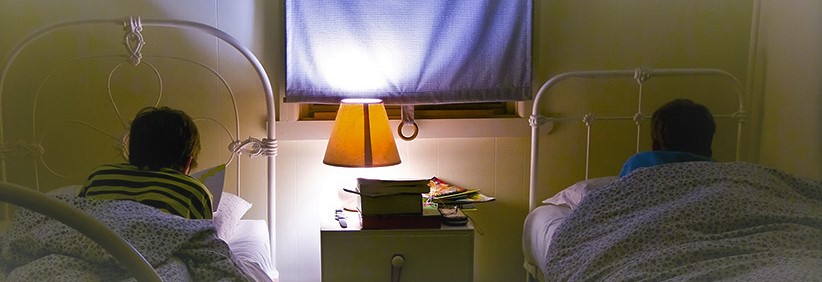
I see them reading in bed when I come in to say good night.

“Let’s play the pur-tend game, Gramps!” Jacob suggests, burrowing down under the covers, brown curls framing his sweet face, his book cast aside.

“It’s pre-tend,” I say.  “And sure, we can play one game before you guys go to sleep.  Three turns each.”

“You go first, Gramps,” Travis says, snuggling into his own bed, a smaller replica of his older brother, his book also forgotten.

“Okay,” I say, screwing my face into what I hope resembles a fearsome snarl.  “I’ll huff an’ I’ll puff ‘an’ I’ll blow your house down!”

“The big, bad wolf!” Travis shouts immediately.  At six years old, he is ever competitive and eager to beat Jacob, older by a year, to the answer.

“Right,” I smile.  “Your turn.”

“Okay…hmmm…”  After a moment, using his deepest voice, he says, “Fee, fie, foe, fum, I smell the blood…”

“The giant!” Jacob cries before he can finish.  “The giant at the top of Jack’s beanstalk.”

“You hafta let me finish, Jake,” Travis complains, indignant at being cut off.

“Don’t worry, Trav,” I say soothingly.  “If Jake can guess them early, it means you’re doing a good job, right?”

Travis smiles triumphantly, pleased by this revelation.  “Right!” he says.  “I’m a good pur-tender.”

“Pre-tender,” I say patiently.  “And now it’s Jake’s turn.”

Jacob has his riddle all ready.  “Mirror, mirror on the wall, who’s the fairest of them all?”

Travis doesn’t reply right away, furrowing his brow as he tries to come up with the answer, so I say, “Sleeping Beauty.”

“Wrong!” Jacob crows.  “I get another turn.”

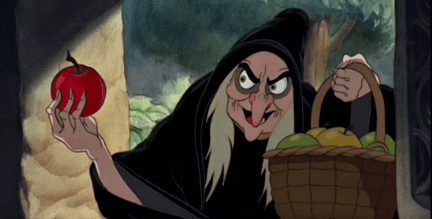
“Wait, wait, I know it now,” Travis argues.  “It’s the wicked, old queen who gave Sleeping Beauty the poison apple. She turned into an old hag!”

“Not fair!” Jacob pouts.  “Gramps gave it away!  He pur-tended to know the answer so you could get it.”

“Hey,” I protest, “that was my best guess.  And it’s pre-tended…which I didn’t do, by the way.”

“Okay, my turn,” Travis says, oblivious to my persistent corrections.  “You won’t get this one!   Wah…wah…what’s up, Doc?”

“Bugs Bunny!” Jacob says.  “That was easy!”

Crestfallen, Travis says, “Yeah, but only ‘cause I can’t stutter!”

“Bugs Bunny doesn’t stutter,” Jacob says.  “That’s Porky Pig.”

“Okay your turn, Jake,” I intercede quickly, heading off a potential squabble.  “This is your third round.  Make it a good one.”

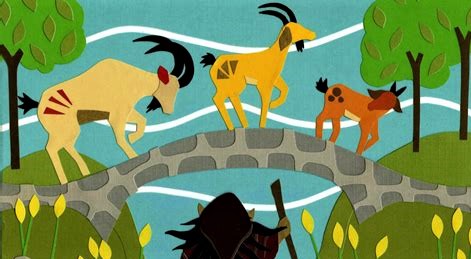
“Okay, here it is.”  In a harsh, threatening rasp, he bellows, “Who’s that clip-clopping across my bridge?”

“Billy Goats Gruff!” Travis exclaims.  “That’s the troll under the bridge!”

“Very good, Trav,” I say.  “Now it’s your third turn.  Can you stump us?”

Adopting a lilting, sing-song tone, he says, “Hi-ho, hi-ho, it’s off to work we go!”

“The seven dwarfs,” Jacob shouts, eager to beat me, even though he’s used his last turn.

“Which one?” Travis says, wanting to stump his brother.

“All of ‘em, right, Gramps?”

“I think so,” I say.  “They all went to work, unless Sleepy slept in.”  My intended joke falls on deaf ears.

“Okay, that’s three for me an’ Trav,” Jacob says.  “But you got two pur-tends left, Gramps.”

This is the standard pattern when we play, which usually allows me to end the game without complaints from them about having to go to sleep.

“I have two pre-tends left,“ I say, “so here’s my second one.”  In my best attempt at a high-pitched cackle, I croak, “Who’s that out there, eating my house?”

“The witch, the witch!” the boys yell in unison.  “Hansel an’ Gretel!”

“Right,” I smile.  “You guys are great at this game!”

“Yeah,” Travis agrees.  “We’re the great pur-tenders!”

Pre-tenders!” I say, for what feels like the umpteenth time.  “You guys are great pre-tenders.  You remind me of an old song, and I’m going to use it for my final riddle.  Then it’s bedtime.”

“Sing it, Gramps,” Jacob urges.  “Sing it for us.”

They’ll endure anything to avoid having to go to sleep, I figure, but I sing the song anyway, tailored just for them.

Oh-oh-oh, yes, you’re the great pre-te-en-ders,

All cozy and ready to sleep,

You’ve played your games and you’ve guessed the names,

And now you must lay down your heads,

Pre-tending you’ll start counting sheep!

“That’s Little Bo-Peep!” Jacob yells, excited to have an answer for the last one.  “She lost her sheep, right?”

“You got it,” I laugh, hugging him, feeling his fleeting kiss on my cheek.

When I bend to hug Travis, he whispers, “I love you, Gramps.  We don’t have to pur-tend ‘bout that.”

Softie that I am, I feel my eyes filling up.  And this time, I don’t attempt a correction.

Babysitting

As a sometimes-hapless father, one of the things I learned about parenthood is there really wasn’t a lot that was new.  Most of it was just the same stuff I experienced in childhood, happening to my own children with me in the role my father once occupied.

I took a certain delight in discovering that.  It was fun to watch as my daughters encountered many of the same situations I faced when I was at their ages.  And it was comforting when I saw them reacting to circumstances in much the way I had.  It reinforced the notion that the values and beliefs my wife and I espoused were being passed along to them.

The tough part, of course, was watching what happened on the few instances when they made an unwise decision and had to face the consequences of their mistake.  I often wondered if my parents had felt the same conflicting emotions as I did on those occasions.

The hardest thing of all was resisting the temptation to tell my daughters what to do in every situation, to provide them a shortcut to what I’d had to find out on my own, sometimes through bitter experience.  But I’d managed to convince myself that keeping quiet was often safest, that the process of figuring out the best way to proceed was more important for them than just being given the right answer.

“They learn best through discovery,” I would tell myself.  “Not by being instructed.”  And I made myself believe that.

But the difficulty with that stance was brought home to me on the occasion of my oldest daughter’s first babysitting job.  Watching her go out the door, climb into someone else’s car, and drive off without so much as a backward glance was a bit of a wrench.

I could still remember how it felt when I went out like that.  From the time I was thirteen until I finished high school, I regularly picked up extra money by babysitting little kids in the neighbourhood.

Mostly, it involved spending time with them before bed, then packing them off before the Saturday night hockey game started on TV.  After getting them settled, I’d sit on the sofa, munching peanuts, sipping a cola until the parents came home.

To me, babysitting seemed like such a simple job back then.  Nothing ever went wrong.  And even if it had, there was always the telephone with the prominently-displayed number where the parents could be reached.  And in a pinch, I knew I could always call my mother.  Babysitting was easy!

But when it came my daughter’s turn, I was no longer so sure of that.  Seeing my little girl go off to her own first job caused me some worry.  At thirteen, she seemed awfully young to me!

Mind you, she was certainly well-prepared.  She’d enrolled in a babysitting course with several of her friends in order to prepare herself for the role, and had proudly received her certificate as proof of her readiness.

During the next few months, she’d taken on a couple of pseudo-babysitting jobs, looking after young children while their parents were still in the house.  By all accounts, she was a competent, confident, and caring babysitter.

I remember watching her pack her tote bag before going out on that first job.  She put in a couple of storybooks she thought the youngsters might like, a deck of playing cards, two of her favourite stuffed toys, note paper and a pen, along with sundry other items.  The only thing she didn’t have by the time she left was any doubt about her ability!

Nevertheless, I worried.

I remember leaping for the phone (uncharacteristic of me!) when it rang a couple of hours later.  But there was no problem.  She’d called only to let us know the kids were in bed, sleeping peacefully, while she was listening to one of her portable cassette tapes, and reading.

When she arrived home around midnight, flushed with the success of her first assignment, elated at the windfall of cash she had earned, I breathed a sigh of relief.

“Babysitting’s easy, Dad,” she said, and I heard the echo of my own younger sentiments.  “There’s nothing to worry about.”

There hadn’t been for her, I guess, just as there hadn’t been for me when I was doing it.  But her experience drove home the fact that, for me as a father, those babysitting jobs weren’t so easy after all!  And when her sister joined the babysitting ranks a couple of years later, those same worries carried on apace.

But now, our lives have sallied through another cycle, and my daughters’ children are striking out—babysitting, weekend jobs, summer employment.  I don’t fret so much about my grandchildren, though—partly because I’m more removed from them as a grandpa than I was as father to my own girls, partly because they have good fathers of their own to do the worrying, and mostly because the five of them are so darned competent at everything they do.

“Babysitting’s easy, Dad,” my daughter had said.  And looking back on it now, on the whole parenting thing, I can almost convince myself she’s right.

April Cometh

Another April is almost upon us.  I have always looked forward to its coming, its showers sweet, its promise of spring—only to be disappointed all too often by its refusal to let go of winter.  I wonder which we will get this year, the beautiful warm month of soft showers, or the cruel bringer of winter’s final ravages.

Poetry is one means I use to express my anticipation of April, sometimes optimistic, full of hope, and other times doubtful and despairing.  And I find the Japanese haiku form especially appropriate—three lines of five, seven, and five syllables, respectively—to convey this conflicted state of mind.

Here are five haiku dealing with April, each with a picture in harmony with my outlook.  I leave it to you, the reader, to decide which of my moods is being conveyed by each—

peekaboo
sun plays peekaboo,
dancing 'cross the wint'ry lake---
heralding the spring
teasing
april is cruel---
so the poet says---teasing
us falsely with spring
spring
joining in our walk,
tentatively, yet warmly---
sweet spring has returned
april fool
april can't fool me,
that false harbinger of spring---
may is the gateway
in the rain
dancing in the rain,
neither of us wet or cold---
warmly wrapped in love

May the spring blossom anew for all of you…..in April, or whenever it arrives!

I Won’t Go Back Again

Each month, wordpress.com, the host of my blog, issues a writer’s prompt. This month’s prompt is the word BRIDGE, and this is my submission.

On the day my wife and I visited Venice, the city was flooding—a precursor, I fear, to what is to come.  Some of the streets alongside the canals were underwater, deep enough that we couldn’t venture into them without rubber boots.

In the Piazza San Marco, the main square of the city, elevated boardwalks had been erected to allow tourists to pass from one side to the other.  Outdoor cafes, their tables waiting for customers, were untended because they sat in several inches of water.  A few children romped and splashed in the accidental lake that covered much of the square, their squeals of delight piercing the general hubbub.

I wondered, sadly, how much longer tourists like us would be able to visit the legendary city.

We made a point of visiting the famed Rialto Bridge—to say we’d been there, of course, but also because our youngest daughter accepted a marriage proposal on that very spot several years ago.  We found it quite romantic, despite the crowds.

Until, suddenly, it wasn’t!

I had stopped to take a couple of pictures of the staircase leading from the bridge to the street below, when I was roughly jostled from behind.  I almost dropped my cellphone.

“Outta the way!” a voice growled.  “You’re blocking the way!”

The speaker, about my age, held the hand of a little girl, perhaps six or seven, and they started down the steps past me.

“I’m taking pictures,” I said.  “You should watch where you’re going.”

“What did you say?” he demanded, turning back, his English accented but fluent.  And angry.  “You shouldn’t even be here!” he exclaimed.  “You tourists are spoiling our city, all you people!”  He was quite excited by then.

“Why don’t you calm down?” I said, wondering where this was headed.  “Before you frighten your granddaughter.”

“I’ll calm down when you are gone,” he said, still looking up at me.

There was a momentary pause as a flurry of thoughts flashed through my mind.

Who is this guy?

What’d I do?

What if he assaults me?

And what about the little girl?  What if she gets hurt?

And what if the police come?

How do I get into these messes?

The man, apparently having second thoughts of his own, turned away abruptly, and started down the stairs, the little girl in tow.  “We can’t even walk around our own city anymore,” he complained loudly, one arm gesticulating.  “All you people, you come here, you block the streets, you ruin everything.  You should stay home, stay wherever you come from…”

His voice faded away, and within seconds he and the little girl were swallowed up in the crowded street, lost to sight.  No one else seemed to have noticed the altercation.

I was shaken, of course, although convinced I had done nothing wrong.  After a few minutes, we retreated to the bridge to collect ourselves before resuming our walking tour of the remarkable city.

Later that evening, reflecting over a glass of wine, I wondered if the man’s anger was not so much with me, as with the fact that I was but one of hordes of tourists overrunning his city, even as the marshy land it sits on sinks into the sea.  In fact, more than 30 million people visit Venice each year, a city with a population of approximately 50,000 souls.

In his anger, I heard echoes of complaints from people in nations all over the world—people opposed to the influx of immigrants and asylum-seekers to their countries, people afraid their jobs will be taken, their culture destroyed, their language lost.  Their fear is real and their resentment palpable.  Politicians cater to it.

I’m awfully glad we visited Venice when we did, and I’m happy we stood on the Rialto Bridge where our daughter’s beau proposed to her.  It is an indelible memory for us both. 

But I won’t go back again.

The Way I Sees ‘Em

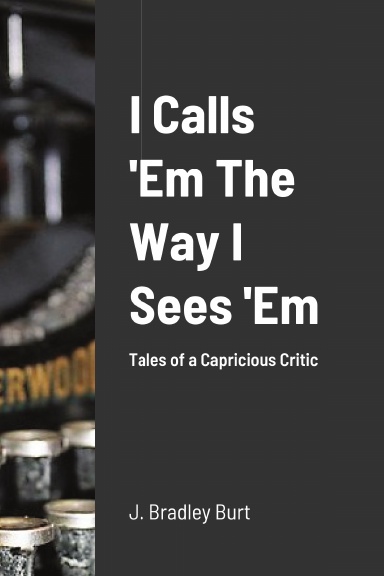
I’m excited to let you know that my brand-new anthology of stories has just been released—I Calls ‘Em The Way I Sees ‘Em: Tales of a Capricious Critic. It joins six previous books of tales, along with eight crime fiction novels, in my published portfolio.

The story goes that a long-ago baseball umpire was explaining his method for calling balls and strikes. “They ain’t nothin’ ‘til I calls ‘em,” he declared. “An’ I calls ‘em the way I sees ‘em!”

That’s what I have tried to do in this collection of short essays and poems, addressing some of the issues facing all of us today—questions and concerns about the society we live in from my perspective as a capricious critic of our world with all its systemic injustices and prejudices.

The book is available for preview at this safe link—https://www.lulu.com/spotlight/precept

There are easy calls, hard calls, and poetic calls described in the book, plus a few tales explaining why I bother to make the calls at all. I hope you’ll take time to check them out because, if you enjoy reading my blog, I think you’ll enjoy the tales I’ve spun.

To whet your appetite, here is an example of one of those poetic calls, written shortly after my father’s death to commemorate our relationship—

The Railwayman

You’d take me down beside the rails to watch the trains go storming by,
And tell me all those wond’rous tales of engineers who sat on high,
In cabs of steel, and steam, and smoke; of firemen in their floppy hats,
The coal they’d move, the fires they’d stoke, as o’er the hills and ‘cross the flats
The locomotives huffed and steamed, their whistles blowing long and loud.
And one small boy, he stood and dreamed beside his daddy, tall and proud.

Terrifying monsters were they, bearing down upon us two, who
Felt their force on that steel highway, hearts a-racing ---loving, true.
I’d almost flinch as on they came toward us, with their dragon-face
A-belching, spewing, throwing flame and steam and smoke o’er ev’ry place.
But you’d stand fast beside the track, and, oh! the spectacle was grand.
So, unafraid, I’d not step back, ‘cause you were there holding my hand.

Oh, Railwayman, oh, Railwayman, I’m glad you knew when you grew old,
How much I loved you---Dad, my friend---who shared with me your dreams untold.
Oh, Railwayman, oh, Railwayman, if I, beside you once again,
Could only stand safe in your hand, awaiting with you our next train.

All aboard, Dad…all aboard!

Please visit https://www.lulu.com/spotlight/precept to have a look at this new collection of tales, and all my books—and please pass this information along to any friends who might be interested.

Tap the Title

Regular followers of this blog will know that you receive a message in your email inbox each time a new post appears. What you might not know is that, by tapping on the title of that email message (in blue at the top), you will be able to read the post in the original tallandtruetales format, rather than in the unadorned body of your email.

Hot air, flights of fancy, and roads not taken…

Reading each post in the tallandtruetales format will also allow you easy access to all the menu items in the blog—HOME, ABOUT ME, GALLERY, MY BOOKS, and PREVIOUS POSTS.

If you haven’t already tried tapping the title, do it with this brief post…..I think you’ll enjoy the full webpage format.

And thanks for following me on my blog!